Hunting Cougar in Alberta’s Foothills
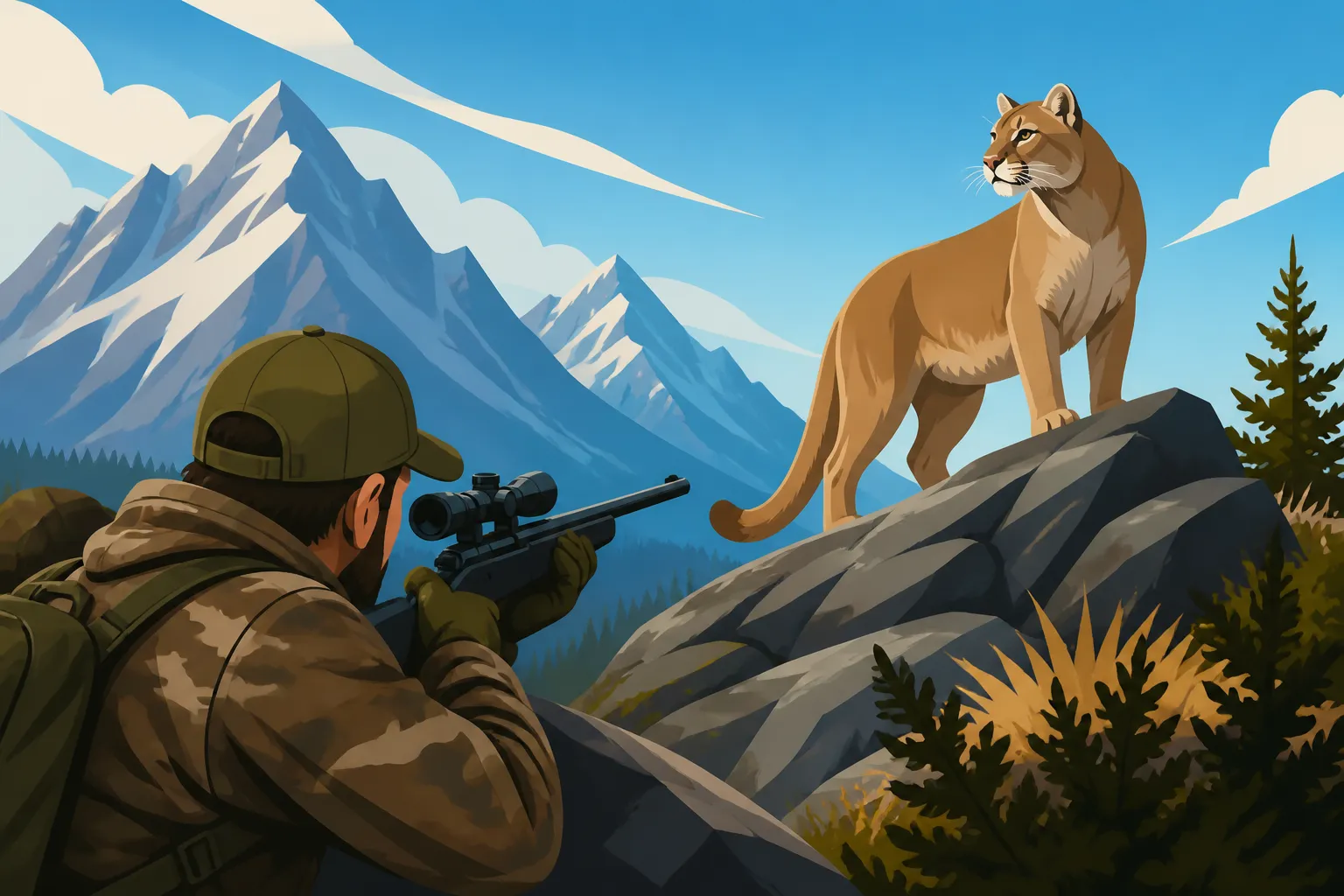
Hunting cougar in Alberta's rugged foothills is an immense challenge, a true test of grit, patience, and woodsmanship. It’s not a hunt for the faint of heart, often involving long days of tracking through deep snow and navigating unforgiving terrain, leaving many hunters wondering where to even begin. This comprehensive guide is designed to cut through that frustration, offering detailed strategies, essential gear advice, and critical regulatory insights to help you successfully pursue Alberta's elusive apex predator in its natural domain.
Understanding Cougar Behavior in the Foothills
Before you even think about lacing up your boots, truly understanding the cougar is paramount. These cats are creatures of stealth and opportunity, and their behavior in Alberta's foothills is heavily dictated by their environment and their prey. Knowing their habits is the first step toward putting yourself in the right place at the right time.
Preferred Habitat and Home Ranges
Alberta's foothills are prime cougar country, offering a perfect blend of dense cover, broken topography, and abundant prey. You'll typically find cougars inhabiting areas with steep, rocky outcrops, heavy timber stands, and tangled willow thickets that provide excellent ambush cover. These areas also offer escape routes and protected denning sites. Think about the transition zones where the mountains meet the prairie – that’s often where their world truly begins. The undulating landscape of the foothills allows them to move silently and remain unseen, making them incredibly difficult to detect without fresh snow.
Their home ranges can be vast, often encompassing hundreds of square kilometers, especially for males. These ranges aren't static; they shift with prey distribution, seasonal changes, and the presence of other cougars. A specific coulee or ridge might be heavily used for a few weeks if a deer herd is wintering there, then abandoned as the prey moves on. Understanding this fluid nature of their territory means focusing on fresh sign, not just historical locations. For hunters, this translates into covering a lot of ground and constantly reassessing where a cat might be holding up.
Prey Preference and Hunting Patterns
Cougars in the foothills are primarily hunters of ungulates, with white-tailed deer and mule deer making up the bulk of their diet. They also frequently prey on elk, especially calves and yearlings, and will occasionally take bighorn sheep in the more mountainous fringes. This strong prey dependency means that to find cougars, you need to find their food sources. Concentrate your efforts in areas where these prey species are abundant and exhibiting wintering or staging behaviors.
Their hunting technique is almost exclusively ambush-based. They use their incredible strength and agility to stalk silently through dense cover, getting as close as possible before launching a short, explosive sprint to tackle their victim. This is why dense, broken terrain is so crucial to their success. They're masters of camouflage and using the landscape to their advantage, often waiting patiently along game trails, creek bottoms, or the edges of dense timber patches. Identifying these natural travel corridors and ambush points can be critical for predicting a cougar's movements, even if you're not seeing the cat itself.
Activity Times and Seasonal Movements
Cougars are largely crepuscular and nocturnal, meaning they are most active during dawn, dusk, and throughout the night. This doesn't mean you'll never see one in broad daylight, but your chances increase dramatically during these low-light periods. When tracking, the freshness of a track often tells you if the cat was moving during these times. They are opportunistic and will hunt whenever hunger dictates, but their natural inclination is to use the cover of darkness.
Seasonal movements are often tied directly to prey migration and weather conditions. In deep winter, deer and elk often move to lower elevations and south-facing slopes, and cougars will follow them. Heavy snowfalls, while providing excellent tracking opportunities, can also push prey into more concentrated areas, which in turn concentrates cougars. Understanding these seasonal shifts is vital. For instance, after a major snowfall, deer might yard up in a sheltered valley, making it a prime hunting ground for a cougar. Hunting during these periods requires a keen understanding of how the weather affects both predator and prey, impacting everything from their preferred travel routes to their bedding locations.
Key Hunting Methods for Foothills Cougars
Hunting cougars is unlike pursuing any other big game species in Alberta. It demands a specific skillset and often specialized resources. In the rugged foothills, these methods are fine-tuned to tackle the unique challenges presented by the terrain and the cunning nature of the cats.
Tracking in Snow
This is arguably the most traditional and effective method for hunting cougars in Alberta's foothills, relying heavily on fresh snowfall. When the ground is blanketed in a fresh layer of snow, it essentially becomes a canvas that records every movement. The goal is to locate a fresh cougar track, often after a night of fresh snow, and follow it until you jump the cat or it leads you to a kill site. This often means driving remote logging roads and oilfield leases at first light, looking for tracks crossing the road.
The key to successful tracking lies in distinguishing a fresh track from an old one, and a cougar's track from a bobcat's or a large dog's. Cougar tracks are typically rounder, lacking visible claw marks (unless they're slipping or running hard), and show a distinctive leading toe. You're looking for a track with crisp, well-defined edges, free of melt-back or wind-blown snow. Once you find a track, it's a game of patience and determination. You need to pay attention to the cat's gait, whether it's wandering, purposefully moving, or "creeping" – indicating it's actively hunting or aware of your presence. The pursuit can be incredibly long and physically demanding, covering miles over steep, broken ground. It's often said that if you want to find a cougar, you need to be prepared to walk in its footsteps for an entire day, or even longer. For a deeper dive into this demanding skill, consider reading about "Tracking a Cougar in Fresh Snow".
Using Hounds Where Permitted
In areas of Alberta where it is legally permitted, hunting cougars with hounds is another highly effective method. This technique involves using a pack of well-trained dogs to locate a cougar track, follow it, and eventually "tree" or "bay" the cat. The dogs' scenting ability and persistence are invaluable in covering vast areas and navigating the dense cover where cougars often travel. Once the cougar is treed, hunters follow the sound of the baying dogs to the location.
The use of hounds is a highly specialized skill, requiring significant investment in dog training, equipment, and time. It’s also subject to strict regulations and ethical considerations to ensure the well-being of both the dogs and the cougar. Hunters must ensure their dogs are controlled and that the pursuit is conducted safely and ethically. While this method can lead to high success rates, it's crucial for hunters to understand and adhere to all local regulations regarding hound hunting, which vary by jurisdiction. For many, the thrill isn't just in the harvest, but in witnessing the incredible work of a well-disciplined pack of hounds.
Calling and Ambush Techniques
While less common than tracking or hound hunting, predator calling can sometimes be effective for cougars, particularly in specific situations. Cougars respond to distress calls, mimicking a wounded rabbit, fawn, or even an injured deer. The key is setting up an ambush point with good visibility and cover, where you anticipate a cougar might be traveling or hunting. This often means positioning yourself downwind near a fresh kill site, a well-used game trail, or a natural pinch point in the terrain.
Calling for cougars requires extreme patience and an understanding of their cautious nature. They rarely come charging in like a coyote; instead, they often circle downwind to scent-check the caller before committing. This means remaining absolutely still and being prepared for a shot to develop from an unexpected direction. Ambush techniques also involve identifying recent kill sites. If you find a fresh kill that has been partially cached, a cougar is highly likely to return to feed. Setting up quietly nearby, perhaps with a calling sequence, can sometimes draw the cat back in. Success with calling often comes down to intimate knowledge of the area and the cougar's recent activity.
Essential Gear and Preparations for a Foothills Cougar Hunt
Hunting cougar in Alberta's foothills isn't a casual affair; it demands robust gear that can stand up to the region's notoriously harsh and unpredictable conditions. Being ill-equipped isn't just uncomfortable, it can be downright dangerous. Proper preparation and the right equipment are non-negotiable for both success and safety.
Specialized Clothing and Footwear
The foothills weather can turn on a dime, going from mild to blustery blizzards in a matter of hours. Layering is your best friend. Start with a moisture-wicking base layer, add insulating mid-layers like fleece or synthetic puff jackets, and top it all off with a waterproof and windproof outer shell. Choose quiet fabrics that won't rustle and spook an approaching cat, and opt for subdued colors that blend into the snowy, treed environment. Even though cougars rely heavily on scent and sight, any advantage you can get from remaining unseen is crucial.
Footwear is perhaps the most critical piece of clothing. You'll be covering extensive distances over steep, uneven, and often snow-covered or icy terrain. You need warm, waterproof, insulated boots with excellent ankle support and aggressive tread. Brands like Kenetrek, Schnee's, or Crispi are popular among serious mountain hunters for their durability and performance in challenging conditions. Don't skimp here; cold, wet feet will end your hunt prematurely and make for a miserable experience. Heavy-duty gaiters are also a must to keep snow out of your boots and protect your lower legs from brush.
Optics and Navigation Tools
Good optics are invaluable for spotting tracks, identifying distant sign, and assessing terrain, even if the actual shot is close. Quality binoculars (10×42 or 10×50 are good all-around choices) are essential. A spotting scope might seem overkill for a cougar hunt, but it can be incredibly useful for picking apart distant slopes or confirming tracks from afar without wasting precious energy.
For navigation, a reliable GPS unit or a robust mapping application on your smartphone is non-negotiable. The foothills are a labyrinth of drainages, ridges, and timber blocks that can quickly disorient you, especially when focused on a track. Many hunters rely on digital mapping tools like GoHunt, Gaia GPS, or onX Hunt to precisely locate their position, mark tracks, plan routes, and identify property boundaries. These apps can be pre-loaded with satellite imagery and topographic maps, which are critical when cell service is non-existent. For detailed planning, consider a deeper dive into "Scouting With Satellite Imagery in Alberta" to familiarize yourself with mapping nuances. Always carry a physical compass and map as a backup, and know how to use them.
Firearms and Archery Equipment
When it comes to taking down a cougar, ethical shot placement and sufficient power are key. For rifle hunters, anything from a .243 Winchester up to a .30-06 Springfield or .300 Winchester Magnum is suitable, provided you're using quality bullets designed for controlled expansion. Accuracy is paramount, as shot opportunities can be fleeting and at close range, requiring a quick, precise response. A short, maneuverable rifle is often preferred for navigating dense bush.
For archery hunters, the legal minimum draw weight in Alberta is 40 pounds. However, for cougar, most experienced bowhunters opt for a heavier setup (55-70 lbs) to ensure adequate penetration. Broadheads should be sharp, durable, and designed for deep penetration. It's not uncommon for cougars to be encountered at very close range when treed, making a well-practiced, instinctive shot critical. Regardless of your weapon choice, ensure it's sighted in perfectly, and you've practiced shooting from various realistic field positions. A wounded cougar in dense terrain can be incredibly dangerous and difficult to recover.
Navigating Alberta's Regulations and Access for Cougar Hunting
Alberta's hunting regulations are designed to manage wildlife populations responsibly, and cougars are no exception. For a successful and legal hunt, understanding the specific rules, licensing requirements, and access protocols is just as important as knowing how to track a cat. Getting this wrong can lead to serious consequences.
Licence Requirements and Season Dates
To hunt cougar in Alberta, you must first possess a valid Wildlife Identification Number (WIN) card and a Wildlife Certificate. Beyond these foundational requirements, you'll need a specific cougar licence (known as a tag). This tag is typically purchased in advance and is allocated to specific Wildlife Management Units (WMUs). You cannot hunt cougar without this specific licence.
Cougar season dates vary by WMU, so it's absolutely crucial to consult the current Alberta Guide to Hunting Regulations well in advance of your hunt. Some WMUs might have early archery-only seasons, while others open for general rifle hunting later in the fall and continue into the winter. These seasons are designed to coincide with periods of optimal hunting conditions (like snow cover) and to manage populations effectively. Always double-check the specific dates for your target WMU. For an overview of when these seasons are active, refer to "Alberta Big Game Season Dates".
Understanding Quotas and Reporting
Cougar hunting in Alberta operates under a quota system in many WMUs. This means that once a certain number of cougars have been harvested in a specific WMU, the season for that unit is closed, regardless of the published end date. This system is in place to ensure sustainable management of cougar populations. The frustration of planning a hunt only to find your WMU closed is real, so diligence is key.
Hunters are responsible for checking the cougar quota line daily, especially during peak hunting times. This can typically be done via a dedicated phone line or online portal provided by Alberta Fish and Wildlife. It's a critical step that cannot be overlooked. As soon as you harvest a cougar, mandatory reporting is required within a specific timeframe, typically within 24 hours. This reporting allows Fish and Wildlife to accurately track harvest numbers and manage quotas in real-time. For a comprehensive explanation, be sure to read "The Cougar Quota Phone Line Explained" and understand all the details of "Cougar Season Dates and Quota".
Accessing Foothills WMUs
Alberta's foothills offer a mix of public and private land, and navigating access can be complex. Much of the cougar habitat lies within the "Green Area," which is primarily Crown Land managed by the province. These areas are generally open to public hunting, but specific rules apply, especially within Public Land Use Zones (PLUZs). PLUZs, like the Ghost or McLean Creek areas, have specific regulations regarding vehicle use, camping, and other activities that hunters must adhere to. A good mapping app like GoHunt can be invaluable for identifying these zones and their specific boundaries.
You'll often find extensive networks of forestry roads and seismic lines that provide access into these remote areas. However, many of these roads are subject to seasonal closures, industrial use, or may require specific permissions to access. Always respect signage and gates. If your hunt takes you onto private land, you must obtain permission from the landowner before stepping foot on their property. This often means knocking on doors or contacting ranchers well in advance. Understanding "Hunting Alberta's Foothills Country" requires a proactive approach to scouting and access planning.
Strategies for Success: Reading Sign and Ethical Hunting
Cougars are masters of stealth, leaving subtle clues that only a diligent hunter can decipher. Learning to "read the book" of the wild, combined with a steadfast commitment to ethical hunting practices, is what truly defines a successful cougar hunter in the Alberta foothills.
Interpreting Tracks and Scratches
The ability to accurately interpret cougar sign is the cornerstone of a successful hunt. Beyond just finding a track in the snow, you need to understand what it tells you. Cougar tracks are typically asymmetrical, with a distinct "M" shape to the heel pad and four toes with no visible claw marks unless the animal is running or on ice. This distinguishes them from canid (dog/wolf/coyote) tracks, which are more symmetrical and typically show claw marks. A mature cougar track can be quite large, often 3.5 to 4.5 inches wide.
Beyond individual tracks, look for patterns. A cougar on a mission will have a purposeful stride. If the tracks are meandering, with frequent stops and changes in direction, the cat is likely hunting. Look for secondary signs: claw marks on trees (scratch posts), which serve as territorial markers or a way for cats to clean their claws. These are often found near kill sites or along frequently used travel corridors. The freshness of the track is paramount; faint, wind-blown, or melt-edged tracks are likely old and not worth pursuing. A deep understanding of these subtle nuances is what helps you decide whether to commit to a long, arduous track.
Locating Kill Sites and Scat
Cougars are methodical hunters and typically cache their kills. They'll drag their prey to a secluded spot, often under a tree or into dense brush, and then cover it meticulously with leaves, dirt, snow, or whatever debris is available. Finding a fresh kill site, especially one that's partially covered, is a strong indicator of recent cougar activity and that the cat will likely return. These sites are often identifiable by disturbed ground, blood, and sometimes partial remains.
Cougar scat also provides valuable information. It's generally segmented, rope-like, and often contains hair and bone fragments from their prey, indicating a carnivorous diet. The size and freshness can tell you about the size of the cat and how recently it passed through. Finding scat along a game trail or near a suspected bedding area can confirm a cougar's presence. A concentration of fresh tracks, scratch posts, and scat in a particular area points to an active territory. Integrating all these clues into a coherent picture is essential for narrowing down where a cougar might be resting or hunting.
Ethical Shot Placement and Recovery
Ethical hunting demands a clean, humane kill. For cougars, this means waiting for a clear, unobstructed shot at the vitals. Whether the cat is treed, on the ground, or responding to a call, patience is key. Aim for the shoulder or chest cavity to ensure rapid incapacitation. Avoid head or neck shots unless you are absolutely confident in your ability, as these can easily wound without killing.
After the shot, observe the animal's reaction carefully. If it runs, mark the last spot you saw it and immediately begin tracking. Cougar can be incredibly tough, and even a well-hit cat can travel a significant distance, especially in dense cover. Tracking a wounded animal, particularly in snow, requires meticulous attention to detail. Follow every drop of blood, every disturbed branch, every displaced rock. If snow conditions are changing, or darkness is approaching, it's sometimes better to back out and return in the morning with fresh eyes and daylight, rather than pushing a wounded animal further into thick cover. And remember, once you've made your harvest, responsible game care is crucial. Pay careful attention to "Meat Care in Alberta's Cold and Warm Swings" to preserve your valuable meat.
Safety and Wilderness Preparedness
Hunting cougars in Alberta's foothills is an intense backcountry experience. The very nature of the pursuit – often solo, deep in rugged terrain, and in challenging weather – means that safety and preparedness are not just recommendations; they are absolute necessities. The mountains are beautiful but unforgiving, and underestimating them can have severe consequences.
Dealing with Mountain Hazards
The foothills present a multitude of environmental hazards. Avalanche risk is a serious concern, especially on steep, snow-loaded slopes after fresh snowfall. Hunters must be aware of current avalanche conditions and avoid dangerous terrain. Rapidly changing weather is another constant threat. A sunny morning can quickly devolve into a whiteout blizzard, bringing plummeting temperatures and zero visibility. Always check detailed weather forecasts before heading out and be prepared for conditions worse than predicted.
Steep, rocky terrain can be treacherous, even without snow. Loose rock, hidden crevasses, and slippery sections can lead to falls and serious injury. Always traverse carefully, test your footing, and consider using trekking poles for stability. When hunting late in the season, be especially prepared for "Hunting Alberta Winter Weather Safely". This means having emergency fire-starting materials, extra warm layers, and a way to signal for help if things go south. Never take the mountains lightly.
Bear and Wildlife Encounters
While you're focused on cougar, remember that you're also in prime bear country, particularly for grizzly bears. Although most grizzlies are denned up during the winter cougar season, some might still be active, especially in warmer spells or if a den has been disturbed. Black bears, though less aggressive, can also pose a threat. Always carry bear spray, know how to use it, and have it readily accessible. Make noise while traveling through dense cover to avoid surprising an animal at close range.
Beyond bears, other large ungulates like moose and elk can be defensive, especially if you stumble upon calves or during the rut. Maintain a respectful distance and give them plenty of space. Knowing how to react to various wildlife encounters is a crucial part of "Wildlife Safety in Alberta Bear Country" and general backcountry preparedness. Your goal is to hunt cougars, not to have an unexpected encounter with other large animals.
Emergency Preparedness
A comprehensive emergency kit is non-negotiable for any backcountry hunt. This should include a well-stocked first-aid kit, emergency shelter (like a bivy sack or tarp), fire-starting materials, and sufficient food and water. Communication is key: carry a satellite messenger or an InReach device. Cell service is unreliable, if not non-existent, in many foothills WMUs. These devices allow you to send emergency messages, check in with loved ones, and access weather updates.
Always share your detailed trip plan with someone reliable before you leave, including your route, expected return time, and contingency plans. Let them know who to contact if you don't check in. Be realistic about your physical capabilities; cougar hunting is physically demanding. Have an exit strategy for every hunt, know your limits, and don't push yourself beyond them. The mountains will always be there for another day, but your safety is paramount.
Common Cougar Signs and What They Tell You
Understanding the subtle language of the cougar is critical for any hunter. Here's a quick overview of what to look for and what it means:
| Sign Type | What to Look For | What it Tells You |
|---|---|---|
| Tracks | Round, asymmetrical; no claw marks (unless running/slipping); distinct M-shaped heel pad; four toes. | Presence, travel direction, size of cat, freshness of activity. |
| Scratch Posts | Vertical claw marks on tree trunks or logs, usually near game trails or kills. | Territorial marking, stretching, claw maintenance. Indicates active area. |
| Scat (Droppings) | Segmented, rope-like; often contains hair, bone fragments, or teeth. | Diet, size of cat, general presence. Freshness indicates recent activity. |
| Kills/Caches | Partially eaten carcass, often dragged into cover and covered with debris (leaves, snow, dirt). | Recent kill, cat will likely return. Prime ambush location. |
| Urine Sprays | Often on vertical surfaces (bushes, rocks) at nose height. | Territorial marking. |
Disclaimer
Hunting is an inherently dangerous activity. The information provided in this guide is for informational purposes only and should not be considered a substitute for proper training, adherence to all local, provincial, and federal laws, and personal responsibility. Always prioritize safety, understand and follow all hunting regulations, and respect wildlife and the environment. This content does not endorse or encourage any illegal activities.