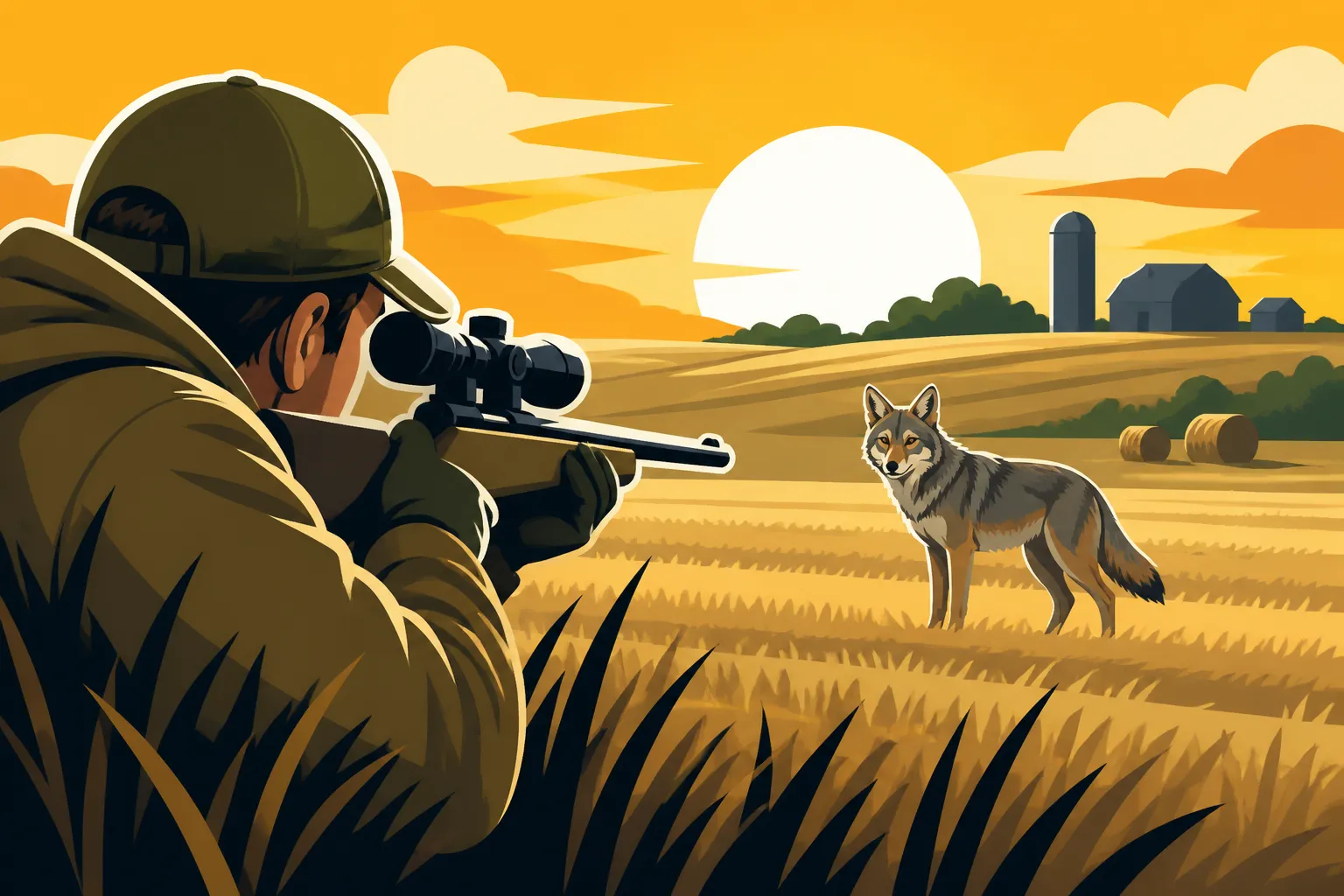
Coyote Hunting Alberta Farm Country
Anyone who has spent time in Alberta’s agricultural areas knows the challenges that come with a healthy, often abundant, coyote population. These clever canids can be tough on livestock, small game, and even deer fawns, creating a real headache for farmers and wildlife managers alike. This guide will walk you through effective strategies and practical tips for hunting coyotes across Alberta's diverse farm country, helping you become a more successful and responsible predator hunter.
Understanding the Alberta Farm Country Coyote
Coyotes in Alberta's farm country are remarkably adaptable animals, thriving in environments shaped by human activity. To effectively hunt them, you first need to understand their behavior, their impact on the local ecosystem, and how their patterns shift with the seasons.
Coyote Behavior and Ecology in Agricultural Zones
Coyotes in agricultural landscapes often exhibit different behaviors than their wilderness counterparts. They are masters of adapting to human presence, frequently using shelterbelts, abandoned farmsteads, sloughs, and coulees for cover, denning, and travel. Their diet in these areas is incredibly varied, consisting primarily of small rodents like voles and mice, but also readily including larger prey. It's not uncommon for coyotes to target deer fawns in the spring and early summer, and they will certainly take advantage of carrion, such as winter-killed livestock or gut piles left by big game hunters. Their territories can be smaller in areas with abundant food sources, leading to higher densities.
These animals are also incredibly intelligent, learning quickly from hunting pressure. A coyote that has been called in once and survived is a much harder animal to fool a second time. They often become more nocturnal in areas with high human activity, moving under the cover of darkness to avoid detection. Observing their sign – tracks in the mud or snow, scat along field edges, or kill sites – can give you invaluable clues about their routines and preferred travel corridors. Pay close attention to pinch points where cover meets open fields, as these are prime locations for ambush or calling setups.
Impact on Livestock and Wildlife
The presence of coyotes in farm country is a double-edged sword. While they play a vital role in controlling rodent populations, their opportunistic nature often brings them into conflict with livestock producers. Calves, lambs, and poultry can become targets, leading to significant economic losses for ranchers and farmers. This is a primary driver for many landowners to welcome coyote hunters onto their property. Responsible coyote hunting can help mitigate these impacts, providing a service to the agricultural community.
Beyond livestock, coyotes can also impact local wildlife populations. Their predation on What Coyotes Do to Alberta Fawns can be significant, especially in areas where deer populations are already stressed. They also prey on upland birds like pheasants and partridge, and even nesting waterfowl. Understanding these ecological dynamics can help you appreciate the role of predator control in maintaining a balanced ecosystem, especially in areas where other top predators (like wolves or cougars) are less prevalent. Hunters targeting coyotes often contribute to a healthier environment for other game species.
Seasonal Patterns and Movement
Coyote activity and movement patterns are heavily influenced by the seasons in Alberta. During the breeding season in late winter and early spring (January to March), coyotes become more vocal and territorial. This can be an excellent time to locate them using howls and distress calls. As pups arrive in spring, adults are constantly on the move, hunting to feed their young, making them somewhat predictable in their daily movements. During the summer, as pups grow, family groups often hunt together.
Once fall arrives and big game seasons open, coyotes will quickly key into gut piles and fresh carcasses, making them easier to lure. Winter, especially periods of deep snow, can concentrate coyotes as they seek easier travel routes and food sources. They often follow deer trails or travel along plowed roads and fence lines. This is also when their fur is at its prime, making it an attractive time for hunters interested in pelts. Understanding these seasonal shifts is crucial for timing your hunts and choosing the most effective tactics.
Essential Gear for Farm Country Coyote Hunting
Hunting coyotes in Alberta’s farm country requires a specific set of gear to maximize your chances of success. From the right firearm to effective calling devices and appropriate camouflage, each piece plays a vital role.
Firearms and Ammunition Choices
For coyote hunting in farm country, speed and accuracy are paramount, as shots can range from close-quarters to several hundred yards across open fields. Most hunters opt for a flat-shooting rifle chambered in calibers like .223 Remington, .204 Ruger, or .243 Winchester. These calibers offer minimal recoil, excellent velocity, and can be highly accurate with the right ammunition. Bullet selection is also critical; varmint-specific bullets designed for rapid expansion help ensure humane kills and minimize ricochets. A good quality scope with variable magnification (e.g., 3-9x or 4-12x) is essential for quickly acquiring targets at various distances.
While rifles are standard, shotguns can be incredibly effective for close-range encounters, especially in thick brush, shelterbelts, or when coyotes come charging into a distressed call. A 12-gauge or 20-gauge shotgun loaded with heavy pheasant loads, coyote-specific buckshot, or even specialized turkey loads can be devastating at ranges under 50 yards. Ensure your shotgun is choked appropriately for tight patterns. The choice often comes down to the specific terrain and hunting situation you anticipate, and many hunters will carry both or plan their hunt around one specific firearm. Always ensure your chosen firearm and ammunition comply with Legal Firearms and Bows for Big Game regulations, though coyotes are often considered predators and have different rules.
Calling Devices and Techniques
Calling is arguably the most critical skill in farm country coyote hunting. There are two main categories: mouth calls and electronic calls. Mouth calls, including distress calls (rabbit, mouse, fawn) and howlers, offer incredible versatility and allow for spontaneous adjustments based on coyote reactions. Learning to use them effectively takes practice, but the ability to mimic a distressed animal or challenge a dominant coyote is a powerful tool. They are lightweight, require no batteries, and can be used in any weather.
Electronic calls, like those from Foxpro or ICOtec, offer a huge library of realistic sounds, from various distress calls to howls, barks, and even pup yips. They allow you to place the sound away from your position, drawing the coyote's attention away from you. This can be especially useful for pressured coyotes that are wary of approaching the sound source too closely. The ability to control volume and switch sounds with a remote makes them very effective, especially for Calling Coyotes in Alberta Stubble. When using either type of call, remember to vary your sequence, incorporate pauses, and listen intently for responses. Sometimes less is more, particularly with educated coyotes.
Camouflage and Scent Control
Coyotes have excellent eyesight and an incredible sense of smell, making camouflage and scent control non-negotiable for success. Choose camouflage patterns that break up your silhouette and blend with the local vegetation and colors of Alberta’s farm country, whether it's stubble fields, snow, or treelines. Full-body camo, including a face mask and gloves, is essential. Avoid shiny objects or anything that could reflect light.
Scent control is equally important. Wash your hunting clothes in scent-eliminating detergent, store them in airtight containers, and dress in the field to minimize picking up human odors. Using a scent eliminator spray on your boots and outer layers is also a good practice. Always play the wind; even the best scent control won't fool a coyote if your scent cone blows directly towards their approach path. Positioning yourself so the wind is in your face or quartering away from where you expect coyotes to appear is crucial. Many hunters use scouting tools from platforms like GoHunt to analyze wind direction over specific terrain features for optimal stand placement.
Key Strategies for Hunting Coyotes in Alberta Farm Country
Successful coyote hunting in Alberta’s agricultural areas isn't just about calling; it involves careful planning, meticulous scouting, and precise execution of your chosen setup.
Scouting and Location Selection
Effective scouting is the foundation of any successful coyote hunt in farm country. Before you even set foot in the field with a rifle, spend time identifying key areas. Look for signs of coyote activity: tracks along field edges, trails leading into bush pockets, scat, and any recent kill sites. Areas where different types of cover meet, such as a treeline bordering a stubble field, or a slough that juts into open ground, are natural travel corridors. Look for features like Hunting a Shelterbelt Between Two Fields or Hunting a Grain Bin Yard at Dusk that provide both cover and potential food sources.
Using tools like the Alberta government's recreational access mapping tool, or a premium mapping application like GoHunt, can help you identify potential access points, property lines, and terrain features from your home. This digital scouting allows you to narrow down areas that might hold coyotes and helps you plan your approach and exit routes. Pay attention to pinch points, high vantage points for glassing, and potential ambush sites. Remember that fresh sign is always best – if you find tracks from two days ago, those coyotes might have moved on. Always secure Asking an Alberta Landowner for Permission before scouting or hunting on private land.
Calling Setups and Wind Considerations
Once you've identified a promising location, setting up your calling stand requires strategic thinking. The wind is your most critical factor. Always approach your stand and set up so the wind is blowing from the direction you expect coyles to come from, towards you, or quartering slightly. This ensures your scent is carried away from their approach. Coyotes will almost always circle downwind to scent-check the source of the call before committing. Position yourself to have a clear shooting lane downwind, anticipating this circling behavior.
Your actual setup should involve finding adequate cover to break up your silhouette without obstructing your view. This could be against a fence line, in a bush line, or behind a large hay bale. Use shooting sticks or a bipod for stability. Place your electronic call 50-75 yards upwind of your position to draw the coyote's attention away from you. When using mouth calls, be mindful of movement. Start your calling sequence softly, then gradually increase volume and intensity. Use a mix of distress calls and howls, pausing frequently to listen for responses. Don't be afraid to try different calls, particularly when dealing with educated animals.
Ambush and Stand Hunting Tactics
The two primary tactics for hunting coyotes in farm country are ambush hunting and stand hunting. Ambush hunting involves positioning yourself in a known travel corridor or near a den site and waiting for coyotes to pass through naturally. This works best when you have a good understanding of their routine and can be very effective early in the morning or late in the evening. This might involve setting up in a field overlooking a Hunting a Frozen Slough Crossing or a trail along a river valley. This method requires patience and a good understanding of coyote movement.
Stand hunting, often combined with calling, involves setting up in a location and actively trying to draw coyotes in. This is the most common method. After an initial setup, remain motionless for at least 20-30 minutes, sometimes longer, especially if coyotes are pressured. Many seasoned hunters recommend waiting up to an hour on a stand. Be prepared for a quick shot, as coyotes can appear suddenly and vanish just as fast. If a coyote hangs up at a distance, a subtle lip squeak or a pup-in-distress call can sometimes entice them to close the final yards. Remember that multiple setups in different locations throughout the day can increase your odds.
| Calling Technique | Best Use Case | Key Considerations | Expected Coyote Reaction |
|---|---|---|---|
| Distress Calls (Rabbit, Fawn, Mouse) | Most common, effective all year | Mimic injured prey, vary cadence, incorporate pauses | Attracts hungry coyotes, often come in cautiously |
| Howling (Challenge, Locator) | Breeding season (late winter), locating coyotes | Used to locate, challenge dominant males, elicit responses | Can bring in territorial coyotes, may circle widely |
| Pup Distress/Yips | Spring/Summer, when pups are present | Mimics lost or injured pups, preys on maternal instinct | Aggressive response from adults, may come in fast |
| Interrogation Howls | Any time after a distress call or silence | Used to confirm presence, assess coyote distance/direction | May get an immediate howl back, or a silent approach |
| Lip Squeaks/Kisses | Coyotes "hung up" at a distance, close range | Very subtle, high-pitched, mimics small rodent distress | Can draw a wary coyote the last few yards, requires stealth |
Advanced Techniques and Considerations
Once you've mastered the basics, there are several advanced techniques and important considerations that can elevate your coyote hunting success in Alberta farm country.
Night Hunting Rules and Gear
Coyotes often become more active after dark, especially in areas with high daytime pressure, but Alberta prohibits hunting any wildlife between one-half hour after sunset and one-half hour before sunrise, and using a light for hunting. It's crucial to be fully aware of and comply with Night Rules for Alberta Predator Hunting. Always double-check the latest regulations, as rules regarding artificial light, specific zones, and legal shooting hours can change. Plan your coyote hunts for legal shooting hours.
Night vision, thermal optics and scope-mounted lights are popular for coyotes in some other jurisdictions, but in Alberta a light may not be used for hunting and no shot may be taken outside legal hours. Low light at dawn and dusk still calls for care: ensure you have a clear backstop, know your target, and are aware of your surroundings to prevent accidents.
Working with Landowners
In Alberta's farm country, access to private land is often the key to consistent coyote hunting success. Building and maintaining positive relationships with landowners is not just polite, it's absolutely essential. Always ask for permission before entering any private land, even for scouting. Present yourself professionally, explain your intentions (e.g., helping with predator control, ensuring safe hunting practices), and offer to share your contact information. Be clear about where and when you plan to hunt.
Respecting the landowner's property is paramount. Close all gates, avoid driving on wet fields, pick up your spent casings, and leave no trash behind. If you harvest a coyote, offer to show it to the landowner, and respect their wishes regarding carcass disposal. If they have livestock, be extra cautious about noise and movement that could spook animals. A good relationship with one landowner can often lead to introductions to others. Remember, you are a guest on their property, and your actions reflect on all hunters. Platforms like GoHunt sometimes offer features to help identify land ownership, which can aid in securing permission more efficiently.
Ethical Hunting Practices and Regulations
Ethical hunting goes beyond just following the law; it's about respecting the animal, the land, and the hunting tradition. For coyotes, this means striving for clean, humane kills. Practice your shooting regularly, especially at varying distances, so you can confidently make an ethical shot when the opportunity arises. Avoid taking risky shots that could wound an animal.
Familiarize yourself with all Alberta hunting regulations specific to coyotes and other predators, not just general big game rules. This includes understanding Coyote Hunting Rules and Open Season, restrictions on baiting, shooting hours, and any specific WMU rules. For instance, while coyotes don't typically require blaze orange, when hunting during an open big game season or in populated areas, wearing Alberta Blaze Orange Requirements is a wise safety measure and may even be legally required depending on the specific activity. Always report your harvest if required, and never waste edible portions of game meat, even with predators, where regulations allow.
Dealing with Challenging Scenarios
Coyote hunting isn't always straightforward. Sometimes you encounter wary animals, or Mother Nature throws a wrench into your plans. Knowing how to adapt to these challenging scenarios is what separates the average hunter from the successful one.
Hunting Pressured Coyotes
One of the biggest frustrations in farm country is encountering coyotes that have been heavily hunted. These "educated" coyotes are incredibly wary, often hanging up far out, circling widely, or bolting at the slightest perceived threat. When dealing with pressured coyotes, you need to change your approach. First, try going deeper into properties or finding pockets of cover that might see less human disturbance. Sometimes, a short walk further than most hunters are willing to go can yield unpressured animals.
Vary your calling. If everyone is blowing rabbit distress, try a mouse squeak, a coyote pup distress, or a series of non-threatening howls. Use electronic calls to place the sound further from your setup, or even behind a small rise, to make the coyote expose itself more. Be incredibly patient and motionless; even the smallest twitch can give you away. Consider longer waits on stand, up to an hour or more, and use extreme stealth on your approach and exit. Also, adjust your setup angle to anticipate their downwind circle, giving you a wider shooting window.
Adapting to Weather Conditions
Alberta's weather can be unpredictable, and successful coyote hunters learn to adapt. Wind, for example, is often seen as a negative, but it can be your friend. A strong wind can mask your sounds and scent, allowing for a closer approach. Position yourself to use the wind to your advantage, especially when calling, ensuring it carries your scent away from the target area. On very windy days, focus on thicker cover where coyotes might seek shelter, or hunt along natural windbreaks.
Snow can reveal fresh tracks, making scouting much easier. After a fresh snowfall, coyotes are often on the move, looking for food, making it an excellent time to hunt. However, deep snow can also limit your access. Rain or light snow can dampen sounds, making coyotes less responsive to calls, but also potentially less wary. Always dress appropriately for Hunting Alberta Winter Weather Safely, ensuring you have warm, layered clothing, waterproof outer shells, and proper footwear. Conditions that keep other hunters indoors can often provide prime opportunities for the dedicated coyote hunter.
Carcass Management and Fur Care
Once you've successfully harvested a coyote, proper carcass management is important, especially when hunting on private land. Always be respectful of the landowner's wishes regarding the carcass. If they don't want it left in the field, be prepared to pack it out. This might mean dragging it to a discreet location or loading it into your vehicle. Dispose of carcasses ethically and legally, away from public view or water sources.
If you plan to keep the fur, prompt and proper care is crucial. The quality of a coyote pelt peaks in the deep winter months, typically from November through February, when the fur is thick and fully prime. Learn how to skin and flesh a coyote properly. If you're new to fur handling, consider finding a local fur buyer or trapper who can offer advice or even process it for you. Properly cased and stretched pelts will fetch a better price and are a testament to a well-executed hunt.
Safety and Legalities in Farm Country
Hunting in populated agricultural areas brings unique safety and legal considerations that every hunter must prioritize. Compliance and caution are not just good practice; they are essential for responsible hunting and maintaining positive public perception.
Firearm Safety and Public Awareness
Firearm safety is always paramount, but it takes on an even greater importance in farm country, where houses, barns, livestock, and roads are often close by. Always know your target and what lies beyond it. Never take a shot if you're not absolutely certain of your background. A ricochet can travel a surprising distance and cause unforeseen damage or injury. Use elevated positions when possible, as shooting down significantly reduces the risk of a ricochet.
Public awareness is also a major factor. Farmers and residents in rural areas are accustomed to seeing hunters, but careless behavior can quickly sour relationships. Be discreet when travelling with firearms, keeping them cased until you are at your hunting location. Avoid shooting near buildings, livestock, or within sight of residences. Even if legal, it can create unnecessary alarm. Understanding and adhering to Alberta's Rules on Shooting Across a Road is critical, and generally, it's best to avoid even approaching this line. Clear communication with landowners is your best defense against misunderstandings.
Alberta Regulations Specific to Coyotes
While coyotes are generally classified as non-licence furbearers and predators in Alberta, meaning you don't always need a specific tag to hunt them, there are still important regulations to follow. Always consult the current Alberta Hunting Regulations, available through the Alberta Environment and Parks website or via resources like GoHunt, before heading out. These regulations cover everything from legal calibers, shooting hours, and baiting restrictions to specific rules about night hunting in certain WMUs.
The Coyote Hunting Rules and Open Season are generally quite liberal, often open year-round with no bag limits for residents on private land with permission. However, rules can differ on Crown land or in specific Wildlife Management Units (WMUs). For example, some WMUs might have restrictions on certain types of firearms or hunting methods. Always ensure you are familiar with the specific WMU you are hunting in by consulting resources like Reading an Alberta WMU Map Before You Go. Ignorance of the law is never an excuse, and violations can result in significant fines and loss of hunting privileges.
Communicating with Landowners and Neighbors
Effective communication is the cornerstone of successful and ethical hunting in Alberta’s farm country. Beyond simply asking for permission, maintain an open dialogue with the landowners you hunt with. Let them know when you plan to be on their property and for how long. Inform them if you harvest an animal. This transparency builds trust and can lead to long-term hunting access.
It’s also wise to be aware of other residents or property owners in the immediate vicinity of your hunting area. If you’re hunting near a neighbor’s property, a brief introduction and explanation of your activities can go a long way in preventing concerns or complaints. Explain that you are being safe, respecting property lines, and focusing on predator control. Many times, a quick chat can turn a potential issue into a friendly understanding. Remember, a courteous and respectful approach ensures that access for all hunters remains a possibility for years to come.
Disclaimer
Please note that hunting regulations, seasons, and access rules in Alberta can change. Always consult the most current Alberta Hunting Regulations prior to any hunting activity. This guide is for informational purposes only and does not supersede official government regulations.