Judging a Full-Curl Bighorn Ram
The call came in, and just like that, after all the planning and preparation, you finally have that coveted Alberta bighorn sheep tag in your pocket. The excitement is immense, but it quickly shifts to a real sense of pressure. These animals live in some of the toughest country, and opportunities are fleeting. The biggest hurdle? Knowing with absolute certainty if that ram staring back at you through the spotting scope is truly a "full-curl" ram, legal to harvest. It’s a challenge that can make even seasoned hunters anxious, and this guide is here to walk you through every critical aspect of confidently judging a full-curl bighorn ram in Alberta's breathtaking mountains.
Understanding Alberta's Full-Curl Regulations
Let's be honest, getting a bighorn tag in Alberta is a big deal for many hunters. The commitment required to hunt these magnificent animals is significant. The last thing you want is to make a mistake when it comes to identifying a legal ram. The regulations around what constitutes a "full-curl" are precise, and understanding them is your first, most critical step.
What "Full-Curl" Truly Means
In Alberta, the legal definition of a full-curl bighorn ram is typically based on a specific measurement related to the horn's growth. It's not just about how pretty the spiral looks. While regulations can sometimes be nuanced and change from year to year, the general rule of thumb, and the one most commonly understood, is that the tip of the horn must extend beyond the bridge of the nose when viewed from the side, or that the tip of the horn has grown past a specific plane (often the eye or the back of the skull). However, the most robust and widely accepted definition in Alberta, one that covers most scenarios, states that a ram is legal if the tip of its horn, when viewed from the side, extends beyond a line drawn from the back of the skull to the top of the bridge of the nose. Another common rule applies if the ram is mature enough that its horn tip has broomed (worn down naturally) but would have met the full-curl criteria. Always, and I mean always, check the most current Alberta Hunting Regulations before you head into the field, as these specifics are non-negotiable legal requirements. The pressure to make a split-second decision is real, but understanding this definition beforehand gives you a solid framework.
The Challenge of Judging Age and Growth in the Field
It sounds straightforward on paper, right? Just look for the tip to clear the nose. But out there in the high country, with the wind whipping and the light fading, judging a ram can be incredibly difficult. These animals don't often stand perfectly broadside on a flat, open field for your convenience. They're usually on steep, broken terrain, moving, or nestled amongst rocks. The distance can be deceiving, and heat shimmer or poor light can make even the best optics seem inadequate. Many hunters spend years preparing for a bighorn hunt, and while some pursue tags through Alberta's Special Licence Draws, when that tag finally hits their hand, the pressure to not only find a ram but judge it correctly is immense. You're trying to quickly assess a living, breathing animal against a very specific, almost geometric, standard. While age is a good indicator of maturity, it's not the sole legal determinant. A younger ram could technically be "full-curl" if its horns have grown quickly, and conversely, an older ram might have broomed horns that don't quite make the mark if it doesn't meet the specific tip-past-nose criteria. It’s a complex puzzle that requires patience and a keen eye.
Visual Cues for Identifying a Legal Ram
Moving beyond the strict definition, there are several visual cues that, when combined with your understanding of the regulations, will help you make a confident judgment. These are the things you'll be actively looking for through your glass.
The "Tip Beyond the Bridge of the Nose" Rule
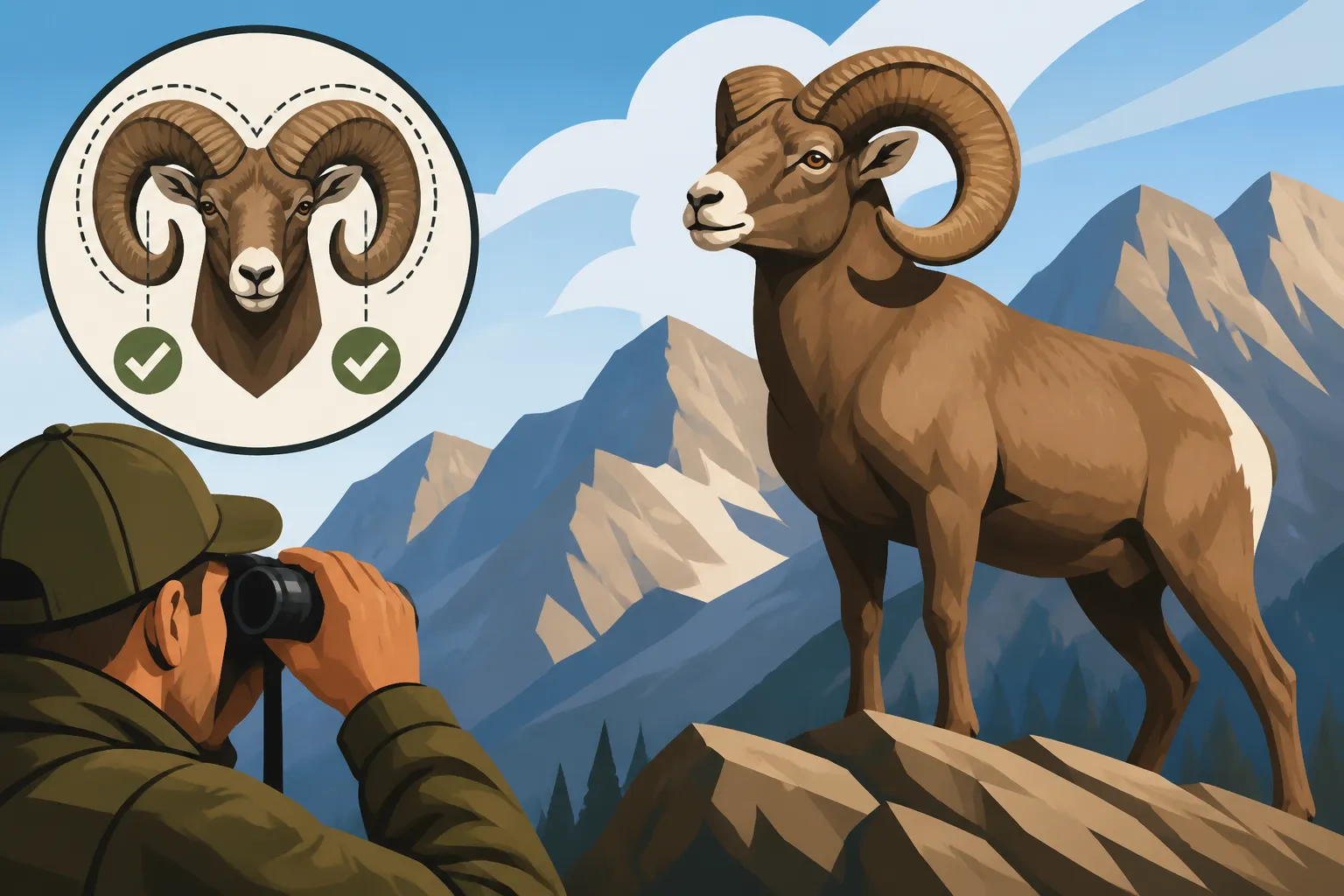
This is the cornerstone of judging in Alberta, and it's where your focus should largely be. Imagine a straight line running from the back of the ram's skull to the top of its nose. For a ram to be legal, the very tip of its horn must extend past this imaginary line when viewed from the side. This can be tricky because the ram's head position can dramatically alter your perspective.
- Broadside View: This is the ideal scenario. The ram stands perfectly sideways, allowing you to clearly draw that imaginary line. You're looking for the horn tip to visibly project beyond the nose.
- Slightly Quartering Away/Towards: This is more common. If the ram is quartering slightly away, the horn on the far side might appear shorter or the angle might distort the "line" you're trying to draw. If it's quartering towards you, the near horn might look shorter. You need to be able to mentally adjust for these angles, or, better yet, wait for a clearer shot.
- Head Up/Down: If a ram has its head low to graze, its horns might appear to curl up and away from its nose, making it look legal when it's not. Conversely, if it's looking uphill with its head cocked back, the tip might appear to fall short. Patience is paramount here; wait until the ram holds its head in a natural, neutral position or offers multiple angles before making a final call.
What about broken tips? Alberta regulations often make allowances for broomed or broken horns. If a ram's horn tip is broken, but it's clear that before the break, it would have met the full-curl criteria, it is generally considered a legal ram. This is where experience and knowing what a truly mature ram looks like comes into play. You need to be able to visualize that horn intact.
Interpreting Annuli (Growth Rings) for Age
While not a legal requirement for full-curl status, understanding annuli, or growth rings, is vital for assessing a ram's overall maturity. These rings are essentially annual growth markers, similar to tree rings, and they tell you how old the ram is. Each distinct ring represents a year of growth.
- Counting the Rings: To count annuli, you'd ideally need a clear, close view. In the field, this is often difficult, but a good spotting scope can sometimes reveal them. You're looking for the distinct "pinch" marks in the horn. A mature ram, typically one that is full-curl, will often be 7-8 years old or even older.
- Growth Variation: It's important to remember that horn growth can vary significantly. Factors like genetics, nutrition, and even the local environment can influence how fast a ram's horns grow and how pronounced the annuli are. A ram in an area with abundant feed might grow faster than one in a harsher environment. So, while age and full-curl often go hand-in-hand, a young ram with exceptional growth could be full-curl, and an older ram with poor growth might still be sub-legal. The primary legal determinant is the "tip past the bridge of the nose" rule, but knowing the age helps you confirm overall maturity. Looking at factors like age is key to Judging a Bighorn Ram's Age.
Mass, Brooming, and Other Indicators of Maturity
Beyond the specific curl, there are other signs that point to a truly mature, legal ram. These are supporting visual cues that build a complete picture.
- Sheer Mass: Older rams carry significantly more mass in their horns, especially at the base. They'll appear much thicker and heavier compared to younger rams. This adds to the overall impressive appearance of a truly mature ram. It's a weightiness that's visible even at a distance.
- Brooming: This is when the horn tips are worn down or broken off from fighting, rubbing, or scraping. It's a common sign of an older, dominant ram that has lived a full life. However, a ram can be heavily broomed and still not be legal if the remaining horn doesn't meet the "tip beyond the nose" criterion. Conversely, a ram could be legal and not significantly broomed. Brooming primarily indicates age and activity, not necessarily legal status.
- Body Size and Overall Presence: Mature rams are just bigger animals. They have thick necks, deep chests, and a robust, powerful build. They carry themselves with an undeniable dominance. When observing a group of rams, the largest and most dominant-looking animal is often the one you're looking for. However, never let body size override the legal horn measurement. Always confirm the curl, as sometimes a younger, genetically large-bodied ram can trick the eye. When you're Glassing Alpine Basins for Bighorn Sheep, pay attention to these overall characteristics to help narrow down potential candidates.
Practical Strategies for Field Judging
Now that we've covered the what, let's talk about the how. Field judging is a skill honed over time, and it relies heavily on your equipment, patience, and practice.
Optics are Your Best Friend
You simply cannot overstate the importance of high-quality optics when hunting bighorn sheep. This isn't a game for cheap binocular harnesses.
- Binoculars: Start with a good pair of 10x or 12x binoculars. They are your primary scouting tool, helping you locate sheep and quickly assess their general size and horn characteristics. For glassing vast areas and picking apart distant slopes, sometimes 15x binoculars on a tripod can be a game-changer.
- Spotting Scope: This is where the real judging happens. A high-quality spotting scope, typically 20-60x or higher, is absolutely essential. You'll need it to magnify the horns sufficiently to make that critical judgment about the tip-to-nose plane. Don't skimp here; the clarity at high magnification is what separates a confident "yes" from a doubtful "maybe."
- Tripod: A sturdy tripod is non-negotiable for both your spotting scope and, ideally, your high-power binoculars. Trying to freehand a scope at 40x or 60x magnification is an exercise in futility. The stability allows you to hold the image steady, study the ram, and make a precise judgment without the wobbles.
- Rangefinder: While not directly for judging curl, a reliable rangefinder is crucial for confirming distance, which in turn helps you understand the scale of what you're seeing through your optics. Knowing the exact distance helps prevent misjudgments due to perspective.
- GoHunt's role: Many hunters find tools like those from GoHunt incredibly useful for planning and scouting. Their mapping tools can help you identify prime sheep country and potential travel corridors, allowing you to maximize your glassing efforts in areas where you're more likely to find a mature ram. While not an optic, it's a critical piece of modern hunting gear that complements your glassing strategy.
Patience, Angles, and Group Dynamics
Sheep hunting is a game of patience, and field judging is no exception. Rushing a decision is the fastest way to make a mistake.
- Wait for the Right Angle: Rams rarely cooperate by standing perfectly broadside in ideal light. You will likely have to wait. They might be bedded, facing away, or obscured by terrain. Resist the urge to rush. Watch them, study their movements, and wait for them to offer a clear, unambiguous view that allows you to confidently apply the "tip beyond the nose" rule. This often means sitting for hours, or even days, on a particular ram or group.
- Observe Group Dynamics: Often, the most dominant, oldest rams will be at the head of the group or will interact in a way that signals their status. While this isn't a judging rule, it helps you prioritize which rams to scrutinize with your spotting scope. The biggest, bossiest ram is often the one you're looking for, but always confirm the curl.
- Hunt with a Partner: Two sets of eyes are always better than one. A hunting partner can offer a different perspective, double-check your judgment, and catch details you might miss. This is especially valuable in the high-stakes world of bighorn hunting. Discussions and shared observations can solidify your confidence or flag potential issues. When you are Backpack Hunting Alberta's Bighorn Country, having a trusted partner makes the experience safer and more effective.
Using Technology and Practice
Modern technology and consistent practice can significantly improve your field judging skills.
- Reference Materials: Keep a copy of the current Alberta Hunting Regulations with you, especially the sections pertaining to Bighorn Sheep Draw Rules and Limits. Some hunters even create small, laminated reference cards with diagrams illustrating the full-curl definition. These visual aids can be a quick, on-the-spot reminder.
- Digital Tools: Apps from companies like GoHunt can provide overlay features on maps, allowing you to mark locations where you've seen sheep, plan your approach, and even review terrain features that might influence how you glass. While not for judging the animal itself, these tools optimize your chances of getting into a judging position.
- Constant Practice: This is perhaps the most important tip. You don't just learn to judge a ram the moment you get a tag. Constantly look at photos and videos of bighorn sheep. Visit wildlife parks or conservation areas to observe sheep in person. Practice drawing that imaginary line on every ram you see. Train your eye to quickly identify the key characteristics. The more you practice, the more intuitive the process becomes, and the more confident you'll be when that once-in-a-lifetime opportunity arrives. Consider also practicing when Hunting a High Ridge Above Timberline or other similar habitats where you might find sheep.
What to Do When in Doubt
This is the hardest part for any hunter, especially when holding a tag that took years to draw and a significant financial investment. But it’s also the most critical ethical decision you'll face.
The Ethical Choice
When it comes to bighorn sheep, the mantra is simple, yet incredibly difficult to abide by: "When in doubt, don't shoot." The consequences of mistakenly harvesting a sub-legal ram in Alberta are severe. We're talking substantial fines, potential loss of hunting privileges for years, and a significant ethical stain on your hunting career. Beyond the legal ramifications, there's the profound responsibility to the animal and the conservation of the species. Bighorn populations are precious, and illegally harvesting a ram can have negative impacts on local herd genetics and age structure.
- Reconsider and Relocate: If you can't get a definitive angle, or if something just doesn't quite look right, pass. It might mean another day, another stalk, or even passing on that particular ram entirely. It's frustrating, heartbreaking even, but it's the right thing to do. Many stories from veteran sheep hunters include tales of passing on rams that were "almost there," only to find an unquestionably legal ram later.
- The Weight of the Decision: Understand that this moment will test your resolve. The adrenaline will be pumping, and the desire to fill that tag will be overwhelming. But take a deep breath, review your mental checklist, and if that lingering doubt persists, put the rifle down or let the arrow remain nocked. A tag carried home unpunched is far better than a trophy taken illegally.
The Post-Harvest Check and Reporting
Even after a successful shot, your responsibilities aren't over. Proper post-harvest procedures are crucial.
- Tag Attachment and Documentation: Immediately after recovering your ram, attach your tag as required by Alberta regulations. Take clear photographs from multiple angles, especially broadside shots that showcase the full-curl status, before any field dressing begins. These photos can be invaluable if questions arise later.
- Mandatory Reporting and CWD Testing: Alberta has specific requirements for reporting harvested big game, and often for submitting samples for Chronic Wasting Disease (CWD) testing, especially in certain Wildlife Management Units (WMUs). You will need to understand the reporting process for Alberta's CWD Testing Requirements and submit the required biological samples. Failing to report or submit samples can lead to further penalties. Ensure you know where the nearest CWD drop-off freezers are located if you're in a mandatory submission zone.
- Meat and Trophy Care: Properly field dressing and caring for the meat is not only an ethical obligation but often a legal one. Respect the animal by utilizing as much of the meat as possible. If you plan to take the trophy home, understand the requirements for Packing Out of Alberta's Mountain WMUs and potentially shipping antlers or capes across borders, particularly if you're a non-resident. Finally, remember what an Alberta guided bighorn sheep hunt costs, and make sure your investment is protected by following all rules. This beautiful animal, possibly an Alberta record like Alberta's Record Bighorn Ram and Its Score, deserves utmost respect and adherence to regulations.
| Judging Criterion | Key Visual Cue | Importance | Field Difficulty |
|---|---|---|---|
| Legal Curl | Tip beyond bridge of nose | Critical | High |
| Age | Annuli (growth rings) | Supporting | Very High |
| Mass | Thick, heavy base | Supporting | Medium |
| Brooming | Worn horn tips | Supporting | Low |
| Body Size | Large, robust build | Supporting | Low |
| Dominance | Group leader, aggressive | Supporting | Low |
Disclaimer
This guide is intended for informational purposes only and is not a substitute for the official Alberta hunting regulations. Hunters are solely responsible for knowing and adhering to all current regulations set forth by Alberta Environment and Parks. Regulations can change annually; always consult the latest official Alberta Hunting Regulations before planning or commencing any hunt.