Packing Out of Alberta’s Mountain WMUs
There’s a unique dread that sets in the moment you drop a beautiful animal deep in Alberta’s rugged mountain Wildlife Management Units (WMUs). The thrill of the hunt quickly gives way to the daunting reality of getting that hard-earned meat and trophy off the mountain. It’s a challenge that tests your physical limits, your gear, and your mental fortitude, often turning a successful hunt into an exhausting epic. This guide is here to walk you through the nitty-gritty of packing out of Alberta’s mountains, sharing practical strategies and hard-won wisdom to make sure your efforts don’t go to waste.
The Unforgiving Nature of Mountain Pack-Outs
Let's be honest, hunting in Alberta's mountains isn't for the faint of heart. It’s physically demanding, often involving steep ascents, traversing treacherous scree slopes, and navigating dense timber, all at elevations that can leave you breathless even without a heavy pack. When you add a downed animal to that equation, the challenge escalates dramatically. It's not just about the weight; it's about the relentless terrain, the unpredictable mountain weather, and the sheer distance back to the truck or base camp. Many hunters, myself included, have stood over a harvested animal in a breathtaking alpine basin, only to feel a wave of apprehension about the journey ahead.
The frustration is real when you've just pushed your body to its limits to make a successful stalk and shot, only to realize the real work is just beginning. Picture yourself knee-deep in fresh snow, a cold front rolling in, and a quarter of a bull elk staring back at you from a mile-long climb up a canyon wall. It’s moments like these that redefine "type two fun." You need a plan, the right gear, and a healthy dose of grit to overcome these obstacles. Failing to prepare for the pack-out can turn a dream hunt into a nightmare, risking spoilage of precious meat or even dangerous situations.
Essential Gear and Thorough Preparation for the Trek Out
Success in a mountain pack-out hinges almost entirely on your gear and how meticulously you plan. This isn't a casual stroll; it's an expedition, and your equipment needs to be up to the task. Skimping here is a recipe for disaster, broken gear, and potential injury.
Your pack frame is the undisputed hero of any heavy pack-out. Forget your lightweight daypack; you need a dedicated external or internal frame pack designed to haul serious weight comfortably. Look for features like a robust frame, a well-padded hip belt, adjustable torso length, and compression straps that truly cinch down a load. Brands like Mystery Ranch, Kifaru, and Stone Glacier are popular among serious mountain hunters for a reason – they’re built for this abuse. When considering a hunt in areas known for difficult access, like the true backcountry explored during Backpacking Into Alberta's Bighorn Country, a top-tier pack becomes non-negotiable.
Next up, quartering and meat preservation. A sharp, durable knife kit is paramount. You'll want a sturdy fixed blade for the heavy work and a smaller, sharper blade for finer detailing. A bone saw can be invaluable for breaking down larger animals, making it easier to manage quarters. Good quality game bags are also critical. Opt for breathable, lightweight synthetic bags that protect the meat from flies, dirt, and debris while allowing it to cool. Cotton bags can work, but they hold moisture and can become heavy. Proper meat care from the moment of the kill is essential, especially when dealing with the variable temperatures often encountered in the mountains. This directly impacts the quality of your harvest, whether you're dealing with Meat Care in Alberta's Cold and Warm Swings or the deep freeze of Field Dressing in Alberta's Deep Cold.
Don't overlook navigation and communication. Even if you've done your homework scouting with tools like GoHunt for detailed topo maps and public land overlays, terrain features can look vastly different with a heavy pack and fading light. A reliable GPS device, coupled with a printed map and compass, is a must. Cell service is non-existent in many mountain WMUs, so a satellite messenger (like a Garmin inReach or Zoleo) is a critical safety tool for emergencies or simply checking in with loved ones. Imagine the peace of mind knowing you can call for help if you take a nasty tumble with a load of elk meat on your back.
Here’s a quick checklist of essential gear for a typical mountain pack-out:
| Category | Essential Items | Notes |
|---|---|---|
| Hauling | External or internal frame pack | 80+ liter capacity, robust frame, padded hip belt |
| Heavy-duty compression straps | For securing meat quarters | |
| Meat Care | Sharp knife kit (fixed blade, smaller blade) | Replaceable blades or sharpening stone |
| Bone saw (folding or lightweight) | Especially for elk, moose, or large deer | |
| Breathable game bags (multiple sizes) | Synthetic, lightweight, ample quantity | |
| Nitrile gloves | For hygiene during field dressing | |
| Navigation & Comms | GPS device (with fresh batteries) | Pre-loaded maps, marking kill site and route |
| Topographic map (printed) & compass | Backup, know how to use them | |
| Satellite messenger (Garmin inReach, Zoleo) | For emergencies, check-ins | |
| Personal Safety | First-aid kit (comprehensive) | Including pain relief, blister care, tourniquet |
| Headlamp (with extra batteries) | Absolutely critical for night-time packing | |
| Water filter/purifier | Stay hydrated, especially during strenuous activity | |
| Bear spray (easily accessible) | Essential in Alberta's bear country | |
| Misc. | Paracord or rope | For hanging quarters, tying off gear |
| Bivy sack or emergency blanket | If an unplanned overnight becomes necessary | |
| High-energy snacks | Sustained fuel for demanding exertion |
Before you even head out, physically condition yourself. There’s no substitute for strong legs, core strength, and cardiovascular endurance when you're facing a multi-day pack-out. This preparation directly impacts your safety and efficiency, making the arduous task manageable rather than soul-crushing.
Strategic Approaches to Efficient Meat and Trophy Transport
Once your animal is down, the clock starts ticking. The efficient transport of meat and trophy out of the mountains is an art form, perfected through experience and careful planning. Your initial field dressing and quartering decisions are paramount. For larger game like elk or moose, you'll almost certainly be quartering the animal in the field. This means removing the four quarters, backstraps, tenderloins, neck meat, and anything else you intend to salvage. For a full breakdown, resources like Quartering a Moose Alone in the Bush can provide valuable insights, even if you’re dealing with a different species.
For sheep and goats, which are smaller but often found in the steepest, most unforgiving terrain, some hunters opt for the "boned-out" method, removing all meat from the bone to reduce weight, while others prefer to keep quarters intact. The skull and cape for a trophy mount also add considerable bulk and weight, and how you decide to manage this depends on the species and your hunting goals. For instance, when you're Hunting Mountain Goat in Steep Rock, every ounce counts, so boning out the meat might be the wisest choice to lighten the load on precipitous terrain.
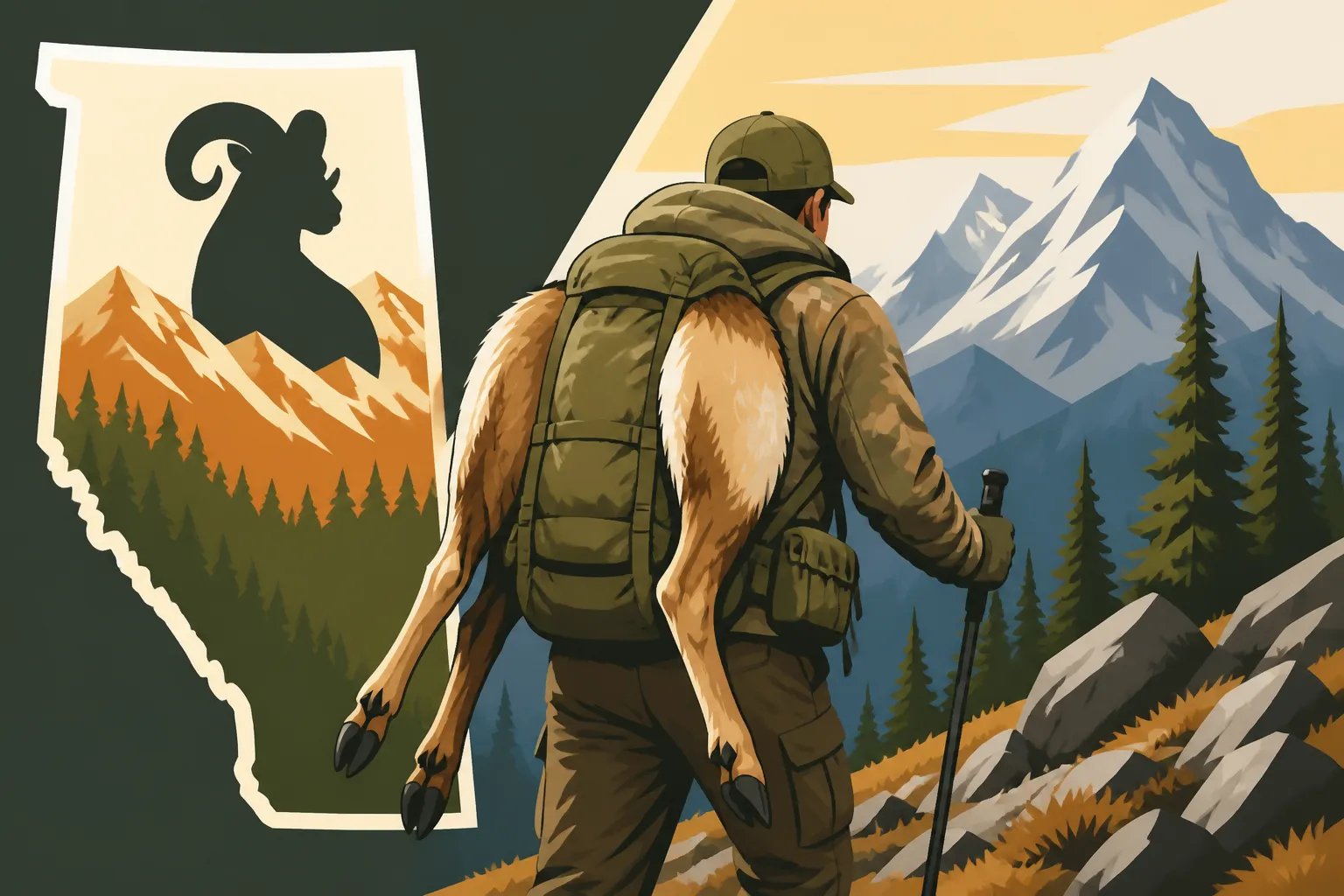
Loading your pack correctly is a skill unto itself. Distribute the weight as evenly as possible, with the heaviest items positioned close to your back and slightly above your hips. This helps maintain your center of gravity and prevents the pack from pulling you backward. Secure meat quarters firmly with compression straps to prevent shifting, which can throw you off balance and lead to fatigue or falls. For a bighorn sheep, you might be looking at a single, heavy load out, especially if you're taking the cape and skull. For an elk, however, you'll almost certainly be making multiple trips, or you'll need the help of hunting partners. Coordinating these efforts is crucial, especially when you're miles from the nearest road.
Consider caching meat. If you have multiple animals down or a particularly large one, and the weather is cool enough, you might make a first trip out with a manageable load, leaving the rest of the meat safely hung in game bags high in a tree away from predators. Just be sure to mark its GPS location meticulously and protect it as best you can. Always check local regulations on caching and what constitutes proper game meat storage. GoHunt's platform might offer insights into specific WMU regulations or provide a way to mark these cache spots on your maps for easy retrieval. Remember, cold, consistent temperatures are your friend. In the variable climate of Alberta's mountains, Hanging Meat in Fall Temperature Swings requires careful consideration to prevent spoilage.
If hunting with partners, divide the load strategically. The strongest member might take the heaviest quarter, while others carry the head, cape, and lighter quarters. Work together, pace yourselves, and take frequent, short breaks to conserve energy. This teamwork is often what makes a successful pack-out possible, turning a monumental task into a shared accomplishment.
Navigating Difficult Terrain and Unforeseen Challenges
The actual physical act of moving a heavy load across mountain terrain is where the true test lies. It’s relentless, and you will encounter challenges that push you to your limits. Steep inclines become monstrous climbs, loose scree fields feel like walking on marbles, and dense timber transforms into an obstacle course designed to trip you.
When descending steep slopes with a heavy pack, take small, deliberate steps. Use trekking poles for stability, which can literally be a lifesaver. Keep your knees bent and allow your legs to absorb the shock. On scree, try to walk on solid rock whenever possible, or if traversing a scree slope, pick your footing carefully, sometimes kicking in steps. For instance, after a successful hunt where you've been Hunting a High Ridge Above Timberline, the descent can often be more challenging than the climb, especially with added weight.
Water crossings are another potential hazard. If possible, avoid deep or fast-moving water. If a crossing is unavoidable, unbuckle your pack's hip belt and sternum strap so you can shed it quickly if you fall. Use a strong stick or trekking pole for balance, facing upstream into the current. The freezing cold temperatures of mountain streams can quickly lead to hypothermia, making quick, safe crossings paramount.
Unpredictable mountain weather can turn a mild day into a brutal test of survival in mere hours. Fog can roll in, reducing visibility to mere feet. Rain can turn trails into slick mud, and snow can quickly accumulate, obscuring trails and making travel agonizingly slow. This is where excellent layering of clothing becomes critical. Be prepared for Hunting Alberta Winter Weather Safely, even if you start your hunt in the fall. Always carry extra warm layers, rain gear, and a solid headlamp with fresh batteries, because the odds of finishing your pack-out in daylight are slim.
Finally, stay vigilant for wildlife. A heavy pack-out can take hours, or even days, and you'll be moving slowly, making noise, and carrying fresh meat. This can attract predators. Keep your bear spray easily accessible and know how to use it. Make noise as you travel, especially in thick cover, to avoid surprising an animal. If you've been hunting in areas like Alberta's Mountain WMUs and Their Access, you know you're in prime predator country. It's not uncommon to hear wolves howling or to spot fresh bear sign on your way out.
The mental game is just as important as the physical. It’s easy to get discouraged when you’re exhausted, sore, and still miles from your vehicle. Break the journey down into small, manageable segments. Focus on reaching the next ridge, the next creek, or the next landmark. Stay positive, keep communicating with your partners, and remind yourself of the reward waiting for you at the end of the grueling haul. The satisfaction of butchering and enjoying game meat that you personally packed out from the wilderness is truly unparalleled.
Disclaimer
The information provided in this guide is for general informational purposes only and does not constitute professional advice. Hunting in Alberta's mountain WMUs carries inherent risks, and conditions can change rapidly. Always consult the latest Alberta hunting regulations, acquire the necessary licenses, and prioritize safety. Proper preparation, physical fitness, and adherence to safe hunting practices are essential. The author and publisher are not responsible for any incidents or accidents that may occur as a result of using this information.