Hunting Ptarmigan Above Alberta’s Treeline
Hunting ptarmigan above the treeline in Alberta isn't your average walk in the park. The thin air, unpredictable weather, and rugged, unforgiving terrain can be incredibly challenging, leading to frustrating days if you're not prepared for what the high country throws at you. This guide is all about equipping you with the knowledge and strategies to tackle Alberta's alpine country, find these elusive birds, and make your ptarmigan hunting experience both successful and, most importantly, safe.
Understanding Alberta's Ptarmigan and Their Alpine Domain
Before you even think about lacing up your boots for a high-country ptarmigan hunt, it's crucial to understand the birds themselves and the unique environment they call home. These aren't your typical forest grouse; ptarmigan are true specialists of the alpine tundra, and their adaptations are what make them so fascinating—and so challenging to hunt.
Three Alpine Ghosts: Willow, Rock, and White-tailed Ptarmigan
Alberta is home to three distinct species of ptarmigan, each with its own preferred micro-habitat within the broader alpine zone. Knowing the differences and where to look can significantly improve your chances.
First up, we have the Willow Ptarmigan. These are generally the largest of the three, and they tend to favour slightly lower elevations, often found in willow thickets and stunted spruce patches just above the treeline, especially near water sources. They're often mistaken for grouse in their summer plumage, but their completely feathered feet are a dead giveaway. They're more often found in the northern reaches of the province's mountain ranges.
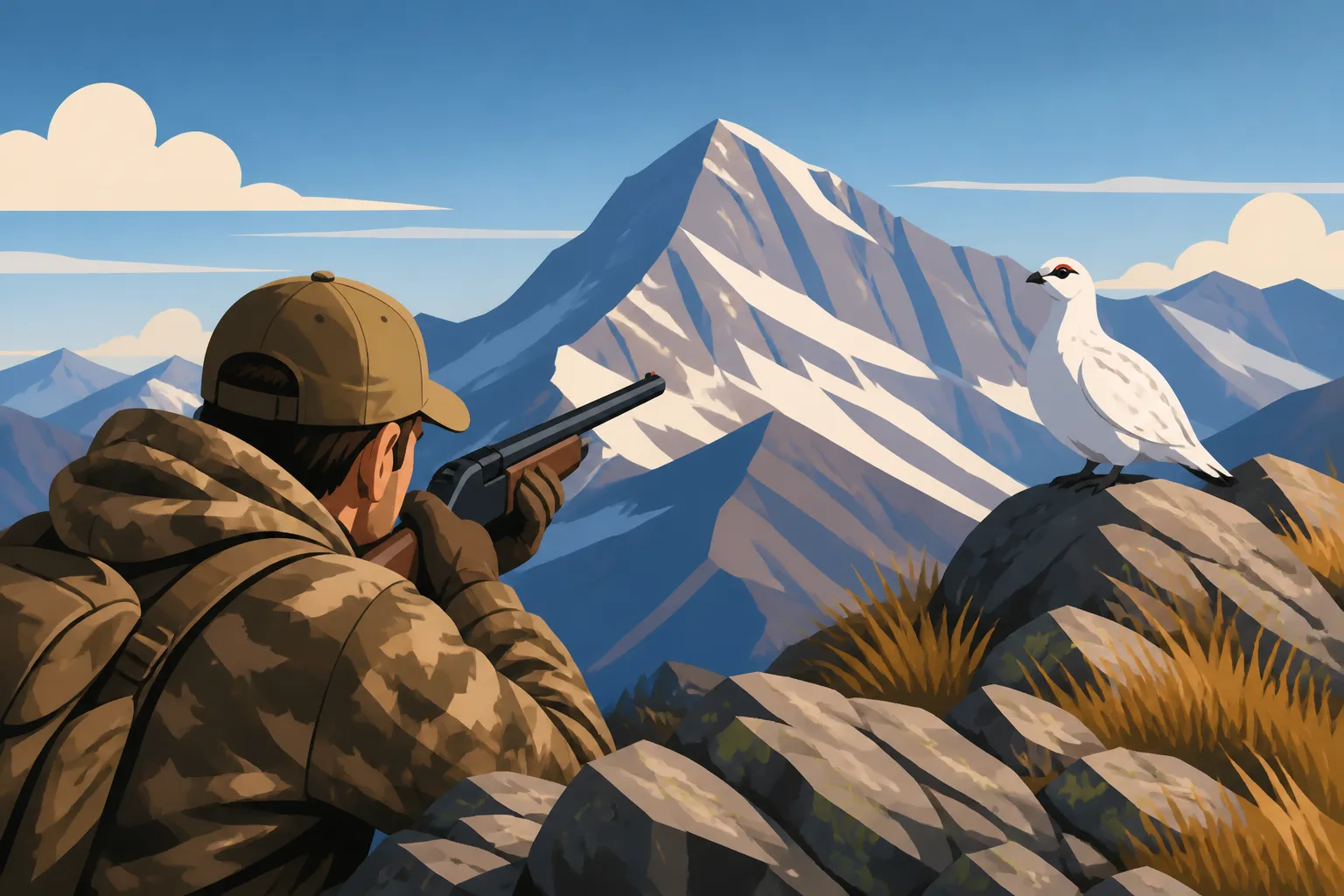
Next, the Rock Ptarmigan calls the more exposed, barren, and rocky slopes its home. You'll find them a bit higher up than the Willow Ptarmigan, blending seamlessly into the grey and brown rocks. Their camouflage is legendary, and they'll often hold incredibly tight, relying on their plumage to disappear right before your eyes. These birds are found throughout the main Rocky Mountain chain in Alberta, pushing up into the highest basins.
Finally, the White-tailed Ptarmigan is arguably the most iconic high-country bird. They are the smallest of the three and are truly creatures of the high alpine, living year-round above the treeline. Their pristine white tail feathers, even in summer, set them apart. You'll find them scrambling amongst rockslides, boulder fields, and sparse alpine meadows, often at dizzying elevations. They're masters of camouflage, turning completely white in winter to match the snow, and mottled grey-brown in summer to blend with the rocks and lichen.
Understanding these distinctions can help you narrow down your search area. If you're struggling to find birds in a willow draw, perhaps climb higher and seek out rockier, more exposed ground for a different species. This kind of nuanced approach is what sets successful alpine hunters apart.
Seasonal Adaptations and Behavior
Ptarmigan are survivors, and their adaptations to the harsh alpine environment are truly remarkable. Their most famous trick is their seasonal plumage change, which you can read more about in our guide on Ptarmigan Colour Change Through the Season. In summer, they are mottled brown, grey, and black, perfectly blending with the tundra. As winter approaches, their feathers gradually turn brilliant white, providing unparalleled camouflage against the snow. This transition is incredibly important to note because a white bird on a patchy, early-season snowpack can stick out like a sore thumb, or, conversely, a brown bird against fresh snow can be equally obvious.
Beyond their wardrobe, ptarmigan behavior is largely dictated by food availability and predator evasion. They primarily feed on buds, twigs, leaves, and berries of alpine plants like willow, dwarf birch, and heather. This means focusing your search on areas with these vegetation types is key. When disturbed, ptarmigan will often flush with a distinctive cackle, flying short distances before setting down again, often just over a ridge or behind a large boulder. They rarely fly far, preferring to run or hold tight, making them excellent candidates for a patient stalk or a good dog.
Remember that weather plays a massive role. On sunny, calm days, ptarmigan might be higher and more spread out. During stormy weather, high winds, or heavy snowfall, they'll seek shelter in dense krummholz (stunted, wind-swept trees), deep snow drifts, or sheltered rock crevices. Pay close attention to these patterns; it's rarely a good idea to push into severe weather above treeline just to find birds. Your safety always comes first, which is something we discuss further in Hunting Alberta Winter Weather Safely.
Essential Gear for Your High-Altitude Ptarmigan Quest
Hunting ptarmigan above the treeline isn't like a pheasant hunt in a stubble field. The environment demands specific gear to ensure your comfort, safety, and success. Cutting corners here can lead to a miserable, or even dangerous, experience.
Layering for the Unpredictable Alpine Climate
The alpine weather is notoriously fickle. You can start your day with blue skies and warm sunshine, only to have a blizzard roll in within an hour. Proper layering is not just a suggestion; it's a critical safety measure.
Start with a good base layer made of merino wool or synthetic materials that wick moisture away from your skin. Cotton is a definite no-go as it retains moisture and will chill you to the bone. Over this, add a mid-layer for insulation, like a fleece jacket or a puffy vest. This is your primary warmth provider. Your outer layer needs to be completely waterproof and windproof, a hard-shell jacket and pants, to protect against the inevitable rain, snow, or biting wind. Think Gore-Tex or similar high-performance fabrics.
It's also essential to carry a quality puffy jacket (down or synthetic) that you can throw on during breaks or when the temperature drops rapidly. Don't forget insulated gloves or mittens, a warm toque or balaclava, and gaiters to keep snow and debris out of your boots. Remember, you're not just looking for comfort; you're safeguarding against hypothermia, which can set in surprisingly fast when you're exposed to wind and moisture at elevation. For more ideas on staying warm, check out our piece on What to Wear on a Late Season Hunt.
Footwear and Navigation: Your Alpine Lifelines
Your feet are your engine in the mountains, and improper footwear is a recipe for disaster. Invest in sturdy, waterproof hiking boots with excellent ankle support and a stiff sole for navigating rocky, uneven terrain. Look for boots designed for mountaineering or serious backpacking. Break them in well before your hunt, and consider bringing along moleskin or blister patches as a preventative measure. Wool or synthetic socks are also a must, and bringing an extra pair to change into if your feet get wet can be a game-changer.
When it comes to navigation, relying solely on your phone is a gamble in the backcountry, where cell service is non-existent. A dedicated GPS unit is invaluable, but even better is having a reliable mapping app on your phone that allows for offline maps. Apps like GoHunt are fantastic for this, allowing you to download detailed topographic maps of the WMUs you plan to hunt. Make sure your phone is fully charged, and carry a portable power bank. Always, and I mean always, carry a physical map and compass and know how to use them as a backup. There's simply no substitute for traditional navigation skills when technology fails. A pair of quality binoculars or a spotting scope will also be critical for Glassing Alpine Basins for Bighorn Sheep and, of course, for spotting ptarmigan from a distance.
Firearms and Ammunition Choices
For ptarmigan, a shotgun is generally the weapon of choice. A 20-gauge or 12-gauge with light game loads (7.5 or 8 shot) is usually ideal. The ranges are typically close, and the birds aren't large, so heavy loads are unnecessary and just add weight. Consider a smaller gauge like a .410 or 28-gauge if you're a skilled wing shooter looking for an extra challenge and to reduce weight even further.
Crucially, non-toxic shot is mandatory for migratory birds in Canada, and while ptarmigan are upland game birds, many areas (especially those with sensitive wetlands or overlapping migratory bird habitats) might recommend or require it. Always check the specific regulations for the WMU you're hunting. Steel shot performs differently than lead, so familiarize yourself with its patterns before the hunt. Some hunters prefer small-bore rifles like a .22LR or .17HMR if they primarily intend to stalk birds on the ground, but for flushing birds, a shotgun is superior. Whatever your choice, ensure it's lightweight enough for mountain travel.
Strategies for Success: Hunting Ptarmigan Above Treeline
Hunting ptarmigan successfully above the treeline requires a blend of patience, keen observation, and strategic movement. It's a completely different game than hunting whitetails in the bush or ducks on a pothole.
Mastering the Spot-and-Stalk in Rocky Terrain
The vast, open nature of the alpine makes spot-and-stalk tactics incredibly effective. First, find a good vantage point, ideally one that gives you a sweeping view of several alpine basins, rockslides, and willow patches. Use your binoculars or spotting scope extensively. Instead of endlessly walking, sit down, scan patiently, and let your optics do the work. Ptarmigan often reveal themselves by movement or by their stark white plumage against darker rocks. This technique is similar to how one might go about Hunting a High Ridge Above Timberline for other alpine species.
Once you spot birds, the challenge begins. Ptarmigan often hold incredibly tight, so approach slowly and deliberately, using terrain features like large boulders, ridge lines, or krummholz to break up your silhouette. Move into the wind whenever possible; not only does it carry your scent away, but it also helps muffle your footsteps. When you get close, be prepared for them to flush suddenly. If they fly, mark where they land precisely. Ptarmigan usually don't fly far, often just over a rise, allowing for a second, more cautious approach. This patient, methodical approach will increase your shot opportunities.
The Role of a Good Bird Dog in the High Country
While not essential, a well-trained bird dog can be an incredible asset for ptarmigan hunting, especially for finding birds that hold tight or for retrieving downed birds in thick cover or difficult terrain. Breeds like Brittanys, German Shorthaired Pointers, or English Setters are popular choices.
However, hunting with a dog in the high country presents its own unique challenges. The rocky, uneven ground can be tough on a dog's paws, so invest in quality dog boots. Hydration is also critical, as dogs can overheat quickly during strenuous mountain climbs. You'll need to keep your dog close, especially when Hunting Mountain Goat in Steep Rock or other areas with dangerous cliffs. The vastness of the terrain means your dog needs excellent recall and must be comfortable ranging without getting lost. A dog can locate birds much faster than a human eye, scenting them even when they're perfectly camouflaged, then holding point until you can get into position for a shot. This can save you countless hours of walking and dramatically increase your success rate.
Reading the Landscape and Weather for Ptarmigan
Successful ptarmigan hunters are keen observers of their surroundings. Learn to read the landscape. Look for areas where different habitat types meet, like the edge of a rockslide next to a patch of alpine willow, or a sheltered basin with lush vegetation. These transition zones often hold birds. Also, keep an eye out for fresh ptarmigan sign: distinctive three-toed tracks in soft dirt or snow, and small, dark droppings.
Weather conditions are arguably the most critical factor. As mentioned earlier, ptarmigan will adapt their behavior to the elements. High winds can make birds take shelter, but also make them less likely to hear you coming. Fog and low clouds can completely shut down visibility, making hunting impossible and navigation perilous. Always check the mountain forecast, but be prepared for it to change rapidly. A clear morning can turn into a whiteout in minutes. Learn to identify safe routes and escape options if the weather turns. This awareness is a skill honed over many trips and is vital for anyone Backpacking Into Alberta Sheep Country. The ability to adapt your plan based on the conditions is paramount for both success and safety.
Safety First: Navigating Alberta's Treeline Environment
The raw beauty of Alberta's treeline and alpine zones comes with inherent risks. Ignoring these can lead to serious consequences, even for experienced outdoors enthusiasts.
Altitude Awareness and Emergency Preparedness
While not as extreme as some of the world's highest peaks, Alberta's mountains can still present challenges related to altitude, especially if you're coming from sea level or are not acclimatized. Altitude sickness (Acute Mountain Sickness, or AMS) can manifest as headaches, nausea, dizziness, and fatigue. In its more severe forms, High Altitude Cerebral Edema (HACE) and High Altitude Pulmonary Edema (HAPE) can be life-threatening. The best prevention is a slow ascent, staying hydrated, and avoiding overexertion. If symptoms appear, descend immediately.
Beyond altitude, a comprehensive emergency kit is non-negotiable. This should include a first-aid kit, emergency shelter (tarp or bivy bag), fire-starting materials, extra food and water, a headlamp, and a reliable communication device. While cell service is rare, a satellite messenger (like an inReach or Spot device) is highly recommended for emergency communication. Let someone know your detailed trip plan, including your route and expected return time. This is standard practice for any serious backcountry venture, whether you're Packing Out of Alberta's Mountain WMUs or just out for a day hunt.
Respecting Wildlife and the Fragile Ecosystem
Hunting above the treeline means you're entering the domain of other, larger wildlife. Be aware of your surroundings, especially for grizzly bears and cougars, which can inhabit these areas. Carry bear spray and know how to use it. Make noise while moving through dense vegetation to avoid surprising animals.
The alpine environment is incredibly fragile. Stick to established trails where possible to minimize your impact. Pack out everything you pack in, including spent shotgun shells and any trash. Leave no trace. Avoid disturbing wildlife unnecessarily, and be mindful of other users of the backcountry, such as hikers or climbers. Respect for the land, its wildlife, and other outdoor enthusiasts is a core tenet of responsible hunting. Understand the access rules for Alberta's Mountain WMUs and Their Access to ensure you're hunting legally and ethically.
Alberta Ptarmigan Species Comparison
To help you distinguish between the three ptarmigan species you might encounter in Alberta's high country, here's a quick comparison:
| Feature | Willow Ptarmigan | Rock Ptarmigan | White-tailed Ptarmigan |
|---|---|---|---|
| Size | Largest | Medium | Smallest |
| Primary Habitat | Willow thickets, stunted spruce, wet alpine meadows, just above treeline | Exposed rocky slopes, barren ridges, higher elevations | High alpine boulder fields, rockslides, sparse alpine tundra |
| Tail Feathers | Dark (blackish) in all seasons | Dark (blackish) in all seasons | White in all seasons (a key identifier) |
| Winter Plumage | All white, except for dark tail | All white, except for dark tail and a black eye line (males) | Pure white |
| Summer Plumage | Rufous brown, males with red eye combs | Grey-brown barring, males with red eye combs | Grey-brown mottled, no red eye combs |
| Vocalization | "Go-back, go-back" call, cackling | Harsh cackling, squawking | Soft "chick-chick-chick" |
| Range in AB | Northern Rocky Mountains, parts of Boreal Foothills | Throughout Alberta's Rocky Mountains | Throughout Alberta's Rocky Mountains |
This table provides a quick reference, but remember that observation in the field is key. Take your time, use your optics, and try to note these characteristics when you spot a bird.
Disclaimer
Hunting carries inherent risks, and conditions in Alberta's backcountry can change rapidly. The information provided in this guide is for informational purposes only and should not replace proper training, local knowledge, or consultation with experienced professionals. Always prioritize safety, understand and follow all provincial hunting regulations, and ensure you are adequately prepared for the challenges of hunting in the alpine environment.