Getting a Deer Out on a Frozen Trail
There are few moments in hunting as bittersweet as dropping a magnificent Alberta deer when the ground is frozen solid and the long drag back to the truck looms ahead. That initial rush of success can quickly turn into dread as you realize the frozen, unforgiving terrain you just traversed is now your biggest obstacle to getting that hard-earned game out. This guide is here to walk you through the very real challenges and practical strategies for getting a deer out on a frozen trail, ensuring your trophy makes it home safely and efficiently.
The Unique Challenges of Frozen Trails
Hunting late in the season, or during those notorious Alberta cold snaps, often means dealing with ground that has become as hard as concrete, slick with ice, or treacherously uneven. It’s a completely different ballgame than dragging a deer across soft grass or even a dusting of fresh snow. Ignoring these specific conditions can turn a successful hunt into a miserable, and potentially dangerous, ordeal.
Icy Surfaces and Uneven Terrain
Imagine you’ve just tagged a beautiful whitetail buck deep in an aspen bluff. You field dress it, gather your gear, and start pulling. Instantly, you hit an icy patch on what used to be a muddy game trail, and your feet go out from under you. It’s a common, frustrating reality. Frozen trails aren’t just cold; they are a mosaic of hidden hazards. What might have been a small, easily navigated rut in the mud during September becomes a bone-jarring, ankle-twisting obstacle course of solid ice and rock.
Old logging roads, creek bottoms, and even simple two-track trails can transform into treacherous ice rinks overnight. The smooth, hard-packed snow might seem like a blessing for a moment, but underneath it often lies a sheet of pure ice, especially in shaded areas or where water has pooled and frozen. Creeks and sloughs that were easy to cross earlier in the season become dicey propositions when frozen. You might find yourself Hunting a Frozen Slough Crossing where you need to be extra cautious about ice thickness and stability, especially when burdened with a deer. The constant battle for traction drains energy, wears down boots, and significantly slows progress, often pushing you to your physical limits long before you reach your vehicle.
Extreme Cold and Equipment Limitations
Beyond the physical difficulty, the biting cold itself presents another layer of challenges when retrieving game. Temperatures often dip well below freezing in Alberta during late season hunts, easily hitting -20°C (-4°F) or colder. This kind of cold impacts everything. Your fingers and toes can go numb in minutes, even with good gloves, making fiddly tasks like tying ropes or attaching straps incredibly difficult. The extreme cold can also make certain gear brittle; plastic sleds, while excellent for snow, can crack or shatter if they hit a hard, frozen obstacle with enough force. Ropes become stiff and harder to coil, and even things like headlamp batteries drain faster in the frigid air.
Furthermore, physical exertion in extreme cold requires careful management of your body temperature. You start to sweat as you pull, and that moisture, if not properly managed with layers, can quickly cool your body when you stop for a break, leading to a rapid drop in core temperature. The risk of frostbite on exposed skin, or even hypothermia, becomes a very real concern, especially if you’re alone or far from your vehicle. This makes proper planning, layering, and having a solid Winter Truck Kit for an Alberta Hunt absolutely paramount. You need to be prepared not just for the hunt, but for the arduous work that often follows a successful shot.
Essential Gear for Frozen Deer Recovery
When you're facing down a long haul over frozen ground, the right gear isn't just a convenience; it's a necessity for both efficiency and safety. Don't underestimate the physical toll this kind of retrieval takes. Being prepared with specialized equipment can mean the difference between an exhausted but successful extraction and a potentially dangerous, frustrating nightmare.
Traction and Hauling Aids
First and foremost, your footwear needs to be up to the task. Standard hunting boots, even insulated ones, often lack the grip needed on slick ice. Investing in a good pair of ice cleats or spikes that attach to your boots is a game-changer. Brands like Kahtoola Microspikes or Yaktrax offer excellent traction on ice and packed snow, dramatically reducing the risk of slips and falls. This allows you to exert more force forward rather than constantly battling to stay upright.
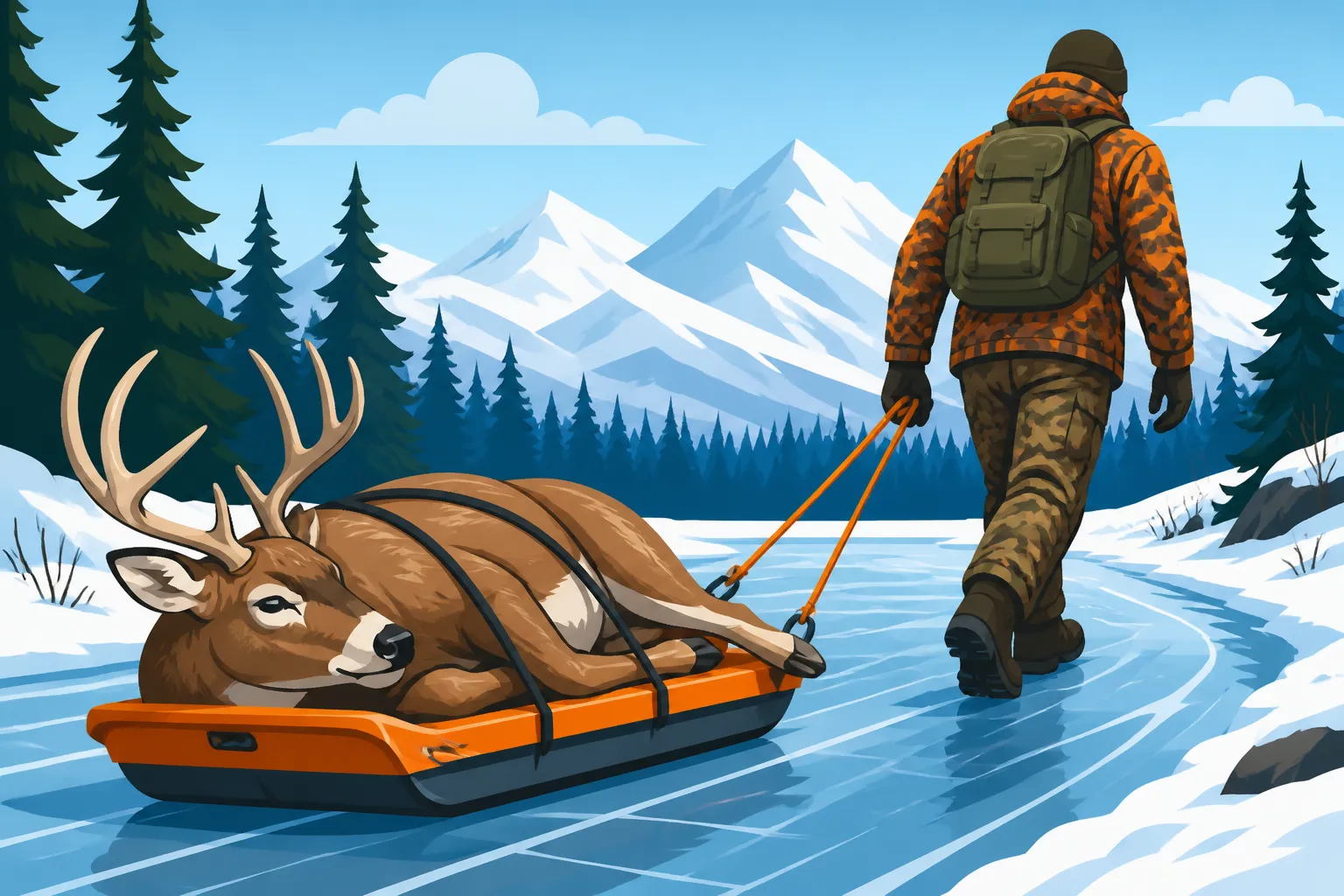
For the deer itself, a robust game sled is indispensable. Rigid plastic sleds are fantastic for moving deer over snow, but as mentioned, they can become brittle in extreme cold. Consider heavy-duty sleds made from durable, flexible high-density polyethylene (HDPE) that can withstand impacts without shattering. Some hunters even prefer heavy-duty canvas game bags or tarps, which can cradle the deer and conform to uneven terrain better, though they offer more friction. If you’re quartering the animal, a good internal or external frame backpack, like those from Stone Glacier or Kifaru, becomes your best friend. This allows you to carry meat out in sections, distributing the weight more evenly and reducing the drag factor significantly. For challenging terrain, a portable winch or a heavy-duty come-along can be a lifesaver, allowing you to move heavy loads with mechanical advantage, especially up hills or out of deep ravines.
Cold Weather Clothing and Safety
Layering is key for staying comfortable and safe during strenuous activity in the cold. Start with a moisture-wicking base layer to pull sweat away from your skin. Add insulating mid-layers, such as fleece or down, which you can shed or add as your exertion level changes. Your outer shell should be waterproof and windproof to protect against the elements. Don't forget insulated, waterproof gloves or mittens that allow enough dexterity for handling ropes, and always carry spares. A warm hat is crucial, as a significant amount of body heat is lost through the head.
Beyond clothing, a comprehensive safety kit is non-negotiable. This should include a reliable fire starter (matches, lighter, fire steel), a basic first-aid kit with an emergency blanket, a whistle, a fully charged cell phone (expect limited service in many Alberta hunting areas), and ideally, a satellite communication device like an inReach or Zoleo. High-energy snacks and a thermos of hot water or soup will help replenish calories and rehydrate. Remember, getting a deer out is physically demanding, and you need to keep your energy levels up. For detailed advice on staying safe in frigid conditions, check out our guide on Hunting Alberta Winter Weather Safely.
Here’s a quick comparison of common game retrieval methods on frozen trails:
| Method | Pros | Cons | Best Use |
|---|---|---|---|
| Game Sled (Plastic) | Low friction on snow/ice; protects meat; keeps hide clean | Can be bulky; may crack on hard impacts; requires cleared path | Packed snow trails, gentle slopes, multiple hunters |
| Heavy-Duty Tarp/Bag | Flexible; lightweight; good for uneven ground; protects meat | More friction than sled; can snag; less rigid structure | Rocky or brushy areas, solo hunters, short distances |
| Quartering into Pack | Distributes weight evenly; easier on rough terrain; hands-free | Time-consuming; requires knowledge of butchering; heavier pack weight | Long distances, steep terrain, solo hunters, minimal trail access |
| Game Cart (Wheeled) | Excellent for cleared trails; less friction than dragging | Wheels struggle on deep snow/ice; difficult on uneven ground/slopes | Cleared frozen roads, well-maintained trails with minimal snow/ice |
| Vehicle Assist (ATV/Snowmobile) | Fastest; least physical exertion (if legal) | Requires legal access; can get stuck; potential for damage to game/trail | Designated trails, open fields, when legal and safe |
Strategies for Efficient Extraction
Once you’ve got your deer down and your gear sorted, the real work begins. Getting a deer out on a frozen trail requires more than just brute strength; it demands smart planning, technique, and often, a little mechanical ingenuity.
Solo Hunter Techniques
If you find yourself alone after a successful hunt, quartering the animal is almost always the most sensible approach, especially if you’re any significant distance from your vehicle or facing tough terrain. This involves field dressing the deer, then systematically removing the four quarters, backstraps, and tenderloins. You can even bone out the meat to reduce weight further. While it takes time, it transforms a single, unwieldy mass into manageable loads that can be carried in a good backpack. This method significantly reduces the physical strain and allows you to navigate icy, uneven trails with much greater control and safety. Be sure to protect the meat from freezing solid too quickly or getting freezer burn; our guide on Meat Care in Alberta's Cold and Warm Swings offers some excellent tips.
Even if you opt not to quarter, a game sled or a sturdy tarp can still be utilized. The trick for solo hunters is to use short pulls and frequent rests. Attach a pulling harness to your body, distributing the weight across your shoulders and hips, rather than just your arms. This frees up your hands for balance and navigating obstacles. Before you even start, take a moment to assess your route. Look for the path of least resistance, avoiding steep inclines or areas with obviously thicker ice or dense brush. Using a mapping tool like GoHunt or checking satellite imagery before your hunt, as detailed in Scouting With Satellite Imagery in Alberta, can help you identify potential retrieval routes ahead of time. Sometimes, even adding a piece of stiff conduit or a sturdy branch across the front of the sled can act as a handle, allowing you to push rather than just pull, engaging different muscle groups.
Team Recovery Tactics
Hunting with a partner or a group significantly lightens the load and enhances safety. When tackling a frozen trail, multiple hands make short work of most obstacles. For dragging a whole deer, two people can each take a rope on either side of the deer’s head or sled, allowing for better steering and more distributed pulling power. If you have three or more, one person can push from the rear while others pull, providing a coordinated effort that’s much more efficient than a single person struggling.
Communication is absolutely vital in a team recovery scenario, especially on slippery ground. Call out hazards like icy patches, hidden stumps, or dips in the trail. Work together to lift the deer over obstacles or to navigate tight turns. Consider using long ropes and having team members spread out, especially on steep sections, to provide more leverage and prevent the deer from sliding back down uncontrollably. One person can lead, scouting the immediate path, while the others focus on the pull. This collective effort not only makes the physical task easier but also reduces the risk of injury for any single individual, transforming a potential struggle into a shared accomplishment.
Leveraging Mechanical Advantage
Sometimes, human power simply isn't enough, or the distance is too great. This is where mechanical advantage comes into play. If legal and safe for the specific WMU and terrain, a quad, side-by-side, or even a snowmobile can be an incredible asset. Many frozen trails in Alberta, especially old forestry roads or well-used cutlines, are accessible by these vehicles. However, it's critical to know the local regulations regarding Quad and Side-by-Side Rules on Crown Land to avoid fines or damaging the environment. Always drive slowly and cautiously on frozen surfaces, as traction can be unpredictable, and a heavy deer in tow can affect vehicle stability.
For areas where vehicles can't go, but you still need a boost, portable winches or come-alongs are invaluable. These devices use a geared mechanism to multiply your pulling force, making it possible to move surprisingly heavy loads with minimal effort. They are particularly useful for pulling a deer up a steep embankment, out of a gully, or across a difficult section of ice. You’ll need a sturdy anchor point (a strong tree, for example) and durable straps. A block and tackle system, using pulleys and ropes, can also provide significant mechanical advantage, allowing you to move heavy game with a fraction of the force. Learning how to properly set up these systems beforehand can save immense time and energy when you're out in the field. Remember, the goal is to work smarter, not harder, especially when the cold is biting at your heels.
Post-Recovery Considerations
You’ve done it! The deer is out, loaded, and you’re headed back to camp or home. But the work isn't quite finished. There are still a few crucial steps to ensure your gear is ready for next time and, most importantly, that the precious meat you worked so hard for is properly cared for.
Meat Care in Sub-Zero Temperatures
One of the unique advantages of hunting in Alberta's deep cold is that nature provides a ready-made refrigeration system. However, this also presents its own challenges for meat care. While the cold will prevent spoilage, you don't want the meat to freeze solid too quickly, as this can make processing difficult and affect the final quality. If you're going to a processor, a partial freeze is fine, but if you're butchering it yourself, you want it pliable. After retrieving your deer, try to get it to a cooler location, perhaps a garage or an unheated shed, where it can slowly chill. Avoid direct exposure to sunlight, even in cold temperatures, as this can cause the exterior to warm up and spoil.
If the deer has been quartered and packed out, ensuring the meat is clean and free of dirt, hair, or debris is paramount. Place quarters in breathable game bags to protect them while allowing air circulation. When transporting, try to keep the meat elevated or separated from other items in your vehicle to prevent it from resting in any pooled blood or moisture. For longer drives, especially if the temperature might fluctuate, consider placing game bags in large coolers to maintain a consistent cold temperature. Don't forget that if you harvested in certain WMUs, there are Alberta's Mandatory CWD Submission WMUs requirements, so be prepared to submit the head.
Gear Maintenance and Personal Recovery
After all that exertion, it’s easy to just dump your gear and collapse. But taking a little time for post-hunt maintenance will pay dividends. Your game sled, ropes, and any other retrieval tools will likely be covered in blood, dirt, and possibly ice. Clean them thoroughly as soon as possible. Rinse sleds and tarps with cold water, scrub away any blood, and allow them to air dry completely to prevent mildew and rust on metal components. Check ropes for fraying or damage and store them properly.
Equally important is your personal recovery. You’ve just burned a tremendous amount of calories and likely pushed your muscles to their limits. Get out of your sweaty layers as soon as you can, take a hot shower, and rehydrate. Replenish your energy with a good meal. Inspect your feet for any blisters or frostnip. Taking care of yourself after the hunt is just as important as during, ensuring you're ready and eager for your next adventure in the Alberta wilderness. It’s tough work, but the venison in the freezer and the memories made are always worth it.
Disclaimer
Please note that hunting regulations, seasons, and access rules in Alberta can change. Always consult the most current Alberta Hunting Regulations Guide and relevant government websites before planning any hunt. This article provides general information and recommendations, but it is the hunter's responsibility to ensure compliance with all laws and regulations.