What to Do If You Get Stuck in the Bush
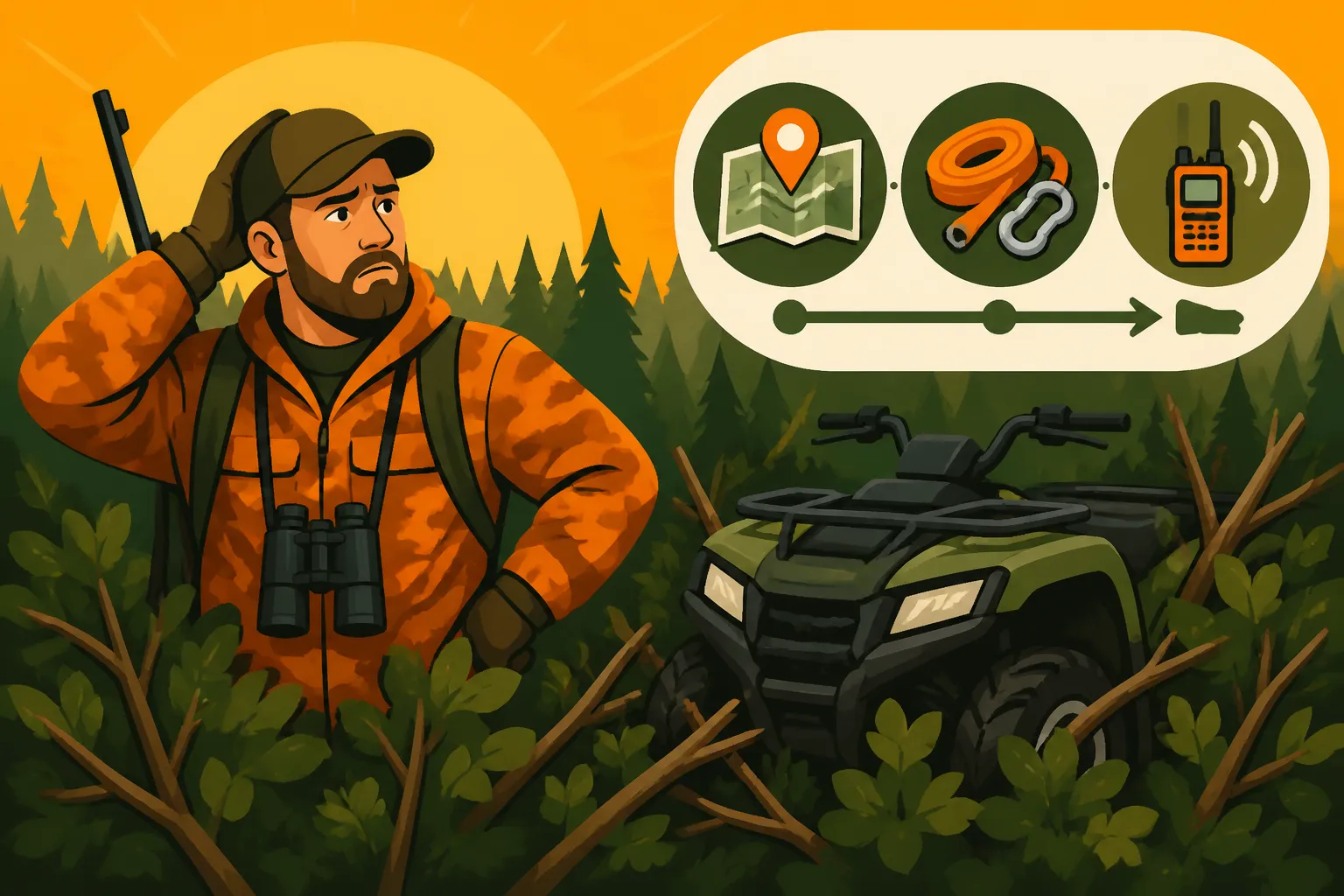
We’ve all been there, haven't we? That gut-wrenching moment when your tires spin, the engine revs, and your truck or quad just sinks. Whether it’s that deceptively shallow-looking mud puddle on an old logging road, a patch of hidden muskeg, or a snowdrift that seemed traversable, getting stuck in Alberta’s bush can quickly turn a great hunting trip into a survival situation. This guide is all about helping you prevent that nightmare, and more importantly, what to do when it inevitably happens, so you can get unstuck safely and continue your adventure.
Proactive Planning: Avoiding the Sticky Situation Entirely
Let's be honest, the best way to deal with getting stuck is to never get stuck in the first place. This isn't always possible in Alberta's diverse and often challenging terrain, but a solid foundation of preparation can drastically reduce your odds of ending up in a bind. It's about respecting the land, knowing your limits, and having the right tools for the job.
Vehicle and Gear Readiness
Before you even think about hitting those backcountry trails or remote cutlines, your vehicle needs to be in tip-top shape. This isn't just about a fresh oil change; it's about anticipating the rigors of the hunt. Are your tires in good condition and suitable for off-road travel? All-terrains or mud-terrains are a must if you're venturing beyond gravel roads. Check your winch cable (if you have one) for frays, ensure your tow straps aren't sun-rotted, and make sure your Hi-Lift jack isn't seized up from last season.
Think about the conditions you'll be facing. If you’re heading out for Hunting Alberta Winter Weather Safely, you’ll need a robust Winter Truck Kit for an Alberta Hunt that includes things like chains, a heavy-duty shovel, and perhaps a recovery board like Maxtrax. For early fall hunts, where the ground can still be soft and boggy, good mud tires and a reliable winch are your best friends. Always carry a comprehensive toolkit, jumper cables, and spare fluids. It sounds basic, but you’d be surprised how many hunters forget these crucial items in the excitement of the season.
Mastering Your Route and Terrain
Knowledge is power, especially when you're driving into unfamiliar territory. Before you leave home, spend time poring over maps and satellite imagery. Tools like GoHunt are invaluable for this, allowing you to scout potential access points, identify tricky sections of trail, and pinpoint areas to avoid. Look for old logging roads, seismic lines, and pipeline rights-of-way, but be wary – these often have unmaintained sections prone to washouts, deep ruts, or overgrown vegetation that can hide trouble.
When Scouting With Satellite Imagery in Alberta, pay attention to vegetation changes that might indicate muskeg or swampy ground. Darker green, dense areas often mean water. Look for historical imagery too, if available, to see how conditions change seasonally. Once you’re on the ground, always walk new or questionable sections of trail before driving them. What looks like solid ground from inside your truck can often be a bottomless pit of gumbo or a deceivingly deep water crossing. Understanding Quad and Side-by-Side Rules on Crown Land is also critical, as some areas have restrictions on where you can operate.
Essential Communication and Emergency Gear
Getting stuck is bad, but getting stuck without a way to call for help is far worse. Cell service quickly disappears once you venture off main highways and into Alberta's vast wilderness. A satellite messenger or satellite phone is non-negotiable for serious backcountry hunters. Devices like the Garmin inReach or Zoleo offer two-way communication and SOS capabilities, allowing you to send messages to loved ones or directly contact rescue services, even when miles from the nearest cell tower. We’ve covered Satellite Messengers in the Backcountry in detail, and it’s a read you absolutely need to check out.
Beyond communication, always have a small survival kit with you, even if you’re just going for a day hunt. This includes a first-aid kit, a fire starter, extra warm layers (even in summer, temperatures can drop), a headlamp, and high-energy snacks and water. Remember, if you get stuck, you might be out there for longer than planned. Prepare for the unexpected.
The Immediate Aftermath: What to Do When You Realize You're Stuck
That sickening lurch, the smell of burning rubber, the sudden halt – you’re stuck. Panic is a natural first reaction, but it’s the absolute worst thing you can do. Take a deep breath. Assess the situation calmly. Your immediate actions can make the difference between a quick recovery and a long, cold night.
Prioritize Safety and Assess the Situation
The very first thing you need to do is stop. Don't keep spinning your tires and digging yourself deeper. Seriously, resist the urge. That's how many minor stuck situations become major recovery headaches. Turn off your engine to conserve fuel.
Once you've stopped, get out of your vehicle (safely!) and assess the situation. Is the ground around you stable? Is there a risk of your vehicle sliding further? What exactly are you stuck in? Mud? Snow? Sand? A rock crevice? This assessment will inform your recovery plan. Look for potential anchor points like sturdy trees if you have a winch. Identify the path of least resistance – sometimes you can reverse out, other times it’s forward.
Consider your surroundings. Are you in a remote area? Is the weather changing? How much daylight do you have left? These factors will influence how long you can safely attempt self-recovery before needing to call for external help. Remember, your safety and the safety of your hunting partners are paramount. No trophy is worth a serious injury.
Conserve Resources and Stay Calm
If you find yourself truly stuck and a quick self-recovery isn't an option, conserving your vehicle's resources and your personal energy is crucial. If it's cold, starting the vehicle periodically for warmth is acceptable, but be mindful of your fuel gauge. It's often better to bundle up in extra layers and use a portable heat source or build a small fire (if safe and legal) rather than idling your vehicle for hours.
Staying calm also extends to your mental state. Frustration can lead to bad decisions. Take a break, eat a snack, and re-evaluate if you feel yourself getting stressed. Talk through the options with your hunting partners. Sometimes, a fresh pair of eyes can spot a solution you missed. Remember, you prepared for this (or you should have!), and you have the tools and knowledge to handle it. This is where having Emergency Plans in Alberta's Backcountry can really pay off, detailing who to contact and what information to provide.
Self-Recovery Techniques: Getting Yourself Unstuck
Alright, you've assessed the situation and kept your cool. Now it’s time to put those recovery tools to work. Remember, patience and methodical effort are your best allies here. Rushing things will only make it worse.
Traction Aids and Digging Your Way Out
Often, the problem is a lack of traction. Your tires are just spinning on mud, snow, or loose gravel. This is where shovels and traction aids become invaluable.
Shoveling: A good, sturdy shovel is a hunter's best friend. Dig out the material in front of (or behind) your drive tires. Try to create a ramp that gives your tires something to grip. Clear any debris, rocks, or branches that might be wedged under your vehicle, especially around the axles and differentials. High-centering on a berm or rock is a common way to get stuck.
Traction Boards: These are incredible. Whether you have branded recovery boards like Maxtrax or simpler, heavy-duty mats, they provide instant traction. Wedge them firmly in front of or behind your drive tires, ensuring they have solid purchase on the ground and extend out to solid terrain. Gently apply throttle and try to drive up and over them.
Makeshift Traction: No fancy boards? Look around. Branches, rocks, even your floor mats can offer some temporary grip. Just be mindful that using floor mats can ruin them, and anything you put under your tires can become a projectile if not properly placed. Use caution.
Winching and Tow Straps: The Heavy Hitters
When digging and traction boards aren't enough, it's time for the big guns. Winches and tow straps are powerful tools, but they can be dangerous if not used correctly. Always refer to your equipment's instructions and follow safe recovery practices.
Winching: If you have a vehicle-mounted winch, you're in a good position.
- Identify a strong anchor point: A large, healthy tree (ensure you use a tree saver strap to protect the tree bark!), another vehicle, or a solid rock. Never wrap a steel cable directly around a tree.
- Unspool the cable: Pull out enough cable to reach your anchor point, keeping tension on the line.
- Attach securely: Use a shackle to connect your cable hook to the tree saver strap or another recovery point.
- Engage the winch: With your vehicle in neutral (or sometimes low gear, depending on the situation and winch type) and the steering wheel straight, slowly start winching. Keep an eye on the cable and the anchor point. Ensure everyone is clear of the winch line – a snapping cable is incredibly dangerous.
- Stop when free: Once your vehicle is on solid ground, carefully disengage the winch and re-spool the cable neatly.
Tow Straps: If you have another vehicle with you, a kinetic tow rope or a heavy-duty tow strap can work wonders.
- Use proper recovery points: Never attach a tow strap to a bumper, axle, or hitch ball. Use dedicated recovery points on both vehicles (e.g., frame-mounted tow hooks or shackles).
- Clear the area: Ensure no one is between the two vehicles or near the strap.
- Gentle pull: The recovery vehicle should pull gently at first. For kinetic ropes, a slight running start can help, as they stretch and recoil, generating a powerful tug. For standard tow straps, a smooth, consistent pull is safer. Avoid jerky movements.
Important Note on Safety: Always wear gloves when handling winch cables. Ensure bystanders are at least 1.5 times the length of the recovery strap or cable away from the operation area. Flying debris or snapping cables can be lethal.
| Recovery Method | Pros | Cons | Ideal Situation |
|---|---|---|---|
| Shoveling | Basic tool, minimal risk | Labor intensive, slow, limited effectiveness in deep mud/snow | Minor stuck, high-centering, clearing path |
| Traction Boards | Simple, effective, quick | Can be costly, only works if vehicle isn't too deeply stuck | Mud, sand, snow, rocky terrain |
| Winching | Powerful, can recover from deep stuck | Requires winch & anchor, dangerous if misused, slow | Deep mud, steep inclines, remote areas |
| Tow Straps | Effective with another vehicle, faster than winching | Requires second vehicle & recovery points, dangerous if misused | Vehicle-to-vehicle recovery on relatively flat ground |
| Airing Down Tires | Increases tire contact patch, improves traction | Requires air compressor for re-inflation, can damage tires if too low | Sand, soft mud, snow, tricky rocks |
When to Air Down Your Tires
This is a trick many experienced off-roaders use, but it requires an air compressor to re-inflate your tires later. By reducing the air pressure in your tires (e.g., from 35 PSI down to 15-20 PSI), you increase the tire's footprint on the ground, effectively spreading the vehicle's weight over a larger area and providing more traction. This can be particularly useful in sand, soft mud, or deep snow.
However, be cautious. Driving too fast or making sharp turns with aired-down tires can cause them to de-bead (come off the rim), which is a whole new problem. Only air down if you have a reliable way to re-inflate, and only drive at very slow speeds until you're back on solid ground.
Calling for Help: Knowing When to Throw in the Towel
Sometimes, despite all your preparation and best efforts, the bush wins. Recognizing when you're truly beyond self-recovery is a sign of wisdom, not weakness. Don't let ego put you or your partners at greater risk.
Recognizing Your Limits
There comes a point where continued attempts at self-recovery become counterproductive, dangerous, or simply exhaust your resources. This could be due to:
- Deeply stuck conditions: You're high-centered, in a deep bog, or your vehicle is leaning precariously.
- Lack of suitable anchor points: No strong trees for miles, or the ground is too soft to hold another vehicle.
- Failing light or worsening weather: Trying to recover in the dark or a blizzard is incredibly risky.
- Mechanical failure: Something broke during the initial stuck or a recovery attempt.
- Injury: Someone got hurt during the process.
If any of these situations arise, it’s time to stop and consider external help. Prolonging the effort can lead to more damage to your vehicle, more serious injury, or a longer, colder night stuck out in the wilderness. If you’re hunting Moose Hunting Alberta's Boreal Forest or deep in Elk Hunting Alberta's Foothills, help can be hours, if not a full day, away.
Initiating Emergency Communication Protocols
This is where your satellite messenger or phone becomes your lifeline. Follow your pre-established Emergency Plans in Alberta's Backcountry.
- Activate SOS or contact your pre-arranged emergency contact: If it's a true emergency (injury, life-threatening situation), activate the SOS function on your satellite messenger. This sends your exact coordinates and a message to a 24/7 monitoring centre, which will dispatch local emergency services.
- Provide clear, concise information: If contacting a friend or family member, tell them:
- Your precise location (GPS coordinates are essential, GoHunt or your device will provide them).
- What happened (e.g., "stuck in mud," "vehicle high-centered").
- The condition of everyone in your party (injuries? medical conditions?).
- The type of vehicle you have.
- How much fuel and food/water you have.
- Any visible landmarks.
- What resources you have (e.g., "winch broken," "no shovel").
- Stay with your vehicle: This is a critical rule. Your vehicle is much easier to spot from the air or ground than a lone person. It also provides shelter and some supplies. Do not wander off looking for help unless it's an absolute last resort and you have a clear, safe plan.
Waiting for Rescue Safely
Once you’ve called for help, your job is to wait safely.
- Stay warm and dry: Put on all your extra layers. Hunker down in the cab of your truck, or set up a tarp shelter if you have one. If possible and safe, build a fire.
- Conserve energy: Don't waste energy fretting or continuing futile recovery attempts.
- Signal your position: If you have a signal mirror, whistle, or brightly colored tarp, have it ready. At night, a flashlight or headlamp can be used to signal. If a search aircraft is overhead, use your vehicle’s lights.
Getting stuck is a quintessential part of hunting in Alberta. From a forgotten Hunting a Cutline Intersection for Whitetails to a flooded Hunting a Frozen Slough Crossing, the potential for trouble is always there. By preparing properly, acting calmly, and knowing your limits, you can turn a potentially dangerous situation into just another story to tell around the campfire.
Disclaimer
The information provided in this guide is for general informational purposes only and does not constitute professional advice. Hunting and vehicle recovery involve inherent risks, and it is crucial to exercise caution and good judgment. Always adhere to local laws, regulations, and safety guidelines. The author and publisher are not responsible for any injury, damage, or loss that may result from following the advice contained herein.