Hunting a Burned-Over Boreal Block
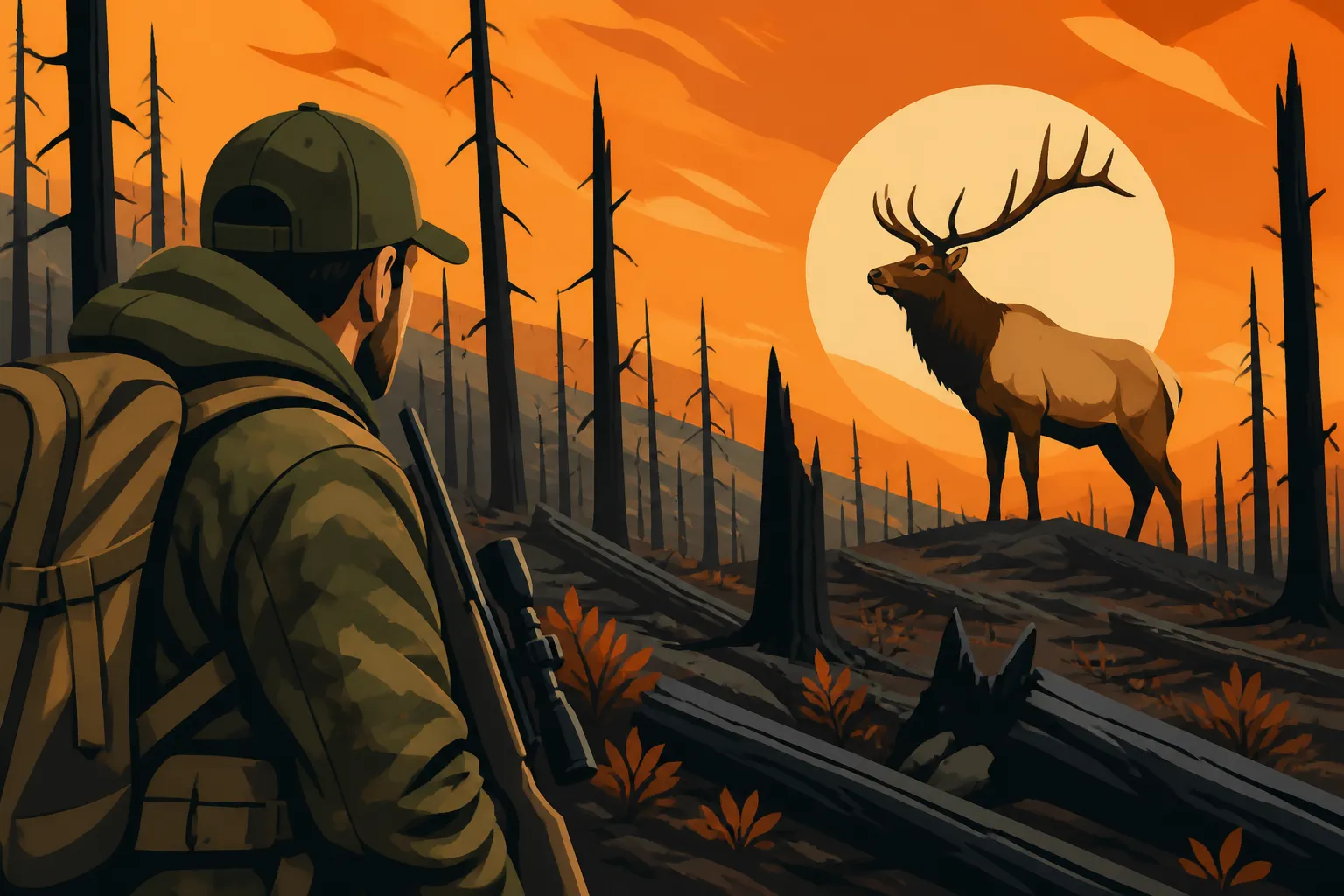
Walking into an area recently consumed by wildfire can feel disheartening. What was once vibrant timber or dense undergrowth now often looks like a stark, black-and-white landscape of charred trunks and barren ground. Many hunters might assume these areas are devoid of game, written off as unproductive for years to come. But that couldn't be further from the truth. This guide will reveal why these seemingly desolate zones in Alberta's boreal forest are, in fact, incredibly productive hunting grounds, and how you can effectively hunt for moose, deer, and bears within them.
Why Burned Blocks Are Hunting Hotspots
It’s easy to look at a burned-over block and think, "Nothing could possibly live here." The truth is, while the immediate aftermath of a fire can be devastating, nature has an incredible way of regenerating, and often, with a renewed vigor that attracts wildlife like a magnet. Far from being dead zones, these areas often become critical habitats, especially for big game.
Initial Post-Fire Changes and New Growth
The first thing to understand is the immediate impact of fire. While the fire itself is destructive, it also acts as a natural reset button. It clears out old, unproductive vegetation, opens up the forest canopy, and introduces a flood of sunlight to the forest floor. This exposure to sunlight, combined with the nutrient-rich ash from burned trees and undergrowth, creates a perfect seedbed for new life. Within months, sometimes even weeks, you’ll start to see a flush of pioneering plant species. These can include fireweed, various grasses, willow, aspen, and other deciduous shrubs, all of which are incredibly palatable and nutritious for browsing animals. Think of it like a natural clear-cut, but with an added boost of soil fertility. This rapid return of highly digestible forage is a huge draw.
Initially, game animals might skirt the edges or move through quickly, but as soon as that green shoots up, they're in there. Moose, for instance, will be drawn to the new willow and aspen growth, while deer will browse on fireweed and other tender shoots. This immediate response is why even relatively young burns, say 1-3 years old, can be fantastic hunting spots. The ground might still be black, and there will be plenty of deadfall, but underneath, a vibrant new food source is exploding. This concept of rapid regeneration after a disturbance is a key factor in understanding "How Wildfire Changes Game Range".
Habitat Diversity and Edge Effect
One of the most valuable aspects of a burned-over area is the creation of incredibly diverse habitat and exaggerated edge effects. Wildfires rarely burn uniformly. You'll find pockets of unburned timber, often in low-lying areas, along creek bottoms, or where natural firebreaks existed. These unburned islands become critical cover for animals, providing shelter from the elements and a sense of security. Surrounding these islands are the regenerating burned areas, offering abundant food. The transition zone between the unburned pockets and the regenerating burn is what we call an "edge," and it's where wildlife thrives.
Imagine a large burn block that has unburned fingers of spruce or pine running through it. These fingers offer thermal cover and bedding areas. Just outside of them, the new growth provides incredible forage. Animals can move easily between food and cover, minimizing their exposure to predators and providing them with everything they need in a concentrated area. This natural mosaic is often far more productive than a homogenous, mature forest. When you're "Scouting With Satellite Imagery in Alberta", look specifically for these unburned islands and the transition zones around them – they're often goldmines. The complex interplay of open areas, deadfall, and remaining timber provides ideal conditions for animals to feed, bed, and travel securely.
Nutrient Cycling and Forage Quality
The intense heat of a wildfire does more than just clear land; it fundamentally alters the soil chemistry, leading to enhanced nutrient cycling. The ash from burned vegetation releases a surge of essential minerals back into the soil, acting as a natural fertilizer. This nutrient-rich environment means the new plants that grow are often more succulent, more palatable, and have a higher nutritional value than the vegetation that grew there before the fire.
Forage quality is paramount for big game animals looking to put on weight for the winter or recover from the rut. A moose, for example, needs high-quality browse to sustain its massive body, and the tender, nutrient-dense shoots of willow and aspen found in a burn provide exactly that. Deer benefit similarly, thriving on the increased availability of diverse, vitamin-rich plants. This higher nutritional value directly contributes to better animal health, increased reproductive success, and often, larger body and antler sizes. It's not uncommon to hear tales of hunters finding "Why Burned Ground Grows Big Bulls" in these zones, precisely because of this nutrient-rich buffet. The flush of new growth provides a powerful attractant that can hold game for years after the initial burn.
Scouting and Understanding the Landscape
Successfully hunting a burned-over boreal block in Alberta is less about luck and more about meticulous scouting and a deep understanding of how animals use these unique landscapes. The challenges are distinct – widespread deadfall, lack of traditional cover, and often, a confusing maze of regenerated growth. However, with the right approach, these areas can be incredibly predictable.
Using Satellite Imagery and Topographic Maps
Before you even step foot in the area, modern technology can be your best friend. Utilize tools like GoHunt's mapping features or other satellite imagery applications to get an aerial view of the burn. Look for the fire's perimeter, but more importantly, identify variations within the burn itself. Areas that show as darker green on a satellite image might indicate unburned pockets or areas of more advanced regrowth, which are prime cover. Lighter, more open areas often signify heavier burns and thicker deadfall.
Topographic maps will reveal elevation changes, creek bottoms, and ridge lines that might have influenced the fire's path and subsequently, where unburned sections or specific types of regrowth might be concentrated. Animals still use terrain features for travel, even in a burn. Look for benches, saddles, or drainages that offer easier passage. Plot potential access points, note areas of significant deadfall that might impede travel, and identify any remaining water sources. "Reading an Alberta WMU Map Before You Go" is always essential, but in burned areas, understanding the contours and existing features through satellite imagery is an even greater advantage. This initial digital reconnaissance can save you countless hours of unproductive walking.
On-the-Ground Reconnaissance and Reading Sign
Once you’ve done your digital homework, it’s time to hit the ground. Be prepared for slow going due to immense deadfall, which can be exhausting to navigate. Wear sturdy boots and bring trekking poles. On-the-ground scouting is crucial to confirm what you saw on the maps and to find fresh sign. Look for game trails – animals will create distinct paths through the deadfall and dense regrowth to minimize effort. These trails often connect unburned cover to feeding areas.
Pay close attention to browse lines and fresh droppings. What are the animals eating? Are they targeting the new aspen shoots, willow, or specific forbs? This tells you about the quality of the forage and where they are concentrating their feeding efforts. Look for rubs and scrapes, especially during the rut. In these open environments, even a small patch of thicker regrowth can serve as a bedding area. Search for beds where animals have sought shelter from wind, sun, or to simply get off their feet. Identifying these critical locations – food, water, cover, and travel routes – is paramount. This deep dive into animal behavior is key to understanding, for example, "What Moose Eat Through the Year" in these specific conditions.
Navigating Deadfall and Regrowth
The biggest physical challenge in hunting a burned block is often the deadfall. Depending on the severity and age of the burn, you could be dealing with chest-high piles of tangled logs and branches. This makes travel slow, noisy, and physically demanding. However, this also works to your advantage: it deters other hunters, and animals are often accustomed to navigating it, creating those tell-tale trails.
The regenerating growth can also be incredibly dense. Young aspen and willow stands can be so thick that visibility is reduced to mere feet. This requires a different kind of hunting strategy, often relying more on sound and short-range visibility. When navigating, always prioritize quiet movement. Take small, deliberate steps, testing each foot placement before committing your weight. Use the wind to your advantage, moving into it or across it to avoid detection. Sometimes, a seemingly impassable thicket of deadfall or dense regrowth acts as a natural funnel or security cover, pushing animals to more predictable travel routes. Recognizing these natural barriers and funnels is key to predicting game movement. This is similar to strategies used when hunting specific features like "Hunting a Boreal Muskeg Edge", where obstacles dictate animal flow.
Effective Hunting Strategies for Burned Blocks
Hunting burned-over boreal blocks requires a blend of patience, persistence, and specialized tactics. The openness in some areas and the extreme denseness in others means you can't just walk in and expect success with conventional methods. Adaptability is the name of the game.
Still-Hunting and Glassing Techniques
Given the often-open nature of burned areas, especially in the first few years, still-hunting and glassing become incredibly effective. Still-hunting involves moving very slowly, taking a few steps, then pausing for several minutes to observe and listen. Use binoculars to scan ahead, not just for animals, but for subtle clues like the flick of an ear, a patch of hide, or an antler tine. The black background of charred timber can make animals stand out, but it can also make them incredibly hard to spot if they're still.
Find an elevated vantage point if possible – an unburned ridge, a large rock outcrop, or even a sturdy, partially burned tree (exercise extreme caution if considering climbing anything potentially compromised by fire). From here, systematically glass every patch of new growth, every shadowed pocket, and every potential travel corridor. Use a good pair of binoculars, like those from GoHunt's recommended gear lists, to pick apart the details. Animals will often feed in the open or move cautiously, so patience is key. Early morning and late evening are prime times, as animals are most active during these cooler periods. This is an excellent way to cover ground quietly and efficiently when you're targeting big game in these open-ish environments.
Ambush Points and Travel Corridors
Even in a seemingly chaotic burn, animals are creatures of habit. They will seek the path of least resistance. This means they'll utilize natural travel corridors, which become excellent ambush points. Look for pinch points where unburned timber narrows down, pushing animals into a specific area. Creek beds, old logging roads, or even distinct game trails through dense deadfall are all high-potential travel routes. Think about how animals would move from a bedding area (often an unburned island or dense patch of regrowth) to a feeding area (an open, regenerating zone).
Scout these corridors for fresh sign. If you find consistent tracks and droppings, set up downwind of the anticipated travel route. Consider using a portable ground blind or simply finding natural cover behind a large log or clump of unburned vegetation. If the area has old seismic lines or cutlines, these can also serve as major arteries for animal movement. Learning how to identify and hunt these specific features, similar to "Hunting Moose Along Cutlines and Seismic Lines", is directly applicable to burned blocks where such features are often revealed or emphasized by the fire. Being patient and letting the animals come to you in these predictable zones can be extremely productive.
Calling and Scent Management
Calling can be highly effective in burned areas, especially for moose and elk, because the open nature of the landscape allows sounds to carry further. For moose, cow calls and bull grunts can be deadly, particularly during the rut. If you hear a bull respond, gauge his direction and try to close the distance while remaining hidden. For elk, bugling can challenge a dominant bull or attract cows. Learn about "Calling Moose in Alberta's Boreal Forest" for specific techniques that transfer well to these landscapes.
Scent management is always crucial, but perhaps even more so in burns. The disturbed ground and charred vegetation can often mask human scent less effectively than a dense, natural forest. Use scent-eliminating sprays, wash your hunting clothes in scent-free detergent, and pay careful attention to wind direction. Always try to approach your chosen ambush point or still-hunt with the wind in your face or quartering. The more you can minimize your presence, the greater your chances of success. A slight change in wind direction can betray your position instantly in an open burn.
Species-Specific Considerations in Burned-Over Areas
While the general principles of hunting a burned block apply across the board, tailoring your approach to the specific species you're pursuing will significantly increase your odds. Each animal interacts with this regenerated landscape in its own unique way.
Targeting Moose and Elk
Moose, being large browsers, absolutely thrive on the explosion of new deciduous growth in burned areas. Aspen, willow, and birch shoots are their primary food sources, and burns provide them in abundance. As mentioned, "Moose Hunting Alberta's Boreal Forest" often means looking for areas with plentiful browse. You’ll find moose concentrated in areas with a mix of new growth for feeding and unburned pockets or dense regenerated stands for cover. They prefer areas that are wet, so look for burns that include boggy sections, beaver ponds, or creek bottoms.
Elk, while perhaps less common in the deep boreal, will utilize burned areas where they interface with their traditional foothill or transitional forest range. They are grazers and browsers, so they'll be drawn to the new grasses and forbs, as well as the deciduous shoots. During the rut, calling can be very effective in these more open environments. Both moose and elk will create significant travel trails through deadfall, making these corridors prime spots for ambushing. Consider scouting areas that still retain water or have close proximity to unburned heavy timber for bedding.
Hunting Whitetail and Mule Deer
Both whitetail and mule deer will utilize burned blocks, though their patterns might differ. Whitetails are often found in the earlier stages of regeneration where dense thickets of young aspen, willow, and other shrubs provide both food and excellent bedding cover. They are masters of using even small pockets of cover for security. Look for them along the edges of the burn, near unburned islands, or in areas where the regrowth is particularly thick. Whitetails are adept at moving quietly through dense cover, so still-hunting slowly and meticulously scanning small openings is key. For more in-depth strategies, refer to "Whitetail Hunting in Alberta".
Mule deer, while typically associated with more open prairie or badlands environments, will also enter burned boreal blocks, especially if the burn opens up areas that were previously too dense. They often prefer more elevated positions within the burn, using the remaining standing timber or high points to survey their surroundings. Spot-and-stalk tactics can be very effective for mule deer in these more open areas. Pay attention to their preference for broken terrain and look for them utilizing natural benches and folds in the landscape within the burn.
Strategies for Black Bears
Black bears are one of the earliest beneficiaries of a wildfire, often moving into burned areas within a season or two. Their diet is highly opportunistic and varied, and burns provide an abundance of their favorite foods. In spring, they're drawn to the tender new growth of grasses, sedges, and forbs that flourish in the ash-rich soil. Later in the summer, berries like blueberries and saskatoons can explode in production in these open, sun-drenched areas, creating a literal bear magnet. "What Bears Eat in Spring" is directly tied to the quick regeneration in these zones.
Hunting black bears in burns often involves glassing open slopes or newly greened-up areas for feeding bears. If the burn is extensive and offers good visibility, finding a high vantage point and glassing for hours can be very productive. They will also use the same travel corridors as deer and moose, so setting up an ambush point can be effective. Consider bear baiting, where legal and appropriate, as the rich food sources in burns can make baiting even more attractive to local bear populations. "Black Bear Hunting in Alberta" often highlights the importance of good food sources, and burns are natural food factories for bears. You’ll frequently find them near the edges of burns, especially where there's still unburned timber for denning and escape cover.
Burn Age and Hunting Implications
The effectiveness of hunting a burned-over boreal block can also depend heavily on its age. A burn that's only 1-3 years old will look very different and offer different challenges and opportunities than one that's 5-10 years old, or even older. Understanding these changes helps tailor your hunting efforts.
Young Burns (1-4 Years Post-Fire)
In the immediate aftermath, say within the first year, a burn can still be quite desolate. While new growth starts almost immediately, the ground can be soft and black, and the smell of smoke might still linger. However, by year two and certainly by year three and four, these areas are often exploding with pioneer species. This includes a dense flush of fireweed, various grasses, willow, and aspen saplings.
Hunting Implications:
- Visibility: Can be excellent in some spots where the fire was intense, allowing for long-range glassing. Other areas will be choked with thick, young regrowth, limiting visibility.
- Deadfall: Expect extensive, often unstable deadfall, making travel slow and noisy.
- Game Species: Black bears are often the first to heavily utilize these areas for feeding on new growth. Moose will quickly move in for the willow and aspen. Deer will follow, using thicker regenerating patches for security.
- Strategies: Heavy emphasis on still-hunting and glassing from any available high points. Ambush points along prominent game trails become critical. Calling is effective because sound carries.
Mid-Age Burns (5-15 Years Post-Fire)
By this stage, the landscape has significantly transformed. The initial pioneer species have matured into dense thickets of deciduous growth. Aspen and willow can form impenetrable walls, often 10-20 feet tall. The deadfall will have started to break down, but it can still be significant and treacherous, especially under the dense new growth.
Hunting Implications:
- Visibility: Severely limited in most areas due to dense regrowth. Finding small openings or game trails is paramount.
- Deadfall: Still present, but often more stable and partially hidden by the new forest. Navigation remains difficult.
- Game Species: These are prime moose and deer habitats. The dense cover provides excellent bedding and security, while the mature deciduous growth offers abundant browse. Elk will also use these areas if suitable habitat is nearby.
- Strategies: This is where you focus heavily on finding and hunting game trails and subtle openings. Still-hunting becomes a meticulous, slow process, relying heavily on sound and scent. Drive hunts can be effective if done safely and with enough hunters to cover sections of the dense cover. Calling remains strong, but you might need to get closer for animals to hear you through the thickets. You're essentially hunting a regenerating forest, which shares many characteristics with a large "Spring Bear Hunting Alberta's Cutblocks".
Older Burns (15+ Years Post-Fire)
At this point, the burn is transitioning into a mature regenerating forest. Some of the deadfall may have completely decomposed, and larger deciduous trees might be establishing themselves. Conifers might be starting to re-establish, especially in previously unburned pockets or along the edges.
Hunting Implications:
- Visibility: Can vary greatly. Some areas might open up as trees mature, while others could still be very dense.
- Deadfall: Much less of an obstacle, though some large logs might remain.
- Game Species: Still good for moose, deer, and bear, but the habitat might start to become more uniform again, potentially spreading animals out more.
- Strategies: Hunting becomes more akin to traditional forest hunting. Still-hunting and tracking are still viable, but the unique advantages of a fresh burn begin to fade.
| Burn Age (Years Post-Fire) | Key Characteristics | Primary Game Attractants | Hunting Strategy Focus |
|---|---|---|---|
| 1-4 (Young) | Charred ground, abundant deadfall, rapid new green flush | Fireweed, grasses, young willow/aspen, nutrient-rich soil | Glassing, still-hunting, ambush points along trails, calling. |
| 5-15 (Mid-Age) | Dense deciduous thickets, moderate deadfall decay | Mature willow/aspen, diverse browse, security cover | Still-hunting dense cover, tracking, ambush pinch points, drive hunts (with caution). |
| 15+ (Older) | Transitioning to mature forest, reduced deadfall | Larger browse, re-establishing conifers, mixed habitat | More traditional forest hunting, tracking, scouting for new disturbances. |
Hunting a burned-over boreal block in Alberta is a truly unique experience. It offers a glimpse into nature's resilience and provides exceptional opportunities for the patient and well-prepared hunter. Don't be deterred by the initial desolate appearance; instead, look for the life that quickly emerges from the ashes. By understanding the dynamics of these areas, utilizing modern scouting tools like GoHunt, and applying species-specific tactics, you can turn a seemingly barren landscape into one of your most productive hunting grounds.
Disclaimer
The information provided in this article is for general guidance and informational purposes only. Hunting regulations and conditions can change frequently. Always consult the most current Alberta hunting regulations and relevant wildlife management unit (WMU) specific rules before planning any hunting trip. Ensure you have all necessary licenses and permits and adhere to all safety guidelines. Responsible hunting practices and respect for wildlife and the environment are paramount.