Rules on Baiting Big Game
It’s a question that pops up a lot around campfires and in online forums: "Can I bait big game in Alberta?" The rules around baiting can feel like a labyrinth, confusing even seasoned hunters. You might hear stories from other jurisdictions or get conflicting advice, leaving you scratching your head and worried about making a mistake. Understanding these specific regulations is absolutely crucial for ethical hunting and staying on the right side of the law. This comprehensive guide is designed to cut through the confusion and give you a clear picture of Alberta’s baiting rules for big game.
What Constitutes Baiting in Alberta Hunting Regulations?
Before we dive into what’s allowed or not allowed, it’s important to understand what the province actually considers "baiting" in the first place. It’s not always as simple as leaving out a pile of corn. The regulations are designed to encompass a broader range of actions that could influence an animal's natural movement or feeding patterns.
Defining "Bait" and "Attractant"
In Alberta, the term "bait" generally refers to any substance, natural or artificial, that is used to lure or attract wildlife. This can include food items like grains, fruits, vegetables, or even processed supplements. But it extends beyond just edibles. "Attractants" can also include things like mineral blocks, scent lures, or even certain calls, depending on the context and species. The key factor often boils down to intent. Are you placing something specifically to draw an animal to a particular spot, making it easier to hunt? If so, it likely falls under the umbrella of baiting.
For example, leaving a pile of apples or corn out in a clearing, or setting up a salt lick for deer, would unequivocally be considered baiting. Even pouring out a liquid attractant or using a synthetic scent that mimics a deer in estrus can be interpreted as using an attractant to draw an animal, falling under similar regulatory scrutiny for species where baiting is prohibited. It's about altering the animal's natural behaviour to your advantage through artificial means.
Intent Versus Accidental Feeding
This is where things can get a little nuanced and where frustration often mounts for hunters trying to do everything right. What if you're hunting near an active farm field where grain has spilled, or cattle are being fed? Does that count as baiting? The regulations often try to distinguish between deliberate baiting and accidental or incidental feeding that might occur as a result of normal agricultural operations.
Generally, if grain spills from a combine during harvest or cattle feed is present as part of a legitimate farming operation, and you are hunting nearby, it's not considered illegal baiting unless there is clear intent on your part to capitalize on that specific situation by positioning yourself directly over the spilled grain or feed specifically to ambush game attracted to it. The onus is often on the hunter to demonstrate they are not intentionally using agricultural byproducts as bait. For instance, if you're in a stand 100 yards from a working silage pit, that's one thing. If you've positioned your stand directly on a pile of spilled canola, that’s another. The rules are in place to ensure fair chase and prevent hunters from simply waiting over an artificial food source. When in doubt, it’s always best to give a wide berth to areas with readily available agricultural feed to avoid any appearance of impropriety.
Species-Specific Baiting Rules: A Critical Look
This is arguably the most crucial section because Alberta's baiting rules are not a one-size-fits-all situation. What's perfectly legal for one species can land you in serious trouble for another. Understanding these distinctions is vital.
Deer, Moose, and Elk: Strict Prohibitions
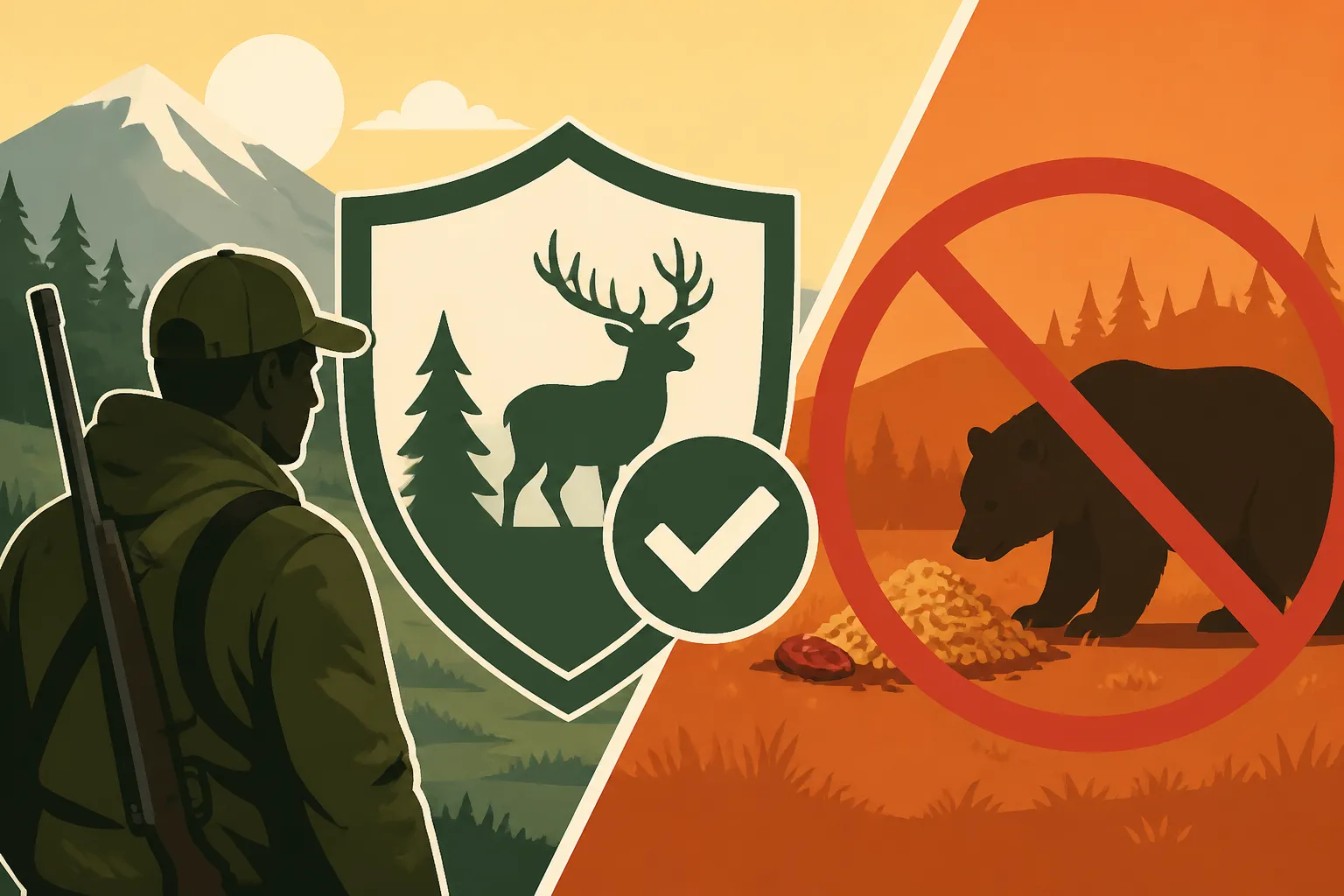
Let's be unequivocally clear: for white-tailed deer, mule deer, moose, and elk, baiting is strictly prohibited in Alberta. There are no exceptions, no special permits, and no grey areas for these iconic big game animals. Placing any food, minerals, or attractants to lure these animals for hunting purposes is illegal. This includes everything from a block of salt to a pile of sugar beets or an apple left on a stump.
The reasons for these strict prohibitions are multi-faceted. First and foremost, it upholds the principle of fair chase, ensuring that hunters are pursuing animals under natural conditions, rather than drawing them to a static, easy target. Beyond ethics, there's a significant concern for disease management, particularly Chronic Wasting Disease (CWD). Concentrating deer and elk at bait sites dramatically increases nose-to-nose contact, which is a primary vector for CWD transmission. You can learn more about this by checking out Alberta's CWD Testing Requirements. Additionally, baiting can disrupt natural migration patterns and feeding behaviours, making sound wildlife management more challenging.
Instead of relying on bait, ethical and effective hunting for these species relies on strategy and understanding their natural habits. Mastering techniques like Reading Whitetail Sign in Alberta Aspen Bluffs or Calling a Bull Moose in the Rut are far more rewarding and legal approaches. For elk, learning how to effectively use vocalizations is key, as covered in Bugling Elk in Alberta's Foothills.
Black Bear Baiting: The Major Exception
Now, here's where the rules diverge significantly. Unlike deer, moose, or elk, baiting for black bears is permitted in Alberta, but under a very specific and tightly regulated framework. This is the big exception that often causes confusion for hunters familiar with rules from other areas.
To legally bait black bears in Alberta, you absolutely need a Class S Bear Baiting Permit. This isn't something you can just decide to do; you need to apply for and obtain this permit from Alberta Environment and Protected Areas. These permits come with a long list of conditions and regulations designed to ensure safety and ethical practices. For example, bait sites must be a certain distance from public roads, residences, and water bodies. You also can't use just any kind of bait. While things like pastries, dog food, and certain grains are common, there's a strict prohibition against using meat from ungulates (like deer or moose) as bait. This is to prevent the spread of diseases and to avoid accidentally attracting grizzly bears, which are protected in Alberta. Setting up a bear bait site requires careful planning and adherence to these rules, as detailed in our guide on Setting a Bear Bait Site in Alberta. These sites are often most effective during the spring season, as discussed in Spring Bear Hunting Alberta's Cutblocks. Many hunters find success by using mapping tools like GoHunt to scout potential bait locations that comply with distance regulations and offer good natural cover for setting up.
Other Big Game Species
For other big game species found in Alberta, such as pronghorn, bighorn sheep, and mountain goats, baiting is generally not permitted. Their habitats and hunting methods are inherently different, and the principle of fair chase remains paramount.
For species like pronghorn, which inhabit vast, open prairie landscapes, baiting would contradict the challenging nature of spot-and-stalk hunting that defines their pursuit. Hunters typically rely on exceptional glassing skills and strategic stalks across open ground. Learning to effectively glass for these animals is covered in Glassing Alberta Prairie for Pronghorn. Similarly, hunting bighorn sheep and mountain goats involves rigorous backcountry expeditions into steep, rugged terrain. The challenge of Backpacking Into Alberta Sheep Country and locating these animals in their natural, often remote, high-alpine environments is a core part of the experience. Baiting these animals would fundamentally undermine the spirit of these hunts and is therefore prohibited.
Navigating the Consequences and Ethical Considerations
Understanding the rules isn't just about avoiding penalties; it's about upholding the integrity of hunting. Breaking baiting regulations carries serious consequences that can impact your hunting future and the public perception of the sport.
Legal Ramifications and Penalties
Ignoring Alberta's baiting regulations for big game (other than regulated black bear baiting) can lead to significant legal trouble. The penalties for illegal baiting can be severe, including substantial fines that can run into the thousands of dollars, confiscation of your hunting equipment (such as firearms, bows, and even vehicles), and the loss of your hunting privileges. Losing your WIN card means you won't be able to purchase any hunting licenses in Alberta for a specified period, effectively ending your hunting season or even several seasons.
Beyond the immediate legal repercussions, a conviction for illegal baiting can damage your reputation within the hunting community. Most hunters are deeply committed to ethical practices and have little tolerance for those who disregard the rules. This commitment is why many actively support initiatives like Reporting a Poacher in Alberta. It’s a serious offense that authorities take very seriously, and rightfully so, to protect wildlife and the integrity of regulated hunting.
Ethical Hunting and Fair Chase Principles
The concept of "fair chase" is a cornerstone of ethical hunting, especially in North America. It essentially means that the hunter should not have an unfair advantage over the animal, and the animal should have a reasonable chance to escape. Baiting certain big game species is often seen as a direct violation of this principle. It reduces the challenge of the hunt, turning it more into an ambush over an artificial food source rather than a true pursuit.
From an ethical standpoint, baiting for species like deer or elk diminishes the value of the hunt and can be viewed negatively by the non-hunting public, potentially jeopardizing the future of hunting. When we hunt ethically, we demonstrate respect for the animal and the environment, which is crucial for maintaining public support for hunting and conservation efforts. It's about preserving the challenge, the experience, and the natural instincts that make hunting such a profound and rewarding endeavour.
Here's a quick reference table to summarize the general baiting rules for common big game species in Alberta:
| Species | Baiting Allowed | Specific Conditions/Permits | Rationale/Key Considerations |
|---|---|---|---|
| White-tailed Deer | No | Prohibited | Fair chase, CWD prevention, natural behaviour |
| Mule Deer | No | Prohibited | Fair chase, CWD prevention, natural behaviour |
| Moose | No | Prohibited | Fair chase, managing natural movement, disease prevention |
| Elk | No | Prohibited | Fair chase, disease management, maintaining wild instincts |
| Black Bear | Yes | Class S Bear Baiting Permit required; strict distances from roads, residences, water; no ungulate meat bait. | Population management tool, historical practice, specific regulations to mitigate risks (e.g., grizzlies) |
| Pronghorn | No | Prohibited | Fair chase, open country spot-and-stalk dynamics |
| Bighorn Sheep | No | Prohibited | Fair chase, mountain environment, challenging wilderness pursuit |
| Mountain Goat | No | Prohibited | Fair chase, extreme terrain hunting, conservation of specific populations |
Legal and Ethical Alternatives to Baiting
So, if baiting is largely off the table for most big game, what are the legal and ethical ways to increase your odds of success? The good news is that Alberta offers incredible hunting opportunities that rely on skill, strategy, and understanding the wild.
The Power of Effective Scouting and Habitat Knowledge
There’s no substitute for time spent scouting. Understanding an animal's natural habitat, their feeding patterns, bedding areas, and travel corridors is far more effective and rewarding than any artificial attractant. This means getting out there before the season, or at least leveraging modern tools to do your homework. Using satellite imagery and mapping applications like GoHunt can help you identify potential pinch points, natural funnels, and prime feeding locations. Our guide on Scouting an Alberta WMU Before Season offers invaluable tips for getting a lay of the land.
It’s about becoming a student of the landscape. Where is the freshest water? What are the primary food sources in that particular WMU at that time of year? How does the wind typically blow through that coulee, or along that ridge? Learning to Reading an Alberta WMU Map Before You Go will give you a significant advantage. This deep understanding of animal behaviour and their environment is the true "secret sauce" of successful big game hunting in Alberta.
Mastering Calling and Decoying Techniques
For many big game species, especially deer, moose, and elk, mastering vocalizations and decoy use is a highly effective and perfectly legal strategy. During the rut, calling can be incredibly powerful for drawing in bucks and bulls. Techniques like rattling antlers and using grunt calls can simulate competition, making a whitetail buck come investigating, particularly in farm country as detailed in Rattling and Calling Whitetails in Farm Country.
For moose, replicating the sounds of a cow in estrus or a bull raking brush can bring a heavy-antlered bull storming in, especially in the thick boreal forest. Elk bugles are legendary for drawing in bulls during the September rut, and mastering these calls is a cornerstone of Bugling Elk in Alberta's Foothills. Decoys can also be highly effective, especially for deer, drawing an animal closer for a better shot by providing a visual confirmation of another animal. This relies on your skill and knowledge, not on providing food.
Strategic Stand Placement and Ambush Hunting
Instead of baiting animals to a location, a more ethical and often more successful approach is to identify where animals naturally want to be and then position yourself strategically. This is the art of ambush hunting. It involves finding natural travel routes between bedding and feeding areas, identifying subtle funnels, or spotting transition zones where different types of cover meet.
Setting a treestand or ground blind in a well-scouted location, such as Hanging a Stand on an Alberta Bush Edge or near Hunting a Cutline Intersection for Whitetails, dramatically increases your odds. You're relying on the animal's natural movements, not coercing them with food. This requires patience, stealth, and a deep understanding of animal behaviour throughout the day. It's about being in the right place at the right time, a testament to your scouting and fieldcraft, rather than a trick or shortcut.
Disclaimer
Please be aware that hunting regulations can change. While this guide is based on current information, it is your responsibility to consult the most recent Alberta Guide to Hunting Regulations published by the provincial government before engaging in any hunting activities. Always confirm specific rules and regulations for the Wildlife Management Unit (WMU) you plan to hunt.