Where Alberta Cougars Have Spread
It can feel a bit unsettling, and honestly, a little exciting, when you start hearing whispers, or even seeing tracks, of cougars in areas where they were once thought to be rare or non-existent. For many years, Alberta's cougar population seemed largely confined to the rugged mountains and foothills, making them a true ghost of the wilderness. But times are changing, and if you're a hunter, a rural landowner, or just someone who spends time outdoors, understanding where Alberta cougars have spread is becoming increasingly important for safety and for appreciating the shifting dynamics of our wildlife. This guide will walk you through their historical stomping grounds, the reasons behind their expansion, and where you might encounter these magnificent, elusive predators today.
Understanding Alberta's Historical Cougar Strongholds
For as long as most of us can remember, if you talked about cougars in Alberta, your mind immediately went to the majestic, imposing landscape of the Rocky Mountains and the rolling, timbered foothills that flank them. This was, and still largely is, their prime territory. These areas provided everything a cougar needs to thrive: dense cover for stalking, broken terrain for ambush, and an abundance of prey, particularly deer and elk.
The Mountain and Foothills Heartland
Think about the vast, rugged expanses west of Highway 22, stretching right up to the provincial boundary with British Columbia. This is classic cougar country. Here, the landscape is a mosaic of steep forested slopes, deep river valleys, and remote backcountry that offers these solitary hunters the isolation they crave. Historically, the highest concentrations of cougars were found in the southwestern part of the province, in regions like the Crowsnest Pass and along the eastern slopes of the Rockies, including areas like the Livingstone Range and Porcupine Hills. The very nature of this terrain, with its natural barriers and plentiful game, meant cougar populations remained robust here even when they faced pressures elsewhere. When we talk about Alberta's Predators and Where They Live, cougars have always been a cornerstone of this western ecosystem.
The hunting pressure in these areas, while present, often matched the challenging landscape, meaning that hunters had to work hard to even catch a glimpse of these animals. It also meant that cougars here were often more habituated to human presence in a wilderness context, rather than the more fragmented landscapes further east. These big cats are incredibly efficient hunters, and the sheer volume of deer, particularly mule deer, and elk in these zones provided a stable food source year-round. They moved with the deer herds, following them to lower elevations during harsh winters and back into the high country in the warmer months.
Factors Maintaining Historical Range
Several factors kept cougars primarily within their mountain and foothills comfort zones. Firstly, the sheer density of suitable habitat was paramount. Intact forests, expansive wilderness, and minimal human disturbance allowed cougar populations to maintain strong territories and breed successfully. Secondly, the prey base was incredibly reliable. Elk and deer populations have always been strong in these regions, offering a consistent food source for cougars to raise their young and sustain themselves. And let's not forget the sheer geographical barriers: the open plains to the east offered little in the way of cover or suitable hunting grounds, historically acting as a natural deterrent to widespread expansion. While they might occasionally venture out, these were seen as anomalies rather than a pattern of establishment.
Another crucial aspect was human perception and management. For a long time, cougars were often viewed solely as threats to livestock or big game populations, leading to intense predator control efforts in agricultural areas. This created a strong human-made barrier, pushing cougars back into the more remote, less settled regions where they could avoid conflict. It's a classic example of how human activity can shape wildlife distribution. This historical context is vital when we start to understand how and why their range has started to shift.
The Driving Forces Behind Cougar Expansion in Alberta
The notion that cougars are solely mountain dwellers is increasingly outdated. Over the last couple of decades, we've seen a noticeable, albeit gradual, shift in their distribution. This isn't just a random occurrence; it's a response to several interconnected environmental and ecological changes. Understanding these driving forces helps us anticipate where these formidable predators might appear next and why.
Increasing Deer Populations Beyond the Foothills
One of the most significant drivers of cougar expansion is the booming populations of their primary prey – white-tailed deer. In many areas of Alberta, particularly in the parkland and agricultural fringe zones, whitetail numbers have exploded. These adaptable deer thrive in fragmented landscapes, utilizing shelterbelts, river valleys, and even suburban green spaces. As the deer moved out of the mountains and foothills and into the "white area" (settled areas) of Alberta, establishing themselves in unprecedented numbers, the cougars eventually followed suit. After all, a predator goes where the food is.
These burgeoning deer populations provide an irresistible invitation for cougars. It's like building a five-star buffet in a new neighborhood; eventually, the patrons will find it. This dispersal of prey creates corridors and new territories that are ripe for cougar colonization. We've seen similar patterns with other predators; as prey adapts to new environments, so too do their hunters. The increasing density of whitetails, coupled with their year-round presence, means cougars don't have to follow migratory patterns as strictly, making new areas more viable for permanent residence. This is a crucial element of Alberta's Cougar Population and Where It Grew.
Habitat Changes and Natural Corridors
While mountain habitat remains ideal, changes in land use and the regrowth of certain areas have created new, viable habitats and movement corridors for cougars. Forestry operations, for example, create younger forests that offer dense cover and attract deer. River valleys, even those that cut through agricultural land, provide natural highways of cover and concealment, allowing cougars to travel unseen for considerable distances. Think of the Red Deer River valley, the North Saskatchewan, or even smaller creeks with treed banks—these are perfect pathways for a cautious predator.
Furthermore, some areas that were once heavily cultivated or open might now have more brush and small pockets of timber due to changes in farming practices or natural succession. These "islands" of cover, though smaller than true wilderness, can be enough for a cougar to establish a temporary territory or simply pass through. The increasing interconnectedness of these smaller habitat patches, facilitated by natural features like river systems, allows for greater dispersal. This phenomenon is critical for hunters using tools like GoHunt, which can help identify these smaller pockets of cover and potential travel routes that might now hold unexpected game, including cougars.
Reduced Human Persecution and Management Shifts
Historically, cougar populations faced significant pressure from predator control programs aimed at protecting livestock and game animals. While cougar hunting seasons still exist in Alberta, the widespread, often uncoordinated eradication efforts of the past are largely gone. Modern wildlife management aims for sustainable harvest and recognizes the ecological role of top predators. This shift in attitude, coupled with better understanding of cougar ecology, has likely contributed to their ability to expand their range without facing the same level of immediate, intensive persecution they once did.
Additionally, public perception has evolved. While concerns about safety and livestock persist, there's also a greater appreciation for the role of cougars in maintaining healthy ecosystems. This means less immediate "shoot-on-sight" mentality and more of a focus on conflict prevention and co-existence where possible. This subtle but significant change in human-wildlife relations has undoubtedly given cougars more breathing room to explore and settle new territories, contributing to their spread into areas many never expected to see them.
Where Cougars Are Emerging Across Alberta's Landscape
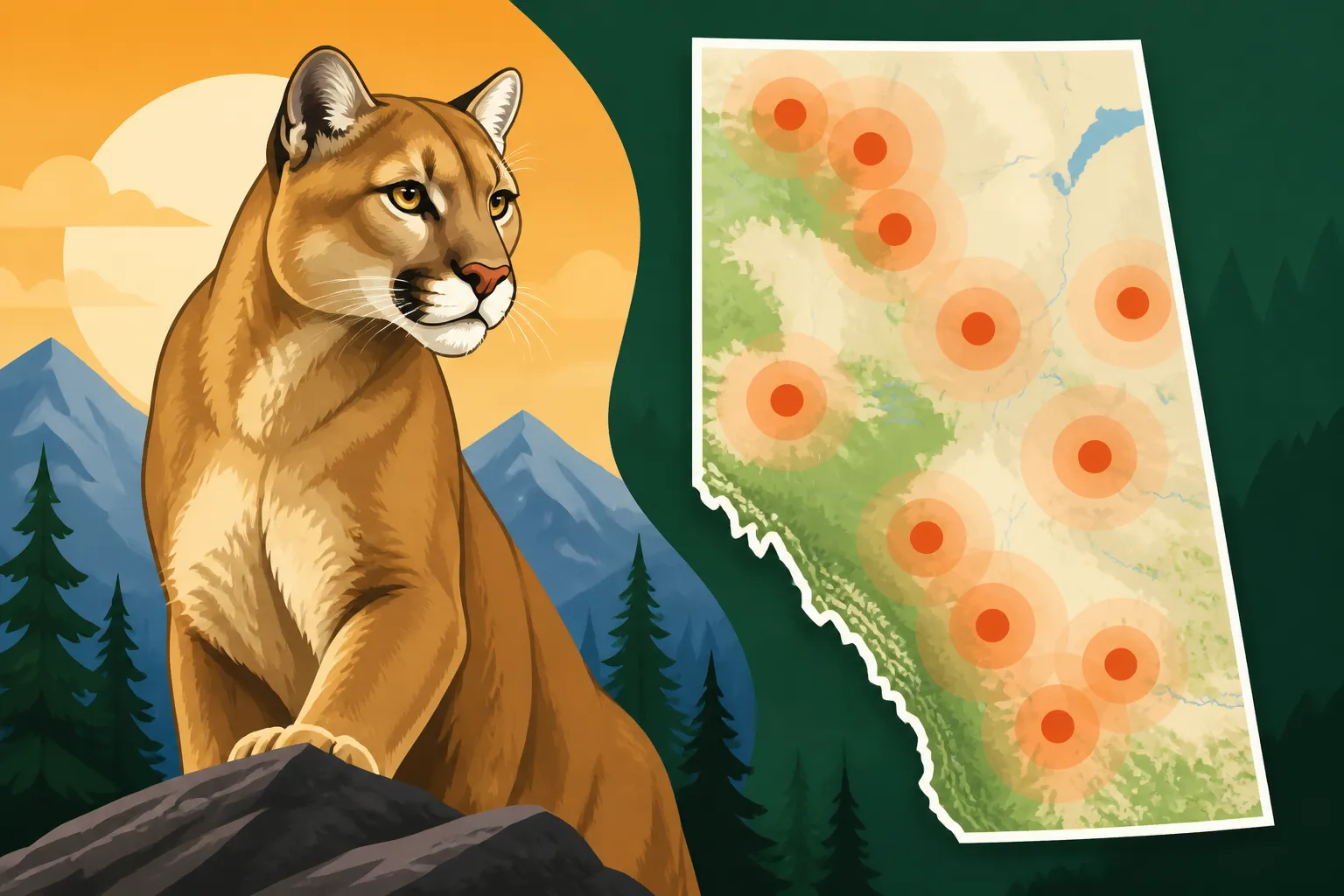
The traditional view of cougars as strictly mountain animals is rapidly becoming a relic of the past. Today, their presence is being documented in a wider array of landscapes across Alberta, moving eastward into areas that were once considered safe from these powerful predators. This expansion isn't uniform, but certain patterns and hotspots are becoming clear.
Parkland and Boreal Fringe Zones
Perhaps the most notable area of cougar expansion is the Parkland region and the southern fringes of the Boreal Forest. This is that transitional zone where the prairie meets the forest, characterized by rolling hills, aspen bluffs, scattered wetlands, and a mix of agricultural and treed land. The reason for their success here ties directly back to the booming white-tailed deer populations that thrive in this mosaic habitat. Deer find excellent cover, diverse forage, and often less predatory pressure in these areas, inadvertently creating a perfect hunting ground for cougars.
Hunters and rural residents in areas like the Beaver Hills, around Edmonton, or even as far east as the Battle River valley, are reporting more frequent cougar sightings and encounters. While these areas might not sustain the same density of cougars as the mountains, the fact that they are establishing territories and successfully breeding outside of the traditional range is a significant development. This shift means that knowing Hunting Alberta's Parkland Country and Its WMUs now requires an awareness of these stealthy predators. A successful deer hunter might suddenly find themselves sharing their hunting grounds with a cougar, emphasizing the need for vigilance and proper backcountry etiquette, even close to home.
River Valleys and Riparian Corridors
The river systems of Alberta act as crucial highways for cougar dispersal. Even in relatively open agricultural landscapes, a river valley often provides a ribbon of dense cover, food, and water, allowing cougars to travel largely unseen. The North Saskatchewan River, the Red Deer River, and even the larger tributaries that feed into them, offer incredible corridors for movement. From the deeper, timbered breaks of the Red Deer River Badlands to the aspen and willow-choked banks of the North Saskatchewan near cities, these riparian zones are proving to be key conduits for cougar spread.
Cougars use these valleys not just for travel, but for hunting. The concentrated deer, elk, and even smaller game populations drawn to water and cover make these areas incredibly productive hunting grounds for them. This means that hunters who focus on Hunting a River Valley Bottom in Alberta for deer or moose should be particularly aware of the potential for cougar presence. The ability for these cats to establish themselves along these linear habitats means they can penetrate deep into areas that might otherwise seem unsuitable.
Isolated Timber Pockets and Urban Edges
While it sounds almost unbelievable, cougars are also being reported in smaller, more isolated timber pockets, even those surrounded by extensive agricultural fields. These islands of cover, often on private land or within municipal reserves, can sometimes support a transient cougar or even a breeding female if the prey base (again, usually whitetail deer) is sufficient. These are usually younger, dispersing animals looking for their own territories, but some might decide to stay if the conditions are right.
This leads to the uncomfortable reality of cougar sightings on the very edges of urban and semi-urban areas. While direct human-cougar interactions are still rare, the presence of deer in city parks, golf courses, and green spaces means that cougars, following their food, can occasionally venture into surprisingly close proximity to people. It's a stark reminder that even in seemingly "safe" areas, nature is reclaiming its ground, and wild animals are incredibly adaptable. Tools like GoHunt can help identify these smaller, often overlooked, parcels of land that might act as temporary habitat or travel corridors for cougars, even near more populated zones.
Here's a quick look at how cougar distribution is changing:
| Characteristic | Historical Range (Primarily Foothills/Mountains) | Emerging Range (Parkland/River Valleys/Boreal Fringe) |
|---|---|---|
| Primary Habitat Type | Steep, rugged, dense conifer/aspen forests | Aspen bluffs, riparian corridors, fragmented forest |
| Dominant Prey Species | Mule Deer, Elk, Bighorn Sheep | White-tailed Deer, smaller ungulates |
| Landscape Character | High wilderness, low human density | Mixed agricultural/forest, higher human density |
| Cover Availability | Abundant, extensive | Patchy, linear along water features, shelterbelts |
| Human Encounters | Rare, typically deep backcountry | Increasing, often near rural/urban interfaces |
| Movement Patterns | More localized, following elevational shifts | More exploratory, using corridors, wider dispersal |
What the Expanding Cougar Range Means for Hunters and Wildlife
The expanding range of cougars in Alberta is a significant development, carrying implications not just for the cougars themselves, but for other wildlife species, livestock, and of course, for us as hunters and outdoor enthusiasts. It requires a shift in our awareness and practices, recognizing that what was once a rare encounter might become a more regular possibility.
Shifting Dynamics for Prey Species
The most immediate impact of cougar expansion is on prey species, particularly white-tailed deer. In areas where cougars become established, they will exert a new level of predatory pressure on deer populations. This can be a double-edged sword: on one hand, it could help manage overabundant deer herds, especially in agricultural zones where deer often cause crop damage. A healthy predator-prey relationship is vital for ecosystem balance. On the other hand, for hunters who target whitetails in these new cougar areas, it could mean a slight change in deer behavior or even localized reductions in deer numbers. What Coyotes Do to Alberta Fawns is a similar dynamic, but cougars are much more effective at taking down mature deer.
Cougars are incredibly efficient hunters, and their presence can make deer warier and force them to utilize cover more effectively. This might make for a more challenging hunt, as deer become less predictable and harder to pattern. It also means that other predators, like coyotes and even wolves, might face increased competition for food in these newly established cougar territories. This intricate web of predator-prey interactions is always in flux, and the addition of a dominant predator like the cougar will undoubtedly ripple through the entire food chain.
New Hunting Opportunities and Challenges
For cougar hunters, the expanding range means potential new hunting grounds, closer to home for some, or simply a wider array of WMUs (Wildlife Management Units) where a cougar tag might be viable. However, it also presents challenges. Hunting cougars often requires specialized skills, such as tracking in snow or utilizing hounds. As cougars move into more fragmented landscapes, traditional hunting methods might need adaptation. Hunting Cougar in Alberta's Foothills might be different than hunting one in a parkland river valley. Hunters will need to understand how cougars utilize these newer, often smaller, patches of habitat.
Moreover, the increasing proximity of cougars to human habitation means hunters must be even more mindful of safety and ethical hunting practices. This includes knowing Rules on Hunting Near Buildings and understanding public land access in areas that might be adjacent to private residences. Awareness of cougar activity, understanding their tracks and sign, and being prepared for an encounter are becoming essential skills for any hunter venturing into these new areas. It's about respecting the animal and the changing landscape.
Increased Need for Awareness and Co-existence
The spread of cougars necessitates a heightened level of awareness for anyone spending time outdoors in Alberta, regardless of whether you're hunting. Hikers, campers, farmers, and even rural homeowners need to be informed about cougar behavior, how to prevent conflicts, and what to do if an encounter occurs. This isn't about fear-mongering, but about responsible co-existence. For rural landowners, particularly those with livestock, the potential for cougar depredation may increase, requiring proactive measures to protect their animals.
Education campaigns from provincial wildlife agencies will become even more critical to inform the public about cougar ecology and safety. This includes understanding the nuances of cougar tracking, knowing Tracking a Cougar in Fresh Snow, and interpreting their movements. As hunters, we often spend the most time in these wilder places, and we have a responsibility to be part of that educational effort, sharing our knowledge and experience to foster a better understanding of these magnificent, spreading predators. The more we know, the better we can adapt to living alongside them.
Disclaimer
This article is for general informational purposes only and does not constitute professional advice. Laws, prices and regulations vary by location and change over time. Consult a qualified professional for guidance on your specific situation.