Wolf Pack Size in the Boreal
Figuring out the exact dynamics of wolf packs in Alberta's vast boreal forest can feel like trying to solve a mystery written in tracks and howls. It's not just a number; it's a living, breathing social structure that shifts with the landscape, the prey, and even the season. This guide will pull back the curtain on what influences wolf pack sizes in our northern forests, helping you better understand these incredible predators and their role in the ecosystem.
Understanding Wolf Ecology in Alberta's Boreal Forest
The boreal forest of Alberta is a sprawling, rugged landscape of dense spruce and pine, trembling aspen stands, vast muskegs, and a spiderweb of cutlines and seismic trails. This is prime wolf country, a place where these apex predators reign. To truly grasp why wolf packs are the size they are, we first need to appreciate the intricate relationship they have with this demanding environment and the creatures within it. Wolves aren't just animals; they are incredibly social beings whose survival hinges on cooperation, territoriality, and a keen understanding of their hunting grounds.
The Boreal Ecosystem and Wolf Habitat
Imagine miles upon miles of thick timber, broken up by wetlands and old logging cuts. This is the canvas on which boreal wolves paint their lives. They navigate this complex terrain with incredible efficiency, using natural corridors like frozen rivers and old game trails, but also human-made features. Hunting a Boreal Muskeg Edge reveals some of the challenges and opportunities this landscape presents for all wildlife. Wolves are master opportunists, utilizing everything from dense cover for denning and raising pups to open areas like old burns or seismic lines for hunting and travel. The sheer scale of the boreal means that individual wolf territories can be immense, often hundreds of square kilometers, especially where prey might be less concentrated. This vastness itself is a factor in how many wolves a single pack can sustain and protect.
Wolf Diet and Prey Availability
A wolf pack's pantry largely dictates its size and success. In the boreal, their primary diet revolves around large ungulates such as moose, white-tailed deer, and occasionally elk, with woodland caribou also featuring in some northern reaches. The health and abundance of these prey populations are directly linked to the wolves' ability to thrive. When moose numbers are high in a particular area, a wolf pack can find sufficient food to support more members. Conversely, if a severe winter or disease impacts the deer population, the wolves will feel it too. This constant push and pull between predator and prey is a natural cycle, but it means pack sizes are rarely static. It’s an ongoing dynamic that shapes the very fabric of the forest, and many hunters often wonder, Do Wolves Affect Alberta Moose Numbers?, a question deeply tied to the availability of food for these packs.
Factors Influencing Wolf Pack Size
Wolf pack size isn't arbitrary; it's a delicate balance influenced by several environmental and biological factors. Think of it like a business: how many employees can you support given your revenue, your operational costs, and the size of your market? For wolves, their "revenue" is prey, their "costs" are energy expenditure, and their "market" is their territory.
Prey Density and Biomass
This is arguably the most significant driver of pack size. Simply put, more available food allows for more mouths to feed. If an area boasts a high density of moose, deer, or elk, a pack can grow larger because the hunting success rate is higher, and individual wolves don't have to expend as much energy searching for meals. This isn't just about the number of prey animals, but the biomass – the total weight of potential food. A few large moose can provide as much sustenance as many smaller deer, influencing the carrying capacity for a wolf pack. Hunters scouting for big game often use tools like GoHunt to analyze game densities, which, incidentally, can also give you clues about potential wolf activity in an area. When you see strong game populations on a GoHunt map, it’s a good indicator that the resident wolf packs might be on the larger side.
Territory Size and Competition
Wolves are fiercely territorial. Each pack maintains a specific home range, which they actively defend against other packs. This isn't just about aggression; it's about resource management. A pack needs enough territory to find food, raise young, and avoid undue competition. The size of these territories can vary dramatically, from hundreds to thousands of square kilometers, depending on the richness of the habitat. In areas with abundant prey, territories might be smaller, allowing for more packs to exist in closer proximity, though still with clear boundaries. In leaner areas, packs need vast expanses to ensure they can consistently find food, which naturally limits the number of wolves an area can support. Competition between packs can result in deadly encounters, serving as a natural mechanism to regulate population density and pack size.
Reproduction and Dispersal Dynamics
Every spring, a dominant alpha female in a pack typically gives birth to a litter of pups, usually ranging from 4 to 6, but sometimes more. This influx of new members significantly increases the pack size, at least temporarily. However, wolf populations don't simply grow unchecked. As young wolves mature, typically between 1.5 to 3 years of age, they often disperse from their natal pack. This dispersal is a critical aspect of wolf population dynamics. These young, solitary wolves or small groups strike out to find their own territories, find a mate, and start new packs. This natural dispersal prevents any single pack from becoming excessively large and depleting local resources. It's a fundamental biological imperative that ensures genetic diversity and the spread of wolves into new habitats.
Human Impact and Management
Human activities also play a significant role in shaping wolf pack sizes in Alberta's boreal. Hunting and trapping, where legally permitted, can directly reduce pack numbers. While regulated, this pressure can fragment packs, reduce their average size, and even change their social structure. Habitat alteration, such as logging, oil and gas development, and the creation of new roads and seismic lines, can also indirectly affect wolves. These changes can alter prey distribution, increase access for hunters and trappers, or even create new travel corridors for wolves, potentially influencing their territories and pack dynamics. Understanding Wolf Season Dates and Limits is crucial for anyone engaging with wolves in Alberta, as management strategies aim to balance predator populations with prey numbers and human interests.
Typical Wolf Pack Structures and Dynamics
When we talk about a "wolf pack," we're not just referring to a random gathering of wolves. There's a deeply ingrained social order and structure that helps these animals survive and thrive in challenging environments like the boreal forest.
The Alpha Pair and Family Unit
At the heart of every stable wolf pack is the alpha pair – the breeding male and female. These two are typically the leaders, making decisions about hunting, travel, and territory defense. Their offspring from previous years, and the current year's pups, make up the rest of the core family unit. This structure is highly cooperative: older siblings often help raise and feed the new pups, and everyone contributes to hunting and protecting the territory. The strength of this family bond is what makes wolves such formidable predators. It’s a tight-knit unit where each member has a role, contributing to the overall success of the group.
Average Pack Size in Alberta's Boreal
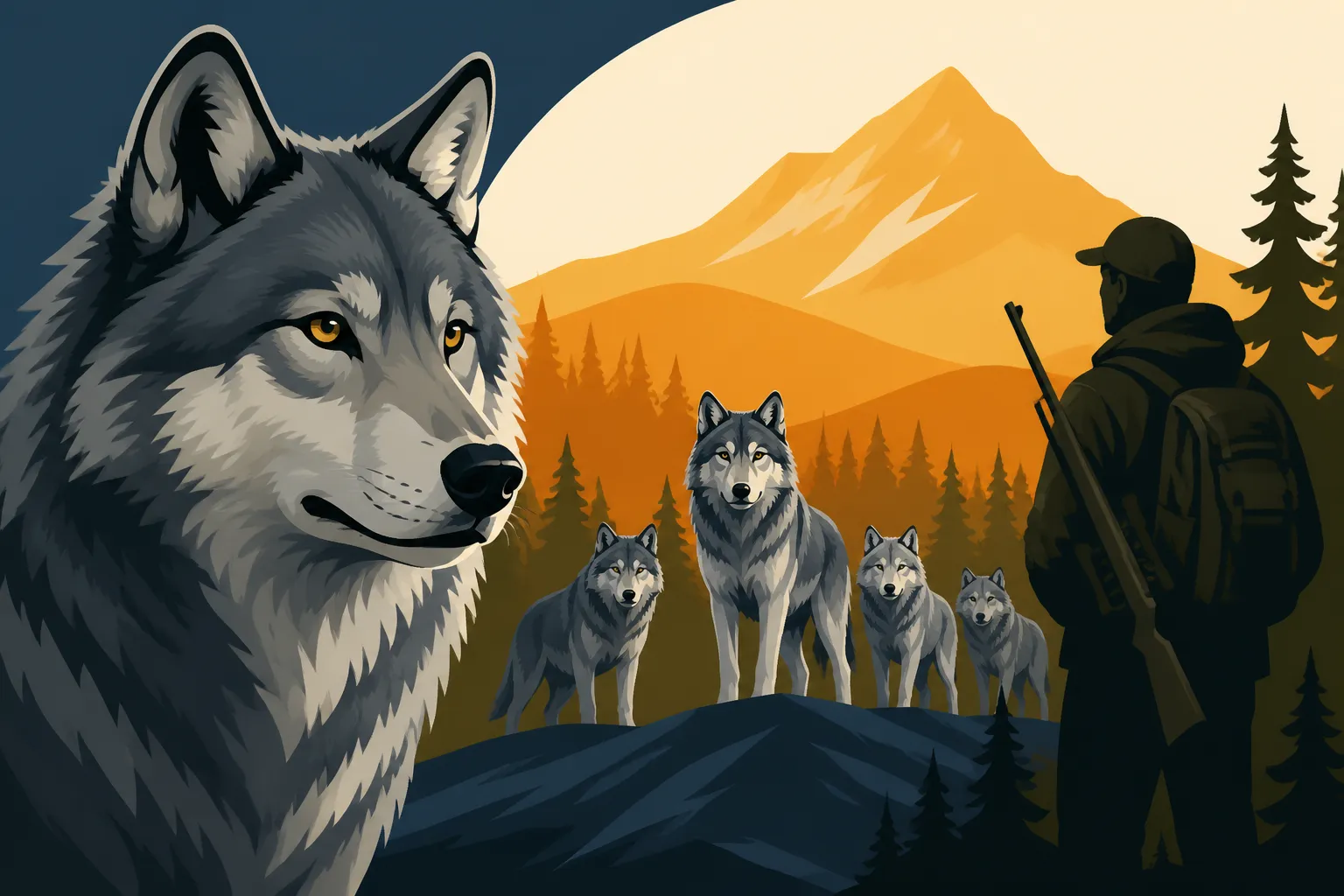
So, what's a typical wolf pack size in Alberta's boreal? It's important to remember that this isn't a fixed number, but a range. Generally, you're looking at packs that average around 4 to 10 wolves. However, depending on prey abundance, territory size, and dispersal rates, this number can certainly fluctuate. Some areas with very rich prey bases might support larger packs of 12-15 or even more, especially during the winter when older pups are still with the pack. Conversely, in areas where prey is scarce or hunting pressure is high, you might encounter smaller packs of just a breeding pair and their current year's pups. A tool like GoHunt, with its detailed mapping capabilities, can help you visualize the vastness of these boreal territories and give you a better appreciation for the distances these packs roam.
Here's a simplified look at the factors influencing pack size:
| Factor | Typical Impact on Size Range | Seasonal Variation |
|---|---|---|
| Prey Abundance | High: Larger packs (8-15+) | Stable food: consistent size |
| Low: Smaller packs (2-6) | Decline: leads to smaller or fragmented packs | |
| Territory Size | Large: Supports fewer packs, but potentially larger within that range | Stable: relatively consistent |
| Small: More packs overall, but generally smaller individual packs | Competition can reduce size | |
| Reproduction Rate | High: Increases size in spring/summer | Peak in spring with new pups |
| Low: Limits growth | ||
| Dispersal Rate | High: Reduces size as young leave | Late fall/winter: young wolves often disperse |
| Low: Pack may grow larger temporarily | ||
| Human Harvest | Can reduce pack size | Primarily during Wolf Season Dates and Limits |
Transient Wolves and Dispersal
Not every wolf is part of a stable, multi-generational pack. There are also transient wolves – individuals or small groups that have dispersed from their birth packs and are searching for new territory, a mate, or a place to settle down. These transients might travel vast distances, often on the periphery of established pack territories, until they find an opportunity to claim a vacant area or replace a deceased alpha in an existing pack. While not part of a formal pack structure, their movements are still influenced by the established packs around them, and they contribute to the overall wolf population dynamics across the boreal landscape.
Implications for Hunters in the Boreal
For hunters venturing into Alberta's boreal, understanding wolf pack size and dynamics isn't just academic; it offers valuable insights into the ecosystem and can influence your hunting strategies, whether you're targeting deer, moose, or even wolves themselves.
Locating Wolves and Reading Sign
Knowing that wolves operate in packs, and understanding their territorial nature, can help you interpret the sign you find in the bush. A single set of tracks might belong to a transient, but multiple tracks of varying sizes, especially near a fresh kill or along a well-used game trail, strongly suggest a pack is active in the area. Look for scat with hair and bone fragments, prominent rub trees used for scent marking, and listen for howls, which are often used to communicate pack locations and defend territory. Hunters using platforms like GoHunt can layer historical game data with topographical features, helping to predict where wolves might be concentrating their efforts based on available prey. If you're on an old seismic line and you find fresh wolf tracks, you can bet that prey animals like moose are also using that same corridor. Understanding these connections is key for Hunting Moose Along Cutlines and Seismic Lines or Hunting a Pipeline Right-of-Way.
Understanding Wolf Behavior and Calling
The social structure of a wolf pack also informs effective calling strategies if you're targeting wolves. While lone wolves might respond to a simple howl, a pack response is a complex concert of individual voices, often meant to announce their presence and warn off intruders. Knowing that packs defend territories, you might consider calling from the edge of what you suspect is their home range, mimicking an intruding wolf to elicit a response. Or, if you’re looking to draw in a lone wolf, a distressed prey animal call might be more effective. Techniques like those discussed in Calling Wolves in Winter Bush are often rooted in a deep understanding of these pack dynamics and communication.
Impact on Game Animals
Ultimately, wolf packs are a natural, integral part of the boreal ecosystem, and their presence directly influences the behavior and distribution of other game animals. Areas with active wolf packs might see deer and moose move more frequently, use thicker cover, or travel in slightly larger groups for protection. Hunters often notice that game animals in wolf country can be warier and more attuned to their surroundings. This doesn't necessarily mean fewer game animals, but it often means they are distributed differently and may be harder to approach. Understanding these dynamics helps hunters adapt their strategies, perhaps focusing on thicker cover, identifying escape routes, or recognizing how game might use features like Hunting a Burned-Over Boreal Block or Hunting a River Island in the Boreal to evade predators. It's all part of the wild calculus that makes hunting in Alberta's boreal so uniquely challenging and rewarding.
Disclaimer
This article is for general informational purposes only and does not constitute professional advice. Laws, prices and regulations vary by location and change over time. Consult a qualified professional for guidance on your specific situation.