Where Badgers Dig on the Prairie
Anyone who spends time walking the vast, beautiful expanse of the Alberta prairie understands the unique challenges and hidden gems it presents. One thing you'll inevitably encounter is the signature earthworks of the American badger. These industrious diggers leave behind holes that can be a twisted ankle waiting to happen if you're not careful, but they're also a fascinating indicator of the health and activity of the prairie ecosystem. This guide will help you understand where badgers dig, why they choose those spots, and what their presence can tell you about the local wildlife, offering insights that can surprisingly benefit your hunting strategy.
Understanding the Alberta Badger's Prairie Habitat
The American badger (Taxidea taxus) is perfectly designed for life on the open plains, a powerful, stocky animal built for excavating. They are masters of the shovel, and their presence is a clear sign that you're in good prairie country. Spotting their distinctive dig sites isn't just about identifying a potential trip hazard; it's about reading the landscape.
The Classic Badger Hole: Where to Spot It
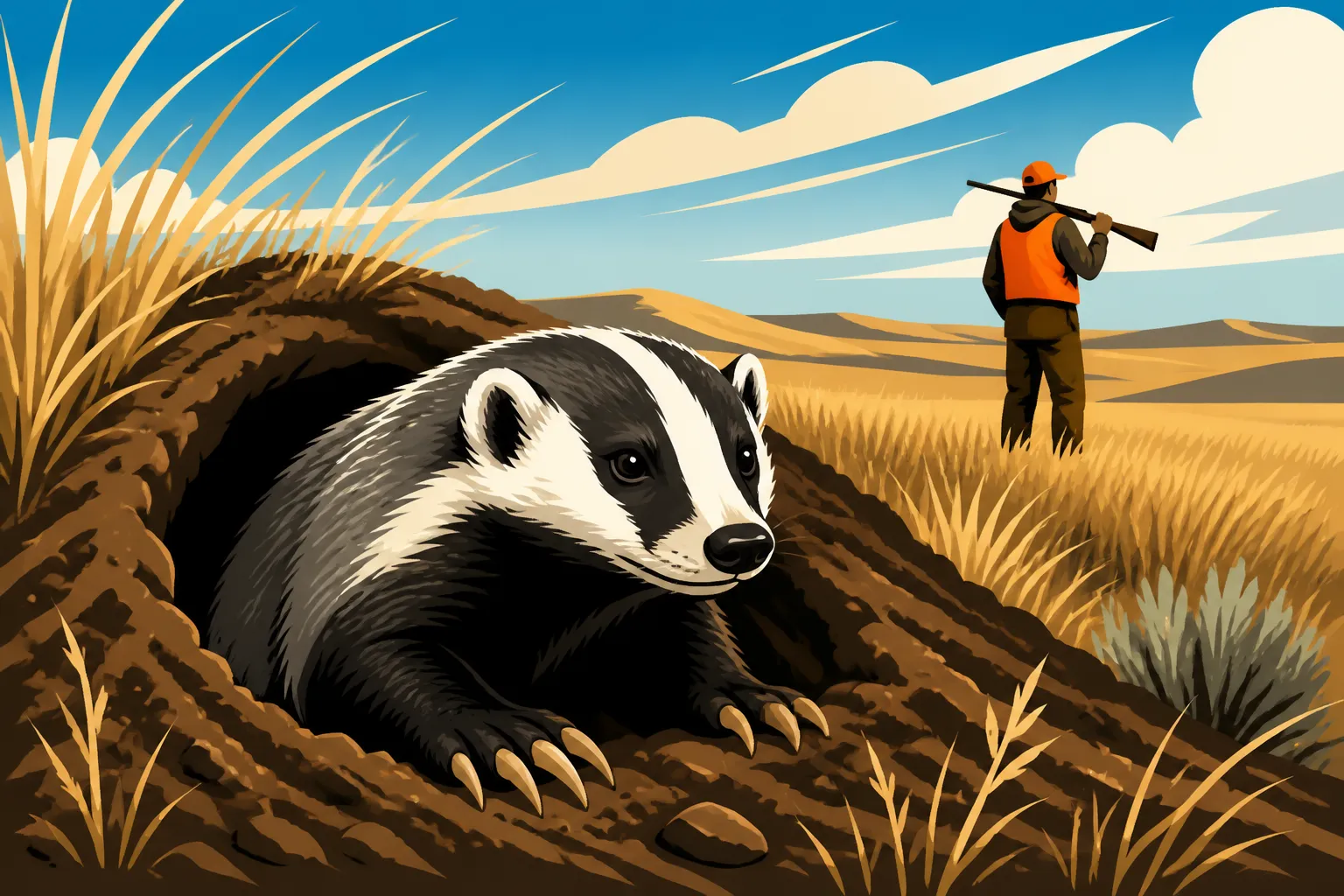
When you're out scouting or hunting, a badger hole isn't hard to miss once you know what you're looking for. Picture a fresh mound of loose dirt, often sandy or silty, forming a crescent shape around a large, oval-shaped opening. The hole itself is typically wider than it is tall, usually 8-12 inches across, and often slopes gently into the earth. It’s significantly larger than a gopher hole and distinct from a coyote or fox den. You'll often find these fresh excavations on slight rises, knolls, or along the edges of grassy areas that transition into cultivated fields or scrubland.
Imagine you're driving a grid road, scanning the horizon. You notice a slight elevation on a pasture, perhaps where the grass is a little taller or thicker, and there it is: a fresh pile of dirt, a darker patch against the dry prairie grasses. That's a classic sign. They love these subtle topographical changes because they offer a bit of drainage and potentially easier digging into the softer soil, especially compared to hard-packed clay. These aren't just random spots; badgers are quite strategic in their construction, always seeking efficiency and opportunity.
Why Badgers Choose Certain Dig Sites
Badgers don't just dig for fun; their excavations are directly linked to their primary food source: burrowing rodents. Think ground squirrels (gophers), Richardson's ground squirrels, and pocket gophers. If you find an area peppered with badger holes, especially fresh ones, it’s a strong indication that there’s a thriving population of these rodents beneath the surface. Badgers are phenomenal hunters, capable of digging faster than their prey can burrow, literally unearthing their meals.
They gravitate towards areas with lighter, more workable soil – think sandy loams or silty areas. Heavy clay can be a real struggle, so they’ll often avoid it unless prey density is exceptionally high. You'll often see them set up shop on the edges of agricultural fields, in native prairie pastures, or along river breaks where the soil composition is more favourable. A prime location might be a gentle slope near a slough or a dry creek bed, where the ground isn't perpetually waterlogged, allowing for stable burrows. This preference for well-drained, prey-rich ground means their presence can tell you a lot about the overall health and productivity of that specific piece of land.
Badger Behavior and Their Impact on the Ecosystem
Badgers are solitary creatures for the most part, but their actions leave a lasting mark on the landscape and play a crucial role in the prairie ecosystem. Understanding their habits goes beyond just avoiding a misstep; it helps paint a fuller picture of the wildlife interactions happening around you.
The Badger's Diet and Hunting Strategy
The American badger is a formidable predator, built for power and excavation. Their short, powerful legs, long claws, and compact, muscular bodies make them incredibly efficient diggers. While they're opportunistic, their diet primarily consists of burrowing rodents. They don't just wait for a gopher to pop its head out; they actively pursue them underground. A badger will often plug up multiple escape routes of a gopher colony before systematically digging down to trap its prey. This hunting strategy is intense and energy-consuming, but highly effective.
Sometimes, you'll see evidence of a badger's work and wonder how anything could survive such an onslaught. They can essentially "plow" an area, leaving behind a network of craters and mounds. Beyond ground squirrels, they'll also hunt mice, voles, birds' eggs, and even reptiles or amphibians if the opportunity arises. This broad diet, combined with their relentless digging, makes them a significant control on rodent populations, which in turn can influence grass health and grazing patterns for other species. Their powerful jaws and sharp teeth make short work of their catch.
Ecological Role: Nature's Ground Disturber
Badgers are often referred to as "ecosystem engineers" or "nature's ground disturbers," and for good reason. Their constant digging and burrowing have profound effects on the prairie. First, their excavations aerate the soil, which can improve water penetration and nutrient cycling. This can benefit plant growth in the long run. Second, the old burrows they leave behind become critical habitats for a host of other species. Foxes, burrowing owls, coyotes, and even some reptiles and amphibians will readily take over abandoned badger dens for shelter, nesting sites, or raising their young.
Consider a patch of prairie that might otherwise be a uniform carpet of grass. A badger comes along, and suddenly, there are mounds of freshly turned earth, deep holes, and varying levels of vegetation. This creates microclimates and structural diversity that wouldn't exist otherwise. A burrowing owl might find the perfect readymade home, or a snake might use an old hole for hibernation. Even a coyote might loiter near an active badger hole, hoping to snatch a rodent as it tries to escape the badger's pursuit. It’s a dynamic, interconnected web, and the badger is a central player in modifying the physical landscape.
What Badger Signs Mean for Hunters on the Prairie
For the seasoned or aspiring hunter, seeing badger activity isn't just about admiring a clever animal; it's about reading the signs of the prairie. Badgers, in their own unique way, can provide valuable intel on where other game animals might be.
Indicators of Prey Concentration
Active badger holes are a direct indication of a high concentration of ground squirrels and other burrowing rodents. This, in turn, is a massive draw for other predators. Coyotes and foxes are keenly aware of badger activity and will often patrol areas with fresh digs. If you're Coyote Hunting Alberta Farm Country, finding these badger-rich areas could put you right in the path of coyotes looking for an easy meal or a rodent flushed from its burrow. These smaller predators, in turn, are part of the food chain that bigger game animals like deer and elk are sometimes wary of.
Beyond predators, the overall health of the prairie, indicated by abundant small prey, can influence larger game. Deer might browse near areas with less intense badger activity, where the ground isn't as disturbed, but still offers good forage. Mule deer, known for their preference for broken country, might use the subtle elevation changes where badgers dig for bedding, or simply navigate around these areas. Knowing where badgers are working tells you there's a certain level of prey abundance, and that energy flows through the ecosystem. You can even use mapping tools like GoHunt to mark areas of observed badger activity, helping you visualize potential predator hotspots or routes that deer might avoid or use strategically.
Navigating Badger Country Safely
While badgers are fascinating, their excavations pose a very real hazard for anyone traversing the prairie. Whether you're on foot, riding a quad, or even driving a truck on rough terrain, a hidden badger hole can spell disaster. A twisted ankle is a common injury for hunters who aren't paying attention, especially during low-light conditions at dawn or dusk when deer are most active. For vehicles, hitting a deep, unstable badger hole can damage suspension, pop tires, or even lead to rollovers.
Always be vigilant when walking through areas with known badger activity. Keep your eyes on the ground as much as they are on the horizon. If you're Spot-and-Stalk Mule Deer in Alberta in open country, this becomes even more critical as your focus is often on the animal, not your footing. These holes can also create natural funnels or obstacles for game. A deer might alter its path to avoid a heavily dug-up section of a pasture, which could push it past your stand or toward a Hunting a Prairie Coulee Bottom or Hunting a Shelterbelt Between Two Fields where you're waiting. Understanding these subtle landscape features, even those created by a badger, can give you a tactical edge.
Common Misconceptions and Interesting Facts
Badgers are often misunderstood, sometimes conflated with other burrowing animals or simply seen as pests. Taking a moment to distinguish their signs and appreciate their unique characteristics can enhance your overall appreciation of Alberta's wildlife.
Distinguishing Badger Dens from Other Burrows
On the Alberta prairie, badgers aren't the only ones digging holes, so it’s important to know the difference. Here’s a quick comparison:
| Animal | Typical Hole Appearance | Other Distinguishing Features |
|---|---|---|
| Badger | Large, oval (wider than tall), crescent-shaped dirt mound | Often solitary, powerful dig marks, typically one main entrance |
| Coyote | Larger than badger holes, often multiple entrances, tunnel-like | Scat and prey remains often visible nearby, usually in den complex |
| Fox | Smaller than coyote, often multiple entrances, messy | Smaller dirt piles, less substantial than badger, often overgrown |
| Gopher | Small, circular, numerous holes in a "town" | Many close-together holes, often in grass or pastures, very shallow |
Knowing these differences can help you interpret the landscape more accurately. If you're scouting for Mule Deer Hunting Alberta's Prairie and Badlands, understanding whether you're looking at an old badger hole or a fresh coyote den could change your approach. A coyote den indicates active predators that might be preying on deer fawns, while a badger hole usually just points to a good rodent population.
The Longevity and Adaptability of Badgers
Badgers are largely solitary animals, preferring to live alone except during breeding season. They are highly territorial, and their home ranges can be quite extensive. This solitary nature means you're unlikely to see multiple badgers working the same patch of ground simultaneously, though their ranges might overlap. They are also incredibly resilient and adaptable, thriving in harsh prairie conditions, from scorching summer heat to frigid Alberta winters. While they don't truly hibernate, they can enter periods of torpor during the coldest months, slowing down their metabolism and spending more time in their deep burrows.
Their ability to persist in diverse conditions makes them a constant presence across much of Alberta's non-forested landscape. When you're using tools like GoHunt with its historical satellite imagery, you might even be able to spot consistent badger activity in particular sections of prairie over several years, indicating a stable and productive microhabitat for their prey. This kind of long-term consistency in badger sign can highlight areas with reliably good conditions for ground squirrels, which in turn might be productive areas for Glassing Alberta Prairie for Pronghorn or other game attracted to those rich feeding grounds. Their quiet, persistent work beneath the surface is a testament to the prairie's enduring wildness.
Disclaimer
This article is for general informational purposes only and does not constitute professional advice. Laws, prices and regulations vary by location and change over time. Consult a qualified professional for guidance on your specific situation.