Alberta’s Duck Species and Where They Feed
One of the most rewarding parts of waterfowl hunting in Alberta is the sheer diversity of duck species that call our province home, or at least a temporary stop on their migration. But let's be honest, trying to identify them all on the wing, especially when they're buzzing a spread at first light, can feel like a real challenge. And then, figuring out where each species prefers to feed and stage? That's another puzzle entirely. This guide is going to break down the most common duck species you'll encounter in Alberta, delve into their preferred feeding habits, and give you some solid pointers on where to find them, making your next hunt more informed and successful.
The Basics of Alberta's Duck Diversity
Alberta truly is a duck factory, a pivotal part of the prairie pothole region that funnels countless migratory birds through its wetlands and agricultural fields. Understanding the broad categories of ducks helps immensely in predicting their behavior and, ultimately, where you'll have the best chance of encountering them. We generally split them into two main groups based on their feeding style: dabblers and divers. Each group has distinct characteristics, from how they take off from the water to what they prefer to eat.
Dabbling Ducks: Surface Feeders and Their Habitats
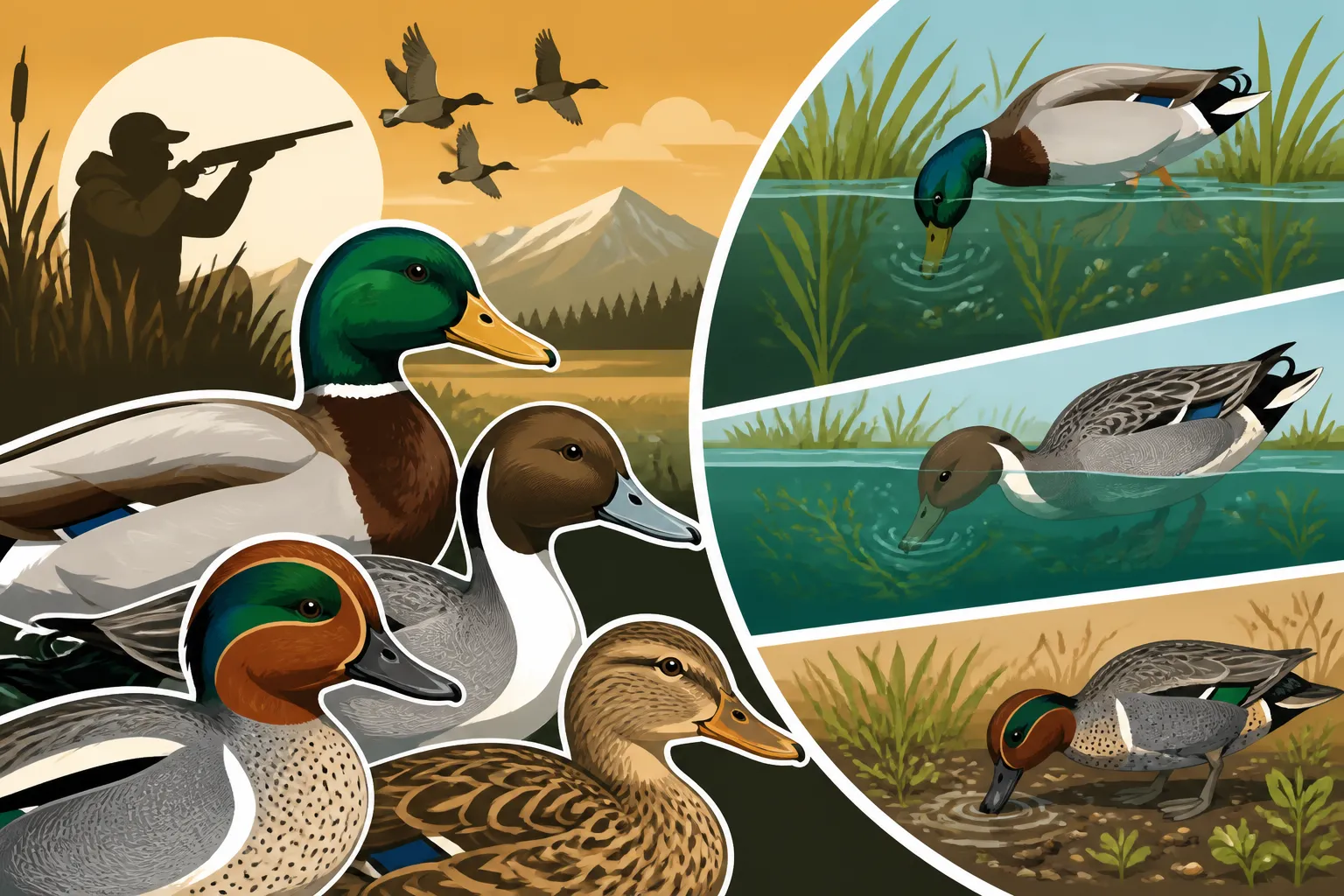
Dabbling ducks are likely the most familiar to many hunters. Think mallards, pintails, wigeon, and teal. What defines a dabbler is their feeding method: they primarily feed on the surface or by "tipping up" in shallow water, their tails pointing skyward as they reach for submerged vegetation or invertebrates. They rarely, if ever, dive completely underwater for food. This feeding style means they prefer shallow marshes, flooded fields, slow-moving rivers, and those classic prairie potholes that define so much of Alberta's waterfowl landscape. They also take off directly from the water, springing into the air, which is a key identification feature. You'll often find these birds in areas with abundant emergent vegetation like cattails, bulrushes, and sedges, or where agricultural crops provide an easy meal.
Their diet is quite varied, consisting of seeds, aquatic insects, snails, and the occasional small fish, but they have a strong preference for plant matter. This makes them highly attracted to grain fields, particularly during the fall migration when crops like barley, wheat, and peas have been harvested. When scouting for these birds, pay close attention to shallow water bodies with muddy bottoms and areas adjacent to farm fields. You might even hear their distinctive quacks and whistles emanating from these rich environments before you see them.
Diving Ducks: Submerged Foragers and Deep Water Haunts
Diving ducks, on the other hand, are built for a different life. Species like canvasbacks, redheads, scaup, and ring-necked ducks are equipped with larger feet placed further back on their bodies, making them excellent underwater swimmers but a bit clumsy on land. They feed by diving deep beneath the surface, sometimes for extended periods, to grab aquatic plants, mollusks, crustaceans, and small fish. This means they are typically found on larger, deeper bodies of water: big lakes, reservoirs, wide rivers, and even the open expanses of large marshes where water depth allows for their preferred feeding method.
Unlike dabblers, divers need a running start to get airborne, paddling across the water for a short distance before lifting off. This characteristic, along with their typically stockier build and often smaller, flatter wing profile, can help distinguish them in flight. When considering Pothole Hunting Ducks on Small Water, you might primarily encounter dabblers, but if those potholes are deep or connected to larger sloughs, you could certainly find divers mixed in. Their reliance on deeper water also means they often stage in large rafts far out on open water during the day, coming into shallower areas or specific feeding grounds during low light periods.
Mergansers: The Fish-Eating Specialists
While technically diving ducks, mergansers (Common, Red-breasted, and Hooded) deserve a special mention due to their highly specialized diet. These ducks are truly piscivorous, meaning they primarily eat fish. Their long, slender bills with serrated edges are perfectly adapted for grasping slippery prey underwater. You'll find mergansers on clear lakes, rivers, and even coastal estuaries, often in areas with good fish populations. While they are legal to hunt and count towards your duck bag limits, many hunters pass on them due to their strong, fishy flavour, which can make them less palatable than grain-fed dabblers.
However, recognizing mergansers is important for accurate identification and adherence to bag limits. They are fast flyers and often travel in smaller groups, exhibiting the same 'running start' takeoff as other diving ducks. You'll rarely see them feeding in shallow stubble fields with mallards; their hunting grounds are almost exclusively aquatic. Their sleek profile and often vibrant plumage, especially the Hooded Merganser with its striking crest, make them a beautiful sight on Alberta's waterways, even if they aren't always the primary target for the table.
Key Dabbling Duck Species and Their Feeding Grounds
Alberta's landscape offers a smorgasbord for dabbling ducks, from the vast grain fields of the prairie to the reedy edges of countless wetlands. Knowing which species prefers what kind of buffet is key to finding success.
Mallards: The Adaptable Greenheads
Ah, the mallard. The iconic "greenhead," probably the most recognizable and widespread duck species in Alberta, and for good reason. Mallards are incredibly adaptable, thriving in almost every habitat type from urban ponds to remote boreal muskeg. They are surface feeders, tipping up to graze on aquatic vegetation, seeds, and invertebrates in shallow water, but their real claim to fame for hunters is their love for agricultural fields. After the grain has been harvested, these fields become prime feeding zones, providing a rich source of calories. You can often find mallards feeding in stubble fields right alongside geese.
When fall migration hits, huge numbers of mallards congregate in Alberta's grain belt, often flying out to feed in fields twice a day – once in the early morning and again in the late afternoon or evening. These birds are looking for energy-rich grains like barley, wheat, and peas. This makes Hunting Ducks on an Alberta Stubble Field a highly effective strategy for mallards. Look for them in low spots in fields where water might have collected after a rain, or near treelines and bluffs that offer some cover for landing and loafing. Their strong social bonds mean that if you find one, you're likely to find many.
Pintails and Widgeon: Prairie Pothole Royalty
The pintail, with its elegant long neck and distinctive tail feather (on the drakes), is another prairie favourite. These birds are truly at home in the vast, open spaces of Alberta's agricultural regions and prairie potholes. Like mallards, they are dabblers, but they tend to prefer shallower water, often feeding in very thin sheet water over mudflats or within harvested fields. They are particularly fond of small seeds and waste grain. Pintails are early migrants, often showing up in large numbers during the early September seasons and moving through relatively quickly, making Hunting Alberta's September Archery Opener a prime time to target them.
Widgeon, characterized by the drake's white crown patch and their unique whistling call, are also common prairie dwellers. They are known for "grazing" much like geese, often found feeding on short grasses and clover in pastures or very shallow water. They also have a habit of "pirating" food from diving ducks, snatching plants that divers bring to the surface. Widgeon are also big fans of waste grain in fields, but you'll often find them dabbling in the shallows of potholes and marshes where they can find tender aquatic vegetation. Both pintails and widgeon are wary birds, and successful hunting often relies on careful scouting to pinpoint their preferred feeding locations.
Green-Winged and Blue-Winged Teal: Early Season Favorites
Teal are the speedsters of the duck world, small but incredibly agile flyers. We have two main species in Alberta: Green-winged and Blue-winged. Blue-winged teal are typically the first to arrive in spring and the first to depart in late summer/early fall, making them an excellent target for early season hunts. They prefer shallow, vegetated wetlands and potholes, feeding on small seeds, aquatic insects, and snails. You'll often see them in large flocks, darting and weaving over the water.
Green-winged teal are a bit hardier and stay later into the fall. They are also dabblers, favouring similar shallow, marshy habitats. Both species are drawn to areas with abundant emergent vegetation and exposed mudflats where they can pick up tiny seeds and invertebrates. Their small size makes them a challenging target, but their tendency to decoy readily and fly in tight groups makes for exciting shooting. When planning a hunt focusing on these smaller ducks, remember that their optimal season might align with different parts of Alberta Duck Season Dates than the larger mallards or divers.
Prominent Diving Duck Species and Preferred Foraging Areas
While dabblers dominate the shallow wetlands and grain fields, Alberta's larger lakes, reservoirs, and deeper rivers are the domain of the diving ducks. These birds offer a different kind of hunting experience, often requiring larger decoy spreads and a keen eye for open water.
Canvasbacks and Redheads: Masters of Deep Water
The canvasback, often called the "king of ducks," is a truly magnificent bird, known for its distinctive sloping profile and a deep affinity for wild celery and pondweeds. These plants grow in the deeper waters of large marshes, lakes, and reservoirs. Canvasbacks are powerful divers, capable of staying submerged for extended periods to extract tubers and rhizomes from the bottom. They often congregate in massive rafts on expansive water bodies, venturing into shallower bays to feed. Their diet also includes a good amount of mollusks and insect larvae.
Redheads, with their striking chestnut heads and blue-grey bills, are another highly sought-after diving duck. While they share a love for deeper water, redheads have a more varied diet than canvasbacks, consuming a mix of aquatic plants, seeds, and invertebrates. They are often found in association with canvasbacks, as well as scaup, on large, shallow-to-moderately deep lakes and marshes. Redheads are also known for being "nest parasites," sometimes laying their eggs in the nests of other duck species. Both canvasbacks and redheads can be extremely challenging to hunt due to their preference for open water and their speed in flight, demanding a strategic setup and often strong winds to bring them within range.
Scaup and Ring-necked Ducks: The Lesser-Known Divers
Lesser Scaup (often just called "bluebills") are abundant diving ducks, found on a wide range of water bodies across Alberta. They prefer lakes, large ponds, and slow-moving rivers, particularly those with muddy bottoms rich in aquatic invertebrates. Scaup feed primarily on snails, insect larvae, mussels, and some plant material, diving to relatively shallow depths. They often form large flocks, especially during migration, and are known for flying in tight, fast-moving groups. Their propensity for large concentrations makes them a common sight in many areas, and hunters can often find success by setting up on points or islands along large lakes where scaup congregate.
Ring-necked ducks, often mistaken for scaup due to similar plumage, are another common diver. However, ring-necks tend to prefer smaller, more secluded wetlands and marshy bays on larger lakes, especially those with dense stands of emergent vegetation. They feed on a mix of seeds, aquatic plants, and invertebrates, often diving in shallower water than scaup. The subtle chestnut "ring" on their neck (often hard to see) and the distinctive white ring on their bill are key identification features. When Scouting Fields for Alberta Waterfowl, don't forget to also cast an eye over the larger, deeper water bodies nearby for these diving species.
Goldeneyes and Buffleheads: River and Lake Residents
Common Goldeneye and Barrow's Goldeneye are robust diving ducks primarily found on rivers and larger, clear-water lakes, especially in forested regions. They are extremely hardy, often staying in Alberta until freeze-up, utilizing open water on rivers and spring-fed lakes. Goldeneyes are primarily carnivorous, feeding on aquatic insects, crustaceans, mollusks, and small fish, which they snatch during dives. Their distinct whistler wings make an audible sound in flight, giving them their nickname. They are often found in smaller groups or pairs, hugging shorelines or river bends where current keeps water open.
Buffleheads, the smallest of the diving ducks, are true pocket rockets. With their striking black and white plumage and oversized heads, they are easily identifiable. Buffleheads prefer small, secluded ponds, forested lakes, and quiet bays on larger water bodies. They are adept divers, feeding mainly on aquatic insects, snails, and small crustaceans. Their small size and preference for sheltered waters mean they often go unnoticed by hunters focused on larger species. Both goldeneyes and buffleheads are tough birds, and their agility in flight can make them challenging targets.
Understanding Duck Food Sources in Alberta
To consistently find ducks, you need to understand what's on their menu and where they're getting it. Alberta's diverse landscape offers an incredible variety of food sources, which largely dictates where different duck species will spend their time.
Agricultural Fields: A Bountiful Buffet
For many duck species, particularly dabblers like mallards, pintails, and widgeon, Alberta's vast agricultural fields are a literal goldmine. Once crops like barley, wheat, peas, and corn have been harvested, a significant amount of waste grain is left on the ground. This easy-to-access, high-energy food source is irresistible to ducks, especially during the fall migration when they need to pack on calories for their long journey south. Large flocks will leave their loafing water (a safe place to rest, often a large lake or reservoir) in the morning and evening to fly to these fields.
Identifying which fields ducks are using requires diligent scouting. Look for tell-tale signs: feathers, droppings, and obviously, ducks flying into or out of a field. Fields that have standing water after a rain or a low spot with a slough nearby are often magnets. Hunters often refer to this as "sheet water" hunting. When assessing a potential field, consider the recent harvest activity and the type of crop. Ducks often prefer freshly harvested fields as the waste grain is more accessible. Utilizing scouting tools like satellite imagery, perhaps through a platform like GoHunt, can help identify likely field types and proximity to water.
Natural Wetlands and Marshes: Seed and Invertebrate Hotspots
Beyond the grain fields, natural wetlands and marshes are absolutely critical habitats for all duck species. These areas provide an incredible diversity of food sources, from the seeds of aquatic plants to a rich abundance of invertebrates. Dabbling ducks will feast on pondweed seeds, smartweed, wild rice, and duckweed, as well as insect larvae and small crustaceans found in the shallow margins. Diving ducks will delve deeper for tubers, rhizomes of submerged plants like wild celery, and a broader range of mollusks and insects.
The quality and type of vegetation in a marsh will directly influence which duck species are present. A cattail-choked marsh might hold more dabblers, while a deeper, clearer marsh with good submerged plant growth might attract canvasbacks and redheads. These wetlands also serve as vital resting and loafing areas between feeding forays, offering safety and shelter. Understanding Which Ducks Nest in Alberta's Pothole Country gives you insight into the foundational importance of these specific habitats. Accessing these spots often means walking into private land, so always remember the importance of Getting Permission for a Goose Field (or duck field, in this case).
Rivers and Lakes: Diverse Aquatic Ecosystems
Alberta's extensive river systems and numerous lakes also play a crucial role in providing food for ducks. Rivers, especially slower-moving stretches, oxbows, and backchannels, offer a constantly renewed supply of aquatic insects, larval forms, and small fish. Divers like goldeneyes and mergansers are particularly fond of these environments, where they can find clear water to pursue their prey. Even dabblers will utilize river edges and sandbars where they can dabble for seeds and insects.
Lakes, from small secluded ponds to vast reservoirs, provide a spectrum of food. Shallow lake margins mimic wetlands, offering seeds and invertebrates, while deeper sections support populations of mollusks, crustaceans, and fish that diving ducks exploit. The size and depth of the lake, along with its overall productivity, will determine its attractiveness to various species. For example, large, deep lakes often host huge rafts of scaup and canvasbacks during migration. The edges of lakes can also provide a safe haven for ducks after feeding in nearby fields, making them key loafing areas.
Scouting for Feeding Ducks: Tips and Techniques
Finding where ducks are feeding is often the hardest part of waterfowl hunting, but it's also the most rewarding. Diligent scouting is the single most important factor for consistent success in Alberta.
Interpreting Field Sign and Waterfowl Behavior
When you're out scouting, you're essentially playing detective. The first thing you'll look for are obvious signs of duck activity: fresh droppings, feathers, and disturbed stubble in harvested fields. A field that's been heavily used will show clear evidence of ducks walking, dusting, and eating. Pay attention to the concentration of these signs – a few droppings might mean a passing flock, but widespread evidence points to a preferred feeding spot. Remember that ducks will often return to the same general area, sometimes even the exact same field, day after day, as long as the food source remains viable and they aren't pressured.
Beyond physical signs, observe waterfowl behavior. Watch flight patterns at dawn and dusk. Are ducks flying from a large body of water directly to a specific field? That's your cue. Pay attention to how they approach and leave a field; they often use consistent flight lines. Also, consider the wind. Ducks, especially larger species, prefer to land and take off into the wind. This knowledge can help you predict their approach and set up your decoy spread strategically. Don't be afraid to pull over and just observe for an hour or two, letting the birds show you what they're doing.
Utilizing Digital Tools for Habitat Analysis
In today's hunting world, digital tools are invaluable for scouting. Platforms like GoHunt, for example, offer detailed satellite imagery and property boundaries that can give you a massive head start. You can identify potential feeding fields (harvested grain, pea, or corn fields), locate water sources (potholes, sloughs, rivers, lakes), and even identify potential travel corridors between them, all from your computer or phone. This allows you to narrow down areas to physically scout, saving you precious time and fuel. Look for fields adjacent to known wetland complexes or major river systems.
Additionally, many apps show public and private land boundaries, which is crucial for ethical and legal hunting. Alberta's landscape is a patchwork of deeded, Crown, and lease lands, and understanding these boundaries is paramount before you ever set foot on the ground. Use these tools to identify those often-overlooked corners or strips of Crown land that might connect to prime feeding areas. The more information you have before you even step out of the truck, the better equipped you'll be to make informed decisions about where to focus your efforts.
Timing Your Hunts to Peak Feeding Activity
Ducks, much like us, operate on a schedule, and understanding that schedule is vital for success. Most ducks exhibit crepuscular feeding patterns, meaning they are most active at dawn and dusk. They'll leave their roosting/loafing water at first light to head to feeding areas, spend an hour or two gorging themselves, and then return to water to rest and digest. They'll often repeat this pattern in the late afternoon/evening. Sometimes, especially with strong weather fronts or heavy hunting pressure, they might even make a midday feeding flight, though this is less common.
The weather also plays a huge role. Cold, clear mornings after a frost can make ducks incredibly hungry, driving them to fields with zeal. Conversely, warm, calm days might see them loafing longer on the water. A strong northwest wind during migration can push new birds into the area, making scouting from one day to the next critical. Keep an eye on the long-range forecast and consult Alberta Duck Season Dates to plan your trips around favourable weather patterns and peak migration windows. The early bird truly does get the worm (or the duck, in this case) when it comes to field hunting.
Conservation and Responsible Duck Hunting Practices
Being a responsible duck hunter means more than just knowing your species and hitting your target. It's about respecting the resource, adhering to regulations, and ensuring the future of waterfowl hunting for generations to come.
Species Identification for Bag Limits
One of the most important aspects of responsible duck hunting is accurate species identification. Alberta's regulations set specific daily bag limits and possession limits, and these limits often vary by species. For example, the daily limit for mallards might be generous, while that for canvasbacks or pintails might be much smaller. Mistaking a redhead for a scaup, or a pintail for a mallard, could lead to accidentally exceeding a species-specific limit. This isn't just about avoiding penalties; it's about managing populations sustainably.
Spend time studying duck identification guides, paying attention to plumage, flight patterns, and vocalizations. Even after the shot, take a moment to confirm the species before bagging. Many hunters find it helpful to keep a small identification guide handy. Understanding Duck Daily Bag Limit by Species is non-negotiable, and failing to correctly identify your birds can have serious consequences for conservation efforts. Your ability to distinguish between different ducks contributes directly to sound wildlife management.
Non-Toxic Shot Requirements and Why They Matter
A crucial regulation for all waterfowl hunters in Alberta (and across Canada) is the mandatory use of non-toxic shot. This means you cannot use lead shot for hunting migratory game birds. The most common non-toxic alternatives are steel, bismuth, and tungsten-based shot. This regulation isn't just bureaucratic red tape; it's a vital conservation measure. Lead shot, when ingested by ducks (who often pick up grit from marsh bottoms to aid digestion), can cause lead poisoning, leading to illness, paralysis, and death. This impacts not only the ducks but also predators that consume poisoned birds.
The switch to non-toxic shot has significantly reduced lead exposure in waterfowl populations. While non-toxic shot might handle a bit differently than traditional lead, modern ammunition technology has come a long way, offering excellent performance. Familiarize yourself with Non-Toxic Shot Requirements for Migratory Birds and practice with your chosen non-toxic loads before the season. It’s an easy way to ensure your hunting practice is ethical and contributes to the health of the very birds we love to pursue.
Respecting Habitat and Private Land
Alberta's abundant waterfowl resource relies heavily on healthy habitat, both public and private. As hunters, we have a responsibility to be stewards of these lands. This means packing out everything you pack in, leaving no litter or spent shells behind. Avoid disturbing sensitive nesting or roosting areas, and be mindful of your impact on the environment, particularly fragile wetland ecosystems. If you're using ATVs or other vehicles, stick to designated trails and avoid unnecessary damage to fields or natural areas.
Crucially, a significant portion of Alberta's prime waterfowl habitat is on private land. Gaining access to these fields and wetlands means building relationships with landowners. Always ask for permission, even if you think a field looks abandoned. Be polite, offer to share game, and respect any conditions the landowner sets. Familiarize yourself with Alberta Landowner Permission Law to understand your legal obligations. A good relationship with landowners ensures continued access for all hunters and helps maintain the positive image of our sport. Without that access, many of the best feeding grounds would be off-limits, diminishing the overall hunting experience in Alberta.
Disclaimer
This article is for general informational purposes only and does not constitute professional advice. Laws, prices and regulations vary by location and change over time. Consult a qualified professional for guidance on your specific situation.