How Alberta WMU Numbers Are Grouped
It can be incredibly confusing to look at Alberta's hunting regulations and see a long list of Wildlife Management Unit (WMU) numbers, especially for new hunters or those venturing into unfamiliar territory. Trying to keep track of all 219 separate units feels like a monumental task, and you might wonder how anyone can possibly make sense of it all. The good news is, you don't have to memorize every single WMU. This guide will walk you through how Alberta's WMU numbers are intelligently grouped, simplifying your hunting planning and helping you understand the regulatory landscape more easily.
Deciphering Alberta's WMU System: Why the Numbers Matter
When you first dive into Alberta's hunting regulations, the sheer volume of Wildlife Management Unit numbers can feel overwhelming. It's like being handed a phone book and told to find one specific person without any alphabetical order. Each WMU represents a distinct geographical area, and within these boundaries, specific rules, season dates, and species allocations apply. But what does it all really mean for the hunter trying to plan their next adventure?
What Are Wildlife Management Units Anyway?
At its core, a Wildlife Management Unit (WMU) is simply a defined geographical area that Alberta Fish and Wildlife uses to manage game populations. Think of them as individual districts, each with its own unique blend of habitat, landscape, and wildlife. These boundaries aren't arbitrary; they're drawn based on a combination of factors, including major natural features like rivers and mountain ranges, road networks, and land use patterns. The idea is to manage wildlife at a local level, allowing for targeted conservation efforts, controlled harvests, and specific responses to localized population trends, such as increasing or decreasing deer numbers in a particular region. Without WMUs, managing such a vast and diverse province would be a logistical nightmare, leading to blanket rules that wouldn't make sense in specific ecosystems. For a deeper understanding, you might find our guide on Alberta's 219 Wildlife Management Units helpful.
Moving Beyond Just a Number: The Need for Grouping
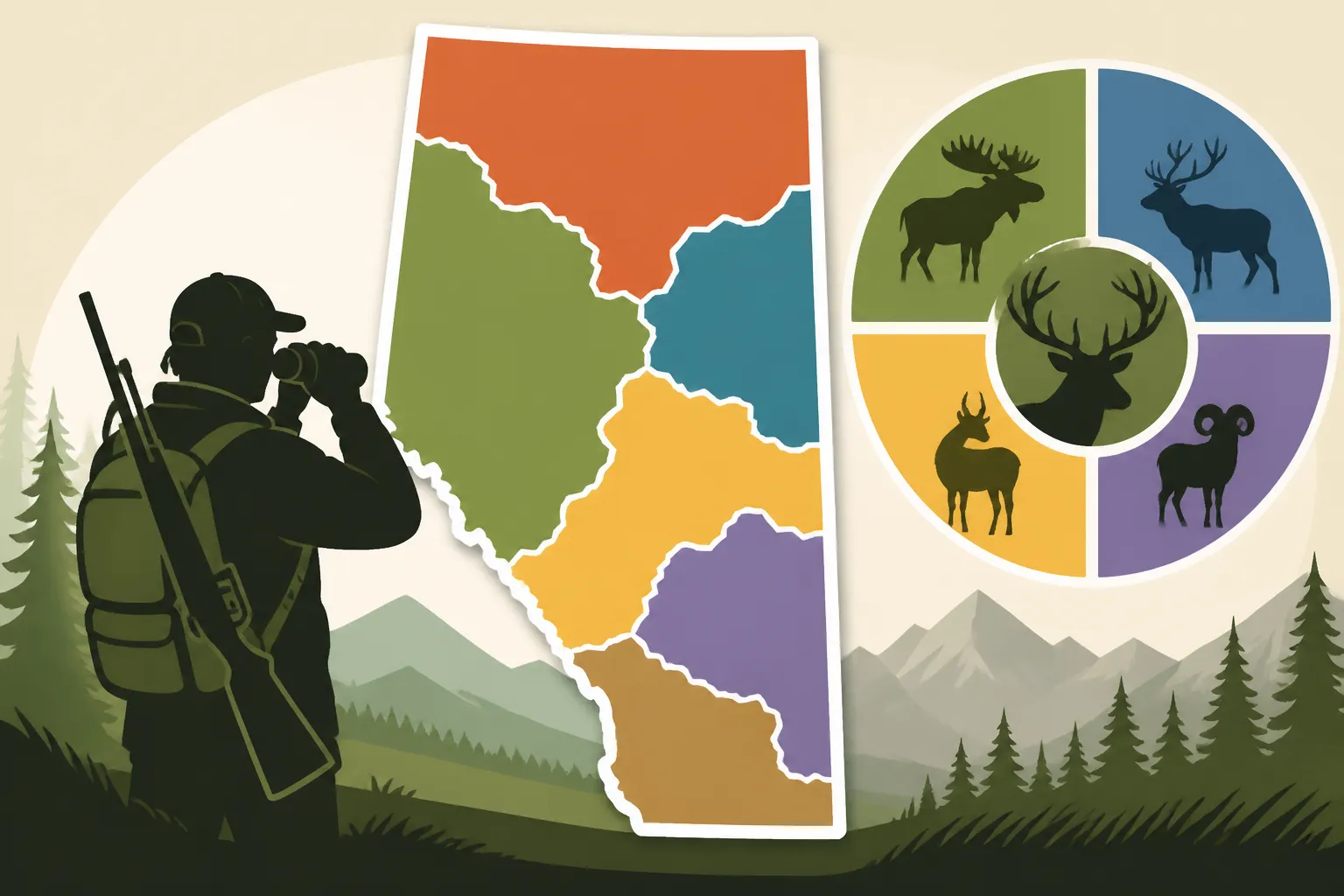
While individual WMUs are crucial for granular management, expecting every hunter to remember the specific nuances of all 219 units is unrealistic. This is where the concept of grouping comes in. Alberta Fish and Wildlife has strategically grouped WMUs into larger, more manageable regions that share similar ecological characteristics, habitat types, and often, similar hunting opportunities and regulatory frameworks. This grouping is not just for convenience; it reflects the major biophysical zones of the province. Instead of thinking about WMU 102, 104, 106, 108, and so on, you can start to think about the "Prairie WMU Group," understanding that certain species, habitats, and season structures will generally apply across that entire cluster. This simplifies the process of researching and comparing hunting opportunities significantly, helping you narrow down your focus based on the type of terrain and game you're interested in pursuing.
The Core Geographical Regions of Alberta's WMU Groupings
Alberta is a vast province, stretching from the prairies in the south to the boreal forest in the north, with the majestic Rocky Mountains forming its western spine. Naturally, the wildlife and hunting opportunities vary dramatically across these diverse landscapes. The WMU groupings are a direct reflection of these major geographical and ecological zones, providing a logical framework for understanding where different types of hunting experiences are found.
Prairie and Grassland Zones: Where the Antelope Roam
The WMUs in the southern and southeastern parts of Alberta fall into the Prairie and Grassland Zones. These are often characterized by flat to rolling terrain, vast open fields of crops, native grasslands, and the distinctive coulees and badlands carved by ancient rivers. Here, you'll find iconic prairie species that thrive in open country. Think of the excitement of Glassing Alberta Prairie for Pronghorn during the draw season, or the challenge of finding a big mule deer buck along the sparse river breaks.
- Key Characteristics: These WMUs are predominantly agricultural, with large tracts of private land mixed with some public access, including provincial grazing reserves and river breaks. Water sources can be limited, influencing game movement. The terrain generally allows for extensive glassing, and long-range shooting opportunities are common. Expect a lot of driving and scouting to locate game, often with the need for permission to access private lands.
- Common Game Species: This region is renowned for its Mule Deer (especially in the coulees and badlands), Whitetail Deer (often found near river bottoms and shelterbelts), Pronghorn (a draw-only species), and various Upland Birds like Hungarian Partridge and Sharp-tailed Grouse. You'll also find abundant Waterfowl in the many potholes and stubble fields, particularly during migration.
- Hunting Considerations: Access to private land is often critical here, making Asking a Grazing Leaseholder for Access or knocking on doors a frequent part of the hunting strategy. Wind can be a major factor, especially when Wind in Open Prairie Country makes stalking difficult. Early archery seasons for deer, and later rifle seasons, provide varied opportunities.
Parkland and Aspen Zones: Whitetail and Moose Transition Lands
Moving north from the prairie or west towards the foothills, you enter the Parkland and Aspen Zones. These WMUs are a beautiful mosaic of rolling agricultural land, aspen bluffs, bush pockets, small lakes, and sloughs. It's a true transition zone, offering a mix of species and hunting styles. This is where you might experience the classic Alberta bush hunting for whitetails or even find moose pushed out of denser boreal areas.
- Key Characteristics: The landscape here is diverse, featuring cultivated fields, patches of dense bush, and numerous water bodies. Cover is more abundant than in the open prairie, providing excellent habitat for a variety of game. Access can be a mix of private land and smaller pockets of Crown land, often requiring careful navigation of property lines. The habitat supports higher densities of certain species due to the combination of food sources and cover.
- Common Game Species: The Parkland is arguably prime Whitetail Deer country, offering excellent opportunities for both archery and rifle hunters. You'll also find a healthy population of Moose, particularly in WMUs with more bush and wetlands. Mule Deer can be present, especially where parkland transitions into more broken terrain. Black Bear are also found here, and it's excellent territory for various Upland Birds like Ruffed Grouse and Spruce Grouse, alongside good Waterfowl hunting.
- Hunting Considerations: This region often means balancing scouting for big deer along bush edges with securing private land access. Hanging a Stand on an Alberta Bush Edge is a common tactic. Understanding how game uses shelterbelts and slough edges is key. The dense cover means still-hunting or using drives can be effective, and calling techniques like Rattling and Calling Whitetails in Farm Country can pay off during the rut.
Foothills and Mountain Zones: Home of the Giants
Along the western side of the province, the foothills rise into the majestic Rocky Mountains. These WMUs are characterized by rugged terrain, steep slopes, dense timber, alpine meadows, and swift-flowing rivers. This is truly big game country, demanding physical fitness and a willingness to venture deep into the backcountry.
- Key Characteristics: Expect dramatic elevation changes, thick coniferous forests, and high-alpine environments. Access can be challenging, often requiring hiking, horseback riding, or ATVs on designated trails. Weather can change rapidly and be severe. Public land is extensive here, much of it within Public Land Use Zones (PLUZs) like the Ghost and McLean Creek areas.
- Common Game Species: The Foothills and Mountain WMUs are known for large Elk herds, Bighorn Sheep, Mountain Goats (draw-only for goats; residents buy class 1 sheep licences, while class 2 sheep and special WMU class 1 sheep are drawn), Moose in lower elevations and river bottoms, Mule Deer in clearcuts and alpine fringes, and Black Bears. Grizzly Bears also inhabit these areas, requiring extra caution. Wolf and Cougar populations are also strong here. Our guide on Elk Hunting Alberta's Foothills details opportunities for this challenging species.
- Hunting Considerations: Physical conditioning is paramount for hunting in these WMUs, especially for species like sheep and goats. Gear needs to be robust and adaptable to variable weather. Backcountry camping is common. Understanding Bugling Elk in Alberta's Foothills can be a game-changer during the rut. Using satellite imagery for scouting, as detailed in Scouting With Satellite Imagery in Alberta, is invaluable for identifying access points and game habitat.
Boreal Forest Zones: Vast Wilderness Opportunities
Stretching across the northern half of Alberta, the Boreal Forest Zones encompass immense tracts of coniferous and mixedwood forest, muskeg, lakes, and rivers. This is Alberta's true wilderness, offering expansive areas for those seeking solitude and a challenging hunt.
- Key Characteristics: This region is characterized by vast, unbroken forests, often with challenging access due to wet ground (muskeg), dense timber, and limited road networks, especially away from major forestry roads and oilfield leases. Clear-cuts and burned areas are often prime habitat for moose and bear. Expect significant mosquito and black fly pressure during warmer months.
- Common Game Species: The Boreal Forest is primarily Moose country, home to some of Alberta's biggest bulls. It's also excellent for Black Bear hunting, with many color phases. Whitetail Deer are present, especially along the fringes and in disturbed areas like cutlines. Wolf and Cougar populations are significant. Ruffed Grouse and Spruce Grouse are abundant. For moose, check out our insights on Hunting Moose Along Cutlines and Seismic Lines.
- Hunting Considerations: Navigation is critical due to the dense forest and often featureless terrain. A reliable GPS or mapping app like GoHunt is indispensable. Access is often via forestry roads, cutlines, or by boat on major rivers and lakes. Patience and a willingness to cover ground are key. Calling a Bull Moose in the Rut can be very effective here. Hunters must be prepared for self-sufficiency and potential wildlife encounters.
Here's a quick summary table of these WMU groupings:
| WMU Group | Primary Landscape | Key Game Species (Primary) | Common Access Challenges |
|---|---|---|---|
| Prairie | Open fields, native grassland, coulees, badlands | Mule Deer, Whitetail Deer, Pronghorn, Upland Birds, Waterfowl | Private land access, open terrain spotting |
| Parkland | Agricultural land, aspen bluffs, sloughs, bush pockets | Whitetail Deer, Moose, Black Bear, Upland Birds, Waterfowl | Mixed public/private access, denser cover |
| Foothills | Rugged mountains, steep slopes, coniferous forests, alpine | Elk, Bighorn Sheep, Mountain Goat, Moose, Mule Deer, Black Bear | Physical exertion, challenging terrain, variable weather |
| Boreal | Vast coniferous/mixedwood forest, muskeg, lakes, rivers | Moose, Black Bear, Whitetail Deer, Wolves, Upland Birds | Remote access, dense bush, wet ground, navigation |
Regulatory Implications of WMU Groupings
Understanding these WMU groupings isn't just about knowing where certain animals live; it's absolutely vital for navigating Alberta's hunting regulations. The provincial government leverages these groupings to implement region-specific rules, ensuring sustainable harvests and tailored management strategies for different ecosystems and wildlife populations. If you don't grasp how these groups influence the rules, you could easily find yourself on the wrong side of the law or, just as frustratingly, miss out on fantastic opportunities.
Understanding Region-Specific Season Dates and Bag Limits
One of the most significant impacts of WMU grouping is on season dates and bag limits. It makes perfect sense when you think about it: the timing of the rut, animal migration patterns, and population health will vary widely between, say, the open prairie and the northern boreal forest. Therefore, the seasons for a particular species, like whitetail deer or elk, will often open and close at different times depending on which WMU group you're in.
For example, a general antlered whitetail season might open in late September for some Foothills WMUs, allowing hunters to target deer before heavy snows, while a Parkland WMU might have a later opening to align with crop harvest or the early stages of the rut. Similarly, bag limits can differ. In areas where a species population is robust and needs reduction, you might see opportunities for supplemental antlerless licences or even an extended season. Conversely, a WMU group with a struggling population might have more restrictive limits or a shorter season. Always double-check the current Alberta hunting regulations or use a reliable app like GoHunt to confirm the specific dates for your chosen WMU, as these can change year to year. Even within a group, specific WMUs might have slight variations, so paying attention to the details is paramount. For example, knowing When Alberta's Rifle Season Opens for your specific WMU is crucial.
Draw Odds and Priority Point Considerations by Group
Special licence draws are another area where WMU groupings play a pivotal role. Many of Alberta's most sought-after species, such as moose, elk, and pronghorn, are managed through a draw system where hunters apply for a specific licence in a particular WMU, while bighorn sheep are handled differently: residents buy class 1 (trophy) licences, and draws exist only for class 2 sheep, five WMU-special class 1 sheep draws, and non-resident Canadians. The success rate of these draws, and thus the number of priority points you might need, is heavily influenced by the WMU's group and the overall population in that region.
A WMU in a popular Foothills Elk zone, known for producing trophy bulls, will likely require significantly more priority points to draw a tag compared to an antlerless moose draw in a remote Boreal Forest WMU. Understanding these regional differences helps you strategize your draw applications. If you're targeting a trophy species like Bighorn Sheep, you'll be looking at specific Mountain WMUs, and priority only matters in the special WMU draws (410, 437, 444/446 and 408). If your goal is simply to harvest an animal, you might consider lower-point draw opportunities for antlerless deer or moose in less pressured Parkland or Boreal zones. Our article on Alberta's Special Licence Draws goes into much more detail about this system, but recognizing the regional context will give you a significant advantage in planning. Using an application that helps predict draw odds, like GoHunt, can be incredibly beneficial.
Species-Specific Management Across Grouped Areas
Beyond season dates and draw odds, WMU groupings are fundamental to species-specific management. Alberta Fish and Wildlife monitors animal populations, habitat conditions, and harvest rates within these units to make informed decisions. This means that a WMU in a Foothills group might have specific regulations regarding grizzly bear encounters or caribou protection, while a Prairie WMU might focus on grassland habitat restoration for pronghorn.
For instance, certain WMUs in the eastern and southern parts of the province might have mandatory Chronic Wasting Disease (CWD) submission requirements for deer heads, as outlined in Alberta's CWD Testing Requirements, reflecting targeted efforts to monitor and manage the disease in areas where it's prevalent. Similarly, specific management zones might be established within a WMU group to address human-wildlife conflict, such as elk damage on agricultural land, leading to special landowner harvest tags or increased antlerless opportunities. By understanding the broader ecological context of these groupings, you gain insight into the "why" behind specific rules and can better adapt your hunting practices to support sustainable wildlife management efforts in the region you choose to hunt.
Practical Approaches to WMU Research and Planning
Navigating Alberta's WMU system, even with the knowledge of groupings, still requires a systematic approach to research and planning. It's not enough to just know that "Prairie WMUs" exist; you need to delve into the specifics of your chosen units. Getting this right can mean the difference between a successful, enjoyable hunt and a frustrating, unproductive one. Modern tools and diligent homework are your best friends here.
Leveraging Mapping Tools and Online Resources
In today's digital age, hunters have access to an incredible array of mapping tools and online resources that make WMU research far more accessible than ever before. Gone are the days of poring over paper maps alone, trying to decipher faint boundary lines. Now, applications like onX Hunt, GoHunt, or Alberta's own Recreational Access Mapping Tool (RAMP) allow you to overlay WMU boundaries directly onto satellite imagery and topographical maps.
- Digital Map Benefits: These digital platforms are invaluable. You can zoom in on specific WMUs, identify terrain features like coulees, river valleys, and timber pockets, and even pinpoint potential access points, whether they be public roads, trails, or areas bordering private land. Many apps also show land ownership, which is crucial for distinguishing between Crown land and private property. Before heading out, use these tools to study potential staging areas for waterfowl, identify pinch points for deer, or locate remote basins for elk. Tools like GoHunt often integrate season dates and draw statistics, providing a one-stop shop for much of your preliminary research.
- Scouting Remotely: Beyond boundaries, these tools help with remote scouting. You can look for patterns in the landscape: south-facing slopes where snow melts faster, heavy cover for bedding areas, or agricultural fields bordering prime bedding habitat. For example, if you're Hunting Mule Deer in the Badlands Coulees, these maps can help you identify complex networks of ravines and breaks that might hold deer. Always remember, however, that while digital tools are powerful, they are no substitute for on-the-ground scouting to understand current conditions and game movement.
Consulting Official Regulations for Group Details
While mapping apps and online forums offer great insights, the official Alberta Hunting Regulations are your ultimate authority. It's critical to remember that while WMUs are grouped, the regulations are still written with specific WMU numbers in mind. Think of the groups as a general guide, but the precise legal details reside in the individual WMU listings.
- Understanding the "Exceptions": Often, a general rule will apply to a group of WMUs, but then specific exceptions or additions will be listed for individual units within that group. For example, all WMUs in the "Foothills" might have a general archery season for elk, but one specific WMU might have an earlier close date, or an extra antlerless season due to high local populations. These details are paramount.
- Reading the Fine Print: Always read the regulations carefully for your chosen WMU. Pay attention to specific definitions, legal equipment, shooting hours, and any unique restrictions that might apply. The "Where to Hunt" sections and tables detailing season dates for big game and game birds are invaluable. Never assume that because a WMU is in the same group as another, all the rules are identical. This diligence ensures you remain compliant and make the most of your hunting opportunity. Our guide on Where to Read Alberta's Hunting Regulations provides a good starting point.
Developing a Flexible Hunting Strategy
Once you've done your research, the final step is to develop a flexible hunting strategy. Alberta's landscape and wildlife are dynamic, and conditions can change rapidly. A rigid plan, no matter how well-researched, can quickly become useless if unexpected weather hits, game moves, or your preferred access is closed.
- Contingency Planning: Consider alternatives. If your primary WMU is experiencing heavy pressure, have a backup WMU (perhaps in the same general group, but with different access points) in mind. If a sudden snowfall pushes game into different cover, know how to adapt your approach. For example, if you were planning to Spot-and-Stalk Mule Deer in Alberta in open fields, but they've moved into thick bush due to cold, you might need to switch to still-hunting or stand hunting.
- Species Versatility: Sometimes, being open to hunting a different species if conditions for your primary target aren't ideal can save a trip. While you might be focused on elk, knowing that your chosen WMU also has good opportunities for deer or bears means you can adjust your focus if needed. The grouped WMU system allows for this flexibility; if one WMU isn't working out, another in the same geographical group might offer similar habitat and species, providing a viable alternative without a complete overhaul of your gear or knowledge base. This adaptability is a hallmark of successful Alberta hunters.
Disclaimer
Please remember that hunting regulations in Alberta can change annually. While this guide provides a comprehensive overview of how WMU numbers are grouped and their implications, it is crucial to always consult the most current official Alberta Hunting Regulations before planning and undertaking any hunt. This guide is for informational purposes only and should not be considered a substitute for the official regulations.