Late Season Whitetail Dates by WMU
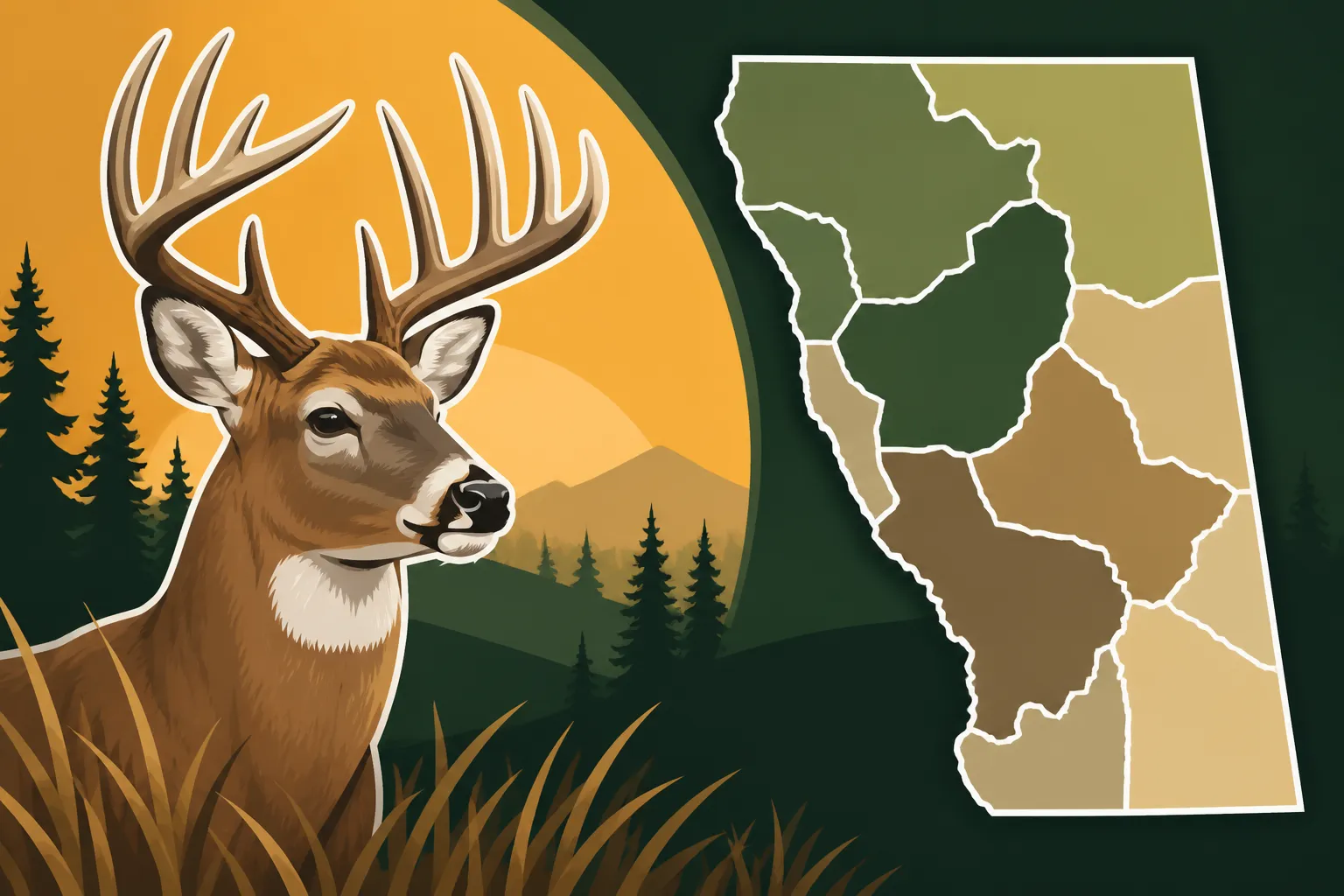
The crisp, biting air of late fall and early winter in Alberta signals a prime opportunity for whitetail hunters, but navigating the exact season dates can feel like trying to solve a cryptic puzzle. Trying to pinpoint when and where you can legally pursue a late-season whitetail, especially with the province's extensive Wildlife Management Unit (WMU) system, is a common frustration for many. This comprehensive guide is designed to cut through that confusion, breaking down the specific late-season whitetail dates across Alberta's diverse WMUs so you can plan your hunt with confidence and precision.
Understanding Alberta's Whitetail Season Structure
Alberta's hunting regulations are renowned for their detail, and the whitetail deer seasons are no exception. While many hunters focus on the archery opener in September or the rifle rut in November, the late season offers unique challenges and incredible rewards for those willing to brave the cold. Typically, the late season for whitetail deer extends through December, and in some WMUs, even into January. However, these dates are highly variable, often dictated by the specific WMU and the type of deer you're pursuing (antlered vs. antlerless).
General Versus Special Licence Dates
It's crucial to distinguish between general licences and special draw licences when looking at late-season opportunities. Many WMUs have general antlered whitetail seasons that close in late November or early December. However, a significant number of WMUs offer extended seasons for general antlered whitetail, or specific seasons for antlerless whitetail through special draws. These special licences often have extended dates to help manage local populations, especially in agricultural areas where deer can cause significant crop damage. For instance, some areas allow a general antlered whitetail harvest until December 7th, while others might have special antlerless seasons extending until January 15th of the following year. This distinction is paramount when checking the regulations; don't assume a general season applies to antlerless animals or that all antlered seasons end at the same time. You'll need to consult the Alberta Hunting Regulations in detail, or use a reliable hunting app like GoHunt to filter by species and WMU.
Impact of WMU Groupings on Dates
Alberta is divided into numerous Wildlife Management Units, each with its own specific regulations. These WMUs are often grouped geographically, such as the "Prairie" WMUs, "Parkland" WMUs, "Foothills" WMUs, and "Boreal Forest" WMUs. While there are overarching trends, specific dates can still vary within these groups due to local population dynamics, land use, and management objectives. For example, some WMUs within the Parkland region might have more generous late-season dates due to higher deer densities interacting with agricultural lands, whereas a less accessible Boreal Forest WMU might have an earlier close. This localized approach means that a general understanding of a region's typical dates is a good starting point, but always double-check the specific WMU you plan to hunt. Without this granular attention to detail, you could easily find yourself outside the legal hunting period, which is a headache no hunter wants.
Navigating Late Season Whitetail Dates by WMU
The key to a successful late-season whitetail hunt lies in meticulously checking the regulations for your chosen WMU. The variability can be daunting, but by breaking down the province into general regions, we can highlight typical patterns and exceptions. Remember, these are general guidelines, and the official Alberta Hunting Regulations are your final source of truth.
Parkland and Agricultural Zone WMUs
Many of Alberta's best late-season whitetail opportunities are found in the Parkland and agricultural zones, often referred to as the "White Area." These WMUs tend to have some of the longest seasons, especially for antlerless whitetails, due to population management needs.
- Typical Dates: Many WMUs in this region will see general antlered whitetail seasons close in late November or early December (e.g., around December 7th). However, special antlerless whitetail draws, often with high success rates, can extend well into January (e.g., until January 15th). Some specific WMUs, often those with abundant agricultural land, might even offer general antlered whitetail until December 31st or early January.
- Examples: WMUs like 200, 202, 204, 206 (around Red Deer, Lacombe) frequently have extended seasons. Further north in the Peace Country, WMUs in the 500 series might also have longer seasons. These are often the WMUs where you'll find significant opportunities for Alberta Supplemental Antlerless Licences.
- Opportunities: The late season here typically means deer are in full winter feeding patterns, concentrating in specific areas like standing corn, swathed grain fields, or heavy cover adjacent to food sources. Snow cover can also make deer more visible against the landscape and push them into predictable travel corridors. This is where applications like GoHunt really shine, allowing you to layer WMU boundaries with land ownership and satellite imagery to identify prime late-season spots.
Foothills and Mountain Fringe WMUs
Moving west towards the foothills, the late-season dates tend to be a bit more restrictive, reflecting different ecological pressures and management goals. These areas often have a mix of whitetail and mule deer, and regulations might be designed to protect one species while allowing harvest of another.
- Typical Dates: General antlered whitetail seasons in many Foothills WMUs (e.g., 300 series) often conclude earlier, frequently around the end of November or early December (e.g., November 30th or December 7th). Special antlerless seasons are less common or shorter than in the agricultural zones, though they do exist in some areas.
- Examples: WMUs around Rocky Mountain House, Nordegg, or the Crowsnest Pass might have whitetail seasons that close earlier than their prairie counterparts. You might find some extended seasons for specific antlerless draws, but they are less prevalent than in the White Area. For instance, checking the regulations for the Hunting the Livingstone-Porcupine Hills area will show these specific date differences.
- Challenges: Hunting in the foothills late in the season often means dealing with deeper snow and more rugged terrain. Deer may be moving to lower elevations or south-facing slopes, concentrating in sheltered areas. Access can also become a major factor, with forestry roads potentially becoming impassable due to snow.
Boreal Forest WMUs
The vast Boreal Forest region to Alberta's north and east presents a different late-season scenario. Whitetails here are often found in conjunction with moose and black bear, and their seasons are tailored to the unique environment.
- Typical Dates: Similar to the foothills, general antlered whitetail seasons in many Boreal WMUs (e.g., 500 series, parts of 300 series) often wrap up by late November or early December. Extended antlerless opportunities might exist, but usually with more limited quotas or specific conditions compared to agricultural areas.
- Examples: WMUs near Grande Prairie, Whitecourt, or Lac La Biche might have their whitetail seasons close around November 30th or December 7th. Specific WMUs might offer later opportunities, but it's less widespread than in the Parkland. If you're planning a trip to Moose Hunting Alberta's Boreal Forest, you'll notice the whitetail seasons in those same WMUs often conclude much earlier.
- Considerations: Hunting the Boreal Forest late in the year means extreme cold, potentially deep snow, and thick cover. Deer often yard up in specific timber stands, making them harder to find but more concentrated once located. Accessibility can be a major challenge due to snow-clogged roads and trails, making a reliable off-highway vehicle (OHV) a necessity in many areas.
A Quick Glance at General Late Season Whitetail Trends
To help visualize the general patterns, here's a simplified table. Always verify with the official Alberta Hunting Regulations for the specific WMU you intend to hunt.
| Region Type | General Antlered Whitetail Season End (Typical) | Special Antlerless Whitetail Season End (Typical) | Common WMU Series Examples |
|---|---|---|---|
| Parkland/Agricultural | Dec 7 – Dec 31 | Jan 15 | 200s, 500s |
| Foothills/Mountain Fringe | Nov 30 – Dec 7 | Dec 7 – Dec 14 (limited) | 300s |
| Boreal Forest | Nov 30 – Dec 7 | Dec 7 – Dec 14 (limited) | 500s, 300s |
Note: These are generalized dates and can vary significantly year to year and by specific WMU. Always consult the current Alberta Hunting Regulations.
Strategies for a Successful Late Season Whitetail Hunt
Once you've nailed down your WMU and its specific dates, the real work begins. Late-season whitetail hunting is often a game of endurance, patience, and adapting to harsh conditions. The deer are focused almost entirely on food, cover, and energy conservation, which can be both a challenge and an advantage.
Locating Food Sources and Thermal Cover
In the late season, deer are highly patterned around two primary needs: caloric intake and protection from the elements. This means scouting for food sources is paramount. Look for standing agricultural crops like corn or peas that haven't been harvested, swathed grain fields, or even specific timber stands that produce browse or acorns if applicable. Adjacent to these food sources, deer will seek out the densest thermal cover available. This could be thick spruce bogs in the Boreal, tangled willow runs in the Parkland, or south-facing slopes with heavy timber in the foothills. Understanding Where Alberta Whitetails Bed in Deep Snow can give you a significant advantage. During heavy snowfall or extreme cold, deer will often "yard up" in these protected areas, forming predictable travel routes between bedding and feeding. Using satellite imagery tools, especially those that offer topographical and vegetation layers, can help you identify these critical areas before you ever step foot in the field.
Adapting Hunting Tactics to Cold Weather
Late season hunting means cold, sometimes bitterly cold, weather. Your tactics need to reflect this. Stand hunting near known food sources or along established travel corridors between food and bedding can be highly effective, especially during the morning and evening hours. However, movement can be critical on truly frigid days, as deer may be on their feet more often, seeking to fuel their internal furnaces. Still-hunting or slow-stalking through dense cover adjacent to feeding areas, particularly during the warmest part of the day, can also produce results. Hunters pursuing Whitetail Hunting in Alberta in December and January should also consider the impact of snow. Fresh snow not only highlights tracks but can also muffle your footsteps, making it easier to sneak up on deer. Don't forget that deer in open country are incredibly wary, so understanding Rattling Volume in Open Parkland or Grunt Calls Late in Alberta's Rut can sometimes coax a curious buck into range, though vocalizations are generally less effective post-rut.
Essential Gear and Safety for Extreme Cold
Hunting in late-season Alberta demands specialized gear. Layering is not just a suggestion; it's a survival strategy. Start with moisture-wicking base layers, add insulating mid-layers (fleece, down, wool), and top it with a windproof and waterproof outer shell. Warm boots rated for extreme cold (like those from Baffin or Irish Setter), hand warmers, and a good quality balaclava are non-negotiable. A thermos of hot coffee, tea, or soup can be a morale booster and a vital source of warmth.
Safety is paramount. The risk of frostbite and hypothermia is very real. Always hunt with a buddy, or at least let someone know your exact hunting location and expected return time. Carry a first-aid kit, fire-starting materials, and extra food and water. A fully charged cell phone (though service can be spotty) and a satellite messenger are also highly recommended. Vehicles can break down in extreme cold, so having a Winter Truck Kit for an Alberta Hunt is essential. This includes blankets, extra fuel, a shovel, traction aids, and booster cables. Getting a deer out when it's thirty below, as explored in Getting a Deer Out on a Frozen Trail, adds another layer of logistical challenge, so plan for recovery and meat care carefully.
Essential Considerations for Late Season Success
Beyond dates and tactics, there are several other critical factors that often dictate the success of a late-season whitetail hunt. These elements are often overlooked but can make or break your experience.
Accessing Private Land and Crown Land in Winter
Many of Alberta's prime late-season whitetail areas, particularly in the Parkland and agricultural zones, are on private land. Securing permission well in advance is crucial. Farmers and landowners are often more receptive in the late season, especially if deer are causing damage, but always approach them respectfully and understand their concerns. The process of Asking an Alberta Landowner for Permission should be done well before you show up with your gear. For Crown Land, access rules might change with the weather. Snow-covered trails might restrict vehicle access, turning many areas into walk-in zones. Always check for any fire bans or access restrictions, which can still occur even in cold weather. Utilizing the Using Alberta's Recreational Access Mapping Tool can help you identify Crown Land parcels and understand general access policies, but a call to the local Fish and Wildlife office is always a good idea for specific winter conditions.
Meat Care and CWD Testing in Cold Weather
Even in the cold, proper meat care is vital. While frigid temperatures generally slow spoilage, rapid cooling of the carcass is still important to ensure quality. Getting the hide off quickly helps the meat cool down and avoids issues like souring. Hanging the meat in fall temperature swings can be a challenge, but in late season, keeping it from freezing too hard before processing might be the bigger concern. If temperatures are consistently below freezing, be mindful of hard freezing, which can make butchering difficult.
Alberta has mandatory Chronic Wasting Disease (CWD) testing requirements in certain WMUs. For late-season whitetails, this is particularly relevant in many of the central and eastern WMUs. You'll need to submit the head of your harvested deer at a designated freezer location. Understanding Which WMUs Require a Deer Head Submission and Where Alberta's CWD Freezers Are is essential. Be prepared to properly tag and bag the head according to instructions, and remember that How Long CWD Results Take can vary, so plan accordingly if you intend to travel with your meat or trophy.
Managing Expectations and Enjoying the Experience
Late-season hunting can be incredibly challenging. Deer numbers might be lower in some areas due to earlier hunting pressure, and the conditions themselves can be brutal. It's easy to get discouraged when the thermometer dips and the snow piles up. Manage your expectations realistically. A late-season whitetail hunt is often more about the experience of being out in the wild, appreciating the quiet beauty of a winter landscape, and honing your skills in difficult conditions. While a successful harvest is always the goal, the camaraderie, the crisp air, and the sheer challenge of it all make late-season hunting a rewarding endeavor regardless of whether you fill your tag. Embrace the quiet solitude and the deep connection to nature that these colder hunts provide.
Disclaimer
The information provided in this guide is for general informational purposes only and does not constitute legal advice. Hunting regulations in Alberta are subject to change, and it is the hunter's sole responsibility to consult and adhere to the most current Alberta Hunting Regulations, available through Alberta Environment and Protected Areas. Always confirm specific season dates, licence requirements, and WMU boundaries before engaging in any hunting activity.