What Oil and Gas Cutlines Do to Game
If you've spent any time hunting in Alberta, especially in our vast forested or mixed-wood zones, you’ve undoubtedly encountered them: those long, straight lines carving through the timber, sometimes narrow and overgrown, sometimes wide and meticulously maintained. These are the oil and gas cutlines, and they represent a significant, often polarizing, feature of our hunting landscape. Understanding how game animals interact with these linear disturbances is crucial for any hunter looking to consistently fill their tags and truly grasp the dynamics of their hunting grounds. This guide will walk you through the complex relationship between Alberta's big game and the pervasive network of oil and gas cutlines.
The Ubiquitous Presence of Cutlines Across Alberta's Landscape
It's easy to feel overwhelmed by the sheer number of cutlines that crisscross much of Alberta, especially as you venture into the Green Area or even the transition zones of the Parkland. They're a fundamental part of our province's industrial history and ongoing economic activity, but their presence profoundly alters the natural environment and, by extension, the behavior of the wildlife we pursue.
What Exactly is a Cutline?
At its core, a cutline is a linear strip of land cleared of trees and other vegetation. Their primary purpose is to facilitate resource exploration and extraction, predominantly for the oil and gas industry, but also for power transmission lines and even older logging roads. You'll encounter a few main types:
- Seismic Lines: These are often the narrowest, sometimes only a few meters wide, created for geophysical exploration. They were historically cut straight for miles, sometimes with little regard for terrain. While many older seismic lines have begun to regenerate, they can persist as discernible features for decades.
- Pipeline Rights-of-Way (ROWs): These are typically wider than seismic lines, sometimes dozens of meters across, providing access for pipeline construction, maintenance, and monitoring. They are usually maintained more aggressively to keep them clear, often through mowing or chemical treatment.
- Power Line Corridors: Similar to pipeline ROWs in their width and maintenance, these lines carry electricity and create distinct breaks in the forest canopy.
Each type of cutline, with its varying width, level of maintenance, and regeneration stage, presents different challenges and opportunities for both wildlife and hunters. They aren't just lines on a map; they are distinct microhabitats and travel corridors in their own right.
The Sheer Scale of the Network
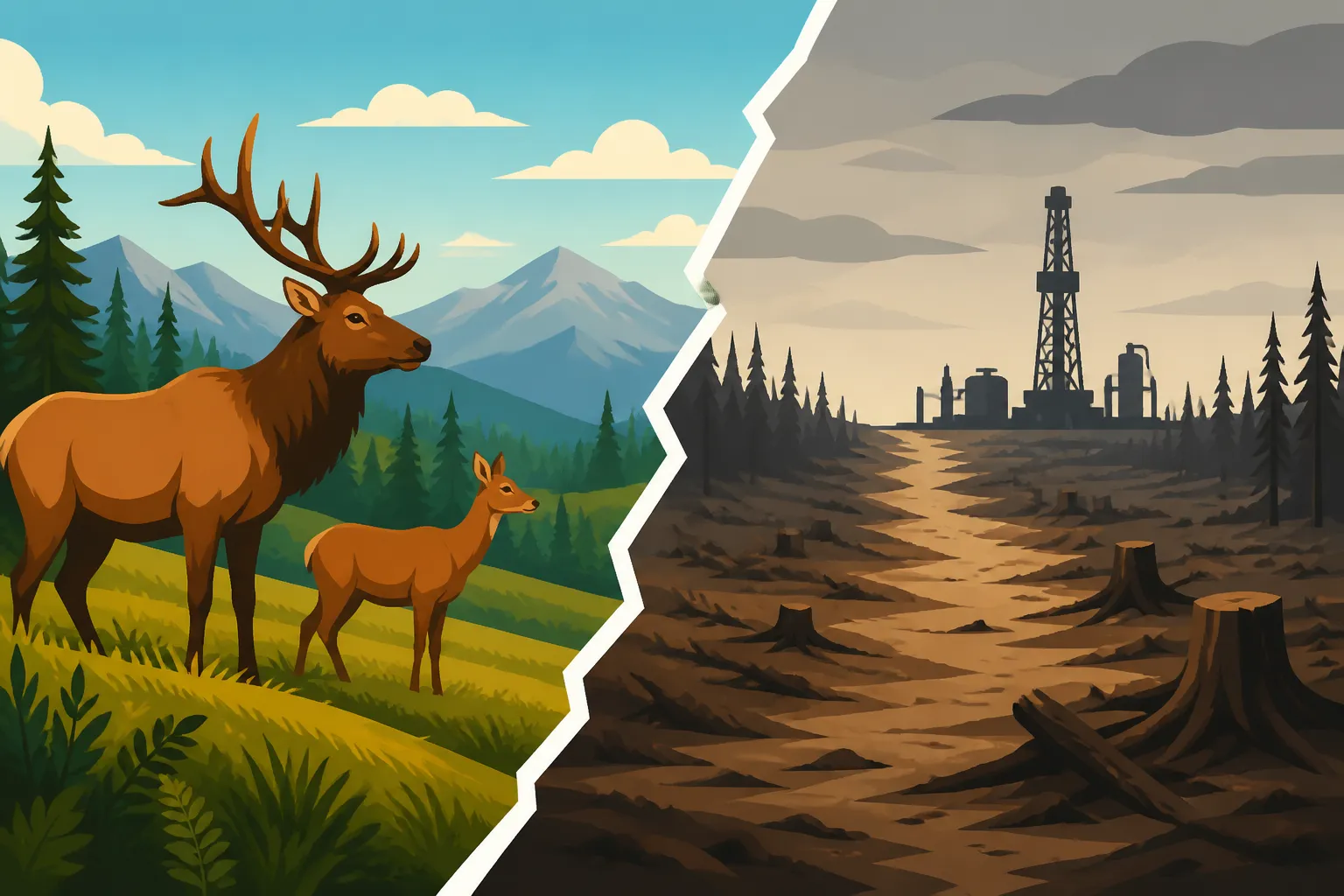
When you look at a satellite map of much of Alberta's Green Area, particularly the boreal forest and foothills, it can resemble a giant grid. Decades of resource development have left behind an incredibly dense network of these linear features. This isn't just a few isolated trails; it's thousands upon thousands of kilometers of modified landscape. This extensive network fundamentally fragments habitats, dividing large tracts of continuous forest into smaller, more accessible blocks. It changes everything from how water drains to how sunlight penetrates the canopy, directly impacting the vegetation that grows there. For hunters, this means that even if you're deep in what feels like wilderness, you're rarely far from some kind of human-made linear feature. It's a reality we all have to contend with. Scouting With Satellite Imagery in Alberta becomes an indispensable tool for understanding this intricate web before you even step foot in the woods.
How Cutlines Influence Big Game Movement and Behavior
The presence of cutlines fundamentally reshapes how big game animals navigate their world. They are not neutral features; they are active components of the ecosystem that can either aid or hinder animal movement, increase or decrease predation risk, and alter feeding patterns.
Highways or Obstacles?
For many animals, cutlines act as convenient travel corridors, much like a human highway system.
- Easy Travel for Some: Species like whitetail deer and elk often use wider, well-maintained pipeline or power line corridors as easy routes of travel, especially when moving between bedding areas and feeding grounds. It's simply less effort to walk a clear path than to push through dense bush. You'll often find fresh tracks on these lines, indicating regular use.
- Barriers for Others: Conversely, narrower, older seismic lines that are regenerating with thick alder or willow can become barriers, especially for animals that prefer denser cover or are wary of open spaces. Moose, for example, might use cutlines for brief crossings or to access certain browse, but they tend to prefer the heavier timber and may avoid very long, exposed stretches. When you're Hunting Moose Along Cutlines and Seismic Lines, understanding this preference for nearby cover is key.
- Predator Advantage: This use as travel corridors isn't limited to ungulates. Predators, particularly wolves and coyotes, also frequently use cutlines. They offer an efficient way for predators to cover ground, scent-check for prey, and even set up ambushes along the edges. This can increase predation pressure on big game, as animals using the cutlines are more exposed. Calling Wolves Along a Frozen Cutline can be particularly effective because of their reliance on these features for travel.
Predation and Hunter Access
Cutlines profoundly impact both predator-prey dynamics and hunter access, creating a complex web of interactions.
- Increased Predation Risk: When big game animals use cutlines for travel or feeding, they become more visible and exposed. A wolf or a cougar can easily spot an elk or deer moving along a linear feature from a distance, or wait at a crossroad. This added visibility can significantly increase the success rate for predators, especially during periods of deep snow where movement off the packed line is difficult.
- Hunter Access and Pressure: This is where the mixed feelings often come in for us hunters. Cutlines provide unparalleled access to areas that would otherwise be extremely difficult to reach. For some, they're a blessing, allowing hunters to penetrate deep into the bush. For others, they're a curse, leading to increased hunting pressure and sometimes pushing game further into more inaccessible pockets. It's a double-edged sword: easier access for you means easier access for everyone else. This is especially true on Crown land, where a developed cutline can become a primary access point into an area, leading to increased traffic from quads, side-by-sides, and foot hunters.
- Shifting Behavior: Over time, heavy hunting pressure along cutlines can teach animals to avoid them during daylight hours, forcing them to move mostly at night or to seek refuge in the dense, uncleared timber between the lines. This means that if you're hunting solely on the cutline, you might be missing out on the animals that have adapted to avoid you.
Edge Habitat and Forage
Cutlines don't just change movement patterns; they create new types of habitat.
- The "Edge Effect": The interface between the cleared cutline and the dense forest creates what ecologists call "edge habitat." This area often sees a greater diversity of plant life because it receives more sunlight than the forest interior, but still benefits from the shelter of the trees. This can mean more browse for deer, moose, and elk, especially in the years immediately following the cutting. You'll see a flush of pioneering plant species like willow, aspen, and various shrubs that provide excellent forage.
- Temporary Food Source: In the initial years after a cutline is established or maintained, it can be a veritable buffet for browsing animals. Moose, in particular, will seek out the young willow and aspen shoots that thrive in these disturbed areas. Whitetails and mule deer will also graze on the new growth. This temporary abundance can draw animals to the cutline, making it an attractive hunting spot.
- Long-Term Changes: However, as vegetation matures, or if the cutline is continually maintained, the forage can change. Aggressively mowed or chemically treated lines may offer less food value. Older, unmaintained seismic lines might regenerate into dense, almost impenetrable thickets, offering cover but less easily accessible browse. Hunting a Pipeline Right-of-Way requires understanding whether it's maintained for forage or just a travel corridor.
Specific Impacts on Key Alberta Species
Different species react to cutlines in distinct ways, largely dependent on their natural behaviors, preferred habitat, and diet. What's a boon for one might be a hindrance for another.
Moose and the Boreal Forest
Moose are creatures of the boreal forest, preferring thick cover and abundant browse. Their relationship with cutlines is a complex one.
- Initial Attraction to Browse: In the years immediately following the creation of a new cutline or the heavy maintenance of an existing one, the resulting flush of young aspen, willow, and other deciduous shrubs can be a huge draw for moose. They'll venture onto the edges of these lines to feed, particularly in areas where other dense browse is scarce. This creates opportunities for hunters, as moose may become more visible. Hunting a Boreal Muskeg Edge where it meets a cutline can be incredibly productive for this reason.
- Vulnerability and Avoidance: Despite the temporary food source, moose are generally wary of large, open areas. A wide, exposed cutline makes them vulnerable to predators and hunters. They might use narrower, regenerating lines more readily, but will often stick to the edges, quickly ducking back into the timber if they feel threatened. This means that while you might find tracks on a cutline, the actual animal is more likely to be found just off the edge, using the dense cover for security. You often see them slip in and out of the timber line.
- Long-Term Habitat Fragmentation: The sheer density of cutlines in some boreal regions has a detrimental effect on moose over the long term. It fragments their habitat, making it harder for them to move safely between larger tracts of contiguous forest. This can stress populations and make them more susceptible to disease and predation.
Whitetails and Mule Deer in Varied Terrain
Whitetail and mule deer, found across various Alberta landscapes, adapt their use of cutlines based on the specific terrain and the type of cutline.
- Whitetails: Masters of the Edge: In forested and mixed-wood areas, whitetail deer are excellent at using the cover and edge habitat provided by cutlines. They might bed deep in the timber but use the edges of cutlines for feeding on the abundant browse or for quick, efficient travel. You'll often see them darting across a cutline or walking just inside the treeline parallel to it, using the cover. Hunting a Cutline Intersection for Whitetails is a classic strategy because these intersections create choke points where deer funnel through, offering clear shooting lanes.
- Mule Deer: Prairie Crossings and Visibility: In more open, prairie, or badlands country, where larger tracts of continuous forest are rare, mule deer might use cutlines as open corridors for travel, especially when moving between coulees or patches of cover. However, their larger home ranges and tendency to travel in the open can also make them more visible and vulnerable on these lines. They are less likely than whitetails to stick to the very edge for cover, preferring to use their keen eyesight and ability to cover ground quickly.
- Escape Routes: Both species, when pressured, might use a cutline as a quick escape route to put distance between themselves and a perceived threat, though they will often seek out the nearest heavy cover as soon as possible.
Elk and Their Use of Linear Features
Elk, being larger and often traveling in herds, have a unique relationship with cutlines.
- Efficient Travel Corridors: Elk are powerful travelers, and wide, clear cutlines or pipeline ROWs offer them extremely efficient routes to move between large blocks of timber and prime feeding areas, such as agricultural fields or open clearings. When elk are migrating or simply moving from bedding to feeding, they will often take the path of least resistance. You might find entire herds moving along these features. Hunting Elk on Alberta's Forestry Roads is a similar concept, as these roads often act as wider cutlines.
- Visibility and Hunting Pressure: Similar to moose, this makes elk more visible, both to predators and hunters. A herd of elk moving along a cutline is a sight to behold, but it also makes them a clear target. Areas with dense cutline networks can concentrate elk movement, leading to increased hunting pressure during open seasons. They learn quickly to use these lines under the cover of darkness or in thick fog, or to move quickly across them during daylight.
- Forage Access: Elk are primarily grazers, but will also browse. The edge habitat created by cutlines can provide new forage opportunities, especially if there's a good growth of grasses or palatable shrubs. This can draw them to the edges of cutlines for feeding, particularly in the mornings and evenings.
Navigating and Hunting Cutlines Ethically and Effectively
Understanding how cutlines function in the ecosystem is just the first step. The real challenge, and the real art, comes in learning to navigate and hunt them both effectively and ethically, recognizing their impact and adapting your strategies accordingly.
Understanding Access and Regulations
Before you even consider hunting a cutline, it's paramount to understand the specific rules and regulations governing its use.
- Crown Land vs. Private Land: Not all cutlines are created equal in terms of access. Many cutlines crisscross Alberta's vast areas of Crown land, where public hunting is generally permitted. However, many also traverse private property. Always know whose land you're on, and always secure permission before accessing private land. The Alberta Trespass Act and Hunting is clear: you need permission. Even if a cutline looks like a public road, it might be on private land.
- OHV and Vehicle Rules: Just because a cutline is wide enough for an ATV or truck doesn't mean you can drive on it. Many cutlines, especially on Crown land, are subject to specific Public Land Use Zone (PLUZ) rules or other restrictions regarding off-highway vehicle (OHV) use. Always check the regulations for the specific WMU or PLUZ you are hunting. Violating these rules can lead to heavy fines and damage to the hunting community's reputation. Knowing Quad and Side-by-Side Rules on Crown Land is non-negotiable.
- Wildlife Management Unit (WMU) Specifics: Regulations can vary significantly between WMUs. Some areas might have specific rules regarding proximity to industrial infrastructure or limitations on hunting certain distances from active sites. Always refer to the current Alberta hunting regulations for your specific WMU.
Reading the Sign and Planning Your Hunt
Cutlines, for all their impact, offer a unique advantage to hunters: they make reading sign incredibly easy.
- Tracks Tell a Story: Snow or soft ground on a cutline acts like a giant ledger, recording every animal's movement. You can learn so much by simply walking a cutline, especially in the early morning. Look for tracks, direction of travel, and even signs of bedding just off the line. This immediate feedback helps you understand what animals are using the area and when.
- Identifying Funnel Points: Animals, like humans, tend to take the path of least resistance. Look for natural funnels where a cutline intersects a dense patch of timber, a creek crossing, or a ridge line. These are natural pinch points where animals are more likely to cross or travel consistently. Using mapping tools like GoHunt can help you identify these features from above, combining satellite imagery with land ownership details to plan your approach.
- Ambush Alley: Because cutlines offer clear shooting lanes and predictable travel routes for game (especially during low-pressure times or at night), they can be excellent spots for stand placement or still-hunting. Consider positioning yourself where you can see a good stretch of the line, but also have visibility into the timber edges where animals might be staging before crossing. Hanging a Stand on an Alberta Bush Edge overlooking a cutline is a tried and true tactic.
- Adapt Your Approach: Don't just walk straight down the middle of a cutline expecting to see game in daylight during hunting season. Animals that have been pressured will often move parallel to the line, just inside the timber, or use it only under the cover of darkness. Hunt the edges and the intersections more than the middle of the line itself.
Minimizing Your Footprint
As hunters, we have a responsibility to not only hunt legally but also ethically, minimizing our impact on the land and the animals we pursue.
- Respect Private Property: This cannot be stressed enough. If a cutline crosses private land, get permission. Period. A quick check on a mapping app like GoHunt can often clarify land ownership, saving you a headache and preventing potential confrontations.
- Minimize Disturbance: While cutlines offer access, think about how your presence affects the animals. If you're constantly driving down a cutline during hunting hours, you're likely pushing game deeper into cover or making them nocturnal. Consider parking further back and walking in, especially during peak hunting times.
- Pack It In, Pack It Out: Cutlines, being accessible, sometimes become dumping grounds. Let's not add to that problem. Everything you bring in, take out. Leave no trace of your presence. This respect for the land benefits everyone, including the wildlife.
- Responsible OHV Use: If you are legally using an OHV on a cutline, stick to designated trails and lines. Avoid creating new ruts or damaging sensitive habitats. Remember that overuse of linear features can contribute to erosion and disrupt natural drainage patterns, which ultimately impacts the health of the entire ecosystem.
Here's a quick overview of how common Alberta big game species interact with cutlines:
| Species | Primary Use of Cutlines | Benefits to Species | Drawbacks to Species | Hunter Considerations |
|---|---|---|---|---|
| Whitetail Deer | Travel, feeding on edge browse, escape | Access to varied forage, efficient travel | Increased visibility to predators/hunters | Hunt edges, intersections; target low-pressure times. |
| Mule Deer | Travel between cover, prairie crossings | Efficient travel | High visibility, increased predation | Spot and stalk from a distance, hunt in low light. |
| Moose | Short-term browse access, crossing | Access to early succession browse | High vulnerability due to openness | Hunt just off the line in thick cover, target regenerating lines. |
| Elk | Travel corridors for herds, some grazing | Efficient movement between habitat | Increased exposure to predators/hunters | Focus on crossing points, hunt edges, avoid driving during prime hours. |
| Wolves/Coyotes | Travel corridors, hunting routes | Efficient travel, easier prey detection | Minimal (top predators) | Can be hunted along these lines, especially in winter. |
While the presence of oil and gas cutlines on Alberta's hunting landscape is a complex issue, it's a reality we, as hunters, must understand and adapt to. They are a permanent fixture in many of our best hunting areas, shaping how animals move, feed, and interact with their environment. By understanding their ecological impacts, respecting regulations, and employing ethical hunting strategies, we can learn to hunt these modified landscapes effectively, continuing to pursue our passion for Alberta's incredible big game. It's about being observant, adaptable, and always respectful of the land and its wildlife.
Disclaimer
This article is for general informational purposes only and does not constitute professional advice. Laws, prices and regulations vary by location and change over time. Consult a qualified professional for guidance on your specific situation.