Aging a Deer by Its Teeth
One of the biggest challenges we face as hunters, beyond the thrill of the chase, is truly understanding the animals we pursue. There's immense satisfaction in knowing the age and life story of a deer, whether it’s for management purposes, appreciating its maturity, or simply for the knowledge itself. Unfortunately, aging a deer accurately in the field can feel like a guessing game, leaving many of us scratching our heads. This comprehensive guide will pull back the curtain on the most reliable method available to us in the field: using a deer's teeth to unlock its age, providing practical tips you can apply on your next hunt.
The Foundation: Understanding Deer Tooth Development
Before we can accurately age a deer, we need to understand the basics of how their teeth grow and change over time. Just like us, deer start with a set of "milk teeth" (deciduous teeth) that eventually fall out and are replaced by permanent adult teeth. This transition, alongside the emergence of new molars, provides crucial clues to a deer's age, especially in its younger years.
Understanding Dental Eruption Sequences
A fawn is born with a set of small, sharp milk teeth. These aren't just for looking cute; they're essential for browsing on tender vegetation. As the deer grows, these temporary teeth are gradually replaced by larger, stronger permanent teeth. The sequence and timing of this eruption are incredibly consistent, making it a fantastic indicator of age. For instance, a deer's first permanent molars typically erupt around 4-5 months of age, followed by the second molars between 12-16 months.
The real game-changer in eruption sequence, and often the first definitive age marker for many hunters, is the third molar. This tooth starts to emerge around 17-19 months of age, and once it's fully in and showing wear, you're looking at a deer that's at least 1.5 to 2.5 years old. Before that third molar is present, you're almost certainly dealing with a fawn or a yearling. Knowing these timelines helps us instantly categorize a deer into a broad age class. It's like checking the odometer on a vehicle; the presence and development of these key teeth give you a clear reading of biological time.
Identifying Key Tooth Structures
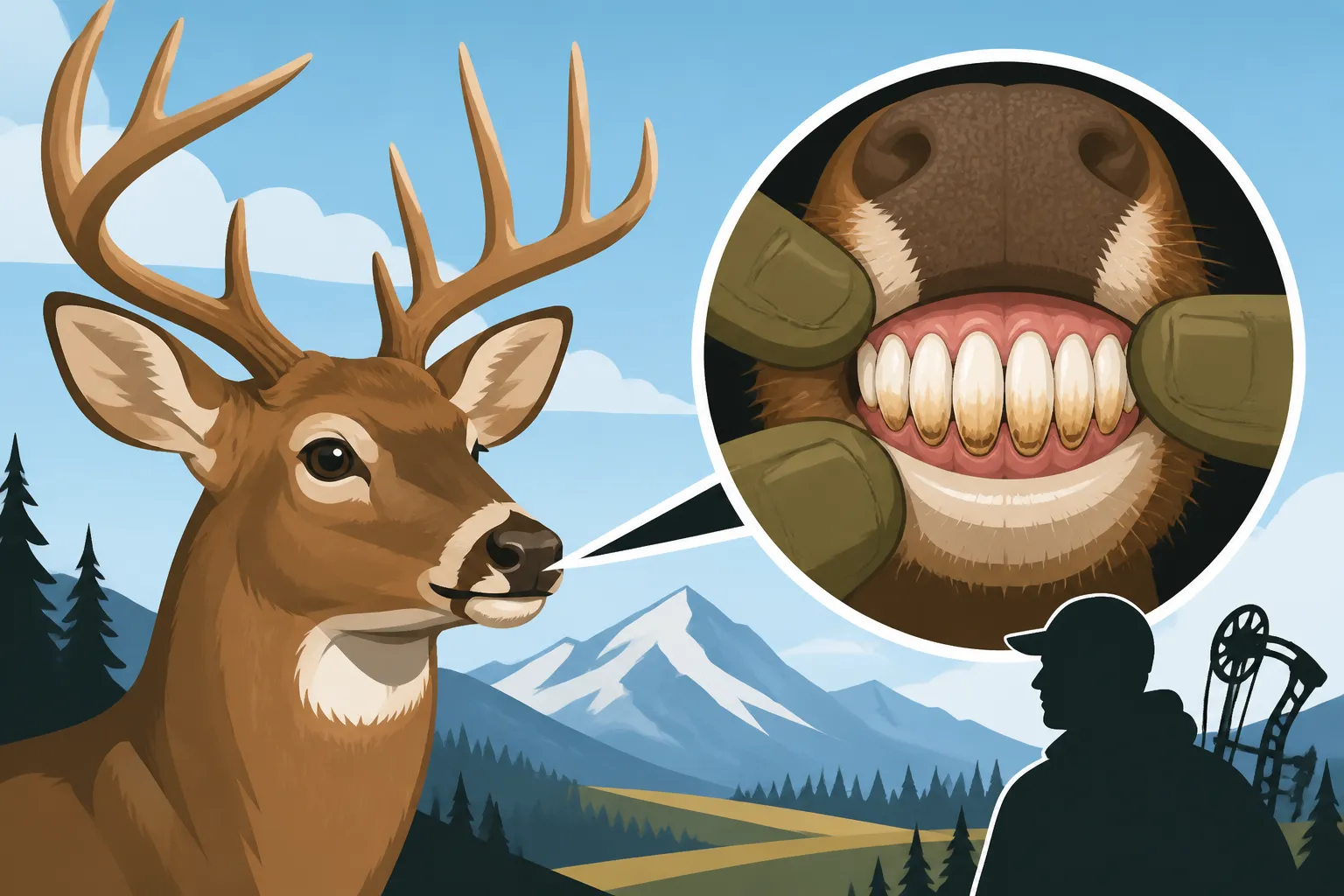
When you examine a deer's jaw, you'll be focusing on a few key types of teeth: incisors, premolars, and molars. The incisors are the small, chisel-like teeth at the front of the lower jaw, used for nipping off forage. They're useful for general health assessment but less so for precise aging. Behind the incisors, you’ll find the premolars (the smaller, usually three-cusped teeth) and the molars (the larger, typically three-cusped grinding teeth).
The mandibular (lower jaw) teeth are our primary focus for aging. Deer don't have upper incisors; instead, they have a dental pad. The premolars and molars are where the magic happens. Look closely at the number of cusps, their shape, and the overall length of the tooth row. A fawn will have smaller, sharper milk premolars. A yearling, or 1.5-year-old deer, will have its third permanent molar just coming in, and its central premolar will still be a temporary "tricuspid" (three-cusped) tooth, eventually replaced by a permanent bicuspid (two-cusped) one. This gradual transition, from juvenile teeth to adult teeth, is the most reliable method for aging deer up to about 2.5 years old. Understanding this pattern is fundamental, and tools like the GoHunt app might even offer visual aids or resources to help you identify these critical dental features.
The Wear and Tear Method: A Closer Look
Once a deer has all its permanent teeth, usually by around 2.5 years old, we can no longer rely on eruption sequences. This is where the "wear and tear" method comes into play. It involves examining the degree of wear on the grinding surfaces of the premolars and molars. Think of it like a tire tread: the more miles you put on, the more worn down the tread becomes. Deer teeth are no different, and the amount of wear can tell us a great deal about their general age.
The Incisors: Front-Line Indicators
While the incisors at the very front of the deer's lower jaw don't offer the precise aging clues that the cheek teeth do, they can still give you some general indications. In a young deer, the incisors will be sharp, white, and tightly packed. As the deer ages, these teeth start to show wear. They'll become shorter, more rounded, and you might notice gaps forming between them. The enamel will often look more stained or yellowed.
However, the degree of incisor wear can vary greatly depending on the deer's diet and the type of forage available in its specific habitat. A deer browsing tough, gritty vegetation in an area with sandy soil might show more incisor wear than a deer feeding primarily on lush, soft browse in a different region. So, while useful for a quick, rough estimate and to gauge overall health, incisors should not be your sole guide for accurate aging. They are simply the first line of defence in the digestive process.
Premolars and Molars: The Grinding Machines
The premolars and molars are the true workhorses for aging deer beyond 2.5 years. These teeth are designed for heavy grinding, breaking down tough plant fibres. Each molar has distinct cusps, or points, on its chewing surface. In a young deer (2.5 to 3.5 years), these cusps will still be relatively sharp and well-defined, with the enamel (the white, outer layer) being much wider than the dentine (the darker, inner layer). As the deer ages and continues to chew, these cusps begin to flatten out. The dentine starts to widen, becoming more prominent than the surrounding enamel.
The third molar, which you'll remember was a key indicator of reaching 1.5-2.5 years, becomes a primary focus for older deer. Look closely at the cusps of this molar; they will show progressive flattening. By the time a deer is 4.5 to 5.5 years old, the cusps on the first molar will likely be almost completely worn flat, and the dentine will be significantly wider than the enamel. For even older deer (6.5 years and up), you'll see extreme wear across all molars, sometimes even extending to the gum line, making the tooth appear very short. The entire grinding surface might be a flat, dark plane of dentine, with only thin rings of enamel left. This is a progressive process, so examining all the molars in sequence gives you the best picture. This kind of detailed observation can be crucial when you're trying to figure out if that buck you just took is a true mature animal or simply a younger deer with big antlers, a common dilemma. When you're cleaning up your harvest, after performing good Field Dressing in Alberta's Deep Cold, take the time to really look at that jaw.
Cementum Annuli: The Gold Standard
While the wear-and-tear method is excellent for field estimation, it's important to understand its limitations. Factors like diet, soil type, and even individual genetics can influence how quickly a deer's teeth wear down. For truly precise aging, especially in scientific studies or for official record-keeping, biologists use a technique called cementum annuli.
This method involves extracting a tooth (usually an incisor), cutting a thin cross-section, and then staining it. Under a microscope, you can see distinct rings in the cementum, a tissue that surrounds the tooth root. Much like tree rings, these rings form annually, allowing biologists to count them and determine the deer's age with incredible accuracy. Each ring represents a year of life. While this isn't a practical method for us hunters in the field, it's worth knowing that a more exact science exists, and some provinces, including Alberta, rely on this method for CWD testing samples, where specific age data is invaluable. If you submit a head for Alberta's CWD Testing Requirements, the labs might use this method to age the deer as part of their data collection, adding to our collective understanding of herd health and demographics in What CWD Is Doing to Alberta Deer.
Here's a simplified table summarizing key dental characteristics for aging deer:
| Approximate Age (Years) | Incisors | Premolars (Front to Back) | Molars (Front to Back) | Key Features to Look For |
|---|---|---|---|---|
| Fawn (0.5) | Small, sharp, milk teeth | 3 milk premolars, often 3 cusps on P3 | M1 erupting or just erupted (4-5 months) | Small overall jaw, distinct milk teeth, M1 may be visible. |
| Yearling (1.5) | Permanent incisors replacing milk teeth | P1 & P2 permanent, P3 (tricuspid milk tooth) | M1 & M2 permanent and showing some wear, M3 erupting | P3 (the 3rd premolar) is still a temporary 3-cusp tooth; M3 (the last molar) is starting to come in. |
| 2.5 | All permanent incisors, slight wear | All permanent bicuspid premolars | All 3 molars permanent and showing slight wear | The 3rd premolar (P3) is now a permanent bicuspid (2-cusp) tooth. M3 is fully erupted. Enamel wider than dentine on molars. |
| 3.5 | Moderate wear, slight rounding | Moderate wear, cusps sharp, dentine thin | M1 cusps moderately worn, dentine wider than enamel | M1 cusps show noticeable flattening; dentine is clearly wider than enamel on M1. |
| 4.5 | Significant wear, gaps may appear | Significant wear, cusps rounded, dentine wider | M1 cusps almost flat, M2 cusps moderate wear | M1 cusps are severely worn, nearly flat. M2 also shows heavy wear. |
| 5.5+ | Heavy wear, very rounded, large gaps | Heavy wear, cusps worn flat, dentine very wide | All molars show heavy, progressive wear; M1 often worn to gumline | All molars show extreme wear, often appearing as flat, dark surfaces. Can be very short. |
Note: This table provides general guidelines. Individual variation in diet and genetics will influence actual tooth wear.
Practical Application in the Field
Knowing the theory is one thing, but actually applying it when you're out in the bush, possibly in cold weather or fading light, is another. Field aging a deer takes practice and a systematic approach. The goal isn't always pinpoint accuracy, but rather to get a solid estimate that helps you understand the animal and contribute to sound game management.
When to Check the Teeth
The best time to check a deer's teeth is after you've harvested the animal and are preparing it for transport, usually during field dressing. Once the deer is down and secured, and you've taken care of the immediate field dressing tasks to start Meat Care in Alberta's Cold and Warm Swings, you can then turn your attention to the jaw. It’s a good idea to bring a small knife or even a sturdy stick that you can use to pry open the deer’s mouth and get a clear view of the lower jaw. Some hunters prefer to remove the entire lower jaw for a more thorough examination later, especially if they are required to submit the head for CWD testing in Which WMUs Require a Deer Head Submission.
Ensure you have good lighting, even if it means using a headlamp. A clean, clear look at the teeth is essential. The process should be systematic: first, quickly identify if you're dealing with milk teeth or permanent teeth to get an initial age bracket (fawn, yearling, or adult). Then, if it’s an adult, move on to assessing the wear on the premolars and molars. Don't rush it. The more attention to detail you give, the better your estimate will be. This is a skill that improves with every deer you examine, much like Reading Whitetail Sign in Alberta Aspen Bluffs becomes second nature with experience.
Challenges and Considerations
Aging by teeth in the field isn't without its challenges. One of the biggest is the sheer physical effort of examining a jaw. Sometimes, you might be dealing with a lot of blood or dirt, which can obscure the finer details of tooth wear. Having a small bottle of water and a rag can be invaluable for cleaning the teeth to get a clearer view. The angle can also be awkward, especially if you're trying to minimize handling of the carcass.
Another factor is the regional variation in diet. A deer grazing in a highly abrasive environment (like sandy soils or areas with lots of forbs that collect grit) might show more rapid tooth wear than a deer feeding on softer browse. This means that a 3.5-year-old deer from one WMU might have teeth that look like a 4.5-year-old from another, making strict comparisons difficult. This is where understanding your local deer population and environment comes into play. Tools like GoHunt or local provincial wildlife reports can sometimes give insights into the typical diet and health of deer in your specific hunting area, helping you calibrate your eye. Remember, aging a deer by teeth in the field is an estimate, a highly educated guess, and not an exact science.
Beyond the Teeth: Other Aging Clues
While dental examination remains the most reliable field method for aging deer, it’s certainly not the only piece of the puzzle. Other characteristics, though less precise, can provide valuable supporting evidence and help confirm your dental assessment, or at least give you a quick initial impression before you even get close to the animal.
Body Characteristics and Proportions
When you observe a deer, especially a buck, its overall body characteristics can give you a strong hint about its age. A fawn, for example, will have a very slender body, short legs relative to its body, and a short neck. A yearling (1.5 years old) will start to fill out but still looks somewhat "leggy," often with a slender neck and waistline. Its proportions haven't fully matured yet. Compare it to What a Big Alberta Whitetail Weighs or What a Mature Alberta Mule Deer Weighs – the difference is often stark.
As a deer matures, its body undergoes significant changes. A 2.5-year-old buck will have a longer body and a deeper chest, with a noticeable thickening of the neck, especially leading into the rut. By 3.5 to 4.5 years old, a buck typically displays a robust, muscular build. Its neck will be thick and blend smoothly into its shoulders, its chest deep, and its belly may show some sag. The legs will appear proportionate to its heavily muscled body. This mature, "blocky" appearance is a strong indicator of an older deer. Does also show similar body maturation, becoming more robust and "motherly" in appearance as they age. Observing these traits, even from a distance while Glassing an Alberta Coulee for Mule Deer or on your scouting trips to Scouting an Alberta WMU Before Season, can help you mentally categorize deer before you even think about putting a tag on one.
Antler Development as a General Indicator
Antlers are perhaps the most visually striking feature of a male deer, and many hunters mistakenly use them as the primary indicator of age. While there's a correlation, antlers alone are a less reliable aging tool than teeth. Generally, a deer's antler size and mass tend to increase with age, peaking between 4.5 and 7.5 years old, before sometimes declining in very old age.
A 1.5-year-old buck might have small spikes, or a modest basket rack. A 2.5-year-old will usually have a larger rack with more points and better mass. The most impressive antlers typically come from bucks in their prime (3.5 to 6.5 years). However, antler development is highly influenced by genetics, nutrition, and environmental factors. A young buck with excellent nutrition could grow a very impressive rack, while an older buck in a poor habitat might have smaller, stunted antlers. Reading Antler Growth in a Wet Year can give you an idea of how environmental factors influence antler development, but never rely solely on headgear. Always back up your antler assessment with a dental check if possible. For instance, sometimes How Deep Snow Moves Deer Around can impact available forage and thus antler growth. Ultimately, while antlers are exciting, the teeth tell a much more consistent story of a deer's true age and maturity.
Disclaimer
This article is for general informational purposes only and does not constitute professional advice. Laws, prices and regulations vary by location and change over time. Consult a qualified professional for guidance on your specific situation.