Which Alberta WMUs Hold the Most Crown Land
Trying to find good hunting spots in Alberta can feel like a never-ending puzzle, especially when you're trying to navigate the patchwork of private and public lands. Many of us want to hunt Crown Land, those vast tracts of public ground that promise freedom and adventure, but figuring out which Wildlife Management Units (WMUs) actually have the most of it can be a real headache. This guide is here to untangle that mystery, showing you where Alberta's Crown Land truly lies so you can plan your next hunt with confidence.
Understanding Alberta's Land Ownership Landscape
Before we dive into specific WMUs, it's really important to get a handle on how land is categorized in Alberta. This isn't just bureaucratic jargon; it's the foundation of understanding where you can legally hunt without prior permission. Getting this wrong can lead to serious fines or, at the very least, a wasted trip.
The Basics: Crown Land vs. Private Land
At its simplest, land in Alberta is either "Crown Land" or "private land." Private land, as the name suggests, is owned by individuals, companies, or Indigenous communities. To hunt on private land, you must have explicit permission from the landowner or leaseholder. This often involves knocking on doors, making phone calls, or even entering into formal agreements. It's a fundamental courtesy and a legal requirement that protects landowners and ensures ethical access.
Crown Land, on the other hand, is land owned by the provincial or federal government and managed for the public good. For hunters, this is the Holy Grail – it's generally open for recreational activities, including hunting, without needing individual permission for each parcel. However, "Crown Land" isn't a monolithic entity; there are different classifications and rules that apply, and knowing these distinctions is crucial. It's the vast, open spaces we dream of, but navigating them still requires diligence.
Green Area vs. White Area: What It Means for Hunters
Alberta's landscape is broadly divided into two main categories: the Green Area and the White Area. Think of these as two distinct worlds with different implications for land use and hunting.
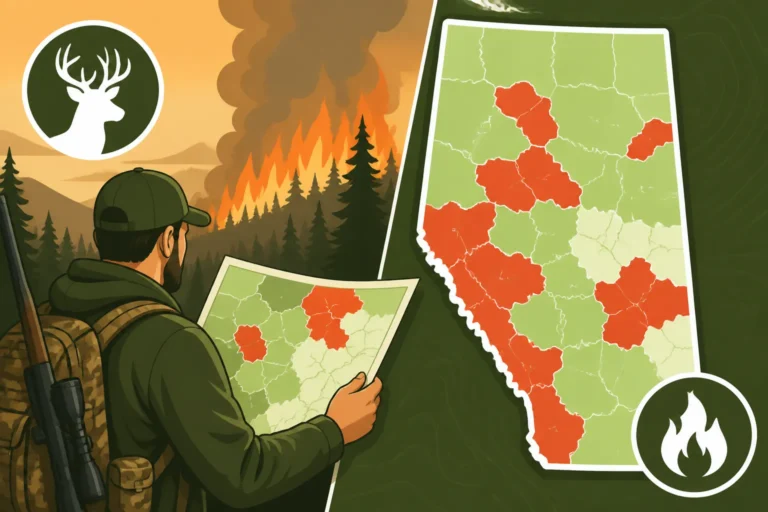
The Green Area covers the northern and western forested parts of Alberta. This is primarily public land, heavily forested, and less developed for agriculture or dense settlement. If you're looking for significant tracts of Crown Land, the Green Area is where you'll find it in abundance. This is the realm of the Boreal Forest, the Foothills, and the Mountains, characterized by vast expanses of timber, rugged terrain, and a network of forestry roads, cutlines, and seismic lines. Hunting in these regions often means heading deep into the bush, far from paved roads and towns. It’s where you can truly immerse yourself in the wilderness experience, chasing everything from moose to black bears. Understanding the specific regulations within the Green Area, particularly within Public Land Use Zones (PLUZs), is vital. You can learn more about these distinctions in Alberta's Green Area and White Area.
The White Area encompasses the more settled, southern, and central parts of the province. This is where you'll find most of Alberta's agricultural land, towns, and cities. In the White Area, the vast majority of land is privately owned. While there are some scattered parcels of Crown Land – often in river valleys, along coulees, or within specific provincial parks or reserves – these are generally much smaller and more fragmented than in the Green Area. Hunting in the White Area often revolves around gaining permission from landowners, navigating smaller parcels of public land, or hunting specific provincial grazing reserves. The hunting experience here is very different, often involving close proximity to human activity and a greater emphasis on discrete tactics and meticulous scouting for those smaller public pockets.
Identifying Alberta WMUs with Significant Crown Land
Now that we understand the lay of the land, let's get specific. When you're dreaming of big public land hunts, certain WMUs and regions are simply going to offer more opportunities than others. It really comes down to geography and historical land use.
The Boreal Forest: A Sea of Public Opportunity
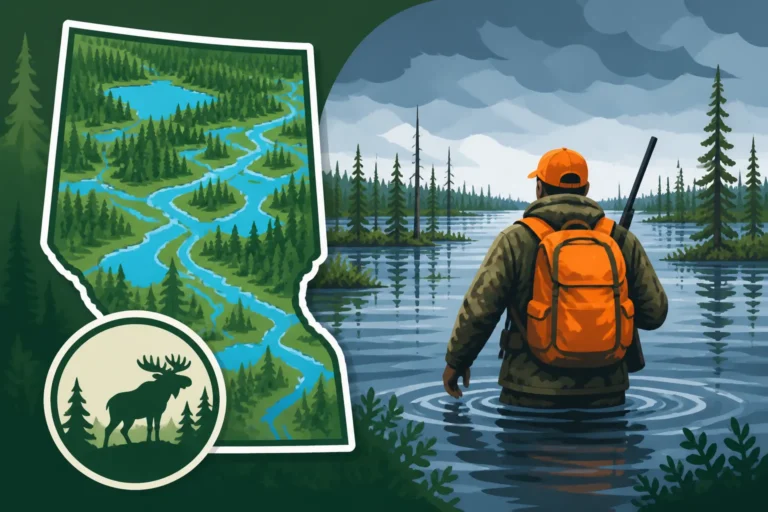
If your idea of hunting heaven is vast, unbroken wilderness, then the WMUs within Alberta's Boreal Forest are calling your name. These are predominantly in the northern half of the province, stretching from the Peace River Country eastward towards Fort McMurray and south to the fringes of the Parkland. Here, Crown Land dominates the landscape.
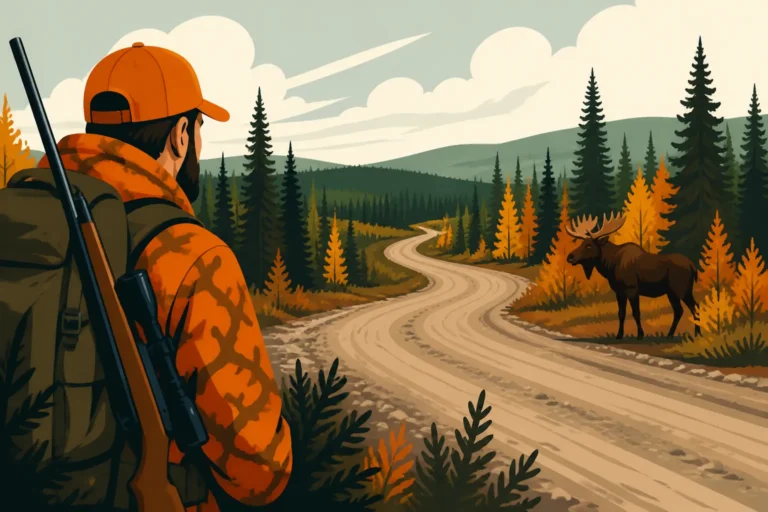
WMUs in the Boreal Forest region, often characterized by dense stands of spruce, pine, and aspen, interspersed with muskeg, lakes, and rivers, boast some of the highest percentages of Crown Land in Alberta. Think about areas around Lac La Biche, the vast regions north of Grande Prairie, or the remote country west of Fort McMurray. These WMUs are where you'll find significant populations of moose, black bear, and whitetail deer that thrive in the mixed forest habitat. Access here is often via extensive networks of forestry roads, oil and gas lease roads, and old cutlines or seismic lines that penetrate deep into the bush. However, "access" in these regions can also mean very rough roads that require a capable 4×4, or even travel by ATV, boat, or on foot for truly remote spots. The sheer scale of public land here means you can often get away from other hunters if you're willing to work for it. This is prime country for Hunting Moose Across Alberta's Boreal and Foothills or Black Bear Hunting in Alberta.
Foothills and Mountain Zones: Rugged Public Access
Moving westward, the WMUs nestled in the Alberta Foothills and the truly mountainous regions along the British Columbia border also offer substantial Crown Land opportunities, albeit with a different flavour of terrain and access. These areas are part of the Green Area and often fall within designated Public Land Use Zones (PLUZs), which have specific rules regarding vehicle use, camping, and other recreational activities.
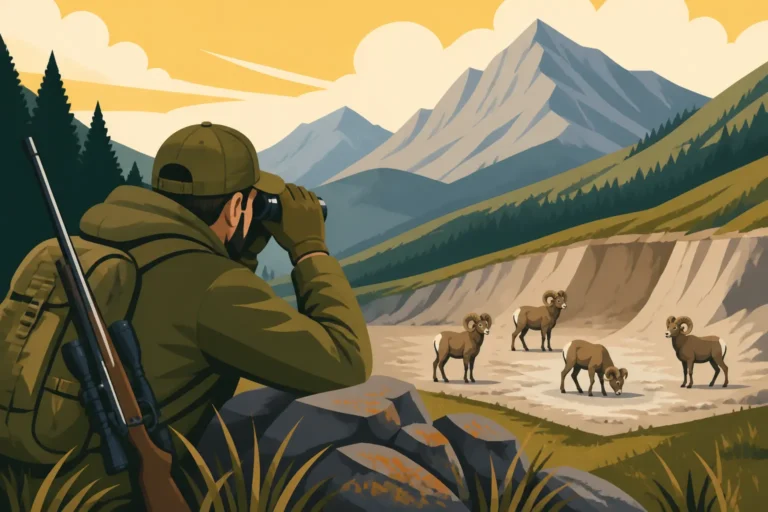
WMUs in the Foothills, such as those along the Forestry Trunk Road (like the Ghost, McLean Creek, or Livingstone PLUZs), or further south into the Crowsnest Pass area, feature a rugged mix of timbered slopes, open ridges, river valleys, and alpine meadows. While not as unbroken as the Boreal Forest, these areas still contain vast amounts of public land. Here, you'll find elk, moose, mule deer, whitetails, and various bear species. Access can range from well-maintained gravel roads to challenging 4×4 trails, and often requires significant foot travel or horseback use to get into the prime hunting grounds. The mountainous WMUs, further west into the Bighorn Backcountry or even the Willmore Wilderness, are almost entirely Crown Land, but they demand true backcountry skills, multi-day excursions, and often horse-supported hunts. These are the kinds of places where you might pursue a coveted class 1 (trophy) licence, which residents buy rather than draw for, or a draw licence for non-trophy sheep, for Bighorn Sheep in Alberta's Mountains. The sheer vertical relief and remoteness naturally limit hunting pressure in many areas, but they also require a higher level of physical fitness and preparation. Find out more about Hunting Alberta's Foothills Country.
Prairie and Parkland: Smaller Pockets, Bigger Challenge
When you move into the White Area, specifically the Parkland and Prairie WMUs, the situation for Crown Land shifts dramatically. These regions are dominated by private agricultural land, making public land hunting much more challenging and requiring a very different approach. You won't find expansive, continuous tracts of Crown Land here.
In the Parkland WMUs, which are the transitional zone between the prairies and the northern forests, Crown Land exists, but it's typically scattered and much smaller. You might find public access in the form of provincial parks (with specific hunting regulations), provincial recreation areas, or small, isolated parcels of Crown land often found along river systems or in significant natural coulees. These spots can be incredibly productive for whitetail deer, mule deer, and various upland birds, but they demand very precise scouting and often involve navigating a patchwork of private land to reach them. Hunting Alberta's Parkland Country and Its WMUs means being very strategic.
The Prairie WMUs, covering the southern grasslands of Alberta, have the least amount of Crown Land. The public land that does exist is often confined to large river valleys, such as the Red Deer River Badlands or sections of the Milk River, or within certain provincial grazing reserves. These river valleys can offer fantastic hunting for mule deer and whitetails, but they are often linear and can see considerable pressure. Grazing reserves offer significant blocks of public access, but usually come with strict rules about vehicle use and potential conflicts with livestock. While the total percentage of Crown Land is low, the opportunities in these specific features can be excellent for species like mule deer and pronghorn, if you know where to look. More details can be found on Hunting Alberta's Prairie WMUs.
To give you a clearer picture, here's a general comparison of WMU region types regarding Crown Land availability:
| WMU Region Type | Typical Crown Land Availability | Dominant Landscape | Primary Big Game Species | Typical Access Style |
|---|---|---|---|---|
| Boreal Forest | Very High, continuous | Dense forest, muskeg, lakes, rivers | Moose, Black Bear, Whitetail | Forestry roads, seismic lines, ATV, remote walk-in |
| Foothills | High, often in PLUZs | Rolling hills, timber, river valleys | Elk, Moose, Whitetail, Mule Deer, Bear | Forestry roads, some gated, horse/foot travel |
| Mountains | Extremely High, wilderness | Rugged peaks, alpine, deep valleys | Bighorn Sheep, Mountain Goat, Elk, Moose | Backpacking, horse-supported, draw-only, very remote |
| Parkland | Low, fragmented, scattered | Aspen bluffs, farmland, small bush lots | Whitetail, Mule Deer, Black Bear (some) | Permission-based, small Crown blocks, riparian zones |
| Prairie | Very Low, linear or specific | Grassland, coulees, river breaks | Mule Deer, Pronghorn, Whitetail | River valleys, grazing reserves, walk-in |
Tools and Strategies for Navigating Crown Land
Knowing which WMUs generally have more Crown Land is a great start, but the real challenge often lies in actually finding those boundaries on the ground and confirming your access. This is where modern tools and good planning become indispensable.
Digital Mapping: Your Best Friend for Public Land
Gone are the days when a paper map and a compass were your only tools for finding property lines. While those still have their place, digital mapping applications have revolutionized how hunters locate and navigate Crown Land. Apps like onX Hunt and GoHunt provide incredibly detailed land ownership layers that clearly differentiate between Crown Land, private property, provincial parks, and other special use areas.
These apps are an absolute game-changer. They use GPS to show your exact location relative to property lines, often displaying different colours or shading for various land designations. This means you can stand on a fence line and know definitively whether the land on either side is public or private. Before heading out, you can spend hours scouting from your couch, identifying potential access points, figuring out travel corridors, and marking bedding areas or water sources on public ground. I honestly don't know how I'd hunt without them these days. They make Reading Alberta's Crown Land Layers on onX an intuitive process. Always make sure to download offline maps before you leave cell service, because believe me, you'll lose it in much of Alberta's Green Area. These tools help tremendously in Scouting With Satellite Imagery in Alberta.
Physical Access and Regulations
Even with the best maps, physically accessing Crown Land can still be a puzzle. In the Boreal and Foothills WMUs, you'll often encounter a complex network of forestry roads (FSRs), old logging cutblocks, seismic lines, and pipeline corridors. Many of these provide legitimate access, but some might be decommissioned, overgrown, or have restrictions.
It's crucial to understand the rules of the road, literally. Some FSRs are open to public vehicle traffic, while others might be behind locked gates, accessible only by foot, ATV, or horseback. Many of the WMUs with significant Crown Land fall within Public Land Use Zones (PLUZs), which have specific regulations governing motorized vehicle use. For example, some PLUZs might restrict ATVs to designated trails only, or even close certain areas to all motorized access during specific times of the year to protect wildlife or sensitive habitats. Always consult the Alberta Hunting Regulations and any specific PLUZ advisories before you head out. Don't assume that just because you see an old trail, you're allowed to drive on it with your quad. Checking the rules for Quad and Side-by-Side Rules on Crown Land or Vehicle Rules on Alberta Crown Land is an essential step in planning. For those seeking truly remote areas, a willingness to hike, or even use a horse, will unlock some of the most pristine and least-pressured hunting experiences Alberta's Crown Land has to offer.
Maximizing Your Chances on Public Ground
Hunting Crown Land is incredibly rewarding, but it's not without its challenges. The freedom of public access often comes with increased hunting pressure, especially in areas that are easily accessible. To truly maximize your chances, you need a strategy that goes beyond just knowing where the public land is.
Scouting and Pressure Management
One of the biggest realities of hunting Crown Land, especially in accessible areas, is the presence of other hunters. That prime bush edge or those classic cutline intersections can look great on paper, but if every truck in the county is parked there on opening day, your chances dwindle. Effective scouting, both before the season and during, is absolutely critical.
Don't just look for game sign; look for human sign. Scout for boot prints, old shell casings, or faint trails that indicate popular hunting routes. Use mapping tools like onX Hunt or GoHunt to identify areas that are a little further off the beaten path, perhaps a mile or two deeper than most hunters are willing to walk from the main road. Often, just a small amount of extra effort can get you into pockets of public land that see significantly less pressure. Consider hunting during weekdays if possible, or focusing on areas that require more strenuous effort to access, like steep draws or dense timber. Opening Weekend Crowds on Alberta Public Land are a reality, so planning to hunt later in the week or deep in the bush can pay dividends. Sometimes, an old logging road that's mostly grown in is exactly what you're looking for, offering great habitat and limited access, as discussed in Hunting an Old Logging Road in the Foothills.
Respecting the Resource and Other Users
As hunters, we are custodians of the land and its wildlife. When hunting on Crown Land, it's more important than ever to demonstrate respect for the resource, the environment, and our fellow outdoor enthusiasts. This means leaving no trace, packing out everything you pack in (and maybe a little extra trash left by others).
It also means being mindful of other users. Crown Land is used by hikers, campers, bird watchers, photographers, and other recreationalists. Be courteous, avoid loud noises or unnecessary disturbances, and always be aware of your surroundings, especially when discharging a firearm. Understand and adhere to all regulations regarding Camping Rules on Alberta Crown Land, fire bans, and waste disposal. By setting a good example, we help ensure that public land remains open and accessible for hunting for generations to come. Your actions reflect on all hunters, so let's make sure that reflection is a positive one.
Disclaimer
This article is for general informational purposes only and does not constitute professional advice. Laws, prices and regulations vary by location and change over time. Consult a qualified professional for guidance on your specific situation.