Best Alberta Public Ground for Upland Birds
Ever felt like finding prime upland bird hunting spots on public land in Alberta is like searching for a needle in a haystack? You're not alone. With vast tracts of land and complex regulations, it can be tough to pinpoint where to go for sharpies, Huns, and ruffies. This guide is going to walk you through the types of public land where you're most likely to find success, helping you unlock some of Alberta's best wingshooting opportunities and make the most of your hunting season.
Understanding Alberta's Upland Bird Habitat Needs
Before you even load up your dog and hit the road, it's crucial to understand what kind of habitat each of Alberta's common upland bird species prefers. Knowing their ideal homes will dramatically improve your chances of finding them, even on unfamiliar public land. Different birds seek out different cover, food, and water sources, so a "good spot" for one might be barren for another.
Sharp-tailed Grouse and Their Prairie Haunts
Sharp-tailed grouse, or "sharpies" as we often call them, are true birds of the prairie and parkland. They thrive in areas with native grasslands, interspersed with brushy coulees, clumps of aspen, and patches of willow. These birds need open spaces for their famous dancing grounds (leks) in the spring, but also dense cover for nesting and escape from predators. Think about the edges where native prairie meets agricultural fields, or where rolling hills are dotted with shrubby draws. You'll often find them feeding on berries, seeds, and insects, especially along the edges of grain fields in the fall. If you're looking for sharpies, you're usually looking for a blend of open grass and protective brush. Walking Up Sharp-Tailed Grouse in Alberta is a great way to experience this.
Hungarian Partridge and the Farm Fringe
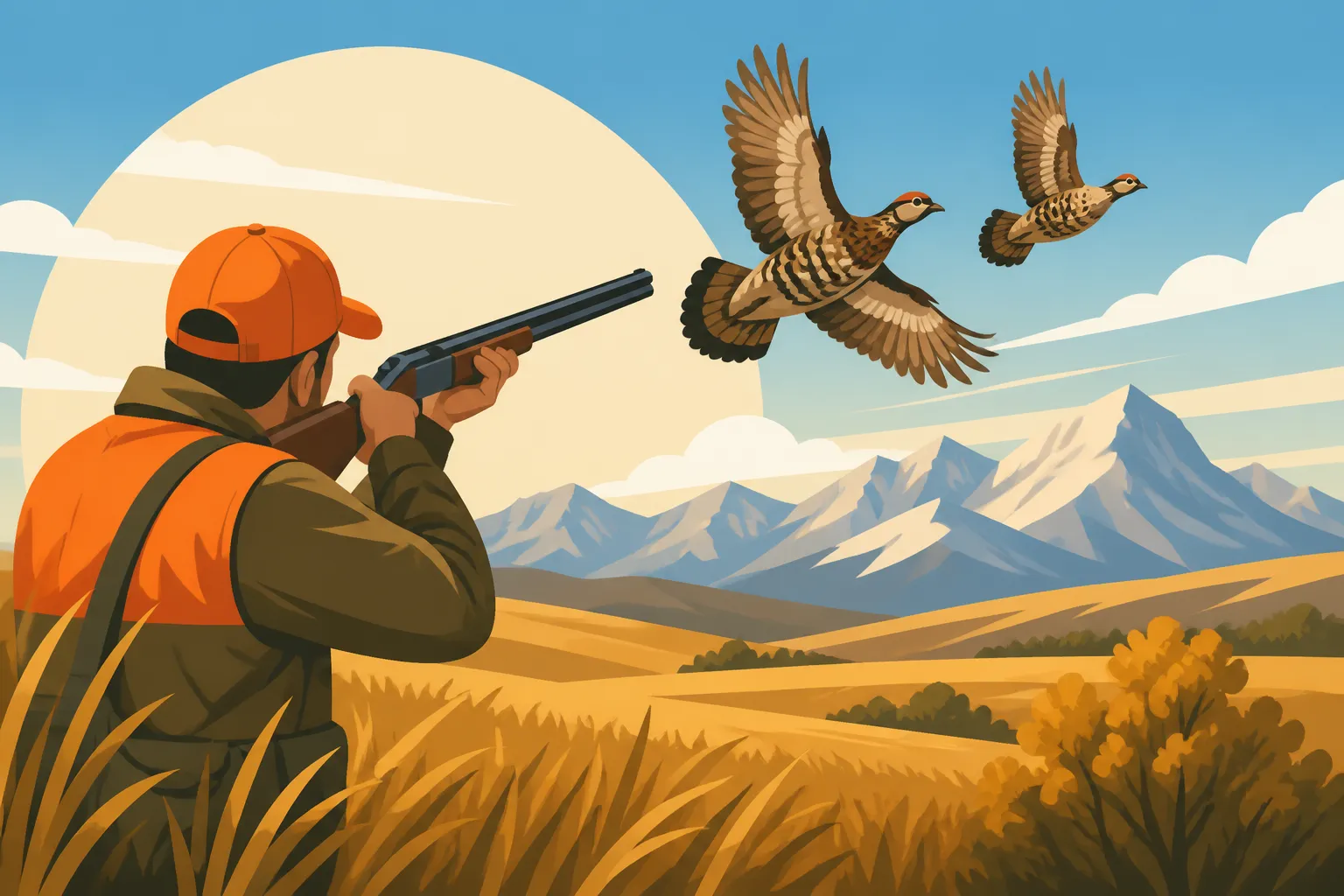
Hungarian partridge, affectionately known as "Huns," are quintessential farm birds. They absolutely love the interface between agricultural fields and light cover. This means shelterbelts, fencelines, old corrals, stubble fields, and patches of weeds or native grass that butt up against cultivated land. Huns are often found in coveys (groups) and will burst into flight with an explosive flush that can startle even the most seasoned hunter. They feed heavily on grains, weed seeds, and insects found in these environments. Public land in the "white area" (settled agricultural zone) of Alberta, particularly quarter sections that have some natural cover remaining, can be fantastic for Huns. It's all about finding that balance of food-rich fields and secure hiding spots. Hunting Hungarian Partridge on Alberta Farms can be very rewarding.
Ruffed and Spruce Grouse in the Timber
When you head into the timber, you're likely thinking about ruffed grouse and spruce grouse. Ruffed grouse, with their distinctive drumming, prefer young aspen and poplar stands, river bottoms choked with thick brush, and mixed forests where conifers and deciduous trees intermingle. They need dense undergrowth for protection and feed on buds, catkins, and berries. Look for old logging roads, cutblocks that are regenerating, and creek bottoms. Spruce grouse, on the other hand, are much more tied to dense coniferous forests, particularly black spruce and lodgepole pine stands. They're often less flighty than ruffed grouse, sometimes allowing a close approach, earning them the nickname "fool hens." Their diet consists mainly of conifer needles. Hunting these birds often involves walking trails, old seismic lines, or simply still-hunting through appropriate timber. Ruffed Grouse Hunting Alberta's Bush Trails offers a classic experience.
Pheasants and Ptarmigan: Niche Habitats
Pheasants aren't native to Alberta and are primarily found around release sites or in areas with very specific, rich agricultural landscapes that offer ample heavy cover like cattail sloughs, dense brush, and tall grasses. While you can find them on some public lands, particularly those managed by conservation groups, many of the best pheasant opportunities are on private land. Ptarmigan are an entirely different beast, residing exclusively in the alpine tundra, high above the treeline in Alberta's mountain ranges. Hunting them requires significant physical exertion, often involving backpacking into remote, rocky, and windswept basins. They're a beautiful bird, changing plumage with the seasons, and a true challenge for the dedicated upland hunter. Hunting Ptarmigan Above Alberta's Treeline is a unique adventure.
Key Public Land Types for Upland Bird Hunting
Alberta offers a surprising amount of public land for hunting, but not all of it is created equal when it comes to upland birds. Understanding the different categories of public land and their typical characteristics will guide you toward the most productive areas. It's not just about "Crown land"; there are specific designations that can make a huge difference.
Crown Land: The Vast, Varied Resource
Alberta's Crown land is the most extensive type of public land, encompassing millions of acres. It's often divided into the "Green Area" (primarily forested, foothills, and mountain regions) and the "White Area" (settled agricultural regions). For upland birds, both can be productive, but in different ways.
In the Green Area, you'll find vast expanses of forest, which can be excellent for ruffed and spruce grouse. Look for areas with a mosaic of different-aged timber stands, especially regenerating cutblocks, old logging roads, and natural clearings. These areas provide the diverse food sources and cover that grouse need. Access might be via forestry roads or old trails, but be prepared for rugged terrain.
The White Area Crown land, though smaller in parcels, can be a goldmine for sharp-tailed grouse and Hungarian partridge. These are often small, isolated quarter-sections or strips of land that were never developed for agriculture. They might be native grass pastures, brushy coulees, or slough edges surrounded by private farmland. Finding these parcels often requires diligent scouting and using mapping tools to identify property lines. Hunting Alberta's Crown Land often means a different approach depending on whether you're in green or white areas.
Provincial Grazing Reserves and Public Land Use Zones (PLUZs)
Provincial Grazing Reserves are large tracts of Crown land primarily managed for cattle grazing, but they offer fantastic upland bird hunting opportunities. These reserves often feature a mix of native grasslands, aspen bluffs, brushy draws, and wetlands, creating ideal habitat for sharp-tailed grouse and Hungarian partridge. You will typically need to contact the grazing leaseholder for permission to access these lands, even though they are technically public. This permission is a courtesy and usually granted, but it's a critical step. Don't skip it! Many hunters overlook these areas, meaning less competition for you. Hunting a Provincial Grazing Reserve can be incredibly productive.
Public Land Use Zones (PLUZs) are designated areas, mostly in the Green Area of the foothills and mountains, designed to manage recreational activities. While often associated with big game, many PLUZs offer excellent ruffed and spruce grouse hunting. The network of trails, old logging roads, and diverse forest cover within PLUZs provides perfect grouse habitat. You might need to hike or use an ATV (where permitted) to get away from road noise, but the rewards can be worth it. The Ghost PLUZ and McLean Creek area are examples where you can find good grouse numbers, especially along creek drainages and mixed stands of timber.
Alberta Conservation Association (ACA) Lands
The Alberta Conservation Association (ACA) acquires and manages thousands of acres across the province specifically for wildlife habitat and public recreation, including hunting. These lands are often well-signed and can be easily identified. Many ACA sites are specifically managed to enhance upland bird habitat, featuring food plots, cover crops, and native grass restoration. These are often excellent places to find sharp-tailed grouse, Hungarian partridge, and sometimes pheasants, especially near release sites. They're typically smaller parcels but can offer fantastic, accessible hunting, particularly for a quick morning or evening hunt. Checking the ACA website for their specific sites and access rules is a smart first step.
Navigating Specific Regions for Upland Bird Hunting
While a detailed, WMU-by-WMU breakdown for every bird would be a book in itself, we can certainly highlight broader regions in Alberta that consistently offer good opportunities for various upland species. These are the general areas where topography, vegetation, and land use combine to create favorable conditions.
The Prairie and Parkland Transition Zones
The most consistently productive areas for sharp-tailed grouse and Hungarian partridge tend to be in the vast transition zones where Alberta's open prairie meets the aspen parkland. This includes many of the WMUs in the 100 and 200 series, as well as the eastern fringes of the 300 series. Think of areas around Hanna, Drumheller, and Castor, extending up towards Vermilion. Here, you'll find a patchwork of cultivated fields, native grass pastures, and scattered aspen bluffs and coulees. The key is to find public land parcels, such as Crown grazing leases or small tracts of public land, that provide this ideal mix. Scouting from vehicle often helps identify promising areas, looking for those "edge" habitats. These regions are often wind-swept, so dressing appropriately for the weather is crucial, especially when Hunting Alberta Winter Weather Safely.
Central Alberta's Aspen Parkland and Boreal Fringe
Moving north and west into Central Alberta, the landscape becomes more dominated by aspen parkland and gradually transitions into the vast boreal forest. This is prime ruffed grouse country. WMUs in the central 200s and 300s, especially those with significant forested sections, can be excellent. Areas around Edmonton, west towards Rocky Mountain House, and north towards Lac La Biche often have good ruffed grouse populations. Look for public access along old forestry roads, municipal reserves, and larger blocks of Crown land that are actively managed or have seen natural disturbance (like old burns) that create young, regenerating forest. These areas often also hold spruce grouse in the thicker conifer stands.
The Foothills and Mountain Front
As you push into the foothills and the front ranges of the Rocky Mountains, you'll find primarily ruffed and spruce grouse, with the rare opportunity for ptarmigan at higher elevations. WMUs in the 300, 400, and 700 series that border the mountains are your targets. These areas are characterized by undulating terrain, mixed conifer and deciduous forests, and numerous creek and river valleys. The Public Land Use Zones (PLUZs) in this region, such as the Ghost, McLean Creek, and Livingstone-Porcupine Hills, are excellent starting points. Access often involves hiking or using off-highway vehicles (OHVs) on designated trails to reach less-pressured areas. For ptarmigan, you'll need to venture into the true high country, well above the treeline, often requiring multi-day backpacking trips in the specific mountain WMUs. Backpack Hunting Alberta's Bighorn Country might offer opportunities for ptarmigan as a bonus.
Tools and Tactics for Finding Your Own Upland Bird Spots
Finding productive upland bird hunting spots on public land isn't always easy, but with the right tools and a smart approach, you can significantly increase your success rate. It often comes down to research, persistence, and a keen eye for habitat.
Leveraging Mapping Technology
In today's hunting world, mapping apps are truly indispensable for finding public land and identifying promising habitat. A robust platform like onX Hunt allows you to overlay property boundaries with satellite imagery, showing you exactly where public land begins and ends. You can identify native grasslands, brushy coulees, shelterbelts, and forest edges that might hold birds, all from the comfort of your home. Zoom in on areas marked as Crown land, grazing reserves, or ACA sites, looking for the specific habitat features that each bird species prefers. Many hunters also find value in platforms like GoHunt for scouting and finding public land overlays, especially when researching different WMUs. Using these tools to pre-scout helps you narrow down vast areas into manageable sections. Reading Alberta's Crown Land Layers on onX is a fantastic skill to develop.
Scouting on the Ground
There's no substitute for boots-on-the-ground scouting. Even with the best maps, you need to verify what the satellite imagery shows. Drive county roads and range roads, paying attention to fencelines, shelterbelts, and the edges of fields. Look for areas where native grasses meet cultivated land, or where timber blocks transition to open clearings. Stop and walk into promising looking public parcels, paying close attention to bird sign like dusting areas, droppings, and feather piles. Listen for bird calls. Early morning or late evening drives can often reveal birds feeding or crossing roads. Scouting With Satellite Imagery in Alberta should always be followed up with actual ground truth.
The Invaluable Role of a Bird Dog
For upland bird hunting, a good bird dog is more than just a companion; it's a vital tool. Whether you have a pointing dog like a German Shorthaired Pointer or a flushing dog like a Springer Spaniel, their noses and instincts will find birds that you would undoubtedly walk right past. They cover ground more efficiently, locate hidden coveys, and retrieve downed birds, minimizing losses. Training your dog to hunt specific species and terrain will pay dividends. Using a Pointing Dog on Alberta Prairie can dramatically increase your chances of finding Huns and sharpies.
Understanding Access and Regulations
Always double-check the Alberta hunting regulations for specific WMU rules, season dates, and bag limits. Understand the nuances of accessing different types of public land. For example, while Crown land is generally open, some Provincial Grazing Reserves require you to contact the leaseholder for permission. Knowing Finding Access on Alberta Crown Land means understanding the various regulations that apply. Always be respectful of private property, even if you're hunting adjacent public land. Knock on doors, introduce yourself, and ask permission if there's any doubt about property lines. A good relationship with landowners can open up opportunities and prevent unnecessary conflicts.
Here's a quick reference for common upland birds and where to find them on public land:
| Upland Bird Species | Preferred Habitat | Common Public Land Types | Key Regions (General) |
|---|---|---|---|
| Sharp-tailed Grouse | Native grasslands, aspen parkland, brushy coulees | Grazing Reserves, White Area Crown Land, ACA sites | Prairie/Parkland transition (e.g., SE & Central Alberta) |
| Hungarian Partridge (Huns) | Farm fringe, shelterbelts, stubble fields, old corrals | White Area Crown Land, ACA sites, some Grazing Reserves | Agricultural zones (e.g., Central & NE Alberta) |
| Ruffed Grouse | Young aspen/poplar stands, river bottoms, mixed forests | Green Area Crown Land, PLUZs, ACA sites | Aspen Parkland, Foothills, Boreal Forest fringes |
| Spruce Grouse | Dense coniferous forests (spruce, pine) | Green Area Crown Land (Boreal/Foothills), PLUZs | Boreal Forest, Foothills |
| Ring-necked Pheasant | Heavy cover near agriculture, cattail sloughs | Release sites, specific ACA sites (fewer public options) | Localized around designated release areas |
| Ptarmigan | Alpine tundra, rocky slopes above treeline | Mountain WMUs, PLUZs (requiring hiking) | High elevation Mountain WMUs |
Hunting Alberta's public ground for upland birds is a deeply rewarding experience, combining physical activity with the thrill of working with a good dog and connecting with nature. By understanding habitat needs, knowing where to focus your search on various public land types, and utilizing modern tools and old-school scouting, you'll be well on your way to filling your game bag and creating lasting memories in the field.
Disclaimer
This article is for general informational purposes only and does not constitute professional advice. Laws, prices and regulations vary by location and change over time. Consult a qualified professional for guidance on your specific situation.