Hunting Alberta’s Northern Boreal Roads
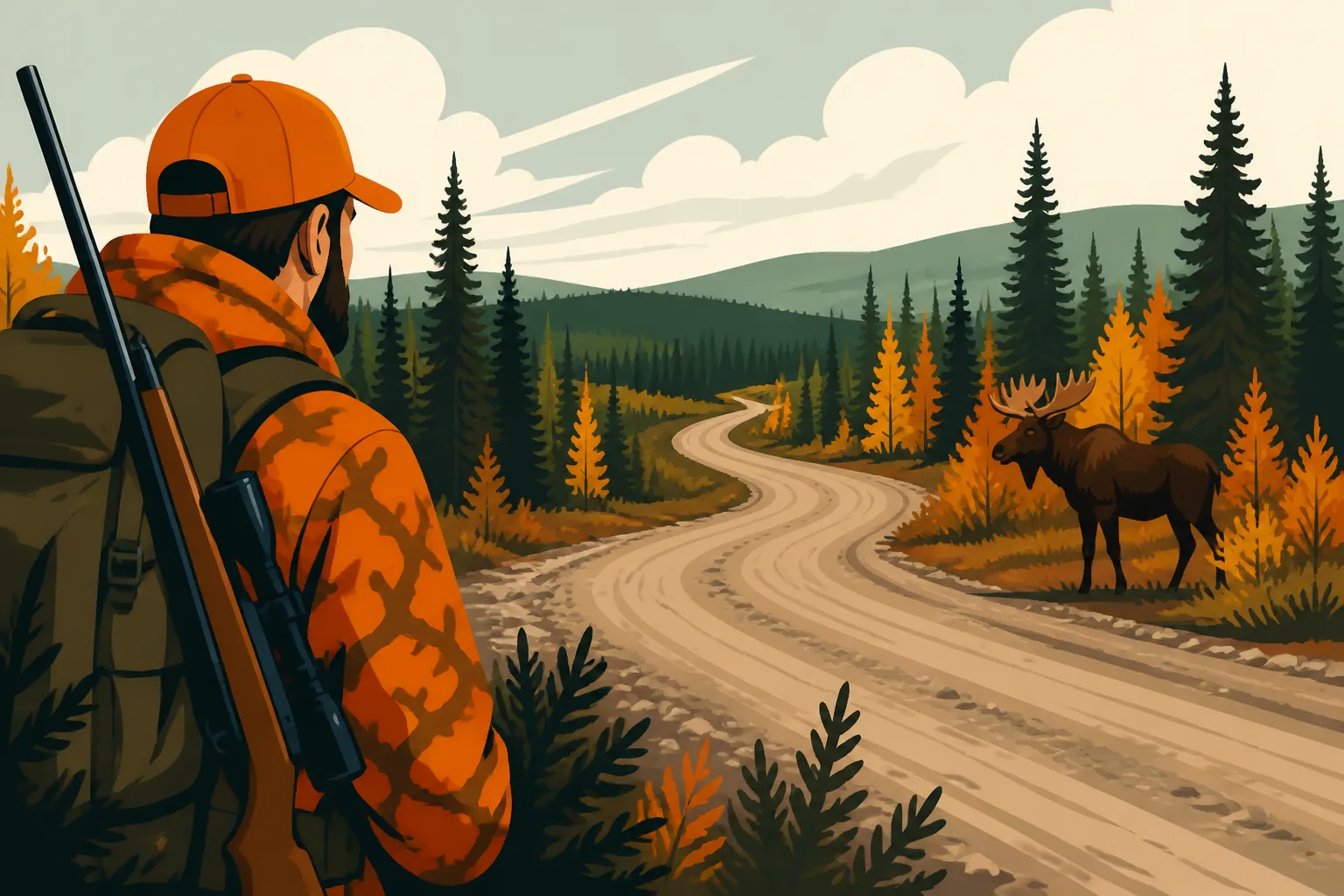
Driving Alberta's northern boreal roads during hunting season can feel like a game of chance – miles and miles of seemingly endless timber with only glimpses of what lies within, leaving you wondering if you're missing opportunities or just burning fuel. This guide is here to unravel the mysteries of hunting these vast northern road networks, offering practical strategies to turn those long drives into productive hunts for moose, deer, and bear.
The Unique Challenge and Opportunity of Boreal Roads
The sheer scale of Alberta's northern boreal forest is breathtaking, but for a hunter, it can also be incredibly daunting. It's a land of dense spruce and pine, mixed with aspen and willow, interspersed with muskeg and countless small lakes and rivers. Roads are often the only practical way to penetrate this vastness, creating both unique challenges and incredible opportunities. You might drive for hours seeing nothing but trees, only to round a corner and find fresh tracks or a deer browsing right off the shoulder.
Understanding the Boreal Landscape from the Road
When you're out there, rattling down a gravel road in the boreal, it's easy to just see a wall of trees. But these roads, whether they're main forestry trunk roads, old logging trails, or narrow seismic lines, are far more than just transportation routes. They are dynamic edges within the forest, creating vital habitat features that game animals absolutely rely on. The dense forest itself often limits visibility to mere yards, forcing animals to use these more open corridors. Think of them as natural highways and trails for wildlife.
The type of road matters, too. Main forestry trunk roads are often well-maintained, wide gravel paths, while old logging roads can be deeply rutted, overgrown tracks that barely qualify as roads anymore. Seismic lines and cutlines are narrower, straight paths, often cut for oil and gas exploration or utility lines, and they slice through the timber in grids. Each type offers different advantages and disadvantages. For example, a major trunk road might see more vehicle traffic, pushing wary animals deeper into cover, but those smaller, overgrown trails? They can be hidden gems, offering quiet travel and unexpected encounters. Animals use these corridors not just for travel between feeding and bedding areas, but also for security, especially when moving between different pockets of cover. They’re looking for the path of least resistance, and often, that’s exactly what a road or cutline provides.
Why Boreal Roads are a Hunter's Best Friend (and Biggest Frustration)
Let's be real, the boreal roads can test your patience. You spend hours driving, burning fuel, scanning the tree lines, and sometimes it feels like you're just on a really long, frustrating scenic tour. That feeling of "Am I even in the right spot? Is there anything here?" is incredibly common. The sheer vastness means pressure can be spread out, but it also means finding that specific sweet spot can be like finding a needle in a haystack.
However, these same roads are also your gateway to some incredible hunting. Without them, much of the northern boreal would be practically inaccessible. They provide the only real visibility into the otherwise impenetrable forest, allowing you to spot deer, moose, or bear moving along edges, crossing openings, or feeding in clearings. The opportunity lies in the access they provide to remote areas that would otherwise require days of arduous bushwhacking. A main road might get you to within a few kilometers of prime habitat, and then an old logging spur or seismic line might lead you right into it. These roads concentrate animal activity, especially where different cover types meet or where there's a water source nearby. For a hunter willing to invest the time in scouting and understanding these networks, boreal roads transform from a frustration into a truly productive hunting ground.
Strategies for Successful Hunting Along Boreal Roads
Hunting boreal roads isn't just about driving around hoping to get lucky. It requires a specific set of strategies, mixing patience with proactive scouting and understanding how game animals interact with these linear features. It's about turning those long drives into calculated efforts.
Scouting Smart: Pre-Season and In-Season Approaches
Effective scouting is paramount when hunting boreal roads, especially given the vastness of the landscape. Before you even set foot in the woods, or rather, put tires on the gravel, leverage modern tools. Satellite imagery, which you can easily access through platforms like onX Hunt or GoHunt, is an absolute game-changer. Spend hours pouring over maps, looking for subtle changes in forest density, identifying old cutlines or seismic lines that aren't visible from the main road, pinpointing areas where the roads intersect with creeks or river drainages, or where pockets of mature timber meet younger growth. Look for pinch points, natural funnels, and any anomalies that might concentrate game movement. If you can identify areas that are difficult for other hunters to access or see, that's where your real advantage lies. Pay close attention to areas that were burned a few years back – Hunting a Burned Block Three Years On can be incredibly productive for moose and elk.
Once you're actually in the field, whether it's pre-season or during your hunt, your scouting shifts. Drive slowly, really slowly. Stop often. Get out, listen, and glass every opening, every cutline intersection. Look for fresh tracks, droppings, rubs on trees, or fresh scrapes along the road edges. These are direct signs of recent animal activity. Don't be afraid to walk a kilometer or two down an old, overgrown logging road, even if it looks like it goes nowhere. You'd be amazed what you find just a short distance from the main drag. A little boot leather can pay huge dividends.
Hunting Techniques Tailored for Boreal Roads
The boreal forest demands adaptable hunting techniques, often blending elements of still hunting, spot-and-stalk, and calling. One popular method is the "spot and stalk" variation, where you drive slowly down a road, constantly glassing the edges and any openings. When you spot an animal, or fresh sign, you carefully plan your approach, using the available cover to get within range. This works particularly well for Hunting Moose Along Cutlines and Seismic Lines or deer browsing along new growth.
Another effective technique involves setting up a stand or ground blind in key locations. Think about where a game trail intersects a main road, or where a lesser-used cutline funnels into a heavier timber block. These are natural ambush points. Hanging a stand can give you an elevated view and help you remain undetected, especially if you identify a natural bottleneck or a frequently used crossing. Hanging a Stand on an Alberta Bush Edge near a productive boreal road can be incredibly effective. Don't underestimate the power of calling, especially for moose during the rut. A well-placed Calling a Bull Moose in the Rut can draw a curious bull out of the thick timber and towards the road edge. For predators, particularly in winter, Calling Wolves in Winter Bush along these remote corridors can also be very successful. Still hunting, moving incredibly slowly and deliberately, paralleling a road or working your way down an old track, allows you to cover ground quietly and detect animals before they detect you.
Understanding Game Movement Near Roads
Game animals in the boreal are constantly adapting to their environment, and that includes the presence of roads and human activity. Understanding their typical movement patterns will dramatically increase your success. During dawn and dusk, animals are most active, often using roads and cutlines to travel between their bedding areas and feeding grounds. You'll frequently see deer and moose browsing along the fresh growth at the edges of clearcuts or moving across open seismic lines during these prime times. This is often your best window for spotting game from your vehicle or setting up an ambush.
As the sun gets higher and human activity increases, animals tend to retreat into the thicker cover that the boreal offers in spades. They'll bed down in dense spruce stands, often just a short distance off the road, but in cover so thick you'd never see them. However, they'll still utilize smaller, less-travelled trails that parallel the main roads, or they might hole up in an old cutblock that has grown up into dense saplings. Pressure from other hunters can also influence these movements, pushing wary animals deeper into the bush. Pay attention to how weather affects their patterns too. A fresh snowfall can make tracking easier and often encourages animals to move more, while heavy rain might keep them hunkered down. Learning to Hunting Alberta Winter Weather Safely is crucial, as late-season snow can reveal many secrets.
Navigating Access and Regulations on Boreal Roads
Hunting Alberta's northern boreal roads isn't just about finding game; it's also about understanding and respecting the intricate web of access rules and regulations. Missteps here can lead to fines, loss of privilege, or worse. It’s a lot to keep track of, and it’s a valid frustration when you’re just trying to enjoy the outdoors.
Public Access and Vehicle Restrictions
The majority of Alberta's northern boreal region falls under Crown land, meaning it's generally open to public access for activities like hunting. However, "open" doesn't always mean unrestricted. It's absolutely critical to know where you are. Finding Access on Alberta Crown Land is the first step. Alberta has numerous Public Land Use Zones (PLUZs), especially in the more mountainous and foothills sections, but they extend into the boreal too. These PLUZs, like the often-visited areas around the Forestry Trunk Road, have specific rules regarding vehicle use, camping, and even hunting methods. You might find some roads are restricted to foot traffic only, or that ATVs and side-by-sides are only permitted on designated trails. Ignoring these rules can lead to significant penalties. Always check the current regulations for your specific WMU and any PLUZs you plan to enter. It's often where people get tripped up, thinking all Crown land operates under the same vehicle rules, which just isn't the case. You absolutely need to be aware of Quad and Side-by-Side Rules on Crown Land before you head out.
Respecting Industrial Operations and Gates
One of the biggest realities of hunting boreal roads is the presence of industrial activity. Logging companies, oil and gas operations, and even seismic crews frequently operate in these areas, and they build and maintain many of the roads you'll be using. This means you will encounter locked gates. And here's the golden rule: a locked gate means no entry. Period. It doesn't matter how great the country looks behind it, or how short a walk it might be to that perfect hunting spot. Trespassing on industrial land, even if it's Crown land managed for industrial use, is a serious offense.
It can be incredibly frustrating to drive all that way, only to find your planned route blocked by a gate. I've been there, staring at a padlock, feeling all my carefully laid plans unravel. This is where good mapping tools like onX Hunt can help you identify potential access issues beforehand, though conditions on the ground can change. Always be aware of industrial traffic – huge logging trucks and heavy machinery can appear quickly, and they have the right-of-way. Give them a wide berth. Sometimes, industrial activity means temporary road closures or specific access windows. Checking with local forestry offices or the operating companies directly might sometimes yield information, but generally, assume gates are locked for a reason.
Understanding Local Wildlife Management Unit WMU Nuances
Alberta is divided into numerous Wildlife Management Units (WMUs), and each can have subtle but significant differences in regulations, season dates, and even species-specific rules. The boreal forest encompasses many of these WMUs, and it's vital to know which one you're hunting in and what rules apply. Don't assume that because you're in the "north," the rules are all the same. For example, some WMUs might have antler point restrictions for deer or different tag allocations for moose.
A good start is always to pull out your current regulations and reference the WMU map. Reading an Alberta WMU Map Before You Go should be mandatory homework. You might find that one WMU has a general season for whitetails, while an adjacent one requires a draw or has a restricted antlerless season. Some boreal WMUs are also part of Alberta's mandatory CWD submission zones, meaning you must submit the head of any harvested deer for testing. Know Which WMUs Require a Deer Head Submission and plan accordingly. These differences, while sometimes minor, are legally binding and can impact your hunt planning significantly. Always double-check before heading out.
| Road Type | Typical Access/Vehicle Rules | Common Game Found | Key Hunting Consideration |
|---|---|---|---|
| Main Forestry Trunk Rd | Generally open to street-legal vehicles, check PLUZs | Moose, Black Bear, Elk | High traffic, focus on side trails, early/late hours, deep woods for moose |
| Old Logging Roads | Often rough, may be gated, restricted to 4×4/ATV in PLUZs | Whitetail, Moose, Bear | Less pressure, good for walking, may require heavy-duty vehicle or quad |
| Seismic Lines/Cutlines | Foot/ATV access typical, often overgrown, check PLUZs | Moose, Whitetail, Elk | Excellent travel corridors, can be hard to spot, good visibility from air via onX Hunt |
| Oil & Gas Access Roads | Private industrial property, often gated or restricted access | Bear, Moose (near edges) | Respect closures, highly variable access, always assume private property unless posted otherwise |
Essential Gear and Safety for Boreal Road Hunting
Hunting in Alberta's northern boreal forest, especially off the main highways and on less-traveled roads, means you're often far from help. Being prepared isn't just a good idea; it's essential for your safety and success. The environment is rugged, and conditions can change rapidly.
Vehicle Preparedness for Remote Boreal Travel
Your hunting vehicle is arguably your most critical piece of gear when hunting boreal roads. A reliable 4×4 truck or SUV is almost mandatory, especially if you plan on venturing down anything more than a well-maintained gravel road. These secondary and tertiary roads can be deeply rutted, muddy, or have significant water crossings, particularly in wet years. I've seen countless hunters get stuck, sometimes in truly remote locations. A good set of all-terrain tires, a full-size spare, and the tools to change it are non-negotiable.
Beyond that, consider a comprehensive vehicle recovery kit. A winch, a heavy-duty tow strap, shackles, and a shovel can be the difference between a minor inconvenience and a multi-day ordeal waiting for a tow. Many boreal roads see minimal traffic, meaning if you get stuck, you could be waiting a long time for assistance. It's a humbling experience to find yourself in the middle of nowhere, wheels spinning. I remember one early season hunt where unexpected rain turned a perfectly dry trail into a soup of mud – thankfully, we had a winch. Always plan for the worst-case scenario. Make sure your fuel tank is full, and consider carrying extra fuel in approved containers if you're heading deep. Know What to Do If You Get Stuck in the Bush and have the gear to get yourself out.
Personal Gear for Boreal Conditions
Beyond your vehicle, your personal gear list for boreal road hunting needs to be robust and adaptable. The weather in northern Alberta can be incredibly unpredictable, swinging from warm and sunny to cold, wet, or even snowy within hours, especially during shoulder seasons. Layered clothing is key; think moisture-wicking base layers, insulating mid-layers, and a waterproof/windproof outer shell. Your footwear needs to be sturdy, waterproof, and comfortable for walking long distances. Depending on the time of year, rubber boots or insulated hiking boots are often suitable.
Navigation tools are also critical. While onX Hunt and GoHunt on your phone are fantastic, don't rely solely on electronics. Always carry a physical map (your WMU map is ideal) and a compass, and know how to use them. A fully charged portable power bank for your devices is also a smart addition. For emergencies, a small but comprehensive survival kit should always be with you: fire-starting materials, a headlamp with extra batteries, a knife, a first-aid kit, and a whistle. It's not about being paranoid, it's about being prepared for the unexpected turn of events. Remember, Hunting Alberta Winter Weather Safely means you need to be equipped for extreme cold if you're out late in the season.
Staying Safe and Aware in Bear and Wolf Country
The northern boreal forest is prime habitat for some of Alberta's most iconic wildlife, including black bears, wolves, and occasionally even grizzlies in certain areas. While encounters are relatively rare, being prepared and aware is crucial. Always carry bear spray and know how to use it effectively. It's not just a deterrent; it's a vital safety tool. Make noise when moving through thick cover, especially if you're off the road, to avoid surprising an animal. Be vigilant and scan your surroundings constantly. Familiarize yourself with basic bear country safety, understanding what to do in different types of encounters. Wildlife Safety in Alberta Bear Country is an excellent resource for this.
While less of a direct threat to humans, wolves and cougars are also present. Understanding Wolf Pack Size in the Boreal can help you recognize their presence through tracks or scat. For communication, especially in areas with no cell service, a satellite phone or messenger device is a lifesaver. These devices allow you to check in with family, share your location, and, most importantly, call for help in an emergency. Never hunt alone without telling someone exactly where you're going and when you expect to return. A simple plan shared with a trusted person can be the most important safety measure you take.
Disclaimer
This article is for general informational purposes only and does not constitute professional advice. Laws, prices and regulations vary by location and change over time. Consult a qualified professional for guidance on your specific situation.