Pothole Hunting Ducks on Small Water
Hunting ducks on small water bodies, commonly known as pothole hunting, can be one of the most exciting and rewarding experiences in Alberta, but it often comes with the frustration of finding productive spots and setting up effectively. Many hunters struggle with inconsistent results, wondering how to consistently entice ducks into close range on these intimate water sources. This comprehensive guide is designed to arm you with the knowledge and strategies to successfully hunt ducks on Alberta's abundant potholes, turning those quiet mornings into memorable hunts.
Understanding Alberta's Pothole Country and Duck Behavior
Alberta is a true duck factory, and much of that reputation comes from its vast expanse of "pothole country." These small, often ephemeral water bodies are magnets for waterfowl, providing critical nesting, rearing, and staging habitat. To become a more effective pothole hunter, you first need to understand this unique landscape and how ducks interact with it.
The Unique Ecosystem of Alberta's Prairie Potholes
Alberta's prairie potholes are depressions left behind by retreating glaciers, creating a mosaic of wetlands that vary greatly in size, depth, and vegetation. These wetlands are particularly concentrated across the province's Parkland and Prairie regions. What makes them so special for ducks is their sheer abundance and diversity. A single quarter section of land might hold half a dozen small potholes, each offering slightly different foraging opportunities. Some are shallow and muddy, perfect for dabbling ducks like mallards and pintails to tip up and feed on submerged vegetation and invertebrates. Others are deeper, providing safe roosting areas.
The vegetation around these potholes is crucial. Cattails, bulrushes, sedges, and various grasses offer concealment for nesting hens and protective cover for broods. During the fall migration, the rich aquatic vegetation and invertebrate life within the potholes, combined with nearby grain fields, create an irresistible buffet for ducks needing to fuel up for their long journey south. Understanding the hydrological cycle of these potholes is also important; some might dry up completely in drought years, while others remain stable. This dynamism means scouting is paramount, as prime spots can change year to year. It's this complex and varied ecosystem that makes Alberta such a vital breeding and staging ground, leading to incredible hunting opportunities for those willing to explore.
Reading Duck Behavior on Small Water
Ducks use potholes differently than larger lakes or rivers. On small water, they're often more concentrated and, surprisingly, can be more susceptible to good calling and decoying if you're set up correctly. Dabbling ducks like Mallards, Northern Pintails, and various species of Teal are the primary residents and visitors of these smaller wetlands. They frequent potholes for a few key reasons: feeding, loafing (resting), and staging.
When ducks are feeding, they'll typically be found in shallower areas, often tipping tail-up to reach submerged vegetation and aquatic insects. Observe their feeding patterns – if they’re actively dabbling, it suggests a rich food source, making it a good spot to set up. Loafing ducks, on the other hand, are often just resting, preening, or digesting, usually found along the edges or in slightly deeper, more secure parts of the pothole. During the early season, you might encounter large family groups. As the season progresses and migration begins, larger flocks will use potholes as temporary rest stops, flying in from distant fields to drink and digest. Pay attention to how they approach and land; ducks are generally more cautious on smaller water, often circling multiple times before committing. If they peel off after a pass or two, it's a sign something in your setup or concealment isn't quite right.
Essential Gear and Setup for Pothole Hunting
Effective pothole hunting is all about maximizing realism and minimizing your footprint. The right gear and a thoughtful setup can make all the difference when ducks are looking closely at a small body of water.
Decoy Spreads and Placement for Close Encounters
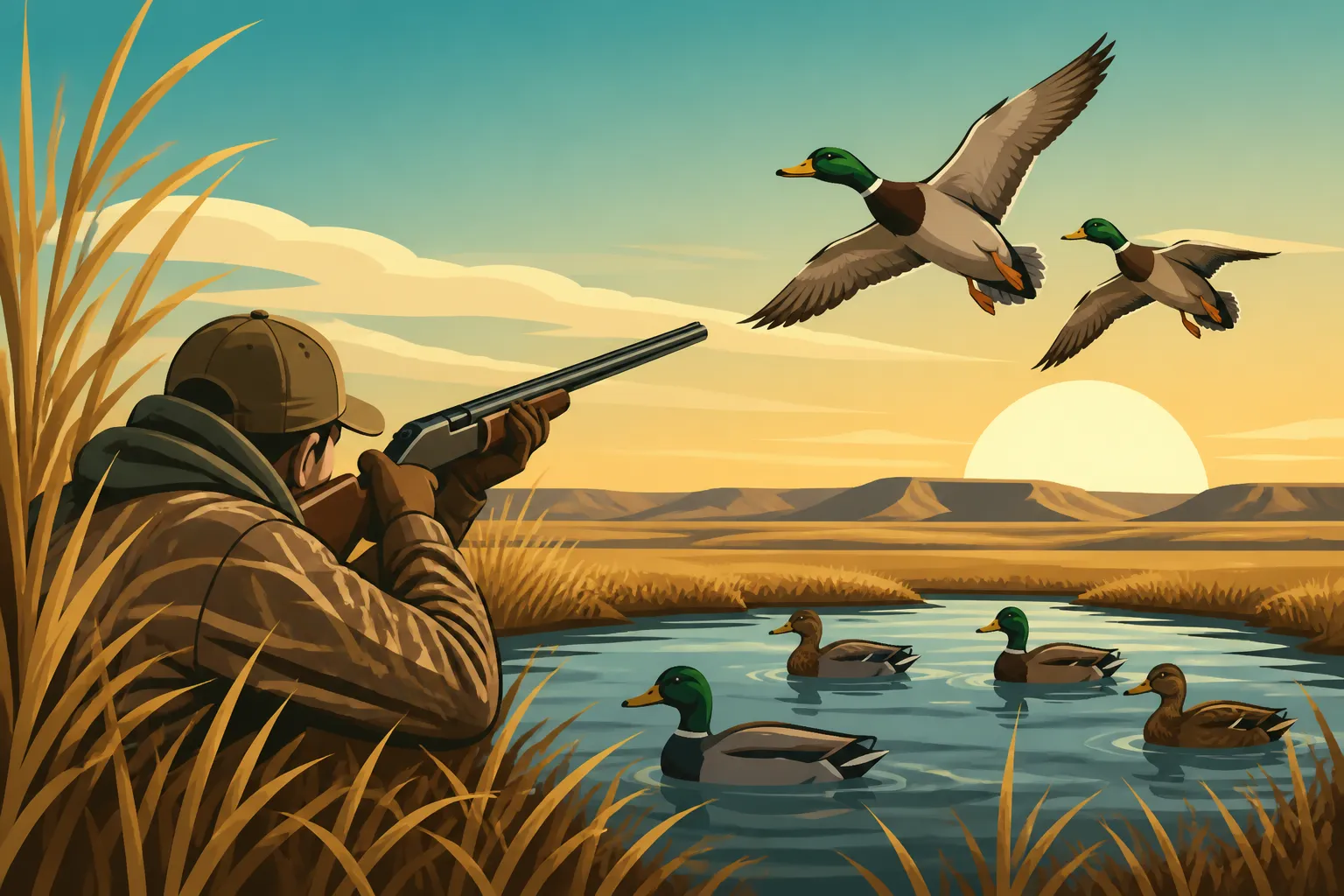
On small water, less is often more with decoys, but realism is absolutely key. You're not trying to attract ducks from miles away like on a big lake; you're trying to convince birds already in the vicinity to commit to your small puddle. A spread of 1 to 2 dozen high-quality mallard decoys is usually sufficient, perhaps with a few pintails or widgeon mixed in for added variety if those species are present. The most effective spreads mimic natural feeding and loafing patterns. Consider an open "J" or "U" shape, leaving a landing zone in the middle or just downwind of your blind. This creates a natural pocket for ducks to approach and land in, giving you excellent close-range shots.
Placement relative to the wind is crucial. Ducks almost always land into the wind, so position your decoys to force them to approach from a direction that exposes them broadside or facing away from your blind, allowing them to swing into the wind right in front of you. Motion decoys, like a spinning-wing decoy or a jerk string, can add a tremendous amount of realism, mimicking active birds and catching the attention of circling ducks. However, use them judiciously; on small water, too much motion can sometimes spook wary birds. A subtle "swimmer" decoy or a single spinning wing decoy deployed a little distance from the main spread can be incredibly effective. Ensure your decoys are clean, free of glare, and look as natural as possible. For more insights on attracting waterfowl, check out Scouting Fields for Alberta Waterfowl.
Blinds, Cover, and Concealment on Open Water
Concealment is paramount when hunting small potholes because ducks have an excellent overhead view and are often looking directly into your setup before committing. Natural cover is always best. If the pothole has thick cattails, bulrushes, or willow clumps, utilize them! Position yourself within the cover, not just behind it. Break up your silhouette completely. If natural cover is sparse, a portable layout blind or a small A-frame blind covered with natural vegetation from the area can work wonders. The goal is to blend seamlessly into the environment.
Waders are an absolute must for pothole hunting, allowing you to wade out and set decoys, retrieve birds, and position yourself effectively. Chest waders are generally preferred as water depths can be unpredictable. Layer your clothing to stay warm and dry, as you'll often be stationary for extended periods, and Alberta mornings can be chilly, even in early fall. Waterproof outer layers are non-negotiable, given the close proximity to water and potential for rain or sleet. Always wear camouflage that matches the local surroundings – browns and tans for dry grass, greens for lush vegetation. Remember, ducks have incredible eyesight; even a sliver of uncovered skin or a shiny object can be enough to send them flaring away.
Shotguns, Ammunition, and Waterfowl Safety
For duck hunting in Alberta, a 12-gauge shotgun is the most common choice, offering a versatile balance of payload and range. A 20-gauge can also be effective, especially for younger or smaller-framed hunters, but ensure it's capable of handling steel shot. Semi-automatic and pump-action shotguns are popular for waterfowl due to their reliability and quick follow-up shots. Whatever firearm you choose, it must be capable of firing non-toxic shot, as this is a legal requirement for all migratory bird hunting in Canada. Options include steel, bismuth, and various tungsten alloys, each with different performance characteristics and price points. Steel shot is the most common and affordable, but consider bismuth or tungsten for better performance at longer ranges or for larger ducks.
Choke selection is important; a modified or improved cylinder choke is often ideal for the close-range shots typical of pothole hunting, offering a good pattern density without being too tight. When it comes to safety, always treat your firearm as if it's loaded, keep the muzzle pointed in a safe direction, and be absolutely certain of your target and what's beyond it. Hunting over water adds another layer of safety considerations, as ricochets are possible. Communicate clearly with hunting partners about shooting zones and be mindful of your swing. Remember, safe hunting is ethical hunting. You can find more details on ammunition requirements in Non-Toxic Shot for Alberta Waterfowl.
Scouting and Accessing Prime Potholes
Finding the right potholes is often 90% of the battle. Alberta has countless water bodies, but only a fraction will hold ducks consistently. Successful pothole hunting hinges on thorough scouting and respectful access.
Locating Promising Small Water Bodies
Gone are the days of just driving around hoping to spot ducks from the road, though that still plays a role. Modern technology has revolutionized scouting. Begin your search with online mapping tools like GoHunt or onX. These platforms allow you to overlay satellite imagery with property lines, helping you identify potential wetlands and nearby food sources (grain fields, especially swathed barley or pea fields). Look for areas with a high density of small water bodies, particularly those adjacent to agricultural land. Also, look for "choke points" – areas where ducks might funnel between larger water bodies or traditional feeding areas.
Before you even set foot out the door, take some time to pore over satellite imagery. Identify small water bodies, observe the surrounding vegetation, and look for signs of recent harvest in nearby fields. Once you have a few promising spots flagged, it's time for boots-on-the-ground scouting. Drive or walk the perimeters, looking for fresh duck sign: droppings, feathers, and active feeding areas. Most importantly, identify where ducks are currently using the potholes – these are your "X" marks. Ducks are creatures of habit, and if they're using a particular spot, there's a good chance they'll be back. Pay attention to flight lines at dawn and dusk. This is a crucial step in understanding Scouting Fields for Alberta Waterfowl.
Gaining Permission on Private Land and Public Access
In Alberta, much of the prime pothole country lies on private land. Gaining permission is not just a courtesy; it's a legal and ethical requirement under Alberta's Trespass Act. Do not trespass. Ever. The best approach is to knock on doors well in advance of the season, or at least a few days before you plan to hunt. Introduce yourself, explain what you're hoping to do (hunt ducks on their potholes), and offer to share some of your harvest. Be polite, respectful, and prepared for a "no." If granted permission, always ask about specific access points, areas to avoid (livestock, residences), and any other rules the landowner might have. Leave gates as you found them, clean up after yourself, and perhaps offer to help with a chore or drop off a thank-you gift. Building a good relationship with landowners can secure hunting spots for years to come. Many hunters also leverage platforms such as GoHunt to identify potential new spots and landowner contact information where available.
While public land (Crown land) in the White Area (settled agricultural areas) is limited for pothole hunting, it does exist. However, much of the Green Area (forested areas) also has wetlands, though often not as productive for the classic prairie puddle duck hunt. Always consult Alberta's Recreational Access Regulation and use mapping tools that clearly define public and private boundaries. Provincial Grazing Reserves can sometimes offer opportunities, but specific rules apply, and you might still need to contact the leaseholder. For detailed guidance on navigating land access, refer to Asking an Alberta Landowner for Permission and Using Alberta's Recreational Access Mapping Tool. Always double-check current regulations for any specific WMU you plan to hunt, as rules can change.
Strategies for a Successful Pothole Hunt
Once you've found your spot and secured access, the real fun begins. But simply showing up isn't enough; you need effective strategies to bring those ducks into range.
Calling Techniques for Pothole Ducks
Calling ducks on small water is an art, not a science, and less is often more. The goal isn't to blast out loud, aggressive calls constantly, but to sound like a contented flock of ducks already on the water, inviting others to join. Start with soft greeting calls or simple quacks to get their attention if they're flying high or at a distance. As they commit and begin to circle, reduce your calling to soft, contented clucks and feeding chuckles. This signals to them that everything is safe and there's good food to be had.
Different species respond to different calls. While a basic mallard call is usually sufficient for most puddle ducks, adding a pintail whistle or a teal call can be very effective if those species are present. A pintail whistle is a great confidence call for many dabblers. Pay attention to how the ducks respond to your calling. If they flare, you might be calling too aggressively or too loudly. If they ignore you, try a different sequence or call type. The key is to read the birds and adjust your calling accordingly. Sometimes, no calling at all is the best strategy if they're already headed straight for your spread. For a broader understanding of calling strategies, consider insights from Rattling Volume in Open Parkland and apply the principles of subtle persuasion.
Managing Wind and Weather Conditions
Wind is arguably the most critical factor in a successful duck hunt, especially on small water. Ducks almost universally take off and land into the wind. This knowledge is your biggest advantage in setting up your decoys and blind. Always position your blind downwind of your decoy spread, forcing the ducks to land into the wind, directly in front of you. A strong wind also creates ripple on the water, which helps to conceal your decoys and blind, making your setup appear more natural. In contrast, on a perfectly calm day, ducks can be incredibly wary; every decoy looks perfectly still, and your blind stands out more.
Weather conditions also play a huge role. Overcast days with light drizzle can be phenomenal, as the low light and reduced visibility make ducks less wary and more active. Cold snaps and the first hard frosts can trigger major migrations, bringing in new birds. However, extreme cold can also freeze up smaller potholes, concentrating ducks on larger, open water bodies. Be prepared for all conditions; wear layers, bring hand warmers, and ensure your gear can withstand the elements. Safety during adverse weather is paramount. If a storm rolls in, pack up and seek shelter. Always tell someone where you're going and when you expect to return.
Ethical Shooting and Retriever Use
Ethical hunting demands clean kills and efficient retrieval of game. Knowing your effective shooting range and sticking to it is crucial. For most hunters with steel shot, this means limiting shots to 40 yards or less. Practice regularly at the range to understand your shotgun's pattern with your chosen ammunition. Aim for the head and neck to ensure a quick, humane kill. Resist the urge to "sky bust" at distant birds; it often results in crippled birds that fly off and are never recovered, leading to wasted game.
A well-trained retrieving dog is an invaluable asset for pothole hunting. Not only do they make retrieving downed birds much easier and faster, but they can also find crippled birds in thick cover that you might otherwise lose. A good retriever minimizes disturbance to your setup by quickly bringing birds back to the blind, allowing you to remain concealed. If you don't have a dog, be prepared to wade out immediately to retrieve downed birds, especially in moving water or thick vegetation. Mark where the bird falls and keep your eyes on it until you have it in hand. It’s also important to be aware of the laws surrounding Rules for Hunting With Dogs if you plan to bring your canine companion.
Maximizing Your Harvest and Meat Care
The hunt doesn't end when the bird hits the water. Proper care of your harvest ensures that the delicious waterfowl you worked so hard for makes it to your table in top condition.
Field Dressing and Immediate Meat Care
Once you've retrieved your duck, immediate field dressing is critical, especially during the warmer early season hunts. The goal is to cool the meat down as quickly as possible to prevent spoilage. You can either breast out the bird immediately or opt for a full pluck later. If breasting out, simply remove the breast meat, discard the rest, and place the breasts in a cooler with ice. If you plan to pluck the whole bird, you still need to gut it quickly. Make a small incision near the vent, remove the entrails, and clean out the cavity with water if available. This allows the body cavity to cool.
After field dressing, place your ducks in a cooler filled with ice. Do not stack them in a pile; ensure air circulation around each bird if possible. A mixture of ice and water works well for rapid cooling, just make sure your birds are in a sealed bag if you don't want them getting waterlogged. Keep the cooler shaded and replenish ice as needed. The quicker you get the body temperature down, the better the quality and taste of the meat will be. This attention to detail aligns with best practices for Meat Care in Alberta's Cold and Warm Swings.
Understanding Limits and Regulations for Alberta Ducks
As an ethical hunter, it's your responsibility to know and adhere to all provincial and federal regulations concerning waterfowl hunting. Alberta's duck season dates and bag limits vary by species and region. Always consult the current Alberta Guide to Hunting Regulations and the Federal Migratory Bird Hunting Regulations. These documents will specify daily bag limits (the maximum number of birds you can harvest in one day) and possession limits (the maximum number of birds you can have in your possession at any given time).
Species identification is crucial. Not all ducks have the same bag limits. For example, Mallards often have a generous limit, while certain species like Canvasbacks or Redheads might have more restrictive limits or even be closed in some areas. Take the time to learn your duck identification, both in flight and on the water, before the season starts. There are many excellent resources available, including online guides and field apps. Also, remember that a hunting licence and a federal migratory game bird permit are required. Strict adherence to these rules ensures the sustainability of our waterfowl populations and the integrity of the sport. For specific numbers, refer to Duck Daily Bag Limit by Species.
Seasonal Considerations and Advanced Tactics
Duck hunting is a dynamic pursuit, and what works in September might not be effective in November. Adapting your tactics to the changing seasons and employing advanced strategies can significantly boost your success.
Early Season Pothole Hunting (September)
Alberta's duck season typically kicks off in September, and early season pothole hunting offers unique advantages and challenges. At this time, you're primarily targeting local birds – those that hatched and were raised right in Alberta's duck factory. Many of these birds are still in smaller family groups or loosely associated flocks. They haven't been pressured much yet, making them less wary than their mid-season counterparts.
The biggest advantages are the warmer temperatures and typically more stable weather, which means more open water and active ducks. However, warmer temperatures also mean more mosquitoes, so come prepared with good bug spray. Concealment can be trickier, as vegetation might still be lush and green, so adjust your camo accordingly. Focus on potholes near ripening or recently swathed grain fields, as ducks will be hitting these areas hard for food. Scouting during this period should identify resident populations and their daily patterns, as they often don't move far. Check the Alberta Duck Season Dates to ensure you're hunting within legal parameters for your chosen WMU.
Mid-Season and Late-Season Shifts
As October progresses into November, Alberta's duck hunting undergoes a significant transformation. The local birds become warier due to hunting pressure, and more importantly, the northern migration begins in earnest. This brings in fresh waves of ducks from further north, often in much larger flocks. These birds are on a mission to put on weight for their migration, and they can sometimes be less wary than local birds that have seen more hunting pressure. However, larger flocks also tend to be more cautious and difficult to fool.
The biggest challenge in the mid to late season is freezing water. Smaller potholes will begin to freeze over, forcing ducks onto larger, deeper water bodies that remain open longer. If you can find a small pothole that still has open water, perhaps fed by a spring or just insulated enough to resist freezing, it can be a goldmine. Using ice-eater decoys or breaking up thin ice can create an irresistible open-water haven. As the season gets colder, ducks will also become more focused on high-energy food sources, making those grain field potholes even more critical. Late-season ducks are typically heavier and often more beautifully plumed, making them a prize for dedicated hunters. This period often sees hunters utilizing strategies like those discussed in Hunting Deep Cold Late in the Season.
Disclaimer
Hunting is an inherently dangerous activity. Always prioritize safety, understand and follow all provincial and federal regulations, and obtain appropriate licenses and permissions. The information provided here is for educational purposes and should not replace official government regulations or professional guidance.