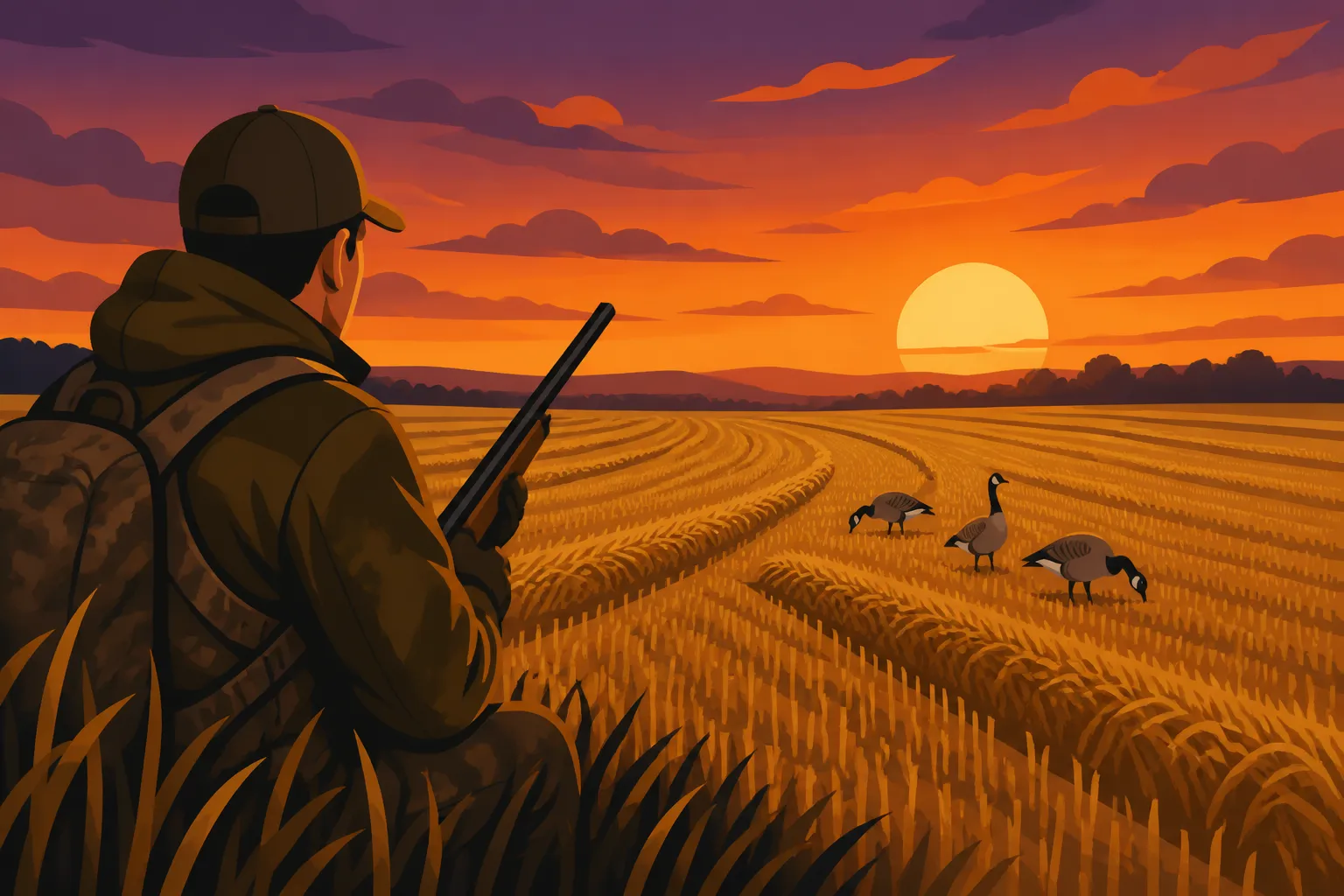
Hunting a Swathed Grain Field at Dusk
There's a unique frustration that many Alberta hunters face: you scout all day, see deer sign everywhere, but the deer themselves seem to vanish when the sun is high. It's almost as if they're playing a game of hide-and-seek, and they're always winning. But as dusk paints the prairie skies, a magical transformation happens. Deer, especially the wily whitetails, begin to emerge from their daytime sanctuaries, drawn by the irresistible bounty of a freshly swathed grain field. This guide will walk you through the nuances of effectively hunting these productive areas as the day draws to a close, transforming those elusive twilight moments into opportunities for success.
Why Swathed Grain Fields Are Prime Hunting Grounds at Dusk
For a hunter in Alberta, a swathed grain field isn't just a place where crops are drying; it's a deer magnet, especially when the sun starts to dip below the horizon. Understanding why these fields are so attractive to deer at dusk is key to unlocking their potential.
The Irresistible Buffet and Security Blanket
Imagine you're a whitetail deer. All day, you've been bedded down, keeping a low profile, letting the world pass by. As evening approaches, your stomach starts to rumble. Where do you go for an easy meal that also offers a sense of security? A swathed grain field fits the bill perfectly.
First and foremost, it’s an abundant food source. Whether it's barley, wheat, oats, or even peas and canola, the swaths contain dropped grains and seeds that are easily accessible. The machinery that cut the crop has effectively done half the work for the deer, leaving a scattered feast. This isn't just about the grain itself; deer will also browse on the tender green shoots that sprout up if there's been some rain, or even nibble on any remaining pods in a canola swath. The ease of feeding, without having to dig or browse extensively, makes these fields incredibly energy-efficient feeding grounds.
Beyond the food, the swath itself offers a surprising amount of cover. While it might look open to us from a distance, the rows of cut crop provide horizontal concealment. A deer, especially a whitetail, can melt into these rows, feeling hidden even while actively feeding. This allows them to move more boldly, knowing they have some protection from predators, including hunters. The low light of dusk further enhances this feeling of security, making them less visible and less exposed than they would be in a wide-open stubble field under full sun. They're transitioning from their secure bedding areas, often nearby aspen bluffs or willow runs, to these feeding grounds, and the swaths offer a perfect middle ground where they can start to relax and feed before full dark.
Timing is Everything: The Dusk Advantage
Deer activity often peaks during dawn and dusk, but in agricultural areas, the evening hunt can be particularly productive. During the day, constant human activity – farmers working, vehicles on roads, general noise – often keeps deer tucked away in denser cover. As soon as that activity dies down and the shadows lengthen, deer feel a strong urge to move.
The specific "magic hour" for swathed fields begins roughly an hour before sunset and can extend into full dark. This is when deer make their move from bedding to feeding. They might filter out one by one, or a whole group could suddenly appear. Their primary goal is to fill their bellies before returning to cover for the night. This predictable pattern is what makes these fields so appealing for hunters. You're not just hoping deer show up; you're hunting a known behavior pattern.
Consider an evening when the weather shifts. A warm, calm evening after a cooler day often sees increased movement. Similarly, a rising barometer after a storm can get deer on their feet. Learning to Read Alberta's Hunting Regulations for specific WMUs will help you understand season dates, but understanding deer behaviour around these fields is just as crucial.
| Grain Type | Primary Deer Attractor | Ideal Swath Condition | Cover/Security in Swath | Prime Hunting Window |
|---|---|---|---|---|
| Barley | Scattered kernels, new shoots | Freshly cut, some standing straw | Low, limited vertical cover, good horizontal concealment | Early to Mid-Fall |
| Wheat | Dropped grains | Fairly flat, stubble | Similar to barley, can be very open | Mid to Late Fall |
| Canola | Pods, dropped seeds, green shoots | Thick stubble, good volume | Excellent horizontal cover, deer can be hidden within swath | Early to Mid-Fall |
| Peas | Shelled peas, plant material | Often flattened, dense | Moderate, deer are often very low to the ground | Early Fall (post-harvest) |
| Oats | Dropped kernels | Similar to barley/wheat | Limited vertical, decent horizontal concealment | Early to Mid-Fall |
Scouting for Success in Swathed Fields
You can't just pick any swathed field and expect a trophy to appear. Effective scouting is paramount, blending traditional field craft with modern technology to pinpoint where deer are, how they're moving, and how you can intercept them.
Glassing from a Distance: The Hunter's Secret Weapon
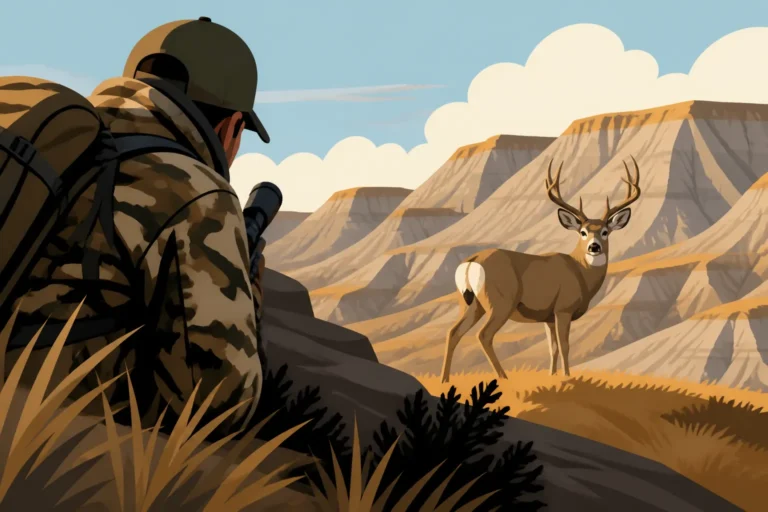
The first rule of scouting swathed fields is do not disturb the field. Deer are incredibly sensitive to pressure. Walking through a field where they intend to feed can immediately shift their patterns, pushing them elsewhere. Your best bet is to use high-quality optics from a distance.
Find a vantage point that overlooks multiple fields, ideally from a hill, a gravel road, or even a public utility right-of-way. Bring out your binoculars, a spotting scope, and settle in. Watch the field an hour or two before sunset. Look for deer filtering out of nearby bush lines, coulees, or river bottoms. Pay close attention to their entry points into the swath. Do they come from a specific corner? Is there a subtle trail leading from a cluster of aspens into the field?
Glassing isn't just about spotting deer; it's about observing their habits. Note where they prefer to feed within the swath, how they react to vehicles, and what time they typically appear. A particular field might only hold does and fawns, while another, perhaps closer to a thick willow run or a bush block, might consistently produce a good buck. I often find that some of the biggest bucks are the last to step out, waiting until the light is almost completely gone. This patience in scouting will pay dividends when it's time to actually hunt. It's also helpful for understanding general deer movement, like when you're Hunting the Rut in Early November and deer might be moving more erratically.
Leveraging Technology: Mapping Deer Movement
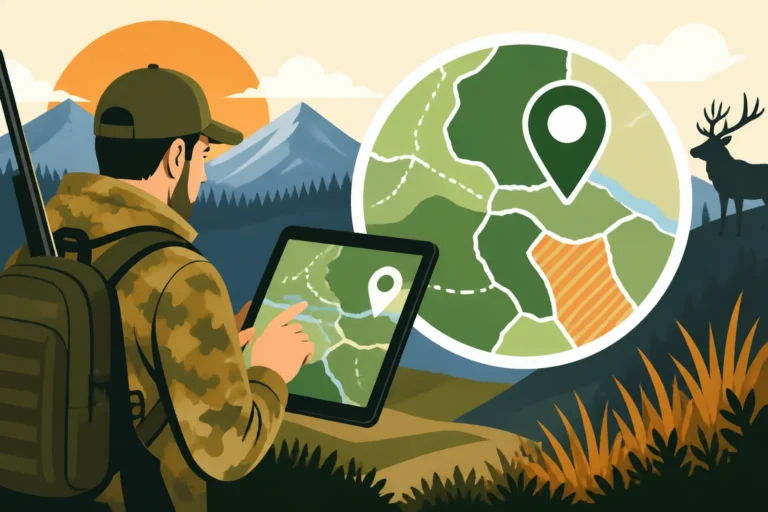
In today's hunting world, technology has given us powerful tools for scouting, and they are particularly effective when dealing with large agricultural landscapes. Digital mapping apps are indispensable for hunting swathed fields. I always fire up my GoHunt app to get an aerial view of the area. This allows me to see the bigger picture that you can't always discern from ground level.
With GoHunt, you can zoom in and identify potential bedding cover adjacent to swathed fields – think thick shelterbelts, small woodlots, deep coulees, or even patches of cattails in a slough. You can trace possible travel corridors, such as faint game trails, irrigation canal corridors, or fence lines that deer might follow from bedding to feeding. The app often provides land ownership data, which is crucial for determining if a field is on private land where you'll need to secure permission, or if it might border Crown Land where access is generally permitted. When you're trying to figure out Finding Access on Alberta Crown Land, these tools are a lifesaver.
Plotting these observed entry and exit points on your GoHunt map helps create a visual representation of deer movement. You can mark specific trees or fence posts that might serve as natural stand locations or ambush points. Using satellite imagery to identify subtle elevation changes, small rises, or depressions within a large, flat field can reveal hidden pockets of cover where deer might feel safer to stage before moving into the open swath. These small details can be the difference between seeing deer at a distance and having them walk right by your setup.
The Wind: Your Undoing or Your Advantage
No matter how perfect your scouting, how high-tech your map, or how abundant the deer sign, ignoring the wind is a surefire way to educate every deer in the county. For an evening hunt on a swathed field, wind direction is the most critical factor.
Deer approach these fields with their noses in the wind, trying to detect any danger ahead. Therefore, you need to position yourself downwind of their anticipated entry and feeding zones. This often means making a slightly longer or more circuitous approach to get to your setup. Before heading out, always check a reliable wind forecast specific to your hunting area. I often check multiple sources because micro-climates and topography can cause localized shifts.
Consider how the wind might swirl near a bush edge or a coulee bottom. Even a light breeze can carry your scent hundreds of yards across an open field. If the prevailing wind makes your desired setup impossible without alerting deer, you must be disciplined enough to either choose a different setup or, better yet, a different field altogether. It's far better to wait for the right conditions than to burn a prime hunting spot by putting deer on high alert. This diligent attention to scent is especially vital when Hunting Alberta's Fall Bear Season as well, as bears have an even more acute sense of smell.
Strategic Setup for the Evening Hunt
Once you've done your scouting and understand the deer movement and wind patterns, it's time to strategize your setup. The right position, combined with proper concealment and scent control, will dramatically increase your chances of success.
Choosing Your Ambush Point: Stand vs. Blind
The decision between a treestand and a ground blind often comes down to available cover and personal preference. Each has its advantages when hunting a swathed field at dusk.
Treestands: If there's a suitable tree line, bluffs, or shelterbelt adjacent to the swathed field, a treestand can offer an excellent vantage point. Getting above a deer's line of sight helps break up your silhouette and can reduce the spread of your scent plume. Look for trees that offer natural back cover, like a dense spruce, or one where you can blend into the canopy. Your stand should be positioned to cover the most likely entry points and feeding lanes you identified during scouting. Remember, deer will often stick to the edge of the field before moving further in, so being close to that transition zone is critical. An important consideration when Hanging a Stand on an Alberta Bush Edge is to ensure you have a clear shooting lane for the twilight hours, as visibility diminishes quickly.
Ground Blinds: In open prairie country or fields with limited trees, a ground blind becomes your best friend. Modern pop-up blinds offer excellent concealment, breaking up your outline completely. The key is to set it up well in advance of the hunt, ideally a few days to a week prior, to allow deer to get accustomed to its presence. Place it judiciously, using any existing natural cover – a cluster of bushes, a large rock, a rise in the terrain, or even a strategically placed bale of hay if you have landowner permission. Ensure the blind offers good visibility of the field while keeping you hidden. With a ground blind, scent control becomes even more critical, as you're at ground level. You'll also need to consider your shooting window. Can you shoot effectively from a seated position, or will you need to be able to stand?
Regardless of your choice, ensure your setup allows for a quiet entry and exit. Nothing spoils an evening hunt faster than spooking deer on your way in or out. Your approach path should ideally be shielded by terrain, timber, or darkness, and always keep the wind in mind.
The Art of Concealment and Scent Control
Being hidden isn't just about what you wear; it's about how you integrate into the environment. When hunting swathed fields at dusk, dark, muted camouflage patterns are generally more effective than bright, high-contrast ones. As the light fades, your silhouette becomes the primary giveaway. Aim to break up your human form against the background. If you're in a treestand, try to blend into the trunk or surrounding branches. In a ground blind, ensure no light leaks out and your windows are strategically positioned.
Beyond visual concealment, scent control is paramount. Deer have an incredible sense of smell, far surpassing a dog's. Even a slight human odor carried on a gentle breeze can cause deer to turn tail and vanish. Shower with scent-free soap, use scent-free laundry detergent for your hunting clothes, and store them in airtight containers away from common household odors. Use scent-eliminating sprays on your clothes and gear before heading out.
When you're in your chosen spot, minimize movement. Even a subtle twitch or reaching for your calls can be detected by a vigilant deer. Use binoculars slowly and deliberately to scan the field, especially along the edges and within the swath itself, looking for flicking ears, a horizontal line that shouldn't be there, or the subtle glint of an antler. Patience and stillness are your allies.
Executing the Dusk Hunt and Post-Shot Protocol
The moment has arrived. You've scouted, you've set up, and now it's time to execute the hunt. The final hour of daylight can be a flurry of activity or a test of patience, and knowing how to respond is key.
Patience, Observation, and Subtle Communication
Once you're settled in your stand or blind, the true test begins: waiting. It's easy to get antsy, but the most successful hunters are those who can sit still, observing their surroundings with keen attention. The first deer to enter the field are often does and fawns, acting as nature's sentinels. They'll feed cautiously, constantly scanning and listening. Larger, older bucks tend to be more wary, often holding back in thicker cover, observing the does before committing to the open field. They're masters of waiting for the last possible minute.
Pay close attention to where deer are entering the field and their general movement patterns. Are they favoring a particular type of swath, or a specific part of the field? Do they immediately head for the densest part of the cut crop, or do they skirt the edges? Understanding these nuances helps confirm your scouting observations or, if necessary, adjust your plans for future hunts.
Sometimes, a subtle call can make a difference. As deer are filtering into the field, a soft grunt or a quiet doe bleat can sometimes pique the curiosity of a buck lingering in the shadows. Don't overdo it – a loud, aggressive call in an open field can be a red flag. The goal is to mimic the soft, natural sounds of deer moving and feeding, not to shout for attention. When Rattling Volume in Open Parkland is being considered, the general rule is to start soft and only increase if there's no response, and that applies here too.
The Shot and Ethical Recovery in Low Light
As the light fades, your shooting window will shrink. This means you need to be absolutely confident in your shot placement and your equipment. If you're bowhunting, know your effective range and practice shooting in low-light conditions. For rifle hunters, ensure your scope is clear and your reticle is visible. Ethical shot placement is paramount. Only take a shot you are 100% confident in. If you have any doubt, let the deer walk. There will always be another opportunity.
After the shot, resist the urge to immediately jump up and pursue. This is critical, especially in low light. Give the deer time. If you've made a good lung or heart shot, the deer won't go far, and pushing it immediately can cause it to run much further, making recovery incredibly difficult. For a solid hit, wait at least 30-45 minutes. For a questionable hit (gut, leg), it's often best to wait several hours, or even until morning.
Tracking in a swathed field at night presents its own unique challenges. Blood trails can be difficult to see on the cut straw and stubble. Use a good, powerful flashlight or headlamp. Look for overturned soil, broken stalks, and any sign of a blood trail. Mark your last known blood or sign with flagging tape before you lose it. If you lose the trail, spread out and search in ever-widening circles. Having a partner is invaluable for this. If you can't find the deer before full darkness, mark your last sign and come back at first light with fresh eyes. This methodical approach will prevent unnecessary suffering and ensure a successful recovery, especially in colder conditions when Meat Care in Alberta's Cold and Warm Swings is a factor.
Always remember that harvesting an animal is just one part of the hunt. The ethical recovery and proper care of the game meat are equally important. Make sure to understand and adhere to all Alberta regulations regarding tagging and transporting your harvest. When you're successful, ensure you report your harvest correctly on the albertarelm.com system.
Disclaimer
Hunting is a challenging and rewarding pursuit that carries inherent risks. The information provided in this guide is for informational purposes only and is not a substitute for professional instruction, local knowledge, or official regulations. Always prioritize safety, understand and follow all current Alberta hunting regulations and laws, obtain necessary licenses and permits, and respect private property. The author and publisher assume no liability for any accidents, injuries, or legal issues that may arise from using this information. Hunt ethically and responsibly.