Hunting Mule Deer on a Prairie Ridge
There's nothing quite like the vast, sweeping views of Alberta's prairie country, but finding a mule deer buck in that seemingly endless landscape can feel like trying to find a needle in a haystack. Many hunters get frustrated with the sheer scale and the mule deer's uncanny ability to disappear into seemingly flat terrain. This guide is here to unravel the mysteries of hunting these incredible animals on a prairie ridge, helping you understand their habits, scout effectively, and execute a successful stalk when the moment arrives.
Understanding Mule Deer Behavior on Prairie Ridges
Mule deer in Alberta's prairie regions are masters of using the subtle contours of the land to their advantage. Unlike whitetails that often stick to dense cover, mule deer thrive in open country, relying heavily on their eyesight, hearing, and the broken topography of ridges and coulees for survival. Their behaviour is intrinsically linked to these features, making understanding them paramount for any successful hunt.
Why Ridges Are Prime Mule Deer Habitat
Prairie ridges offer mule deer a unique combination of advantages: vantage points for spotting predators, sheltered bedding areas, and access to varied forage. A ridge might look exposed to us, but for a mule deer, the very crest provides a high point for observation, while the leeward side offers a break from the wind and a place to bed down. These elevated areas are often transition zones between cultivated fields and native grasslands, providing a buffet of food sources. They can graze on alfalfa or various forbs in the fields at night and then retreat to the safety of a ridge's folds as daylight approaches. This constant movement makes them elusive, but also predictable once you understand their patterns.
Consider a long, winding ridge that parallels an agricultural field. During the night, deer might be out feeding in the stubble. As dawn breaks, they'll often filter back towards the ridge, using its height to scan for danger before dropping down into a secluded pocket or thick brush growing along its slopes. They rely on these subtle rises in elevation to break up their outline and use the prevailing wind to carry scent away from their bedding areas. Recognizing these movements and how they use the terrain for concealment is your first step to unlocking their secrets.
Daily Patterns and Movements
Mle deer typically follow a fairly consistent daily pattern, though this can be influenced by weather, hunting pressure, and the rut. They are most active during the low-light hours of dawn and dusk, which is when they'll be moving to and from feeding areas. During the day, they will often bed down in locations that offer security cover, thermal regulation, and a good view of their surroundings. On a prairie ridge, this might be just over the crest, tucked into a small cut, or in a patch of buckbrush or willow.
Understanding these patterns allows you to predict where a buck might be at different times of the day. For example, a large buck might move from a standing canola field at first light, climb a particular ridge, and then disappear over its crest into a thicket of saskatoon bushes where it beds for the day. He'll likely emerge again in the late afternoon, moving along the ridge system before descending back into the fields. Factors like strong winds or sudden cold snaps can alter these patterns, pushing them deeper into sheltered coulees or making them more active during midday if they need to feed more to maintain energy. Learning to adapt your strategy to these subtle shifts is key, especially as you explore Mule Deer Hunting Alberta's Prairie and Badlands.
Scouting and Locating Bucks on Prairie Ridges
Success in hunting mule deer on prairie ridges heavily depends on effective scouting, both before and during the season. The vastness of the prairie can be intimidating, but with the right tools and techniques, you can narrow down your search and identify promising areas where bucks are likely to frequent. Modern technology, combined with traditional field craft, provides a powerful advantage.
Pre-Season Scouting Strategies
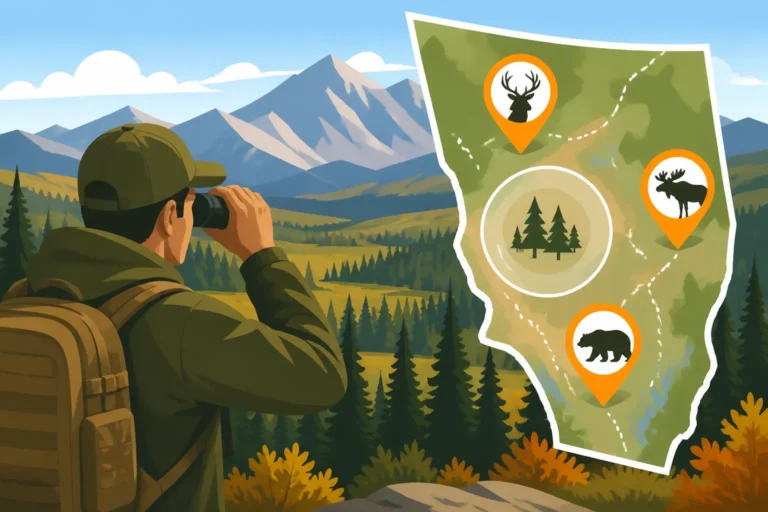
Long before opening day, dedicate time to researching and physically scouting your chosen Wildlife Management Units (WMUs). Start with digital tools. Satellite imagery, which can be found on platforms like GoHunt, is invaluable for identifying major ridge systems, drainage patterns, and potential bedding cover. Look for subtle changes in elevation, patches of dense brush, and areas where multiple draws converge onto a ridge. These are often natural travel corridors and congregation points for deer. Pay attention to how a ridge connects to agricultural fields or other natural features, as deer will often use these transition zones. This kind of digital reconnaissance is a crucial component of Scouting With Satellite Imagery in Alberta.
Once you have some promising areas mapped out, it's time for boots on the ground, or more accurately, eyes through binoculars. Drive or walk these areas, paying close attention to fresh sign. Look for tracks along field edges, rubs on small saplings (even on the prairie, they'll find something to rub), and droppings in bedding areas. Early season scouting allows you to pattern deer before they become pressured. During this time, you can also identify potential glassing points – high spots on neighboring ridges or hillsides that offer expansive views of the area you intend to hunt. Remember that accessing some of these areas might require you to be Asking a Grazing Leaseholder for Access, so secure permission well in advance.
Effective In-Season Glassing Techniques
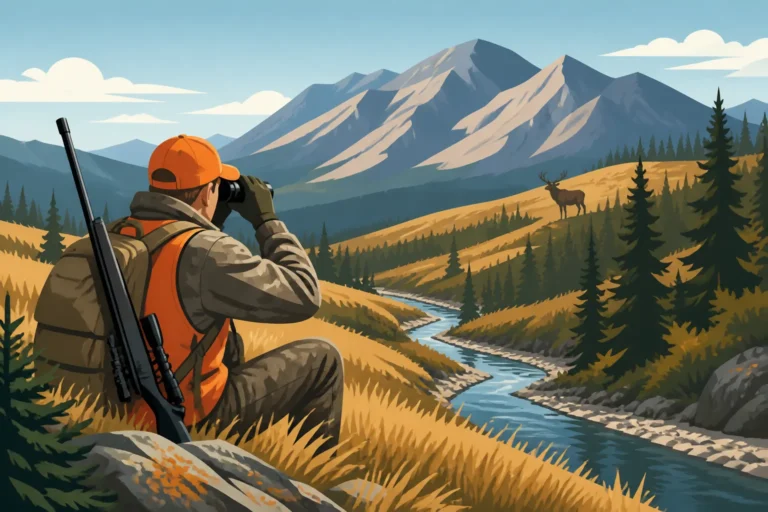
Once the season starts, your binoculars and spotting scope become your best friends. Hunting prairie ridges is primarily a game of long-range observation. Find a good vantage point, ideally one that gives you a view of several ridges, coulees, and adjacent fields. Set up your optics on a sturdy tripod – this is non-negotiable for effective glassing. Spend long hours methodically scanning the landscape. Don't just glance; dissect the terrain section by section, looking for any anomaly that suggests a deer. A flicker of an ear, the horizontal line of a deer's back against vertical grass, or the gleam of an antler in the sun.
Remember the light. Early morning and late evening often provide the best light for spotting deer as the sun creates shadows that highlight features. Midday can be tough, but deer might still be visible bedded in the shade of a small bluff or a patch of brush. Wind is also a critical factor; deer will often bed on the leeward side of a ridge to escape the elements. When you think you've found a buck, study it carefully. Use your spotting scope to assess its size and confirm it's legal. Taking your time here can save you a lot of wasted effort on a stalk. This methodical approach is essential, much like the detailed work described in Glassing an Alberta Coulee for Mule Deer.
Stalking and Approaching a Prairie Ridge Buck
Spotting a mule deer buck on a prairie ridge is only half the battle. The true challenge begins when you commit to a stalk across open, often unforgiving terrain. This is where patience, understanding of the wind, and utilizing every subtle fold in the land come into play. A well-executed stalk can be the most rewarding part of hunting these intelligent animals.
Utilizing Wind and Topography for Concealment
Before you even take your first step, analyze the wind direction. This is absolutely critical in open country. Mule deer have an incredible sense of smell, and a shifting wind can quickly give away your position. Always try to approach from downwind, or at least with a crosswind that carries your scent away from the deer. Use an anemometer or simply toss up some milkweed fluff to get a real-time reading on the wind. Remember, wind can swirl unpredictably in draws and around bluffs, so stay vigilant and reassess constantly. This highlights the importance of understanding Wind in Open Prairie Country.
Next, meticulously plan your approach using the topography. GoHunt's mapping features can be incredibly helpful here. Look for every dip, rise, coulee, and brush line that can provide cover. The goal is to stay out of sight as much as possible. This might mean crawling on your hands and knees for hundreds of yards, making long detours, or moving agonizingly slowly. If you have to expose yourself, do it quickly and then immediately get back into cover. A mule deer's eyes are always scanning, and any sudden, unnatural movement will be immediately picked up. The open nature of the prairie demands a deliberate and often arduous approach, quite different from hunting in dense bush.
The Art of the Slow Play
A successful prairie ridge stalk is rarely a fast one. It's a "slow play," demanding immense patience and constant re-evaluation. As you move, frequently stop and glass ahead, using your binoculars to confirm the deer's location and ensure it hasn't moved or spotted you. Things can change quickly; a bedded deer might stand up, or another deer might appear from nowhere. Always be prepared to stop, drop, and reassess. If the deer starts looking your way, freeze completely and hold your position until its attention drifts elsewhere.
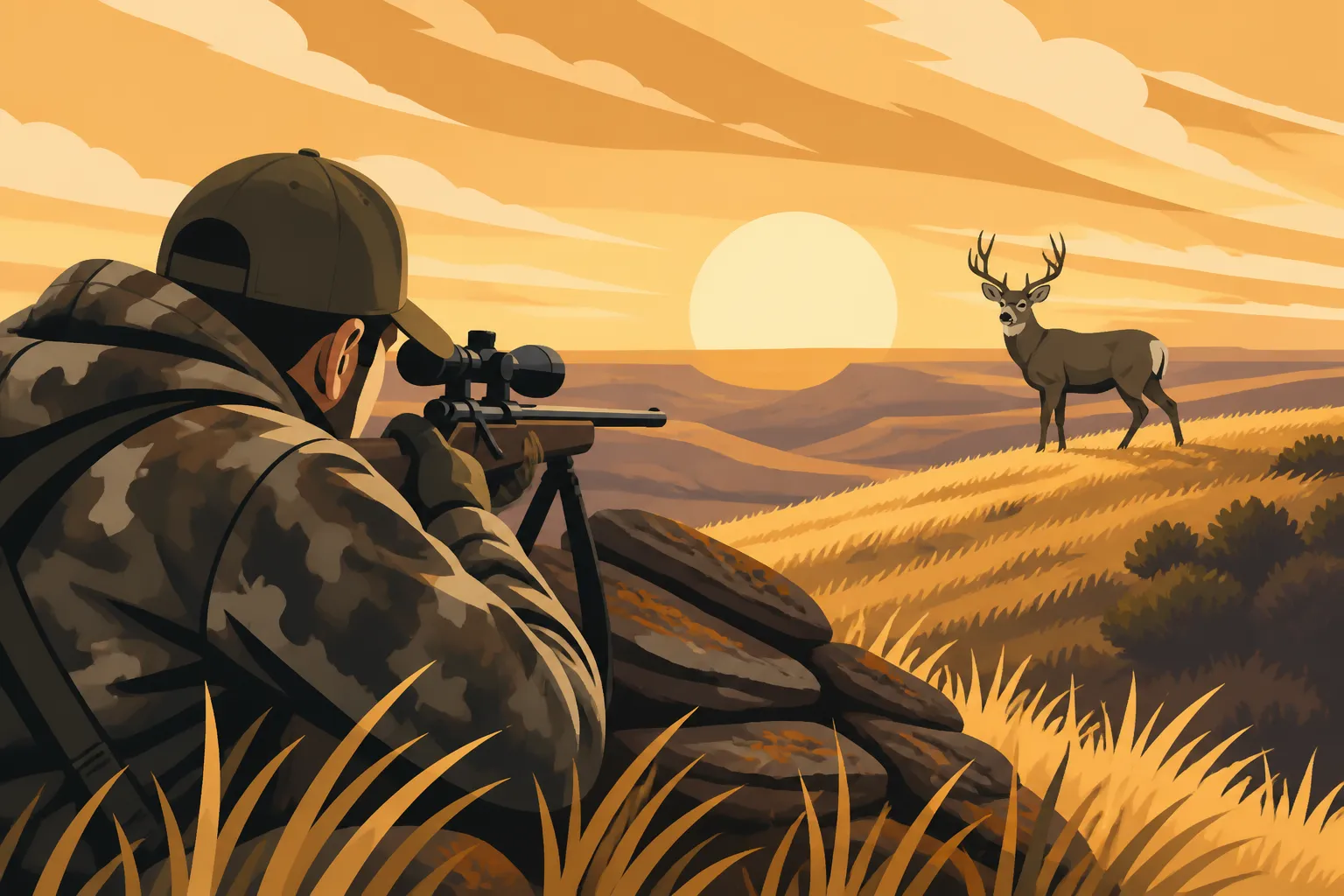
When you get within range, often 200-400 yards, identify a solid shooting rest. This might be your pack, a bipod, or a natural feature like a small rise or a fence post. Practice shooting from various field positions before the season to be ready for whatever the prairie throws at you. The shot will likely be long and demanding, so stability is key. Don't rush; take a deep breath, control your heart rate, and execute a clean shot. The journey of Stalking Mule Deer Across Open Ground is one of ultimate discipline and calculated risk. This deliberate method also applies to Judging a Mule Deer Buck at Distance to ensure you are targeting a legal animal.
Essential Gear and Post-Harvest Considerations
Hunting mule deer on Alberta's prairie ridges requires specific gear to maximize your chances of success and ensure you can handle the animal once it's down. From high-quality optics to rugged clothing, every piece of equipment plays a role in adapting to the challenges of this unique environment.
Optics for Long-Range Observation and Shot Placement
As mentioned, premium optics are non-negotiable. A high-quality pair of 10x or 12x binoculars with a wide field of view is essential for general glassing and locating deer. Supplement this with a good spotting scope, 60-80mm objective, on a solid tripod. This will allow you to pick apart distant hillsides, confirm legal antlers, and plan your approach with confidence. Brands like Vortex, Swarovski, and Kowa offer excellent options that can withstand the rigors of prairie hunting. A rangefinder is also crucial for accurately determining distances, especially on the open prairie where distances can be deceiving. Knowing the exact yardage will allow you to make precise adjustments for your shot, whether you're using a rifle or a bow.
| Optic Type | Ideal Magnification/Objective | Primary Use | Key Feature for Prairie |
|---|---|---|---|
| Binoculars | 10×42 to 12×50 | General scanning, close to mid-range observation | Wide field of view |
| Spotting Scope | 20-60x80mm | Long-range detailed observation, antler judging | High magnification, clarity |
| Rangefinder | N/A | Accurate distance measurement | Fast, precise readings |
| Tripod | Stable, lightweight | Stabilizing binoculars & spotting scope | Essential stability |
Clothing, Footwear, and Retrieval
Alberta's prairie weather can be notoriously unpredictable, swinging from warm and sunny to cold and windy with little warning. Layering is key. Start with a good moisture-wicking base layer, add insulating layers like fleece or down, and top it off with a windproof and waterproof outer shell. Blaze orange requirements must be strictly followed for safety. For footwear, comfortable, supportive, and waterproof hiking boots are essential. You'll be covering many miles on uneven terrain, often crossing wet grass or even shallow water in coulees. Ensure your boots are well broken in to avoid blisters.
Once you've harvested a buck, the challenge of retrieval begins. If you're hunting in remote areas, a game cart, pack frame, or even a heavy-duty sled might be necessary, especially if you're alone. Field dressing the animal quickly is paramount to preserving the meat, particularly if temperatures are mild. Quartering the animal in the field can make it much lighter and easier to transport, especially when far from the truck. Always have a sharp knife, game bags, and enough rope or straps. Understanding What a Mature Alberta Mule Deer Weighs will give you a good idea of the work involved. Remember to also consider Getting a Deer Out on a Frozen Trail if you're hunting in the late season.
Conclusion
Hunting mule deer on Alberta's prairie ridges is an experience that truly tests a hunter's patience, skill, and adaptability. It's a game of inches and calculated decisions, where understanding the land and the animal's behavior is as crucial as the shot itself. By diligently scouting with tools like GoHunt, mastering the art of glassing, and executing a meticulous stalk, you can turn the vastness of the prairie into your advantage. Every successful hunt on these rolling hills is a testament to perseverance and a deep respect for the incredible mule deer that call this open country home.
Disclaimer
The information provided in this guide is for general informational purposes only and does not constitute legal advice. Hunting regulations, seasons, and access rules in Alberta can change frequently. Always consult the most current Alberta hunting regulations and relevant provincial acts before planning or undertaking any hunting activity. It is the hunter's responsibility to know and follow all applicable laws.