Hunting Mule Deer After a Snowfall
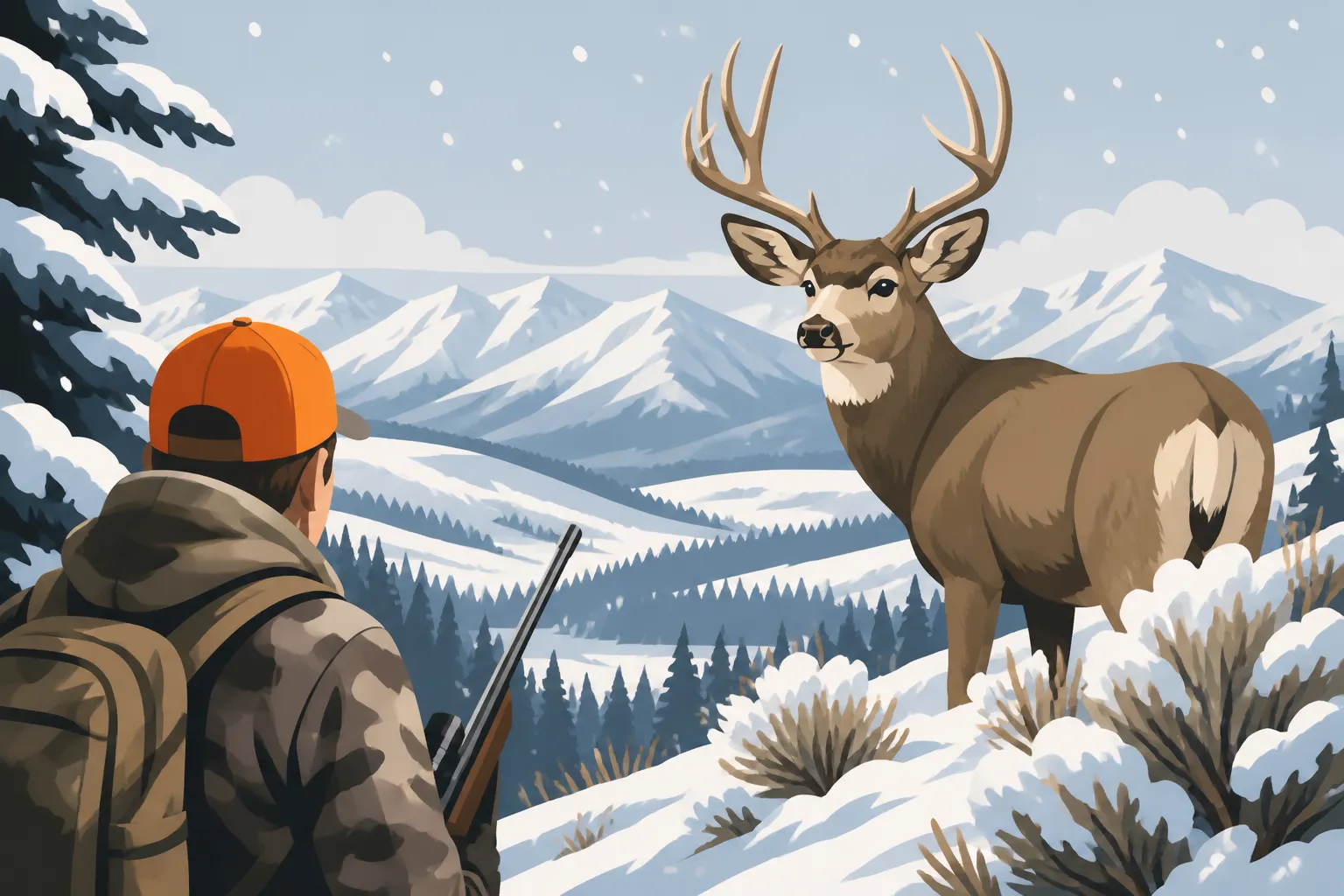
The moment that first significant snowfall blankets the Alberta landscape, a seasoned mule deer hunter’s mind immediately shifts. Before the snow, finding these ghosts of the prairie and badlands can feel like an impossible puzzle, especially when they’re tucked away in their preferred broken country. But when fresh snow arrives, it changes the entire game, providing invaluable clues and altering deer behavior, turning an otherwise challenging hunt into a prime opportunity, and this guide will walk you through making the most of it.
Why Snowfall is a Game-Changer for Mule Deer Hunters
For many of us who pursue mule deer in Alberta, the pre-snowfall conditions can be a real grind. These animals are masters of camouflage, blending seamlessly into the browns and grays of coulees, brush, and standing crops. Their preference for broken, undulating terrain makes it incredibly difficult to spot them before they spot you, leading to frustrating days of glassing vast landscapes with little to show for it. It feels like you're always a step behind, or that they simply vanish into thin air.
But then, the snow falls. And suddenly, everything that was hidden is revealed, or at least, made much clearer. The landscape transforms, and with it, the dynamics of the hunt. This isn't just about pretty scenery; it's about a fundamental shift in how we approach and execute a mule deer hunt.
Enhanced Visibility and Tracking Opportunities
The most obvious, and perhaps most impactful, benefit of a fresh snowfall is the dramatic improvement in visibility. Imagine trying to pick out a grey-brown deer against a backdrop of similar-coloured dead grass, willows, and dirt. Now, picture that same deer silhouetted against a pristine white canvas. The contrast is immediate and undeniable, making it far easier to spot deer at a distance, whether they're moving through a field or bedded down in a coulee. This alone can save hours of painstaking glassing, allowing you to cover more ground effectively.
Beyond mere spotting, the snow provides the ultimate tracking medium. Every step a deer takes leaves a clear impression, telling a story of its recent movements. Fresh tracks reveal where deer are coming from, where they're going, and even how recently they've passed. You can differentiate between a leisurely browse and a hurried escape, glean information about herd size, and even get a sense of the deer's overall health and size by the depth and spread of its prints. This is a level of intel you simply don't get on bare ground, transforming guesswork into informed decisions. Being able to literally follow a deer’s path can be an incredibly effective way of stalking mule deer across open ground or through patchy cover.
Changes in Mule Deer Behavior and Movement Patterns
Snowfall also impacts mule deer behavior, often making them more predictable and concentrated. As temperatures drop and snow blankets their food sources, deer often move to areas where forage is still accessible or where they can find thermal cover. This might mean shifting from open prairie ridges to the sheltered bottoms of coulees, or concentrating in south-facing slopes that melt faster, exposing vegetation. They'll also seek out denser patches of timber or brush for bedding, using the snow as insulation.
Furthermore, heavy snow can limit their movement, making them less inclined to travel long distances unless pressured. They'll conserve energy, moving primarily between bedding and feeding areas. This means if you find fresh tracks leading into a particular draw or timber patch, the deer are likely still nearby. This behavioral change plays right into the hands of hunters who understand these shifts. Instead of deer being spread out across massive tracts, they tend to consolidate into prime wintering areas, making scouting with tools like GoHunt even more effective as you predict these winter patterns. Understanding How Deep Snow Moves Deer Around is critical for success in these conditions.
Reading the Fresh Snow: Tracks and Sign
Hunting after a snowfall isn't just about seeing more; it's about reading the subtle language of the landscape. Every mark in the snow tells a story, and learning to interpret these clues is what separates a casual observer from a successful hunter. It’s like the snow leaves a detailed diary entry of everything that’s happened since the last flake fell.
Identifying Fresh Tracks and Interpreting Movement
The first thing you want to distinguish is fresh tracks from old ones. A truly fresh track will have crisp edges, without any snow crystals melted or refrozen in the impression. If the sun is out, look for distinct shadows within the print; older tracks will often be softened by sun or wind. The snow around the track itself should appear undisturbed, not dusted with fine, wind-blown particles. If there's been any melt-freeze cycle, even a slight one, the tracks will show signs of softening or a glassy sheen.
Once you’ve confirmed freshness, it's time to become a detective. Look at the stride length and pattern. A walking deer will have a fairly consistent, even stride. If the tracks are widely spaced or show signs of breaking through a crust with lunging movements, it indicates the deer was running or moving quickly, likely startled. Groupings of tracks can indicate multiple deer, and by examining the size and depth of the prints, you can often differentiate between does, fawns, and bucks. Deeper prints mean a heavier animal or softer snow, while a wider splay might suggest a large, mature buck with heavier antlers, especially when moving through deeper snow.
Understanding Bedding Areas and Feeding Patterns
Snowfall often forces mule deer into more predictable bedding and feeding patterns. They'll typically bed on south-facing slopes, catching the warmth of the sun, or in thick cover that offers protection from wind and predators. Look for impressions in the snow where deer have laid down. Fresh beds will show clear body outlines and might still radiate some warmth, causing slight melting around the edges, especially on a cold day. Old beds will be filled with fresh snow or show signs of freezing.
Feeding patterns become easier to discern as well. Look for areas where the snow has been disturbed, revealing browse beneath. This is particularly true in areas with sagebrush, bitterbrush, or patches of leftover standing grains like peas or lentils. Deer will paw through the snow to reach these valuable food sources. If you find a pattern of feeding trails leading to beds, you've located a prime area. They might also gravitate towards areas where the wind has naturally scoured snow away, exposing vegetation. Knowing What Whitetails Eat Through Winter can also give clues, as mule deer share some dietary preferences and similar survival strategies.
Stalking and Hunting Strategies After a Snowfall
With fresh snow on the ground, your hunting strategy should adapt to maximize the benefits this new environment offers. It's about using the snow to your advantage, both for tracking and for movement.
Leveraging Tracks for a Productive Stalk
Once you find fresh tracks, the hunt truly begins. The first rule of tracking is to move slowly and deliberately. Resist the urge to rush. Keep your eyes peeled not just on the tracks directly ahead, but also scan the terrain in a 360-degree arc for the deer itself. Mule deer have a habit of circling back or holding tight in cover, watching their backtrail. Always assume they are just ahead, watching you.
When tracking, pay attention to the direction of travel and the type of cover the tracks are leading into. If tracks head into thick timber or a deep coulee, slow down even further. Use binoculars to thoroughly scan ahead before taking another step. If you lose the tracks, don't panic. Fan out in circles from the last confirmed track, carefully searching for where they emerge. Often, the deer has simply veered slightly or jumped over a small obstruction. A good strategy is to use the terrain to your advantage, often moving slightly to the side and higher than the tracks, allowing you to peek into the cover the deer may be using. GoHunt or similar mapping apps can be invaluable here, helping you understand the topography and anticipate where a deer might move or bed. For instance, if you're Hunting Mule Deer in the Badlands Coulees, understanding the contour lines and potential escape routes can be crucial.
Using Wind and Topography for a Stealthy Approach
The wind is always your most important factor, even more so after a snowfall. Your scent travels, and a mule deer's nose is incredibly keen. Always approach from downwind. If the wind is swirling in a deep coulee, you might need to reconsider your approach or wait for more stable conditions. Crosswinds can sometimes be your friend, allowing you to move parallel to the deer's path without spooking them directly.
Topography becomes even more crucial when stalking in snow. Use ridges, gullies, and brush lines to conceal your movement. The goal is to stay out of sight as much as possible, using the contours of the land to break up your silhouette. When moving uphill, keep low and use the crests of hills to skyline yourself as little as possible. When moving downhill, be mindful of loose snow that might create noise. The quiet crunch of fresh snow underfoot can be surprisingly loud in the still, cold air, so lift your feet and place them gently. Many hunters find that fleece outerwear can be invaluable in these conditions for reducing noise.
Consider this scenario: You're tracking a nice buck's fresh prints leading into a long coulee that snakes its way through the prairie. Instead of following directly in the bottom where your scent might swirl and visibility is limited, you might opt to climb onto the leeward side of the coulee rim. From there, you can slowly peer over the edge, glassing the bottom and the opposite slope, using the elevation to spot the deer before it knows you're there. This strategy is particularly effective when Glassing an Alberta Coulee for Mule Deer.
Gear and Safety Considerations for Snowy Conditions
Hunting in the snow in Alberta is undeniably exciting, but it also comes with its own set of challenges, particularly concerning safety and comfort. Neglecting proper gear or safety protocols can quickly turn a memorable hunt into a miserable, or even dangerous, experience.
Essential Clothing and Footwear for Winter Hunts
Staying warm and dry is paramount. You'll need a good layering system. Start with a moisture-wicking base layer (merino wool or synthetic are excellent choices) to pull sweat away from your body. Mid-layers of fleece or down provide insulation. Your outer layer should be waterproof and windproof to protect against snow, sleet, and biting winds. Remember that even on sunny days, the reflection off snow can make it feel colder, so adjust layers as needed.
Footwear is critical. Insulated, waterproof boots with excellent traction are non-negotiable. Look for boots rated for cold temperatures, ideally with at least 800-1000 grams of Thinsulate or equivalent. Your feet will be doing a lot of walking in wet, cold snow, and cold feet will ruin your hunt faster than anything. Always wear good quality wool or synthetic socks, and consider bringing an extra pair to change into midday. Gaiters are also highly recommended to prevent snow from entering the tops of your boots, keeping your lower legs dry and warm, especially if you're navigating deep drifts.
Here's a quick reference table for essential gear:
| Gear Item | Purpose | Key Features |
|---|---|---|
| Base Layers | Wicking moisture, regulating temp | Merino wool or synthetic, snug fit |
| Mid Layers | Insulation | Fleece, down, or synthetic puffy jacket |
| Outer Shell | Weather protection | Waterproof, windproof, breathable |
| Insulated Boots | Warmth, dryness, traction | Waterproof, 800g+ insulation, aggressive tread |
| Socks | Foot comfort, moisture management | Wool or synthetic, multiple pairs |
| Gaiters | Snow seal for boots | Waterproof, durable, adjustable fit |
| Headwear | Heat retention, ear protection | Warm toque or balaclava, blaze orange |
| Gloves/Mitts | Hand warmth and dexterity | Layered system (liner + shell), waterproof |
| Navigation | Staying found, planning routes | GPS (GoHunt), compass, map |
| Emergency Kit | Safety in unexpected situations | Fire starter, first-aid, extra food/water |
Navigation and Emergency Preparedness in Winter
Snow can drastically alter the landscape, making familiar terrain look completely different. Visibility can drop rapidly during a snow squall, leading to disorientation. Always carry reliable navigation tools, even if you think you know the area like the back of your hand. A GPS device or a smartphone app like GoHunt, pre-loaded with offline maps of your hunting area, is essential. Always have a physical map and compass as a backup, and know how to use them, especially if you’re venturing into remote areas for Hunting Alberta Winter Weather Safely.
Emergency preparedness is even more critical in winter conditions. A small survival kit should include a fire starter, a whistle, a headlamp with extra batteries, an emergency blanket, and high-energy snacks. Inform someone of your hunting plans, including your route and expected return time. Cell service can be spotty in many Alberta hunting areas, so consider carrying a satellite messenger for emergency communication. Should you get stuck or stranded, these tools can be life-savers. Remember that Meat Care in Alberta's Cold and Warm Swings is also an important consideration; while the cold helps preserve meat, extreme swings can pose challenges.
Additionally, always be aware of the specific challenges of the environment you're in. If you're hunting in areas like the Milk River Ridge coulees, the wind can be brutal, causing massive snowdrifts and whiteout conditions in minutes. If you're in the foothills, avalanche risk can be a concern in steeper terrain after heavy snowfalls, so know how to identify and avoid such areas. Responsible winter hunting is not just about success; it's about making it home safely.
Disclaimer
Hunting involves inherent risks, including but not limited to adverse weather, challenging terrain, and wildlife encounters. This guide is for informational purposes only and does not replace professional instruction, local regulations, or personal judgment. Always prioritize safety, adhere to all Alberta hunting regulations, and be prepared for emergencies. Ensure you have the proper licenses and understand all rules specific to your hunting area.