Setting a Goose Spread in Swathed Barley
Hunting geese in Alberta's abundant grain fields can be incredibly rewarding, but it often comes with a unique challenge – how do you effectively set up a decoy spread in a field that's already swathed? Unlike standing stubble or fresh cut, swathed barley presents a lower profile, making concealment tricky and demanding specific strategies. This guide will delve into the nuances of hunting over swathed barley, providing detailed insights and actionable strategies to maximize your success and bring those wary birds into range.
Understanding Swathed Barley Fields for Goose Hunting
Swathed barley fields are a magnet for geese, particularly Canada geese and sometimes even snow geese and specklebellies, offering a readily available and highly nutritious food source. Understanding the dynamics of these fields is the first step toward a successful hunt.
What Makes Swathed Barley So Attractive to Geese?
When barley is swathed, it's cut and laid down in rows (swaths) to dry before combining. This process concentrates the grain, making it incredibly accessible for geese. Imagine flying over a vast landscape – a swathed field essentially presents a giant, open buffet line. The individual kernels are easy for them to pick up, and the low-lying nature of the swaths means they don't have to work hard to find food, unlike pecking through standing stubble. This ease of access, combined with the high-energy grain, makes swathed barley a prime feeding location, especially during migration when birds are looking to fuel up. It's often one of the first places new arrivals will hit after a long flight, providing crucial sustenance.
Identifying Key Areas Within a Swathed Field
Not all swathed barley is created equal in the eyes of a goose. Birds often prefer specific areas within a field. Look for slight elevations or rises, even subtle ones, as these offer a better vantage point for incoming birds to survey their surroundings for predators. Field edges, especially those bordering natural cover like treelines, shelterbelts, or sloughs, can also be hot zones. Geese often feel safer landing closer to cover, providing a quick escape route if needed. Proximity to water is another huge factor; if there's a dugout, pothole, or small creek nearby, geese will often stage there before flying a short distance into the feed, or even land in the field and then walk to water. Using tools like GoHunt or other satellite imagery can help you identify these subtle features before you even step foot in the field, giving you a significant advantage in pre-scouting. Pay attention to where the swaths are thicker or thinner, as thicker swaths might indicate a spot where more grain was dropped, making it a more appealing feeding spot.
The Unique Challenges of Swathed Fields
While appealing to geese, swathed barley fields present significant challenges for hunters, primarily due to the lack of natural cover. The low-lying swaths offer minimal concealment compared to standing corn or even taller stubble. This means your blind profile, camo pattern, and overall setup need to be exceptionally well-hidden. The open nature of these fields also means birds often approach from a distance, giving them ample time to spot anything out of place. This wariness is amplified on bright, sunny days when shadows are harsh and anything reflective or unnatural stands out. Furthermore, wind can be a factor, as it can make it harder to hear approaching birds and can also shift decoys if they're not adequately secured, creating an unnatural look. Understanding these challenges upfront helps you strategize your concealment more effectively.
Decoy Spreads for Swathed Barley
The success of your goose hunt in swathed barley hinges largely on your decoy spread. You need to create a visual invitation that convinces wary geese it's safe and rewarding to land.
Choosing the Right Decoy Types and Numbers
When hunting over swathed barley, the specific type and number of decoys you deploy can make a massive difference. Full-body decoys are often considered the gold standard because they offer the most realistic profile, especially in wide-open, low-cover fields where birds can see them from a distance. Their three-dimensional shape mimics live birds more effectively than flat silhouettes. However, full bodies can be bulky and expensive. Shell decoys, which are essentially the top half of a goose, can be a great compromise. They offer a good profile while being lighter and more stackable. Silhouettes can work, particularly when combined with full bodies, to create the illusion of a larger flock. The key is to have a sufficient number of decoys to convince passing birds that it's a popular feeding spot. For Canada geese, a spread of 50-100 decoys is a good starting point, but in areas with heavy migratory traffic, even larger spreads can be beneficial. For smaller species like specklebellies or snow geese, you might need hundreds, even thousands, to truly grab their attention. Consider the species you're targeting – if it's primarily Canada geese, a mix of feeding and sentry postures will be effective.
Designing Your Spread for Natural Movement
Geese are creatures of habit, and their feeding patterns are quite predictable. A natural-looking spread is paramount. Think about how a real flock uses a field. They don't land in a perfect circle or straight line. Instead, they typically approach from downwind, landing short of the main flock and then walking into it as they feed. Design your spread to mimic this. Create an open "landing zone" upwind of your blinds, ensuring there are no decoys directly in this path that could obstruct a bird's approach. Group your decoys into smaller family clusters of 3-7 birds, rather than spreading them out uniformly. This replicates how geese naturally feed in social units. Vary their postures: some "feeding" with heads down, some "sentry" with heads up, scanning for danger. This adds realism and suggests a relaxed, secure environment. A "J" shape or a loose "U" shape often works well, with the open end of the "J" or "U" forming your landing zone, facing into the wind. This naturally funnels birds towards your shooting pocket. When considering how to set up your spread, remember to scout the fields thoroughly, maybe using the GoHunt app to mark where birds were actually feeding. You can learn more about Field Hunting Geese in Alberta Stubble by studying their common behaviors.
Utilizing Movement Decoys and Flags
In wide-open swathed barley, movement is critical to capturing the attention of high-flying birds and adding realism to your static spread. Even the slightest breeze can bring movement to full-body decoys, but dedicated motion decoys can significantly enhance your setup. Rotary machines, like a "Crazy Kicker" or "Lucky Duck," that simulate a goose flapping its wings, can be incredibly effective, especially on calm days. Kite decoys, flown high above the spread, mimic high-flying birds circling to land and draw attention from afar. Flapping flags, manually operated from your blind, are essential. A quick, subtle flag motion when birds are distant can get their attention, and then more pronounced flagging as they approach can help cup their wings and bring them down. Be strategic with your flagging – don't overdo it, or it can look unnatural. A few short, sharp flags, mimicking a landing bird, are usually more effective than continuous waving. Combine these movement elements to create a dynamic and irresistible spread that looks alive and active, drawing geese from impressive distances.
Hiding Your Blind and Gear Effectively
The low profile of swathed barley demands superior concealment. If the geese can see you, they're not coming in, plain and simple.
Low-Profile Blinds and Their Placement
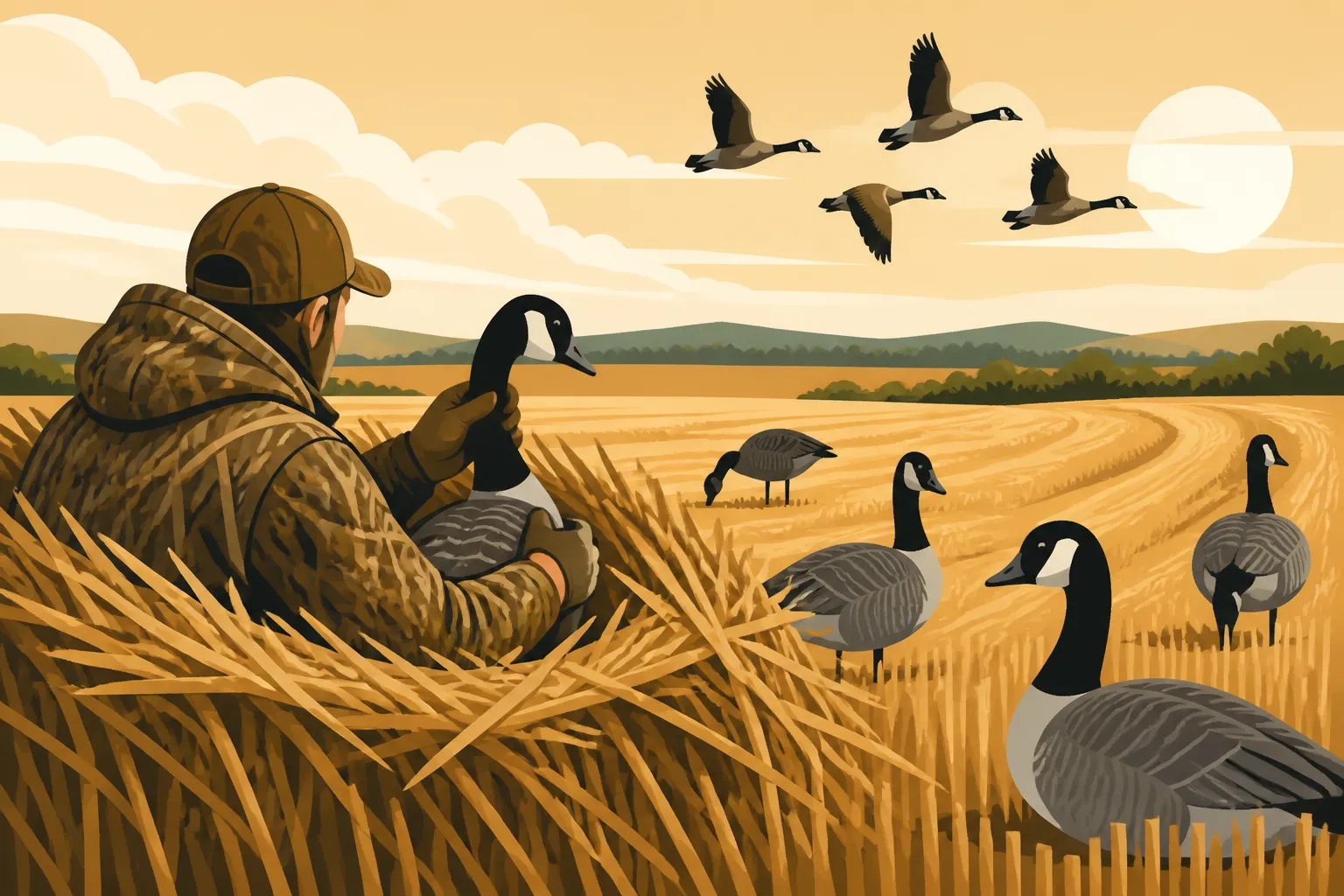
In swathed barley, layout blinds are your absolute best friend. These blinds are designed to keep you prone and blend seamlessly into the low-lying field. Choose a layout blind with a low profile that allows you to disappear into the swaths. Placement is crucial. Instead of just plopping your blind down, look for natural dips, subtle rises, or even thicker areas of swathed barley where you can nestle the blind. Position your blinds with the wind at your back, or slightly quartering, so incoming birds land directly in front of you, giving you an optimal shot angle. If there's a natural drainage or a slight furrow in the field, use it to your advantage to break up your outline. For optimal concealment, consider using a few full-body decoys right up against your layout blind. This creates a natural-looking "bump" in the field and helps to further hide the blind's edges. Remember, the goal is to become part of the landscape, not an alien object within it.
Camouflaging Your Setup with Natural Materials
Once your blinds are positioned, the real work of disappearing begins. Gather ample amounts of local vegetation to "stubborn" or "grass" your blinds. In a swathed barley field, this means cutting or gathering barley straw from the surrounding swaths. Don't be shy – over-stubborning is better than under-stubborning. Shove handfuls of straw into the stubble straps on your layout blind, making sure to break up the hard lines and edges. If the barley is a lighter, golden color, ensure your camo matches this tone. Avoid using too much dark green material if the field is predominantly yellow-brown. Pay close attention to any shiny spots on your blind or gear; a quick swipe of mud or non-reflective tape can hide these. Even your face and hands need to be camouflaged. Use face paint or a face mask, and wear gloves to eliminate any exposed skin. The goal is to make your blind look like just another pile of swathed barley, indistinguishable from the real thing.
Managing Gear and Dog Concealment
It's not just about hiding your blind; every piece of gear and every member of your hunting party, including your dog, needs to be invisible. Any coolers, ammo boxes, gun cases, or extra clothing left carelessly around will instantly flare geese. Keep all gear inside your blinds or tucked neatly under them, completely out of sight. For retrieving dogs, their concealment is paramount. Many layout blinds have dog compartments, or you can use a separate, low-profile dog blind camouflaged to match your human blinds. Ensure your dog is trained to remain absolutely still and quiet until commanded to retrieve. Even a small head peek or a whine can ruin an entire setup. If your dog has light-colored fur, consider a camo vest to break up its outline. The collective goal is to create one seamless, natural-looking patch of feeding geese and swathed barley, leaving no trace of human presence. For more tips on preparing for diverse hunting conditions, consider reading about Hunting Alberta Winter Weather Safely, which often includes similar challenges of concealment.
Calling and Shooting Strategies
Even with the perfect spread and concealment, you need effective calling and shooting to seal the deal on those big Alberta geese.
Effective Goose Calling in Swathed Fields
Calling is the art of convincing geese that your spread is not only safe but also the best place to be. In swathed barley, where birds often have a wide-open view, your calling needs to be authentic and strategic. Start with a "hail call" – a loud, attention-grabbing series of honks – to get the attention of distant flocks. Once they acknowledge you and start heading your way, switch to more conversational "clucks" and "double clucks" and "moans" to mimic birds feeding contentedly. Vary the intensity and volume, making it sound like a natural, active flock. Avoid over-calling; if birds are committed and on a string, sometimes less is more. The key is to react to the birds' behavior. If they start to drift, call to bring them back. If they're cupped and coming, just a few soft clucks or moans might be all that's needed to reassure them. Practice your calling, listening to real geese to perfect your technique. You can find excellent resources online and through brands like Zink Calls or Fowl Language Game Calls. Also, understanding Hunting Alberta's Waterfowl and Migration Routes can help you time your calling and identify the best opportunities.
Reading Bird Behavior and Adjusting Your Approach
Observing the geese and understanding their intentions is critical. When a flock first spots your spread, they'll often circle high, gaining altitude to get a better look. Pay attention to their wing beats, head positions, and flight paths. If they're gliding with set wings, they're likely interested. If they're still flapping hard and flying a wide pattern, they might be more hesitant. As they get closer, they'll often make several passes. If they start to "cup" their wings and drop their landing gear (feet), they're committed. This is often the time to reduce calling or go completely silent, letting the realism of your spread do the work. If they swing wide or seem to shy away, a subtle flag movement or a few soft calls can sometimes bring them back. Always be ready to adjust your strategy based on their reaction. Sometimes, simply lying still and letting them work the spread on their own is the best approach, especially with very wary birds. This applies whether you're Hunting a Swathed Grain Field at Dusk or in the bright morning sun.
Shot Selection and Ethical Retrieval
When the geese are finally committed, wings cupped, and in your landing zone, it's time to rise and shoot. The moment of truth is often chaotic, but maintaining composure is key to ethical hunting. Wait until the birds are within optimal shooting range, typically 25-40 yards, and present a clear shot. Avoid sky-busting or taking Hail Mary shots at distant birds, as this often leads to crippled birds that are difficult to retrieve. Focus on a single bird, aiming for the head and neck or the body to ensure a clean, ethical kill. After the shot, mark the downed bird carefully and send your dog (if you have one) immediately. Quick retrieval is essential to minimize suffering and prevent loss of game, especially in fields where birds can sometimes disappear into thicker swaths. Make sure you are using Non-Toxic Shot for Alberta Waterfowl, as required by regulations, to protect the environment. Always follow up on all shot birds, even if they appear to be just wounded, to ensure every bird is recovered.
| Decoy Type | Pros | Cons | Ideal Use in Swathed Barley |
|---|---|---|---|
| Full Body Decoys | Most realistic profile; excellent visibility from afar; mimics natural feeding postures. | Bulky to transport and store; generally more expensive; can be heavier to carry into the field. | Best for creating a highly realistic, convincing core spread. Essential for wary birds. Combine with shells for added numbers. |
| Shell Decoys | Good 3D profile from above; lighter and more compact than full bodies; more affordable. | Less realistic from ground level or very close range; can sometimes appear flatter if wind is low. | Great for adding bulk and numbers to your spread without the weight/cost of all full bodies. Good for surrounding blinds. |
| Silhouette Decoys | Very lightweight and compact; most affordable option; easy to deploy large numbers. | Flat profile means they can "disappear" from certain angles; least realistic up close. | Useful for extending the edges of a spread, especially upwind, to give the illusion of a massive flock. Not ideal as a primary decoy. |
| Motion Decoys (e.g., Flyers, Rotaries) | Adds crucial lifelike movement; highly effective for attracting distant birds; mimics landing/feeding action. | Can be expensive; requires batteries or wind; visible if not properly maintained/camouflaged. | Essential for breaking up monotony and grabbing attention in wide-open fields. Use strategically within the spread and landing zone. |
| Flags | Human-powered movement; direct control over motion; very effective for cupping birds. | Requires constant attention and physical effort from hunters; can be overused if not careful. | Critical for drawing attention to the spread and making subtle adjustments to an approaching flock's flight path. |
Important Regulations and Ethical Considerations
Beyond the setup, it’s crucial to understand the rules and act responsibly when hunting geese in Alberta.
Adhering to Alberta's Waterfowl Regulations
Alberta has specific regulations governing waterfowl hunting that all hunters must follow to ensure sustainable wildlife populations and safe hunting practices. Before heading out, always check the current Alberta Game Bird Seasons and Limits for the specific Wildlife Management Unit (WMU) you plan to hunt. These regulations specify open seasons, daily bag limits, and possession limits for different species of geese, including Canada geese, snow geese, and specklebellies. It's also vital to confirm your Goose Season Dates by Zone, as these can vary slightly across the province. You must possess a valid Alberta Wildlife Certificate, a provincial game bird licence, and a Federal Migratory Game Bird Permit, which often includes the Canadian Wildlife Habitat Conservation Stamp. Ensure your firearms are legal for migratory birds, and always use non-toxic shot as required by federal regulations. These rules are in place to protect the resource, and ignorance is no excuse.
Respecting Landowner Rights and Access
Hunting geese in agricultural areas of Alberta almost always means hunting on private land. This makes landowner relations paramount. You must obtain explicit permission from the landowner before you step foot on their property to hunt. This isn't just a courtesy; it's the law. Many excellent goose fields are found on private land, and building a good relationship with landowners can open up incredible opportunities. Always ask permission well in advance, clarify exactly where you are allowed to hunt, and respect any conditions the landowner sets. Be clean, pack out all your garbage, and drive responsibly on their property. A simple thank you, perhaps with an offer of some processed goose meat, goes a long way in securing future access. Remember that Alberta has strong trespass laws, and hunting without permission can lead to fines and loss of hunting privileges. You can find more information about Getting Permission for a Goose Field in our other resources.
Ethical Hunting Practices and Conservation
Ethical hunting extends beyond following the law. It encompasses a commitment to responsible and respectful behavior towards wildlife and the environment. This includes striving for clean, quick kills to minimize suffering, and diligently retrieving every bird you shoot. Wasting game meat is illegal and unethical. Take the time to properly field dress and care for your harvested geese, ensuring the meat is suitable for consumption. Consider participating in conservation efforts, whether through purchasing conservation stamps, volunteering with local organizations like the Alberta Conservation Association, or simply by being a vocal advocate for wildlife and habitat. The future of hunting depends on all of us being responsible stewards of the land and its resources. Your actions reflect on all hunters, so always strive to uphold the highest ethical standards.
Disclaimer
Please remember that hunting regulations can change. It is always the hunter's responsibility to consult the most current Alberta Hunting Regulations and any applicable federal regulations before heading into the field. This information is for general guidance only and should not be considered a substitute for official government documentation.