Alberta Spring Bear Season Dates
The call of Alberta's spring bear season is something truly special for many hunters, a chance to get out after a long winter and pursue a formidable animal in the reawakening landscape. But let's be honest, figuring out the exact dates and rules can feel like trying to hit a moving target, with different regions, specific dates, and various regulations making it a bit of a maze. This comprehensive guide is here to untangle all that, providing a clear roadmap to Alberta's spring bear season dates so you can plan your hunt with confidence and excitement, not confusion.
Understanding Alberta's Black Bear Season Structure
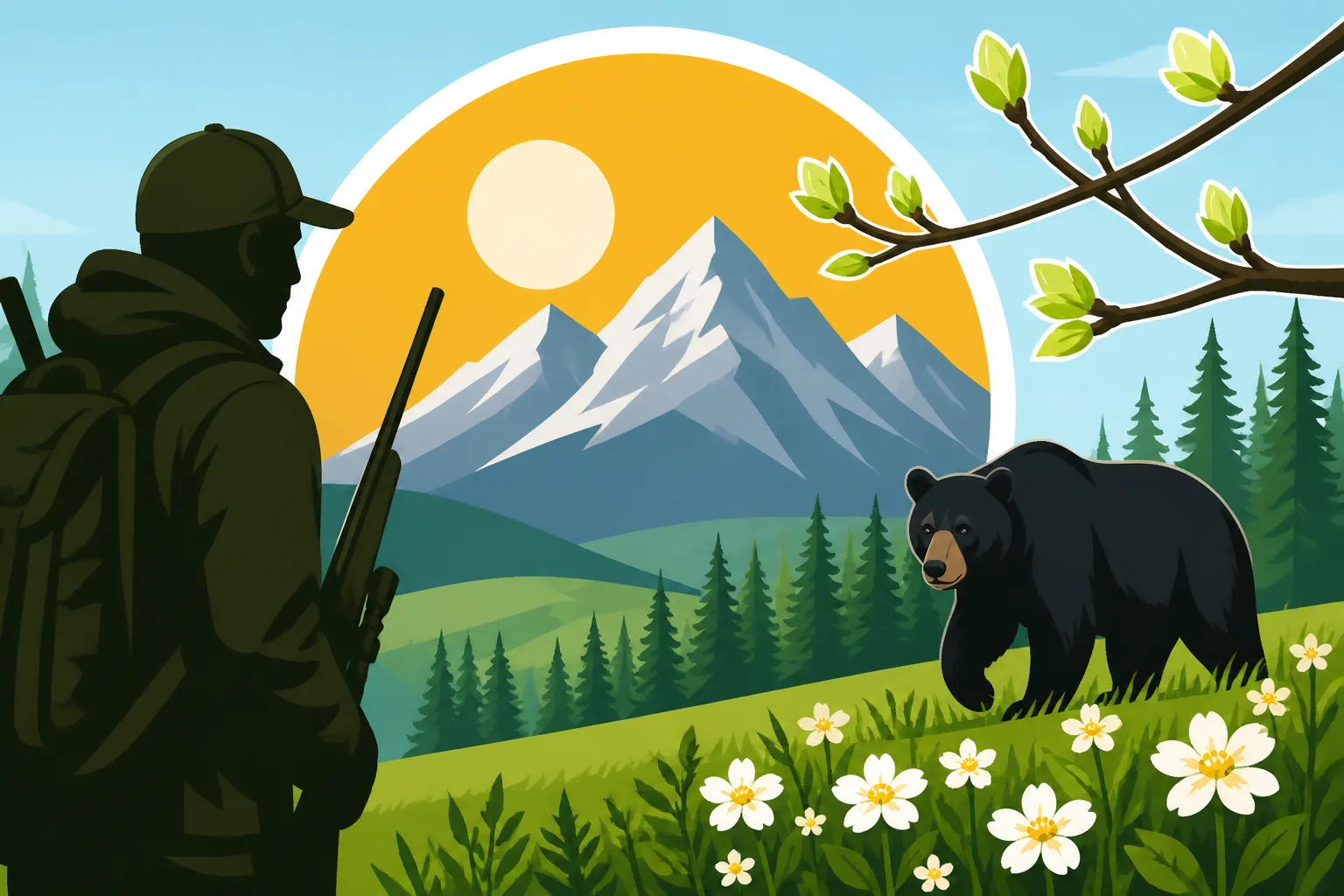
Alberta's hunting seasons are carefully managed to ensure sustainable populations, and black bears are no exception. Unlike some other big game species, black bears in Alberta offer both spring and fall hunting opportunities, each with its own unique appeal and set of regulations. The spring season, in particular, draws a lot of attention because it coincides with bears emerging from their dens, often seeking fresh green-up and readily available food sources after their long winter's slumber.
The General Framework for Bear Seasons
Generally speaking, Alberta’s black bear season is split into two distinct periods: spring and fall. The spring season typically kicks off in April or May and runs through much of June, varying significantly by Wildlife Management Unit (WMU). This timing is strategic, designed to target bears before they enter their heaviest breeding phase and to allow for hunters to intercept them as they begin to forage actively. For many, the allure of a spring bear hunt lies in the combination of milder weather, the vibrant green landscape, and the opportunity to spot bears in open areas as they graze on new vegetation. It’s a different kind of challenge than a fall hunt, often involving more glassing and understanding bear behavior as they transition from denning to active feeding.
The fall season, by contrast, usually runs from September through November, often overlapping with deer and moose seasons. While both seasons offer incredible opportunities, the spring hunt is often preferred by those targeting larger boars before they become more nocturnal and secretive during the peak summer months. It's also a chance to witness the wilderness awakening, a truly immersive experience that goes beyond just the hunt itself.
How Wildlife Management Units Influence Season Dates
The critical thing to understand when planning your spring bear hunt in Alberta is that season dates are not universal across the province. They are dictated by individual Wildlife Management Units, or WMUs. Alberta is divided into numerous WMUs, each with specific regulations tailored to local wildlife populations and conservation goals. This means that a WMU in the northern boreal forest might have significantly different season dates than one in the central parkland or the foothills.
These variations are put in place for several reasons: to account for different bear densities, varying emergence times from dens due to climatic differences, and to manage hunting pressure effectively. For example, bears in the far northern WMUs might emerge later from dens due to prolonged snow cover, leading to later season openings compared to southern areas. It’s absolutely essential to consult the most current Alberta Guide to Hunting Regulations for the specific WMU you intend to hunt. Resources like GoHunt can be invaluable for quickly cross-referencing these dates with geographical data, helping you visualize where and when you can hunt. Failing to check the specific WMU dates can lead to a costly violation, so always double-check. Understanding Alberta's Wildlife Management Units is step one for any hunter here.
Detailed Spring Bear Season Dates Across Alberta
Getting down to the nitty-gritty, let's explore how spring bear season dates typically shake out across different regions of Alberta. Remember, these are general guidelines and historical trends; precise dates can and do change annually. Always verify with the official Alberta hunting regulations.
Northern and Foothills Regions
For many, the vast expanses of Alberta's northern boreal forest and the rugged foothills west of the agricultural zones are prime black bear country. These areas, including WMUs like the 300 series (Foothills), 500 series (Boreal East), and 500 series (Boreal West), generally offer the most consistent and often longest spring bear seasons.
Typically, in these regions, the spring bear season will open in early to mid-May, often around May 1st or May 15th, and extend through to mid-June, frequently closing around June 15th or June 30th. This window allows ample time for bears to emerge from their dens, start actively feeding, and for hunters to access areas that might still be muddy or snow-bound earlier in the spring. You'll find a lot of success targeting green cutlines, fresh logging blocks (as detailed in Spring Bear Hunting Alberta's Cutblocks), and south-facing slopes where vegetation greens up faster. The opportunity to pursue Black Bear Hunting in Alberta in these pristine environments is a major draw.
Central and Parkland Areas
As you move into Alberta's central and parkland regions, where agricultural land mixes with aspen bluffs and river valleys, the bear populations can be more dispersed, and season dates might vary. Some WMUs in the 200 series (Parkland) might have slightly different start and end dates compared to their northern counterparts.
It's common for these areas to have spring seasons that align closely with the northern regions, often opening in early May and running until mid-June. However, due to higher human population density and different land-use patterns, certain WMUs might have more restricted seasons or even specific rules regarding methods like baiting. It's imperative to scrutinize the regulations for WMUs in the central corridor, especially around major population centers, to ensure compliance. You might also find that bear behavior here is more influenced by private land access and food sources like canola and other crops once they are planted.
Southern and Eastern Zones
In the far southern prairie and eastern parts of Alberta, black bear populations are generally much lower, and suitable habitat is less abundant. As such, not all WMUs in these regions have an open spring bear season. Many southern prairie WMUs (100 series) are focused primarily on species like pronghorn and deer.
Where spring bear seasons do exist in these areas, they might be shorter or have specific limitations. For instance, some may only allow hunting for a few weeks in May. It's crucial not to assume that just because a WMU is open for other game, it's open for spring bear. This is where an online tool like GoHunt or a careful review of the current regulations guide becomes non-negotiable. If you're planning a hunt in the deep south or eastern regions, verify every single detail of the season dates for the specific WMU you're interested in.
To help visualize, here's a generalized table of typical spring bear season date ranges by region. Please note that these are illustrative ranges and specific dates for your chosen WMU must be confirmed with the latest official Alberta hunting regulations.
| Region/WMU Group | Typical Spring Season Start | Typical Spring Season End | Notes |
|---|---|---|---|
| Northern Boreal (e.g., WMUs 500s) | May 1st – May 15th | June 15th – June 30th | Often longest seasons, good bear densities |
| Foothills (e.g., WMUs 300s) | May 1st – May 15th | June 15th – June 30th | Excellent habitat, sometimes earlier green-up |
| Central Parkland (e.g., WMUs 200s) | May 1st – May 15th | June 15th – June 30th | Dates can be similar, check local WMU for specific rules |
| Southern Prairie (e.g., WMUs 100s) | Limited or No Season | Limited or No Season | Verify carefully; many WMUs are closed for bear |
Essential Regulations and Preparations for Spring Bear Hunting
Beyond just knowing the dates, there are crucial regulations and preparations every hunter needs to be aware of before heading out for a spring bear hunt in Alberta. Being prepared means not only increasing your chances of success but, more importantly, ensuring a safe, legal, and ethical hunt.
Licensing and Hunter Host Requirements
First and foremost, you can't hunt without the proper paperwork. Every hunter in Alberta needs an Alberta's WIN Card and Wildlife Certificate. This is your basic identification and authorization to participate in hunting activities. On top of that, you'll need a specific What a Black Bear Licence Costs. These can be purchased online through the AlbertaRELM system or from authorized licence issuers. Make sure all your licenses are current and properly filled out before you head into the field.
For non-residents of Alberta, the rules are a bit different. If you're from another Canadian province, you can hunt black bear without a guide, but you must still follow all Alberta regulations. However, if you're a non-resident alien (from outside Canada), it's a different story. You are required to hunt with either a licensed outfitter (as outlined in Why Non-Residents Need a Guide in Alberta) or be accompanied by an eligible Hunting Alberta With a Hunter Host resident of Alberta. This "Hunter Host" rule is critical and cannot be overlooked. Ensure your chosen host meets all the criteria, including being an Alberta resident for at least the last 12 months, holding appropriate licenses, and accompanying you in the field.
Ethical Hunting and Safety Considerations
Spring bear hunting comes with specific ethical and safety considerations. One of the most important is the ability to properly identify your target. It is absolutely illegal to shoot a sow with cubs. As bears emerge from their dens, sows will often have cubs from the previous year, which can be quite large. You must be able to confidently determine that the bear is not a sow with cubs before taking a shot. This requires patience, good optics, and an understanding of bear behavior. Learning how to identify Judging a Boar From a Sow With Cubs is a skill honed through observation.
Baiting for black bears is a popular and effective method in Alberta, and it is legal in many WMUs, but not all. There are strict rules governing the establishment and maintenance of bait sites, including distances from roads, residences, and designated areas. Before you even think about Setting a Bear Bait Site in Alberta, you must consult the regulations for your specific WMU regarding baiting, as rules for Rules on Baiting Big Game can change or be locally specific.
Beyond ethical considerations, personal safety in bear country is paramount. While black bears are generally not aggressive towards humans, encounters can happen. Always carry bear spray, know how to use it, and consider hunting with a partner. Familiarize yourself with general Wildlife Safety in Alberta Bear Country, especially if you're venturing into remote areas. It’s also crucial that all hunters have completed their Alberta Hunter Education Requirements, which covers essential safety and ethical practices.
Maximizing Your Spring Bear Hunt: Timing and Strategy
Once you've got the dates down and the regulations understood, it's time to focus on making your spring bear hunt successful. Timing your hunt within the season and employing smart strategies are key to finding that perfect bruin.
Scouting and Timing Your Arrival
The precise timing of green-up in Alberta is a huge factor in spring bear activity. Bears are naturally drawn to the first green shoots of vegetation after winter, as these tender plants are rich in nutrients they desperately need. This means that a hunt too early in the spring, before significant green-up, might see fewer active bears, as they're still in or near their dens. Conversely, waiting too long can mean bears have dispersed into thicker cover as the vegetation matures and other food sources become available.
The optimal window for Timing an Alberta Spring Bear Hunt often correlates with when south-facing slopes, old logging roads, and clearings begin to show vibrant green. This can vary by a week or two depending on elevation and latitude within your chosen WMU, and of course, the specific weather patterns of that year. Many experienced hunters monitor weather forecasts and even satellite imagery to predict green-up. For planning, online mapping resources like those offered by GoHunt can help you overlay historical weather data with vegetation indexes to make informed decisions about when to head out. Observing local conditions or calling local wildlife offices can also provide valuable real-time insights.
Key Locations and Tactics
When you're out in the field during spring bear season, understanding where bears will likely be found is crucial. As mentioned, new growth is a major attractant. Focus your efforts on:
- Cutlines and Seismic Lines: These linear clearings, especially those with good sun exposure, are often among the first places to green up. Bears will walk these routes, grazing on the new grasses and forbs. Hunting Bear on a Green Cutline in June can be incredibly productive.
- Logging Blocks and Burned Areas: Recent logging activity creates openings that quickly sprout new growth, providing excellent forage. Similarly, areas that experienced wildfires a year or two prior will often have a lush understory that attracts bears.
- River Bottoms and Swamp Edges: These areas can hold moisture and provide a mix of early green vegetation and other food sources like skunk cabbage or catkins.
- South-Facing Slopes: These warm up faster and therefore green up earlier than north-facing aspects, making them prime feeding grounds.
Still-hunting slowly along these features, or setting up a vantage point for glassing, are effective tactics. Remember that spring bears can sometimes have interesting Colour Phase Black Bears in Alberta, ranging from black to cinnamon or blonde, so always be prepared for variations. Patience is your greatest ally. Find a good spot with a clear view of potential feeding areas, settle in, and let your optics do the work. Don't forget that bears are crepuscular, meaning they are most active during dawn and dusk, so plan your hunting times accordingly.
Disclaimer
Please be aware that hunting regulations, season dates, and licensing requirements in Alberta can change from year to year. While this guide provides comprehensive information based on current understanding, it is absolutely essential for all hunters to consult the most recent official Alberta Guide to Hunting Regulations published by Alberta Environment and Parks (AEP) before planning or commencing any hunting activity. Failure to comply with current regulations may result in fines, licence suspension, or other penalties. This guide is for informational purposes only and does not supersede official government documentation.