Why Non-Residents Need a Guide in Alberta
Few things are as frustrating as planning an epic hunting trip to a new region, only to discover the regulations are vastly different from what you're used to, particularly when it comes to who can legally accompany you. Many non-resident hunters dream of Alberta's incredible big game opportunities, but quickly hit a wall when they realize they can't simply buy a tag and head out on their own. This guide will walk you through the fundamental requirement for non-resident hunters in Alberta—the necessity of a hunter host or licensed outfitter—and help you understand why these rules exist and how to navigate them successfully for your next adventure.
Understanding Alberta's Non-Resident Hunting Regulations
Alberta is a fantastic place to hunt, offering everything from massive whitetails and mule deer to majestic moose and bighorn sheep. However, the province has a very specific set of rules governing non-resident hunters, largely aimed at conservation, proper management, and ensuring a safe and ethical hunting experience. These rules are distinct from those for Canadian residents from other provinces, and especially for those coming from outside of Canada (Non-Resident Aliens).
The Fundamental "Hunter Host" or "Guide" Rule
At the heart of Alberta's non-resident hunting framework is the requirement that you cannot hunt big game or certain game birds unless you are accompanied by either a resident "hunter host" or a licensed "outfitter" and their designated guides. This isn't just a suggestion; it's a legal obligation. The province enforces this rule to ensure that non-residents have someone with local knowledge and accountability present during their hunt. It's a system designed to protect wildlife populations, promote ethical hunting practices, and integrate newcomers into the local hunting culture in a structured way. Imagine trying to navigate a vast, unfamiliar wilderness with complex regulations and no local insight—it would be a recipe for trouble, both for you and for the resource. This rule helps prevent that by ensuring a knowledgeable local is always by your side.
The distinction between a "resident" and "non-resident" hunter is critical here. A resident is generally someone who has lived in Alberta for at least six consecutive months, holds a valid Alberta driver's license or equivalent identification, and isn't claiming residency in another jurisdiction. If you don't meet these criteria, you're considered a non-resident. For hunters visiting from other Canadian provinces, you're a "Non-Resident Canadian." If you're coming from the United States or any other country, you're classified as a "Non-Resident Alien," and the rules for you are often the most stringent, sometimes requiring an outfitter for species where a Non-Resident Canadian might be able to use a host.
Who Qualifies as a "Hunter Host"?
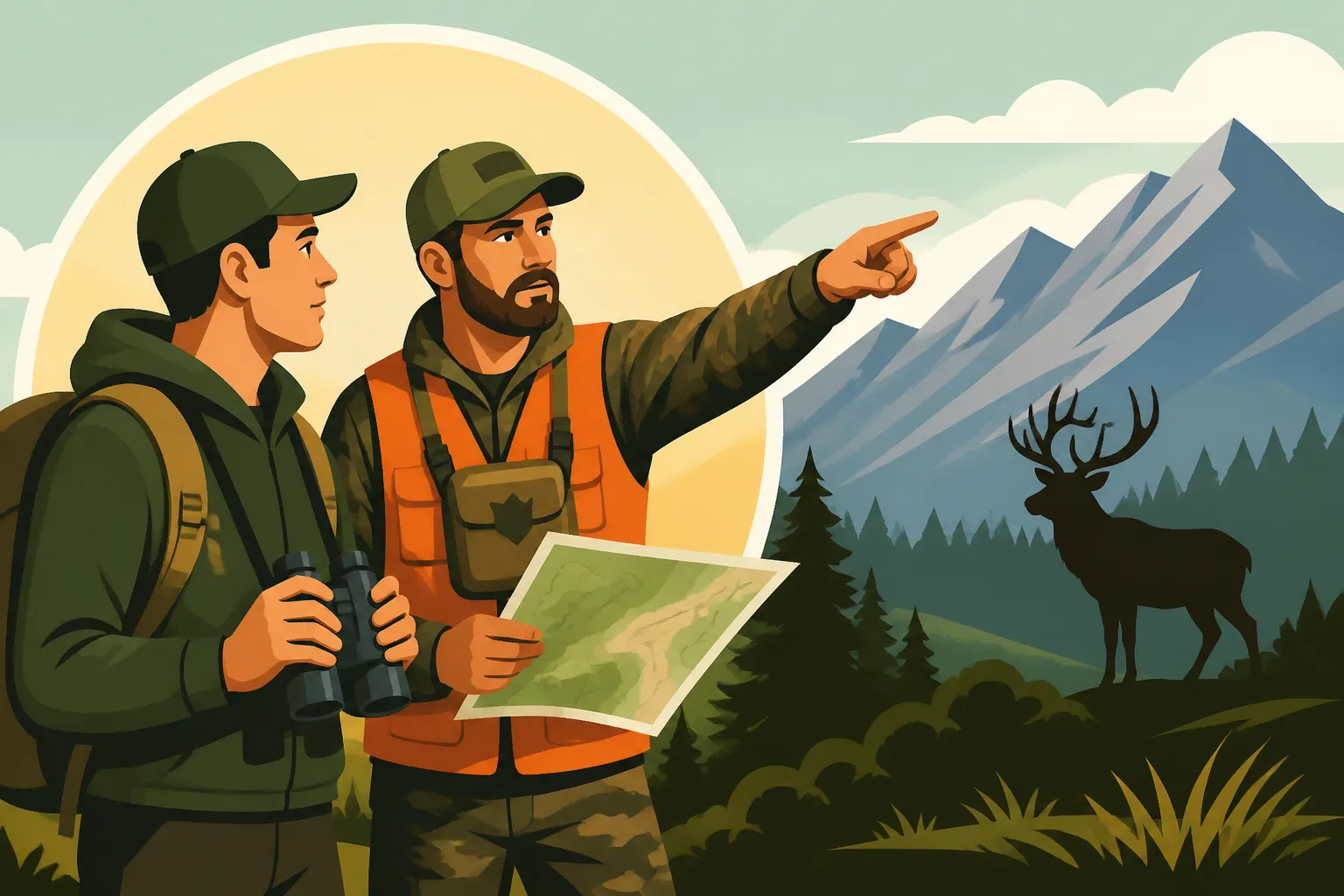
So, if you're not going with an outfitter, who exactly can be your hunter host? It’s not just any friend or acquaintance who lives in Alberta. A hunter host must meet specific criteria set out by the provincial government. First and foremost, they must be an Alberta resident, meaning they have lived here for at least six months and hold appropriate identification, usually an Alberta driver's license. They must also possess a valid Alberta WIN Card and Wildlife Certificate, and be at least 18 years old. More than just meeting the basic legal checkboxes, a hunter host takes on significant responsibility for the non-resident hunter they are accompanying. They are expected to be knowledgeable about Alberta's hunting regulations, ensure ethical hunting practices are followed, and essentially act as your local guide and mentor throughout the hunt.
The practicalities of finding a suitable hunter host can be quite challenging. While the idea of hunting with a trusted resident friend sounds ideal, not everyone has such a connection in Alberta. A host is volunteering their time, expertise, and taking on legal liability for your actions in the field. They cannot charge you for their services, which makes it a truly altruistic act. This means that a genuine, established relationship is usually key to securing a good hunter host. Relying on someone you barely know, or who lacks extensive hunting experience in Alberta, could quickly lead to a less-than-successful hunt, or worse, legal issues if regulations aren't strictly followed. It's crucial for both parties to understand the commitment and responsibilities involved. You can learn more about specific requirements in Who Can Act as a Hunter Host.
When a Licensed Outfitter Becomes Mandatory
While a hunter host is an option for some species, particularly general season whitetail deer or black bear, there are distinct situations where a licensed outfitter and their designated guides become absolutely mandatory for non-resident hunters. This applies most notably to draw-only species like bighorn sheep, mountain goat, moose, elk, and pronghorn in specific Wildlife Management Units (WMUs). These are often highly sought-after tags, and the provincial government allocates a certain number of these special licences directly to licensed outfitters each year for their non-resident clients.
The primary reason for this mandatory outfitter requirement for certain species and zones is precise wildlife management and control over hunting pressure. By channeling non-resident draw applications through outfitters, the province can better regulate the harvest of sensitive or highly prized game populations. Outfitters typically operate within specific WMUs where they hold "allocations" – a set number of tags for various species that they can offer to their clients. Without an outfitter holding one of these allocated tags, a non-resident hunter simply cannot apply for or receive a special licence for these species. This system ensures that the outfitters, who often have long-term relationships with landholders and deep knowledge of the specific areas, are responsible for guiding hunts that align with the province's conservation goals. Understanding Alberta Outfitter Allocations Explained is key here.
Navigating Alberta's Complex Licensing and Draw System
Before you even think about setting foot in an Alberta bush or field with a hunting rifle or bow, you'll need to navigate the province's licensing and draw system. For non-residents, this process adds several layers of complexity compared to what a local resident faces, emphasizing why a host or guide is so valuable. It’s not just about paying a fee; it’s about understanding a multi-tiered system designed to manage hunter numbers and species harvest.
The Alberta WIN Card and Wildlife Certificate
Every hunter in Alberta, regardless of residency, must first obtain a Wildlife Identification Number (WIN) Card. This card is your unique identification within the provincial hunting and fishing system. Think of it as your permanent hunter ID number. You'll need it to purchase any hunting or fishing licence. For non-residents, this is the very first administrative hurdle to clear, and it's essential that you apply for it well in advance of your trip. The process is straightforward and can often be done online through the AlbertaRELM system. Once you have your WIN Card, it's valid for five years, so it's a worthwhile investment if you plan on multiple trips to Alberta.
Beyond the WIN Card, every hunter also needs an annual Wildlife Certificate. This certificate is essentially your general licence to hunt in Alberta for the current season, covering the administrative costs of wildlife management. It confirms your eligibility to hunt and allows you to then purchase specific game tags. For non-residents, the Wildlife Certificate will be different than a resident's, often tied to whether you are hunting with a host or an outfitter, and your specific licence options will be determined by this. Without both a valid WIN Card and the appropriate Wildlife Certificate, you simply cannot legally purchase any other hunting tags in Alberta, making them the absolute foundational requirements for your hunt.
Special Licence Draws for Non-Residents
If your dream hunt in Alberta involves a species like moose, elk, bighorn sheep, mountain goat, or pronghorn, you're almost certainly looking at the special licence draw system. These are highly regulated species, and the number of available tags is limited to manage populations and provide quality hunting experiences. For Alberta residents, class 1 (trophy) sheep licences are not drawn but purchased, though draws exist for class 2 (non-trophy) sheep and for a handful of WMU-special class 1 sheep hunts, where applicants can build priority in some of the draws.
For non-residents, the draw system works very differently, and this is where outfitters become crucial. Non-residents (especially Non-Resident Aliens) cannot typically apply directly into the general resident draw pool for these special licences. Instead, a portion of the available tags for certain species are allocated to licensed outfitters. This means that if you want to hunt a draw-only species, you must book your hunt through an outfitter who holds an allocation for that species and WMU. The outfitter will then essentially 'sponsor' your draw application using their allocated tags. You won't be building priority points in the same way residents do; your access is entirely dependent on the outfitter's allocations. This system guarantees that non-resident hunting for these specific species is managed through professional channels. This structure is detailed further in Alberta's Draw Priority Point System. Platforms like BookYourHunt or GoHunt can be invaluable resources for connecting with outfitters who possess these critical allocations, showing you who offers what for your desired species.
General Licences and Their Limitations for Non-Residents
While many of Alberta's most iconic big game species require an outfitter for non-residents through the draw system, some species are available on "general licences." This typically includes whitetail deer, black bear, and certain game birds. For these species, a non-resident Canadian might be able to hunt with a hunter host. However, even with general licences, there are often limitations and nuances that differentiate the non-resident experience from a resident one.
For instance, general season dates and specific WMUs might have restrictions or different rules for non-residents. While a resident might have a long general season for whitetails across many WMUs, a non-resident might find their options more limited, or that they can only hunt in specific designated areas. Moreover, even with a general tag, the fundamental rule of needing a hunter host or licensed guide still applies to big game. You still can't just arrive and hunt by yourself. This "need for assistance" isn't just about legality; it's about practical success. A local hunter host, even for a general deer hunt, will know the land, the game movements, and local access nuances that would be impossible for an outsider to grasp quickly. For black bear, a host or guide might be crucial for setting up a bait site or understanding specific spring bear hunting tactics in unfamiliar territory.
Accessing Alberta's Diverse Hunting Landscapes
Alberta boasts an incredibly diverse landscape, from the vast prairies and badlands to dense boreal forests and rugged Rocky Mountain foothills. This variety offers a stunning array of hunting opportunities, but it also presents significant access challenges, especially for non-residents unfamiliar with the terrain and land ownership rules. Understanding how to legally and effectively access these areas is another critical reason why a hunter host or licensed outfitter is indispensable.
The Realities of Crown Land Access for Non-Residents
Alberta has vast tracts of Crown land, which is publicly owned and generally accessible for hunting. This sounds like a dream come true for hunters, but the reality is more complex than simply pointing at a map. For non-residents, navigating Crown land effectively requires more than just a GPS. You need to know which Crown land is accessible, what the specific rules are for vehicle use (Quads, side-by-sides), and where the game actually lives within those immense spaces. Much of this land, particularly in the Green Area (forested zones), is remote, rugged, and lacks infrastructure.
Even with maps showing Crown land boundaries, understanding the local nuances – like active logging operations, oil and gas leases, or specific Public Land Use Zones (PLUZs) – requires local insight. These zones, like the Ghost PLUZ or McLean Creek, have their own sets of rules regarding camping, vehicle use, and permitted activities, which can change. A hunter host or outfitter won't just know where the Crown land is; they'll know the best access points, the seasonal game movements within it, and any temporary restrictions or closures. Trying to figure out, for example, where Hunting a Frozen Muskeg Trail is accessible or how to navigate around Alberta's Public Land Use Zones without local guidance can lead to wasted time, frustration, or even legal trouble.
Private Land Challenges and Permission
Unlike some jurisdictions where hunting is allowed on private land unless explicitly posted, Alberta operates under a strict "permission required" rule for private property. This means that if land is privately owned, you must obtain permission from the landowner before stepping foot on it to hunt. For non-residents, this is a massive hurdle. Imagine showing up in a rural Alberta community, knocking on doors, and asking a stranger for permission to hunt their land. The chances of success are incredibly low, especially without any prior relationship or local connection. Landowners are often wary of unknown individuals, and for good reason.
This is where a local hunter host or, more effectively, a licensed outfitter, becomes a game-changer. Outfitters often spend years, even decades, cultivating relationships with local landowners. They have established trust, perhaps agreements for managing wildlife or addressing crop damage, and may even lease land for exclusive hunting access. Their ability to secure private land permission opens up vast opportunities that would be completely unavailable to an unguided non-resident. This access can be particularly crucial for species like whitetail deer and elk, which frequently utilize agricultural lands. Without someone who can secure Getting Private Land Permission in Alberta, your hunting options in Alberta's prime agricultural zones will be severely limited.
Specialized Access for Remote Mountain and Boreal Hunts
Alberta isn't just endless fields; it also features rugged mountain ranges and dense boreal forests, offering some of the continent's most challenging and rewarding hunts. However, accessing these remote areas is a significant undertaking. For a bighorn sheep hunt in the Rocky Mountains or a moose hunt deep in the Boreal, you're looking at extended travel, often requiring horses, specialized ATVs, or even bush planes to reach true wilderness. A non-resident flying or driving into Alberta from afar is unlikely to have the logistical support, specialized equipment, or expertise to safely and effectively execute such a hunt on their own.
Licensed outfitters specializing in these remote areas have the entire infrastructure in place. They own or lease strings of horses for Backpacking Into Alberta Sheep Country, maintain well-established spike camps in the backcountry, possess the necessary communication equipment, and, crucially, have guides experienced in navigating treacherous terrain and unpredictable weather conditions. They understand the nuances of a Hunting a Boreal Muskeg Edge or an Hunting an Alpine Basin in the Mountain WMUs. Attempting such an adventure without professional guidance is not only likely to be unsuccessful but also extremely dangerous due to the remote nature, unpredictable wildlife (especially grizzly bears), and rapidly changing weather.
Local Knowledge and Expertise: The Outfitter Advantage
Beyond the legal and access requirements, the sheer volume of local knowledge and expertise held by an Albertan hunter host or, more comprehensively, a licensed outfitter, is an invaluable asset for any non-resident. Hunting success often boils down to understanding the nuances of a specific area and its wildlife, something that takes years, if not a lifetime, to accumulate.
Understanding Local Game Patterns and Behaviour
Every region, and even every specific WMU, has its own unique game patterns. When do the whitetails move from the aspen bluffs to the fields? Where do the mule deer seek shelter during a chinook wind? When does the moose rut truly peak in the northern boreal versus the foothills? These aren't questions you can answer by simply reading a regulation book or looking at a map. A local hunter host or outfitter has spent countless hours in the field, observing, scouting, and adapting to the behaviour of the animals in their specific area. They know where to look for rubs and scrapes, where deer cross frozen sloughs, or which cutlines moose frequent at dawn.
For example, understanding how deer react to pressure in Hunting a Quarter Section You Just Got versus a vast tract of Crown land is critical. An outfitter who guides in a specific WMU year after year will have detailed knowledge of where the biggest bulls or bucks tend to hide, their preferred feeding grounds, and how they react to different weather conditions. They’ve seen multiple seasons unfold, experienced various migrations, and observed the impact of weather systems like those described in Hunting Alberta Winter Weather Safely. This kind of granular, real-time intelligence is what often makes the difference between seeing a few animals and harvesting a mature trophy.
Navigating Unfamiliar Terrain and Weather
Alberta is a massive province with incredibly varied terrain, from flat prairie to towering mountains. Each landscape presents its own unique set of challenges. The dense boreal forest, for instance, can be disorienting and difficult to traverse, especially in thick snow or during a wet fall. The foothills, with their steep benches and creek bottoms, require a different approach and level of physical fitness than hunting open prairie. As a non-resident, you're not just dealing with new regulations, but entirely new geographical challenges.
Moreover, Alberta's weather can be famously unpredictable, swinging from mild autumn days to blizzard conditions overnight, or from a balmy spring morning to a hail storm by afternoon. A seasoned guide will not only know the terrain like the back of their hand (where to find a Hunting a Foothills Bench Above a Creek or how to glass a Hunting a Prairie Coulee Bottom), but also how to interpret local weather patterns and make crucial decisions for safety and success. They'll have emergency gear, navigation tools, and a deep understanding of backcountry safety, including protocols for encounters with bears and other large predators. This level of preparedness and local environmental awareness is something few non-residents could replicate on their first, or even fifth, trip.
The Intricacies of Alberta's Hunting Regulations
While we've touched on the broad strokes of non-resident regulations, the full scope of Alberta's hunting rules is incredibly detailed and can be overwhelming. Beyond licences and access, there are specific rules about legal firearms and bows, shooting hours, baiting big game (which is generally prohibited for big game, but allowed for black bear under specific conditions), retrieving wounded animals, tagging procedures, and mandatory Chronic Wasting Disease (CWD) testing requirements in certain WMUs. Making an honest mistake due to unfamiliarity with a specific nuance can lead to significant penalties, fines, or even the loss of hunting privileges.
A hunter host, and especially a licensed outfitter, acts as your on-the-ground compliance officer. They are intimately familiar with the latest version of the Alberta Guide to Hunting Regulations and often have relationships with local Fish and Wildlife officers. They can advise you on everything from minimum legal draw weights for bows to the specific calibre restrictions for rifles when hunting big game. Their expertise ensures that every aspect of your hunt, from proper tagging to understanding CWD submission requirements in designated zones, adheres strictly to provincial law. You can delve deeper into the regulations at Where to Read Alberta's Hunting Regulations, but having a human expert beside you is invaluable.
Logistics and Practicalities for a Non-Resident Hunt
Beyond the legal and knowledge requirements, simply managing the logistics of an out-of-province or out-of-country hunting trip can be a monumental task. This is another area where the guidance of a local host or outfitter simplifies the entire process and allows you to focus on the hunt itself.
Importing Firearms and Ammunition
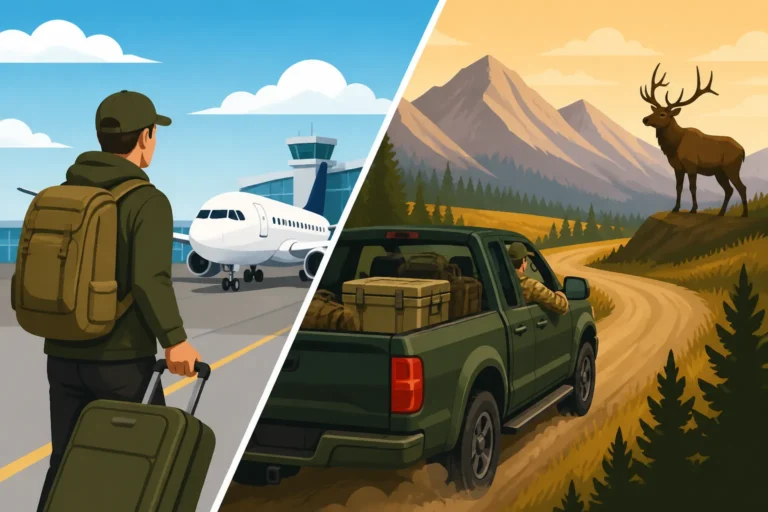
One of the most significant logistical hurdles for non-residents, particularly those from the United States, is bringing firearms and ammunition into Canada. Canada has strict firearms laws, and while hunting rifles and shotguns are generally permitted for hunting purposes with the correct documentation, the process requires careful attention to detail. You cannot simply cross the border with your firearms without declaring them. You must complete a Non-Resident Firearm Declaration Form (CAFC 909) in triplicate and present it to Canada Border Services Agency (CBSA) officers upon entry. There is a fee associated with this declaration, and it must be confirmed by a CBSA officer.
Without prior experience or guidance, navigating this process can be daunting. An outfitter or hunter host can provide crucial advice on completing the forms correctly, understanding restricted versus non-restricted firearms classifications, and ensuring you have all necessary documentation. They can also advise on ammunition limits and transport rules. A common mistake could lead to your firearms being seized at the border, effectively ending your hunt before it even begins. Some outfitters even offer the option to rent a rifle, which completely bypasses the import process. Understanding Bringing a Rifle Across the Border is a must-read for anyone considering this.
Meat and Trophy Care, Processing, and Export
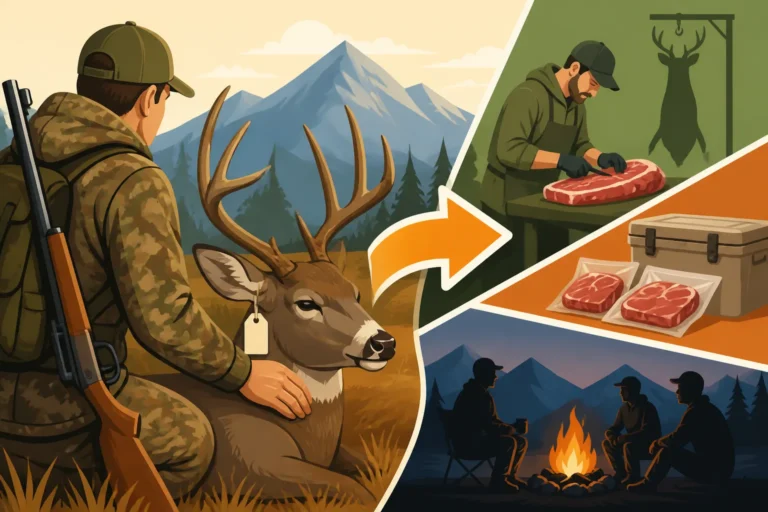
Once you've successfully harvested an animal, the work is far from over—especially for a non-resident. Properly field dressing, cooling, and transporting game meat in Alberta's often fluctuating temperatures (e.g., Meat Care in Alberta's Cold and Warm Swings) requires knowledge and the right equipment. Many remote areas lack immediate access to refrigeration. Then comes the challenge of processing the meat and handling trophies (hides, skulls, antlers) for transport back home. Finding a reputable local butcher or taxidermist, understanding their services, and coordinating timelines can be tricky when you're not from the area.
Outfitters and experienced hunter hosts have established networks for these services. They know the reliable butchers and taxidermists in the region, can arrange for meat processing, and ensure capes and antlers are properly prepared for shipping. For international hunters, exporting meat and trophies involves additional paperwork, permits (like CITES for certain species, though not typically for common Alberta game), and potentially veterinary inspections. An outfitter will be well-versed in these export regulations, helping you navigate the complexities of getting your hard-earned trophy and meat legally back to your home country, avoiding costly delays or confiscations at the border.
Camp Logistics and Equipment for Remote Areas
Planning a backcountry hunt means bringing a lot of gear: tents, cooking equipment, sleeping bags, navigation tools, first aid kits, and more. For a non-resident, shipping or flying with all of this can be incredibly expensive and cumbersome. This is where an outfitter truly shines, as they provide comprehensive camp logistics. They typically supply comfortable tent camps, full meals, cooking staff, and all the necessary equipment, from ATV transport to spotting scopes.
This means that as a non-resident hunter, you primarily need to worry about your personal hunting gear, clothing, and rifle. The outfitter handles the heavy lifting, the cumbersome camp setup, and the daily chores of cooking and maintaining camp. This dramatically reduces the logistical burden on the hunter, allowing them to focus entirely on the hunt itself, rather than worrying about meal prep, potable water, or breaking down camp. Whether it's a lodge hunt or a spike camp deep in the bush, the outfitter’s infrastructure ensures a much smoother and more enjoyable experience, especially when compared to trying to organize a remote camp from scratch in an unfamiliar land.
The "Hunter Host" Alternative: Pros and Cons
While a licensed outfitter is often the mandatory or most practical choice for many non-resident hunts in Alberta, the hunter host option does exist for certain species and circumstances. It’s important to understand both the advantages and the significant limitations of this route before committing.
The Appeal of a Hunter Host Relationship
The primary appeal of hunting with an Alberta hunter host is often the cost savings. Since a hunter host cannot charge for their services, you avoid the significant fees associated with a guided outfitter hunt, which can run into the thousands or tens of thousands of dollars. This makes hunting in Alberta potentially more accessible for those on a tighter budget, especially if they are primarily interested in general season species like whitetail deer or black bear. It can also offer a more personal, grassroots hunting experience, allowing you to immerse yourself in the local culture and potentially forge a lasting friendship with an Albertan resident.
Imagine joining a friend for a week of deer hunting on their family farm or local Crown land. This kind of experience can feel more authentic and less commercialized than a structured guided hunt. It’s an opportunity to learn directly from a local hunter, share stories around a campfire, and experience Alberta in a way that might not be possible through an outfitter package. For a non-resident Canadian who has an established relationship with an Alberta resident, this can be a fantastic way to enjoy the province's hunting opportunities.
The Significant Challenges of Finding and Relying on a Hunter Host
Despite the appeal, relying on a hunter host comes with significant challenges. The biggest hurdle is simply finding a willing and capable host. As mentioned, a host cannot charge for their services and takes on legal responsibility for the non-resident. This is a huge commitment of time, effort, and potential liability, which most people are not able or willing to undertake for a casual acquaintance. Without a genuine, pre-existing relationship, securing a hunter host is exceptionally difficult. Even if you find someone, their hunting experience, knowledge of the specific WMU you wish to hunt, and available time off work might not align with your hunting goals.
Furthermore, a hunter host typically won't have the same level of resources or access as a professional outfitter. They won't have allocated special licence tags, private land leases, an extensive camp setup, specialized equipment like horses or bush planes, or the same deep, professional network for meat processing and taxidermy. Their hunting style might be more casual, and their ability to put you on trophy animals might be limited by their own schedule and local knowledge. While they are legally obligated to guide you, their personal hunting experience might not be as extensive or specialized as a full-time professional guide.
When a Hunter Host is a Viable Option
Given these pros and cons, when is a hunter host a truly viable option for a non-resident? Primarily, it's for general season species where you don't need a special draw tag, such as common whitetail deer or black bear. These species are more widely distributed, and the logistics of the hunt are generally less demanding than a multi-day mountain sheep expedition. The key factor, however, remains having a genuine, pre-existing relationship with an Alberta resident who is an experienced hunter and is willing to commit their time and effort to hosting you.
If you have a close friend or family member who lives in Alberta and is an avid hunter, and you're interested in pursuing species that don't require an outfitter's special allocation, then the hunter host route can be a wonderful experience. It's also important to remember that a hunter host, no matter how experienced, cannot fulfil the outfitter allocation requirements for draw-only species like bighorn sheep, mountain goat, elk, moose, or pronghorn if you are a non-resident alien. For those specific hunts, an outfitter is your only path forward.
Choosing Your Hunting Partner: Outfitter vs. Hunter Host
Deciding between a hunter host and a licensed outfitter for your Alberta hunt is a significant decision that will shape your entire experience. It boils down to your hunting goals, budget, experience level, and what kind of adventure you're truly seeking.
Evaluating Your Goals and Experience
Before you even start looking for a host or outfitter, take a moment to honestly evaluate your own hunting goals. Are you looking for a specific trophy animal that requires a draw-only tag? Do you dream of a challenging backcountry sheep hunt, or a more relaxed whitetail hunt on the farm fringe? What's your budget like? Outfitter hunts represent a substantial investment, while a hunter host, though free in terms of direct fees, still requires you to cover your own travel, licences, and contribute to shared expenses.
Consider your personal experience and wilderness skills. Are you comfortable in unfamiliar backcountry? Do you have experience with game retrieval, navigation, and dealing with unexpected situations in the wild? If your experience is limited, or if you're venturing into truly remote or dangerous terrain, the comprehensive support of an outfitter might be invaluable. If you're physically fit and experienced in self-reliant hunting, and you have a solid hunter host connection, you might lean towards that option for general season species.
The Value Proposition of a Licensed Outfitter
The value proposition of a licensed outfitter, especially for non-residents, is undeniable. You're paying for professionalism, expertise, and a streamlined experience from start to finish. Outfitters are regulated, insured, and their entire business revolves around providing successful and legal hunting opportunities. They possess the deep local knowledge of game patterns, access, and regulations that would take years for an individual to acquire. Critically, for non-residents targeting species like moose, elk, sheep, or goat, outfitters hold the exclusive allocated draw tags that make these hunts possible.
Outfitters also come equipped with specialized gear, established camps, and often have private land access agreements that are simply unavailable to individual hunters. Their guides are often full-time professionals, constantly scouting and monitoring game. For many non-residents, the peace of mind that comes with booking through a reputable outfitter, knowing all the logistics are handled and legal requirements are met, is worth the investment. Platforms like BookYourHunt and GoHunt are excellent starting points for researching and comparing outfitters, helping you find one that aligns with your specific hunting ambitions. They provide structured listings, allowing you to see what various outfitters offer, where they operate, and which species they specialize in. Take the time to vet them, as outlined in Choosing the Right Alberta Outfitter, and don't hesitate to ask for references.
Making an Informed Decision
Ultimately, the choice comes down to careful consideration and clear communication. If you opt for a hunter host, ensure that person is genuinely capable, willing, and that both of you have a crystal-clear understanding of the expectations, responsibilities, and financial contributions (for shared expenses like fuel or food). Discuss every aspect of the hunt in detail beforehand.
If you're leaning towards an outfitter, thorough research is key. Don't just pick the first one you find. Look for outfitters specializing in the species and region you're interested in. Ask about their success rates (and understand what those rates truly mean), what's included and excluded in the package price, their cancellation policies, and, of course, request references from past clients. Make sure their contract is clear and that all your questions are answered before you commit. Alberta offers incredible hunting, but success and satisfaction, particularly for non-residents, hinge on making an informed decision about who will guide your adventure.
| Feature / Consideration | Hunter Host | Licensed Outfitter |
|---|---|---|
| Legal Requirement | Mandatory for Non-Resident Canadians (some species) | Mandatory for Non-Resident Aliens, and for all for draw-only species |
| Cost | No guiding fee (can't charge); cover shared expenses | Significant fee for services, packages, and allocated tags |
| Special Licence Access | Cannot access allocated draw tags for non-residents | Holds exclusive allocated draw tags for non-residents |
| Local Knowledge | Varies by individual host's experience | Professional, extensive, area-specific expertise |
| Logistics & Equipment | You often provide/coordinate your own/shared | Comprehensive camp, gear, transport, and services provided |
| Private Land Access | Limited to host's personal connections | Established relationships and often leased hunting land |
| Legal Responsibility | Host assumes significant personal liability | Outfitter is licensed, insured, and legally accountable |
| Professionalism | Varies; can be casual and informal | Structured, professional, and business-oriented |
| Best For | Non-Resident Canadians with genuine connections, general tags | Non-Resident Aliens, draw-only species, comprehensive experience |
Disclaimer
This article is for general informational purposes only and does not constitute professional advice. Laws, prices and regulations vary by location and change over time. Consult a qualified professional for guidance on your specific situation.