Rules on Wasting Game Meat
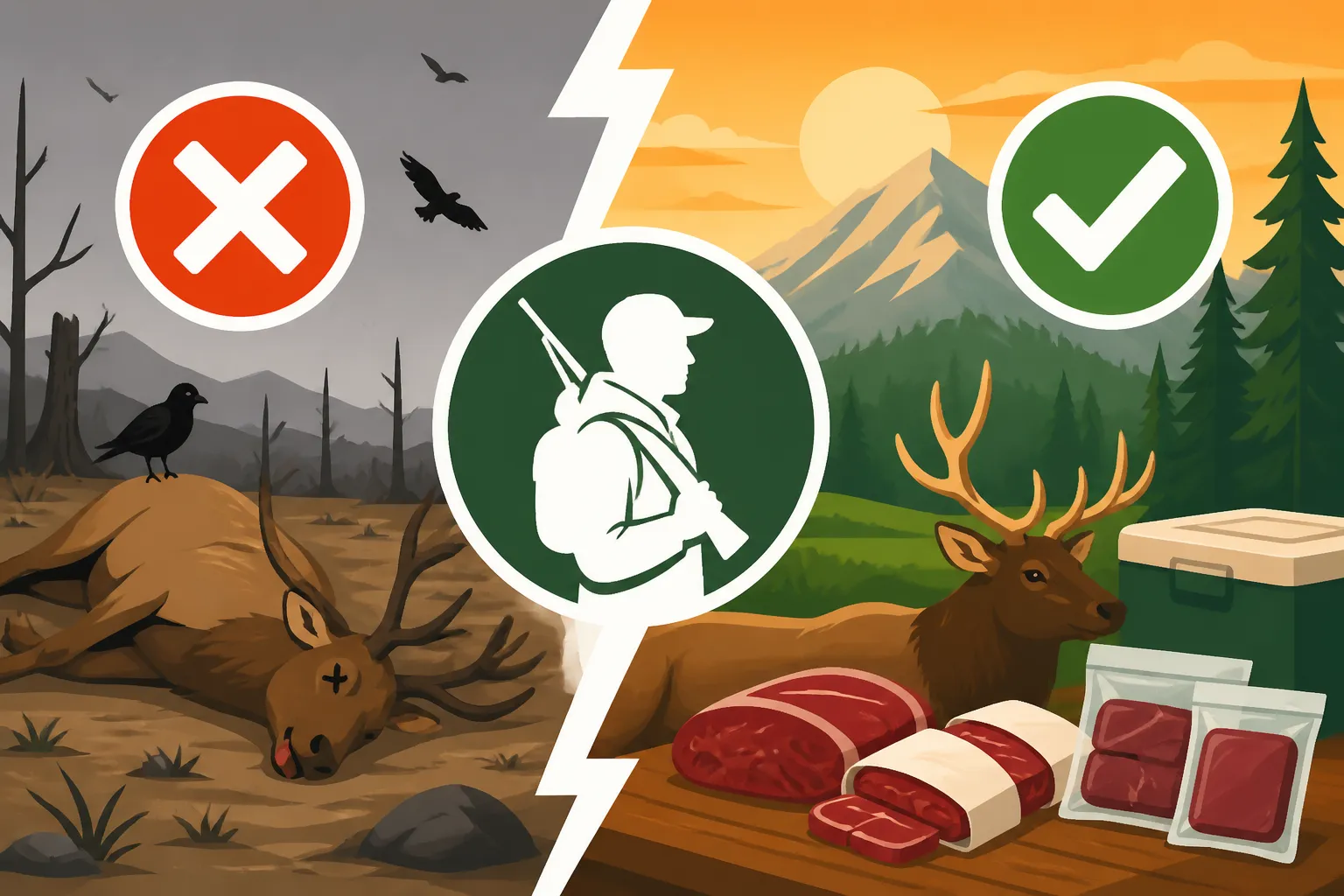
One of the most disheartening things for any ethical hunter is the thought of wasting game meat. We all put so much effort, time, and sometimes even money into our hunts, and the idea of letting any part of that hard-earned animal go to waste goes against everything we stand for. Alberta has clear regulations to ensure that harvested game is properly utilized, and understanding these rules is crucial for every hunter to avoid fines and uphold the integrity of our sport. This guide will walk you through Alberta's regulations on game meat waste, what they mean for you in the field, and how to ensure you're always on the right side of the law.
Understanding Alberta's Regulations on Game Waste
Alberta's hunting regulations are designed to promote responsible hunting and conservation, and a key component of this is the prevention of wanton waste. The core principle is straightforward: if you harvest an animal, you are legally and ethically obligated to retrieve and utilize its edible portions. This isn't just about avoiding a ticket; it's about respecting the animal, the resource, and the privilege of hunting.
The specific rules often revolve around what constitutes "edible portions" and how much of it must be retrieved. Generally, for big game species like deer, moose, elk, and bear, this means the meat from the hindquarters, front quarters, loins, and neck. For birds, it typically refers to the breast meat. These regulations aren't arbitrary; they reflect a long-standing tradition of hunters being stewards of the land and its wildlife. Ignoring these rules not only leads to potential penalties but also casts a shadow on the entire hunting community, fueling anti-hunting sentiment from those who misunderstand our practices. It's a responsibility we all share, from the moment we pull the trigger to the time the meat is in our freezer.
It's important to remember that these rules apply regardless of how you hunt—whether you're Bowhunting Alberta's Early Archery Seasons in the foothills or Rifle Hunting Alberta's General Seasons in the parkland. The expectation for full utilization remains constant. Alberta's regulations stipulate that if you kill an animal, you must make a reasonable effort to retrieve all edible meat. This isn't just about the choice cuts; it encompasses all meat deemed suitable for human consumption. This legal requirement solidifies the ethical commitment to prevent waste, emphasizing that the hunt doesn't end until the animal is properly cared for and its usable parts are safely transported.
Why These Rules Exist: Ethics, Conservation, and Respect
The prohibition against wasting game meat is deeply rooted in both ethical hunting principles and sound wildlife management. From an ethical standpoint, it’s about respect. Respect for the animal whose life was taken, respect for the land that sustained it, and respect for the tradition of hunting as a means of sustenance. Hunters are often the most ardent conservationists, and part of that commitment involves ensuring that no animal is taken needlessly or for mere sport without proper utilization.
From a conservation perspective, these regulations reinforce the value of each individual animal within the ecosystem. Wildlife is a public resource, managed for all Albertans. Wasting game meat undermines the careful population management efforts by Alberta Fish and Wildlife. If animals are taken and not utilized, it essentially means a resource is being squandered, impacting population goals and the overall health of the herd. These rules ensure that every harvest contributes positively to the overall conservation framework, rather than detracting from it.
Furthermore, these regulations address public perception. Non-hunters often view hunting with skepticism, and stories of wasted game can severely damage the image of hunting as a whole. By mandating full utilization, Alberta Fish and Wildlife helps ensure that hunters operate under a clear ethical code that is defensible to the broader public. This helps maintain the social license to hunt, protecting the activity for future generations. It’s a collective effort, where every hunter's actions contribute to how our sport is perceived. This is why tools like the GoHunt app are so useful, as they can help you meticulously plan your retrieval routes, minimizing the chances of having to abandon meat due to unforeseen obstacles or time constraints.
Practical Implications for Hunters: What You Need to Do
Adhering to Alberta’s game waste rules starts long before you pull the trigger. It involves preparation, thoughtful decision-making in the field, and meticulous care after the shot. Here’s what every hunter needs to consider:
Field Dressing and Carcass Care
The moment an animal is down, the clock starts ticking, especially in warmer weather. Proper field dressing is paramount to preserving the meat. This means gutting the animal quickly to allow the carcass to cool. For large animals like moose or elk, this can be a monumental task, often requiring multiple trips or specialized tools. You must ensure that you retrieve all edible portions – the front quarters, hindquarters, backstraps (loins), and neck meat. For bears, the hide and skull are also often part of the required retrieval, as outlined in the regulations for Black Bear Hunting in Alberta.
In cold weather, the challenge shifts to preventing the meat from freezing too hard before it can be processed, while still ensuring it cools properly. In warmer early seasons, like when Hunting Alberta's September Archery Opener, rapid cooling is critical to prevent spoilage. You might need game bags, ice, or even plans for immediate transport to a cooler. Knowing how to properly quarter an animal in the field can significantly reduce the weight you need to pack out, making retrieval of all edible meat more feasible. For detailed guidance, check out our article on Field Dressing in Alberta's Deep Cold or Meat Care in Alberta's Cold and Warm Swings. Using a reliable app like GoHunt can help you mark your kill site and plan the most efficient route for packing out, saving precious time and effort.
Retrieval and Transport
You are obligated to make a reasonable effort to retrieve all edible meat. What constitutes "reasonable effort" can vary depending on the circumstances, but it generally means not giving up easily, especially if the animal falls in difficult terrain. This often means planning your hunt with retrieval in mind. Are you hunting deep in the backcountry? Do you have the necessary equipment (game bags, pack frames, a quad, or even horses) to get the meat out? If you're on a multi-day hunt, do you have a way to keep the meat cool until you can get it to a processor or freezer?
This also ties into ethical shooting. Taking risky shots that might lead to a wounded animal traveling a long distance into impenetrable terrain, making full retrieval impossible, could be seen as a violation of the spirit of the waste rules. Always consider your capabilities for retrieval before taking a shot. Transporting the meat also requires attention; it must be kept clean and cool, and you need to ensure you have the proper Transporting Game Meat and Proof of Sex documentation with you. For remote areas, having a fully charged phone with offline maps, like those offered by GoHunt, can be a lifesaver for navigating back to your vehicle with a heavy load.
Special Considerations: CWD and Other Requirements
Alberta also has specific rules regarding Chronic Wasting Disease (CWD) testing, especially in certain Wildlife Management Units (WMUs). In these designated WMUs, hunters are often required to submit the heads of harvested deer for testing. While not directly a "waste" rule, it's an important part of responsible harvesting and requires careful handling of the animal's head. Be sure to check Alberta's CWD Testing Requirements for the WMU you are hunting in to ensure compliance. You'll want to bone out your meat carefully if you plan to move it out of a CWD mandatory submission zone before getting a negative test result.
Another important point is that once you've harvested an animal and tagged it, you must report your harvest. This is a crucial step in wildlife management and an extension of your responsibility as a hunter. For more information on this, refer to our guide on Reporting a Harvest in Alberta.
Here's a quick reference table for common edible parts for big game:
| Species | Required Edible Portions | Notes |
|---|---|---|
| White-tailed Deer | Both hindquarters, both front quarters, loins (backstraps), neck meat | Must be retrieved and fit for human consumption |
| Mule Deer | Both hindquarters, both front quarters, loins (backstraps), neck meat | Similar to whitetail, focus on complete retrieval |
| Moose | Both hindquarters, both front quarters, loins (backstraps), neck meat | Significantly larger volume, requires more planning for retrieval |
| Elk | Both hindquarters, both front quarters, loins (backstraps), neck meat | Large volume, quick cooling critical to prevent spoilage |
| Black Bear | All four quarters, backstraps, neck meat. Hide and skull (if eligible for trophy/bear parts tag) | Meat can spoil quickly if not cooled. Hide and skull often required. |
| Upland Birds | Breast meat (for consumption) | Usually applies to grouse, partridge, pheasants |
| Waterfowl | Breast meat (for consumption) | Ducks, geese, cranes. Often referred to as "breast out" |
Common Scenarios and Misconceptions
It's easy to misunderstand the nuances of game waste rules, especially when faced with challenging field conditions. Let's clarify some common scenarios and misconceptions.
The "Unrecoverable" Animal
Perhaps the most frustrating scenario is when you make a shot, the animal runs, and despite your best efforts, you cannot locate it or retrieve it from truly impossible terrain (e.g., falling into a river, a deep canyon, or dense, impassable blowdowns). What then? Alberta regulations still place the responsibility on the hunter to make all reasonable efforts. This means hours of searching, even calling in assistance if possible. If, after extensive and documented effort, the animal cannot be recovered, it is still counted against your tag, and the game warden should be notified. This doesn't exempt you from the "no waste" rule if parts could have been recovered, but it acknowledges that sometimes, despite heroic efforts, nature wins. However, don't use this as an excuse; prove you truly did everything you could.
Spoiled Meat
What if you retrieve an animal, but due to unforeseen circumstances (e.g., unusually warm weather, a long pack out, or equipment failure), a portion of the meat spoils before you can get it processed? The regulations typically focus on the intent to waste and the effort to preserve. If you genuinely made every reasonable effort to preserve the meat (e.g., field dressed immediately, packed with ice, transported quickly), but a portion still spoils, it's generally understood that this is not wanton waste. However, showing negligence (e.g., leaving a deer un-gutted for half a day in 20-degree Celsius weather) would certainly be a violation. This highlights the importance of thorough preparation and knowing your limits, especially regarding Alberta Big Game Season Dates and expected weather. Always have a plan for meat care, and consider consulting resources like GoHunt which can show you accessible routes for quicker meat evacuation.
Small Pieces and Trimmings
Sometimes, hunters wonder if they need to pack out every single scrap of meat, including small trimmings or bone fragments. The intent of the law is to utilize edible portions, which means significant muscle groups suitable for human consumption. Small pieces of meat that are inextricably mixed with bone, heavily contaminated with dirt, or otherwise rendered unappetizing during the field dressing process are not typically considered "wasted" if they are left behind. The focus is on the substantial, usable portions. However, deliberately leaving large chunks of salvageable meat is certainly a violation. It’s about common sense and genuine effort. For those venturing into new territory, a quick check on your Alberta's WIN Card and Wildlife Certificate status and familiarizing yourself with Reading an Alberta WMU Map Before You Go can help ensure smooth operations, even when handling meat.
Hunting on Private Land
The rules around game waste apply universally, whether you're hunting on public Crown land or private property. If you have secured Getting Private Land Permission in Alberta, your obligations regarding ethical harvest and meat utilization remain the same. The landowner may also have specific expectations, but the provincial regulations are non-negotiable. Violating these rules can lead to serious consequences, including significant fines and potential loss of hunting privileges, as outlined in Alberta Penalties for Hunting Violations. Always prioritize ethical conduct, and you'll be contributing to a positive hunting legacy in Alberta.
Disclaimer
This guide is intended for informational purposes only and does not constitute legal advice. Hunting regulations can change, and interpretations may vary. It is the responsibility of every hunter to consult the official Alberta hunting regulations each year before heading into the field to ensure full compliance.