Where Ptarmigan Live Above the Treeline
The high alpine regions of Alberta offer some truly spectacular hunting opportunities, but for many, the elusive ptarmigan can feel like a ghost in the vast, unforgiving mountain landscape. Hunters often feel frustrated trying to pinpoint these perfectly camouflaged birds in what seems like endless rock and sparse vegetation, especially if they're used to hunting in bush or farmland. This guide aims to demystify finding ptarmigan, giving you the detailed insights into their unique habitat above the treeline that you need to be successful on your next mountain adventure.
Understanding the Alpine Habitat Ptarmigan Call Home
Hunting ptarmigan isn't like walking up grouse along a bush trail; it's a completely different world. These birds are masters of camouflage, adapted to live in some of Alberta's most extreme environments. To find them, you first have to understand the nuances of their high-altitude home. It's a place where the air is thin, the weather can change on a dime, and the vegetation is sparse and hardy.
Defining the Treeline Ecosystem
The treeline, often called the timberline, is that fascinating ecological boundary where trees cease to grow due to environmental factors like cold temperatures, strong winds, and short growing seasons. Above this line, the landscape transitions into alpine tundra, characterized by low-lying shrubs, grasses, sedges, mosses, and lichens. This isn't just a static line; it's a dynamic zone that can vary significantly depending on slope aspect, elevation, and localized microclimates. Understanding these variations is crucial for pinpointing where ptarmigan might be holding.
Ptarmigan are perfectly at home in this rugged, exposed environment. They thrive where few other birds can, relying on the patchy cover and the subtle contours of the land for survival. Their diet and camouflage are intrinsically linked to this unique habitat, changing with the seasons to blend seamlessly into rock, snow, and tundra plants. When you're glassing for them, you're not looking for movement in dense timber; you're looking for subtle shapes among the rocks and low scrub, often against a backdrop of snow even in late fall.
Typical Ptarmigan Food Sources and Cover
Ptarmigan are vegetarians, and their diet in the alpine zone is a key indicator of where they might be found. They primarily feed on the buds, catkins, leaves, and berries of dwarf willows, birch, and other low-growing alpine shrubs. You'll often find them foraging in areas with a good mix of these plants, especially where they provide both sustenance and cover from aerial predators like golden eagles. These areas are usually sheltered depressions, leeward slopes, or the edges of rock slides where snow might accumulate, offering both food and protection.
Beyond food, ptarmigan also seek out specific types of cover. In summer, their mottled brown plumage blends perfectly with rocky outcrops, lichen-covered boulders, and patches of dry grass. As winter approaches, their feathers turn brilliant white, making them nearly invisible against the snow. They'll hunker down in snowdrifts, under the lee of large rocks, or in deep drifts around stunted conifer islands that push above the treeline, utilizing the snow itself as insulation from the bitter cold and as concealment from predators. Understanding these seasonal adaptations to food and cover is paramount for successful hunting.
Alberta's Ptarmigan Species and Their Mountain Strongholds
Alberta is home to three species of ptarmigan, each with slightly different preferences, though they all share that love for the high country. Knowing which species you're most likely to encounter can help you refine your search strategy and understand their behaviour.
Willow Ptarmigan
The Willow Ptarmigan is typically found at slightly lower elevations within the alpine zone, often near the true treeline where dwarf willows are abundant. These birds are a bit larger than their rock ptarmigan cousins and are known for their preference for the dense, low willow thickets that grow in sheltered valleys and depressions just above where the last spruce and fir trees cling to life. They will dive into these dense willows for cover, making them a challenge to flush out, especially if you don't have a good pointing dog.
Their call is a distinctive, somewhat raucous cackle that can carry surprisingly far in the still mountain air. In the fall, their plumage often retains more reddish-brown tones compared to the grayer Rock Ptarmigan, before transitioning to their stark white winter attire. If you're hunting areas where the timber starts to become stunted and sparse, transitioning into those shrubby meadows, you're in prime Willow Ptarmigan country. Look for fresh droppings and pecked-at willow buds as signs of their presence.
Rock Ptarmigan
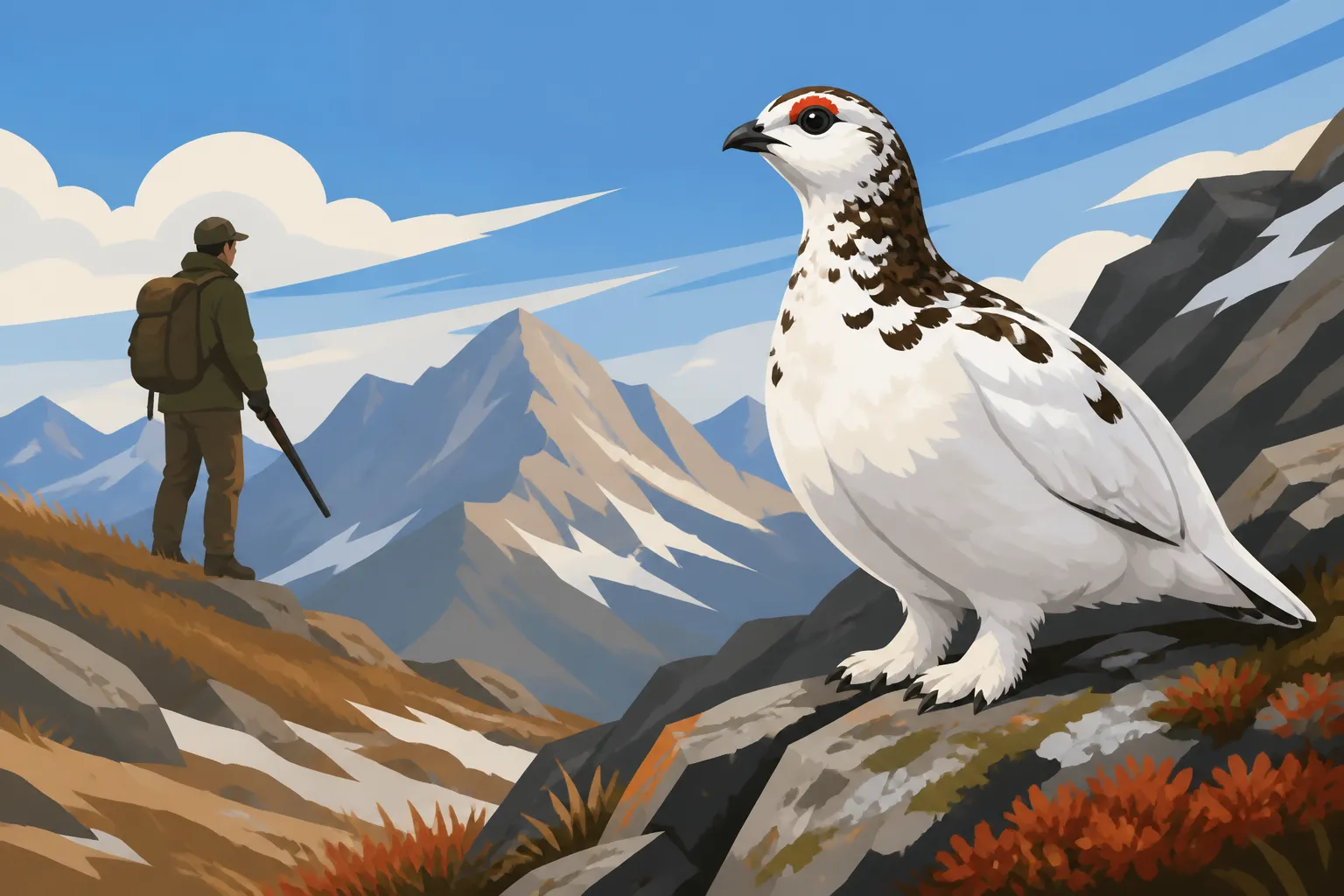
The Rock Ptarmigan prefers even higher, more exposed terrain than the Willow Ptarmigan. You'll typically find them on the barren, windswept slopes, scree fields, and rocky ridges far above any semblance of timber. Their plumage tends to be more grayish and barred in their summer and fall phases, perfectly mimicking the lichen-covered rocks and gravel they call home. These birds are incredibly hardy, accustomed to the harshest mountain conditions Alberta can throw at them.
When hunting Rock Ptarmigan, you're truly in the "high country." Expect to climb, to contend with loose rock, and to constantly scan vast, open expanses. They often hold tight to rocky outcrops, relying on their camouflage until you are almost on top of them, then bursting out with a rapid, powerful flight. Their call is generally harsher, almost a growl or a caw, distinct from the Willow Ptarmigan's cackle. Identifying the right kind of terrain – expansive, broken rock with sparse low growth – is key to locating these incredible birds.
White-tailed Ptarmigan
The White-tailed Ptarmigan is the smallest of the three species and often found at the highest elevations, venturing onto truly barren rocky slopes and alpine meadows well above the range of even Rock Ptarmigan. What sets them apart visually, besides their smaller size, is their pure white tail feathers year-round, which makes for a quick identification even when other species might be transitioning their plumage. Their summer and fall plumage is often a finer mix of greys and browns, blending perfectly with fine scree and alpine mosses.
These birds are arguably the most tenacious, inhabiting the most remote and challenging parts of Alberta's mountains. They are known for holding extremely tight, sometimes allowing you to almost step on them before flushing. Their flight is often short and low, as they prefer to quickly settle back into cover. Their call is a soft, almost kitten-like purr or chirp, much quieter than the other species. When you're truly pushing into the highest, most desolate parts of the mountains, think White-tailed Ptarmigan. This is where you might need to consult detailed topographical maps and satellite imagery using tools like GoHunt to identify those highest, most barren ridges and basins.
Here's a quick comparison of the three species:
| Feature | Willow Ptarmigan | Rock Ptarmigan | White-tailed Ptarmigan |
|---|---|---|---|
| Size | Largest | Medium | Smallest |
| Preferred Habitat | Lower alpine, dense willow thickets | Higher, exposed rocky ridges, scree fields | Highest, barren rock, sparse alpine meadows |
| Summer/Fall Plumage | More reddish-brown, heavily barred | Grayer, barred | Finer grey/brown speckling |
| Winter Plumage | Pure white | Pure white | Pure white |
| Tail Feathers | Dark, barred | Dark, barred | Pure white year-round |
| Call | Raucous cackle | Harsher caw/growl | Soft purr/chirp |
| Typical Elevation | Just above treeline, sheltered valleys | High exposed ridges | Highest, most desolate peaks |
Scouting and Accessing Ptarmigan Country
Finding these birds is one thing; getting to them is another. Alberta's mountain ranges are vast and rugged, and while ptarmigan are present, they're rarely just off the main road. Effective scouting and knowing your access options are paramount.
Identifying Productive Zones on Maps
Before you ever lace up your boots, your scouting begins at home with maps. Topographical maps are your best friend here. Look for areas above the defined treeline, typically marked by contour lines that indicate significant elevation gain. Focus on basins, alpine bowls, and gentle slopes that have a good mix of rocky ground and low-lying vegetation. South-facing slopes often get more sun and can hold more sparse vegetation, which might be a good starting point, but don't discount north-facing slopes with sheltered pockets. You're looking for that mosaic of rock, sparse willows, and open ground.
Tools like GoHunt are invaluable for this type of digital scouting. You can overlay different map layers, including satellite imagery, to get a bird's-eye view of the terrain. Look for changes in vegetation colour that indicate the treeline transition, identify scree fields, and pinpoint those isolated patches of stunted timber or willow thickets that could provide food and cover. Mark potential access points, game trails (if visible), and areas where you expect to find water, which can be critical on longer hunts. Identify potential bottlenecks or terrain features that might concentrate birds, like the top of a cirque or a saddle between two peaks.
Planning Your Approach and Access
Once you've identified potential zones, you need to plan your approach. Access to Alberta's mountain WMUs often involves significant hiking, sometimes requiring a multi-day backpacking trip. Some areas might have old logging roads or seismic lines that can get you part of the way in, but expect to leave vehicles far behind and go on foot. Consider the challenges of Hunting Alberta's Mountain WMUs and Their Access—these aren't casual strolls. You'll need to assess the total distance, elevation gain, and the ruggedness of the terrain.
For some areas, Backpacking Into Alberta's Bighorn Country will give you a taste of the kind of effort and preparation needed. Think about how you’ll get deep into the basins. Is it a long day trip or an overnight camp? How much gear will you need to carry? Be realistic about your physical fitness and the capabilities of your hunting party. Always have a backup plan for weather, and ensure someone knows your route and expected return time. Checking public land use zone (PLUZ) maps is essential to understand vehicle access rules and camping regulations in the specific areas you plan to hunt.
Looking for Signs in the Field
Once you're actually in ptarmigan country, you need to shift your focus to reading the ground. Ptarmigan leave subtle clues. Look for tracks in soft soil or snow, especially around water sources or feeding areas. Their droppings, small and dark, are another key indicator; fresh droppings suggest recent presence. The birds often "dust" themselves in dry, fine soil or gravel to clean their feathers, leaving shallow depressions.
Perhaps the most telling sign is the presence of chewed-on willow buds or other alpine vegetation. Ptarmigan are often found actively foraging, so if you see clear evidence of feeding activity, especially in an area with good cover, spend some extra time glassing. Listen for their distinctive calls—the cackle of a Willow Ptarmigan, the harsher caw of a Rock Ptarmigan, or the soft purr of a White-tailed Ptarmigan—which can pinpoint their general location, particularly if they are disturbed or communicating amongst themselves. A good pair of binoculars is indispensable for picking apart the vast alpine terrain and spotting these cryptic birds.
Best Times and Conditions for Ptarmigan Hunting
Timing is everything when it comes to ptarmigan. Their behavior, location, and even their camouflage change dramatically with the seasons, presenting unique opportunities and challenges.
Early Fall: Post-Molt and Scattered Flocks
Early fall, typically late August through September, sees ptarmigan actively feeding and preparing for winter. They've usually completed their summer molt and are sporting their mottled brown and grey plumage, which blends in perfectly with the changing colours of the alpine tundra. At this time, birds may be more dispersed as they forage, but can still be found in small family groups or loose coveys. This is often a great time to hunt, as the weather can be more predictable, though Hunting Alberta's September Archery Opener can still bring unexpected snow in the mountains.
The challenge in early fall is their superb camouflage. With less snow on the ground, they rely heavily on blending into the rocky, shrubby landscape. A good pointing dog can be a tremendous asset, helping to locate birds that would otherwise be walked past. Focus your efforts on areas with abundant food sources like berry patches and dense willow stands, particularly where these areas offer quick access to rocky cover. The birds might be slightly less wary than later in the season, but their ability to simply disappear into the landscape remains legendary.
Late Fall and Early Winter: Snow and Concentration
As colder weather descends and the first significant snowfalls arrive, usually from October into November, ptarmigan begin their spectacular transformation to their white winter plumage. This is often an excellent time to hunt, as the birds become more concentrated around reliable food sources and sheltered areas, and their white camouflage against patchy snow can make them surprisingly visible if you know what to look for. Witnessing the Ptarmigan Colour Change Through the Season is a real treat for any hunter.
The key here is adapting your strategy to the snow. Early snowfalls can make birds easier to spot if they haven't fully turned white yet. Conversely, a fresh, deep blanket of snow can make them almost impossible to see. They will utilize snowdrifts for cover and insulation, often burrowing into them. Look for tracks leading into snow-covered willows or around large boulders. Weather conditions become a major factor; Hunting Alberta Winter Weather Safely is not just a suggestion, it's a necessity. High winds and whiteout conditions can turn a pleasant hunt into a dangerous ordeal quickly, so always keep a close eye on the forecast and be prepared to turn back.
Essential Gear for Alpine Ptarmigan Hunting
Hunting ptarmigan is a physically demanding pursuit in a harsh environment. Having the right gear isn't just about comfort; it's about safety and success. Don't skimp on essentials when heading into the alpine.
Clothing and Footwear for Mountain Conditions
Your clothing system needs to be robust, adaptable, and capable of handling rapid weather shifts. Think layers, layers, layers. A good base layer to wick moisture, a mid-layer for insulation, and a durable, windproof, and waterproof outer shell are non-negotiable. Temperatures can swing wildly from below freezing to mild in a single day, and rain can quickly turn to snow. Forget cotton; synthetic or merino wool fabrics are your friends. A warm hat and gloves, even in early fall, are also critical.
Footwear is arguably the most important piece of gear. You need sturdy, waterproof hiking boots with excellent ankle support and a stiff sole that can handle steep, uneven, and rocky terrain. Blisters in the backcountry can ruin a hunt and even become a safety hazard. Ensure your boots are well broken in before your trip. Gaiters are also highly recommended to keep snow, scree, and moisture out of your boots, especially when you're traversing through wet alpine meadows or patches of snow.
Navigation and Safety Equipment
The alpine environment can be disorienting, especially in bad weather. A reliable GPS device, a compass, and a detailed topographical map are all non-negotiable. Don't rely solely on your phone; battery life is a constant concern in cold temperatures. Know how to use all your navigation tools. A satellite messenger or personal locator beacon (PLB) is a critical safety item, allowing you to call for help even without cell service.
Beyond navigation, a well-stocked first-aid kit, a headlamp with extra batteries, fire-starting materials, emergency shelter (like a bivy bag), and enough food and water for longer than you expect to be out are all crucial. Always carry more water than you think you'll need, or know where reliable water sources are and how to filter them. The high country is no place to be unprepared, and conditions can change in a flash.
Firearms, Ammunition, and Optics
For ptarmigan, a lightweight shotgun (20 gauge or 12 gauge) with light loads (7.5 or 8 shot) is generally preferred. The shots are often close, as the birds hold tight, so you don't need heavy loads. A .22 rifle can also be effective for headshots on birds that hold tight and allow a close approach, though a shotgun is generally more versatile for flushing birds. Always be mindful of your backdrop when shooting in open country.
Optics are critical for efficient ptarmigan hunting. A good pair of binoculars (10x or 12x magnification) will allow you to systematically scan vast areas without spooking birds. Even with their white camouflage against snow, ptarmigan are surprisingly difficult to spot without quality glass. If you're going for a multi-day trip or anticipate longer glassing sessions, a spotting scope might also be beneficial, but for most day hunts, binoculars are sufficient. Using tools like GoHunt to mark potential locations on your map as you glass can help you stay organized in the field.
Conservation and Ethical Hunting Practices for Ptarmigan
Hunting ptarmigan is a privilege that comes with the responsibility of ethical conduct and a commitment to conservation. These birds are a valuable part of Alberta's mountain ecosystem, and ensuring their populations thrive is up to all of us.
Understanding Seasons and Bag Limits
Before you even plan your trip, thoroughly review the current Alberta hunting regulations for upland birds. Pay close attention to the specific Wildlife Management Unit (WMU) you intend to hunt, as season dates and bag limits can vary. Ensure you have the appropriate Alberta Game Bird Seasons and Limits and provincial licenses. Ignorance of the law is never an excuse, and violating regulations can lead to significant penalties and harm conservation efforts.
Daily bag limits are in place to ensure sustainable harvesting. Respect these limits and avoid taking more birds than you need or are allowed. Ptarmigan populations, while generally robust in their remote habitat, can still be affected by over-harvesting in accessible areas. Always check for any specific restrictions or advisories related to particular WMUs or species of ptarmigan.
Respecting the Environment and Other Users
The alpine environment is fragile. Practice Leave No Trace principles: pack out everything you pack in, including spent shotgun shells. Avoid disturbing sensitive vegetation and stick to existing trails where possible. When traveling across scree slopes or alpine meadows, minimize your impact. Be mindful of water sources and avoid contaminating them.
You may encounter other users in the backcountry, including hikers, photographers, and other hunters. Be courteous and respectful. Give other parties ample space, especially if they are also hunting. Communication is key; a friendly wave or brief chat can prevent misunderstandings or safety issues. If you are hunting with a dog, ensure it is well-controlled and does not harass wildlife or other people. The mountains are a shared resource, and we all have a role to play in preserving their beauty and wildness.
Ethical Shot Placement and Game Recovery
As with any hunting, ethical shot placement is paramount. Aim for clean, quick kills to minimize suffering. When hunting ptarmigan, this means getting within effective range for your chosen firearm and waiting for a clear shot. Avoid taking long, risky shots that are more likely to wound than kill. Follow up on every bird you shoot, even if you think you missed, to ensure it is recovered. These birds are masters of hiding, even when wounded.
Once a bird is down, recover it quickly. Meat Care in Alberta's Cold and Warm Swings is important, even for small game. Field dress your birds promptly to cool the meat, especially if temperatures are mild, and protect them from scavengers. Carry them in a breathable game bag to allow air circulation. Taking care of your harvest not only respects the animal but also ensures you have high-quality meat to take home after your arduous hunt.
Disclaimer
This article is for general informational purposes only and does not constitute professional advice. Laws, prices and regulations vary by location and change over time. Consult a qualified professional for guidance on your specific situation.