Alberta’s Deer Herd Trend Over Ten Years
For any hunter who’s spent years watching the landscapes of Alberta, there’s one constant truth: nothing stays constant. Deer populations, whether it's the whitetail in your favourite aspen bluffs or the mule deer on those rolling prairie hills, are always in flux. It can be incredibly frustrating to feel like the deer numbers are down in your trusted hunting spot, or conversely, be thrilled when they seem to be everywhere. This guide will dive deep into the real factors that have shaped Alberta's deer herd trends over the last decade, helping you understand the complex dynamics at play.
The Natural Rhythms and Environmental Pressures on Deer Herds
Deer populations in Alberta aren't just sitting still; they're constantly ebbing and flowing, driven by a multitude of natural forces. It’s like watching the tide come in and go out, except with more variables at play. Understanding these natural rhythms is crucial to interpreting what you're seeing in the field, rather than just feeling like something is "off."
One of the biggest factors, year in and year out, is the weather. A series of mild winters can lead to booming populations, as more fawns survive, and adult deer enter the breeding season in prime condition. On the flip side, a few back-to-back brutal winters, especially with deep snow that persists, can decimate a herd. Imagine trying to paw through three feet of crusty snow for a mouthful of browse when you're already burning precious fat reserves just to stay warm. That's the reality for many deer, particularly the fawns and older animals, and it’s a huge contributor to Alberta's Winter Kill and Game Numbers. You might see a dip in deer sightings for a couple of years after a particularly harsh winter, and that’s often the residual effect.
Habitat, too, plays a colossal role. Alberta is a diverse province, from the vast boreal forests up north to the open prairies of the south, with parkland and foothills in between. Each of these zones offers different challenges and opportunities for deer. Changes in land use, natural wildfires, or even insect outbreaks that affect forest health can shift where deer find food and shelter. What might seem like fewer deer in one area could simply be them adapting to subtle (or not-so-subtle) changes in their local environment. Deer are incredibly resilient, but they are also opportunists, always seeking the best available conditions.
Major Factors Shaping Deer Population Trends
Beyond the basic environmental rhythms, several specific pressures have significantly impacted Alberta's deer herds over the past ten years. These aren't just minor nudges; they're often game-changers that wildlife biologists and hunters alike spend a lot of time thinking about.
Chronic Wasting Disease CWD
One of the most persistent and concerning threats to Alberta's deer population, particularly for White-Tailed Deer, Alberta's Most Hunted Big Game and Mule Deer in Alberta's Open Country, has been Chronic Wasting Disease (CWD). This neurological disease is always fatal and continues to spread across parts of the province, primarily in the southeastern and central regions. It's an insidious problem because it doesn't kill deer immediately; instead, it slowly degrades their health, making them more susceptible to other factors like predation, winter stress, or vehicle collisions.
The disease can lead to localized population declines, especially in areas with higher infection rates. While the overall provincial herd might seem stable, specific Wildlife Management Units (WMUs) that have been grappling with CWD for a longer period may show noticeable drops in deer numbers. Alberta's Fish and Wildlife has implemented mandatory CWD testing in certain WMUs to monitor its spread and impact, which provides valuable data on where the disease is most prevalent and how it's affecting local herds. This is why you often see reminders about Alberta's CWD Testing Requirements and submitting heads after a harvest.
Predator Pressure and Hunting Dynamics
Predation is a natural part of any ecosystem, and deer are certainly on the menu for a variety of Alberta's carnivores. Wolves in the boreal and foothills, and Coyote Hunting Alberta Farm Country across the agricultural zones, keep deer populations in check. Over the last decade, shifts in predator populations or distribution can have localized effects on deer numbers. For example, if wolf packs move into a new area or experience a period of high pup survival, you might see deer numbers dip in that specific locale for a few seasons.
Hunting pressure itself is another major factor, but it's typically a controlled one. Alberta's Fish and Wildlife uses hunting seasons, licence allocations, and WMU-specific rules to manage deer populations. When populations are robust, general seasons might be longer, or antlerless tags might be more abundant. Conversely, if a WMU's deer numbers are suffering, be it from harsh winters or CWD, regulations might tighten up with shorter seasons or fewer tags. This adaptive management aims to ensure sustainable populations for the long term.
Regional Variations in Deer Trends
It's a mistake to think of "Alberta's deer herd" as a single, monolithic entity. The province is vast, and what's happening to deer in the Peace River country might be entirely different from the trends down in the Milk River Ridge or over in the foothills. Each region faces its own unique set of environmental conditions, human pressures, and management challenges.
Prairie and Parkland Zones
In the southern and central prairie and parkland WMUs, deer often thrive in agricultural landscapes, finding abundant food in croplands and shelter in coulees, river bottoms, and aspen bluffs. Here, severe winters can be particularly devastating if deer can't access feed. Over the last decade, trends here have often been influenced by the intensity of farming practices and the extent of available cover. While whitetails can adapt well to these areas, mule deer might struggle more with habitat fragmentation. GoHunt's mapping tools can be really helpful here for identifying key habitat features even on private land, if you've secured permission.
CWD has also become a significant factor in some of these zones, with some areas experiencing sustained high infection rates that gradually wear down populations. However, deer in these regions can also rebound quickly from setbacks due to high reproductive potential when conditions are favorable.
Foothills and Boreal Forest Regions
Moving west into the foothills and north into the boreal forest, the landscape shifts dramatically. Here, deer face different challenges. Deep, persistent snow can be a major hurdle, especially for Moose Across Alberta's Boreal and Foothills. Habitat changes from logging, like How Logging Cutblocks Affect Alberta Deer, can initially create fantastic browse for deer, leading to temporary population surges in newly cut areas. However, as these areas mature, the habitat value might decrease, causing deer to shift. Similarly, seismic lines and pipeline rights-of-way, sometimes referred to as What Oil and Gas Cutlines Do to Game, can offer travel corridors and forage, but also expose deer to increased hunter access.
Predator populations, particularly wolves and bears, are more prevalent in these forested zones, playing a more pronounced role in population dynamics. When considering these areas, it's vital to remember that deer numbers are often tied to specific local pockets of good winter range, and those pockets can change over time.
Data and Management: How Trends Are Monitored
For us hunters, seeing deer out in the field is our primary indicator of population health. But behind the scenes, Alberta's wildlife managers are constantly collecting data to understand these trends on a much larger scale. It's a complex process that combines various methods to get a clearer picture of what's truly happening.
Monitoring Methods and Data Collection
Wildlife managers use a range of techniques to monitor deer populations. Aerial surveys are a common tool, especially in winter when deer stand out against the snow. These surveys help estimate overall population numbers and observe herd composition (how many fawns, does, and bucks). Another critical source of data comes directly from hunters. When you report your harvest or submit a deer head for CWD testing, that information feeds into a massive database. Details like the WMU of harvest, the age of the animal, and its general health provide valuable insights into local herd dynamics. This is why following all rules for Alberta Big Game Season Dates and reporting your harvest is so important.
Trail cameras, although used by hunters, also contribute to a collective understanding. While not official data, the sheer volume of trail camera photos shared online by the hunting community can sometimes offer anecdotal evidence of localized population shifts or changes in buck-to-doe ratios. Resources like GoHunt, which aggregates data and scouting tools, can help hunters use this information effectively for their own season planning.
Adaptive Management and Future Outlook
Based on all the collected data – from winter kill counts, CWD prevalence, harvest statistics, and aerial surveys – Alberta Fish and Wildlife continuously adjusts its management strategies. This is known as adaptive management: learning from the outcomes of previous decisions and making changes for the future. If a specific WMU shows a consistent decline in deer numbers, you might see reduced tag quotas, shorter seasons, or more restrictive antler point rules in subsequent years. Conversely, areas with thriving populations might see expanded opportunities.
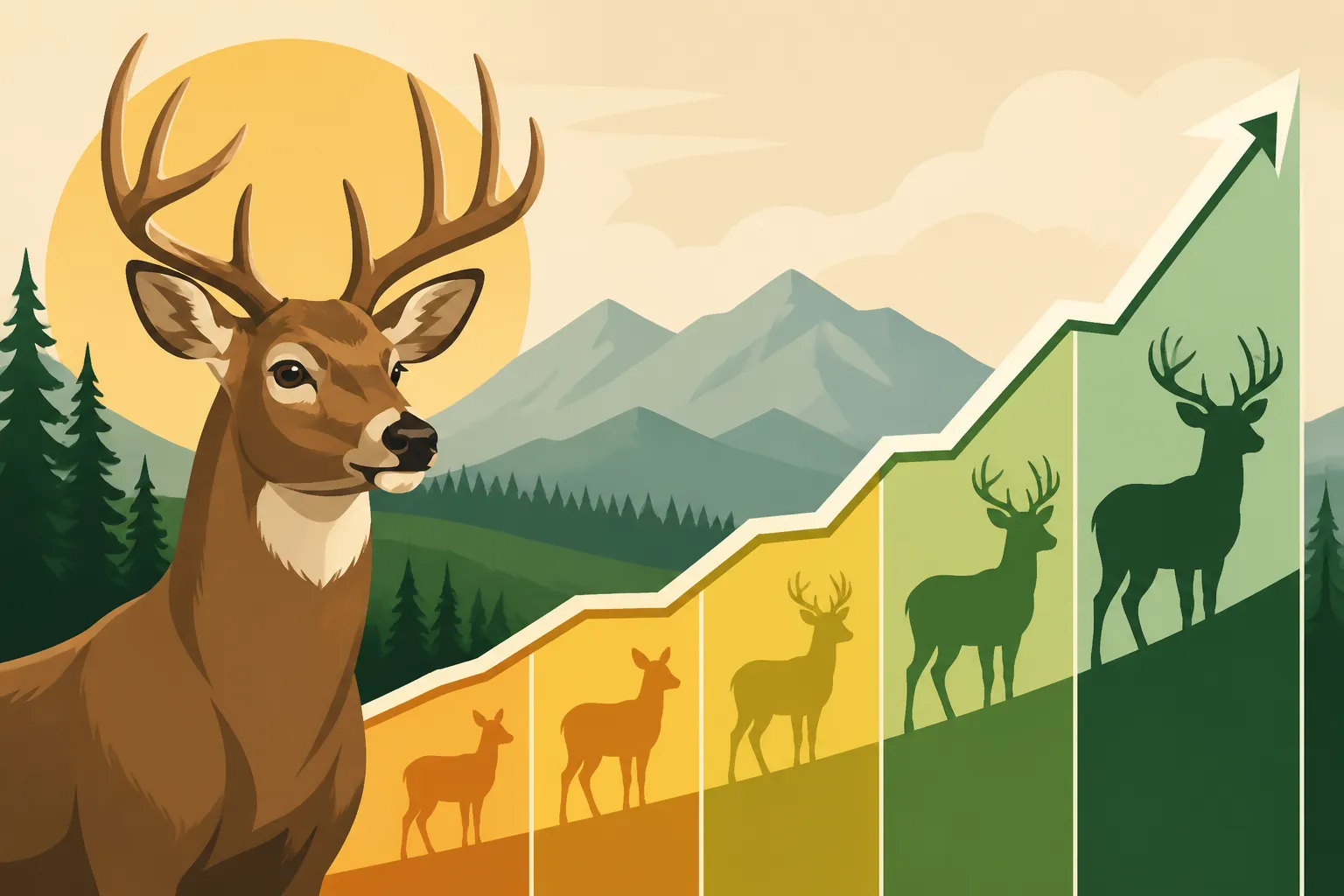
The ten-year trend for Alberta's deer herds is not a single, straight line. It's a fluctuating graph, influenced by nature's whims and human management efforts. While some areas have seen challenges from CWD and harsh winters, others have experienced periods of robust growth. The key takeaway for any hunter is that understanding these dynamics, staying informed about your specific Alberta's Wildlife Management Units, and contributing to data collection (even through mandatory reporting) helps ensure healthy deer populations for generations to come.
| Factor | Impact on Deer Herds (General Trend) | Notes & Considerations |
|---|---|---|
| Winter Severity | Significant impact; harsh winters can cause major mortality. | Deep snow and prolonged cold hit fawns and older deer hardest. |
| Chronic Wasting Disease | Localized declines, long-term health impact, slow herd reduction. | Affects whitetails and mule deer, monitored through mandatory testing. |
| Predator Pressure | Consistent, but localized effects; can be significant during fawning. | Wolves and coyotes are primary predators; impacts vary by region. |
| Habitat Changes | Altered food sources and cover; can create temporary boosts or declines. | Logging, agriculture, natural events (fires) all play a role. |
| Hunting Pressure | Managed to be sustainable; adjusts to herd health. | Regulations (tags, seasons) are adapted to population data. |
| Disease Outbreaks (Other) | Potential for localized impact, usually less widespread than CWD. | Less common, but can include EHD or other pathogens. |
Disclaimer
This article is for general informational purposes only and does not constitute professional advice. Laws, prices and regulations vary by location and change over time. Consult a qualified professional for guidance on your specific situation.