Hunting the Red Deer River Badlands
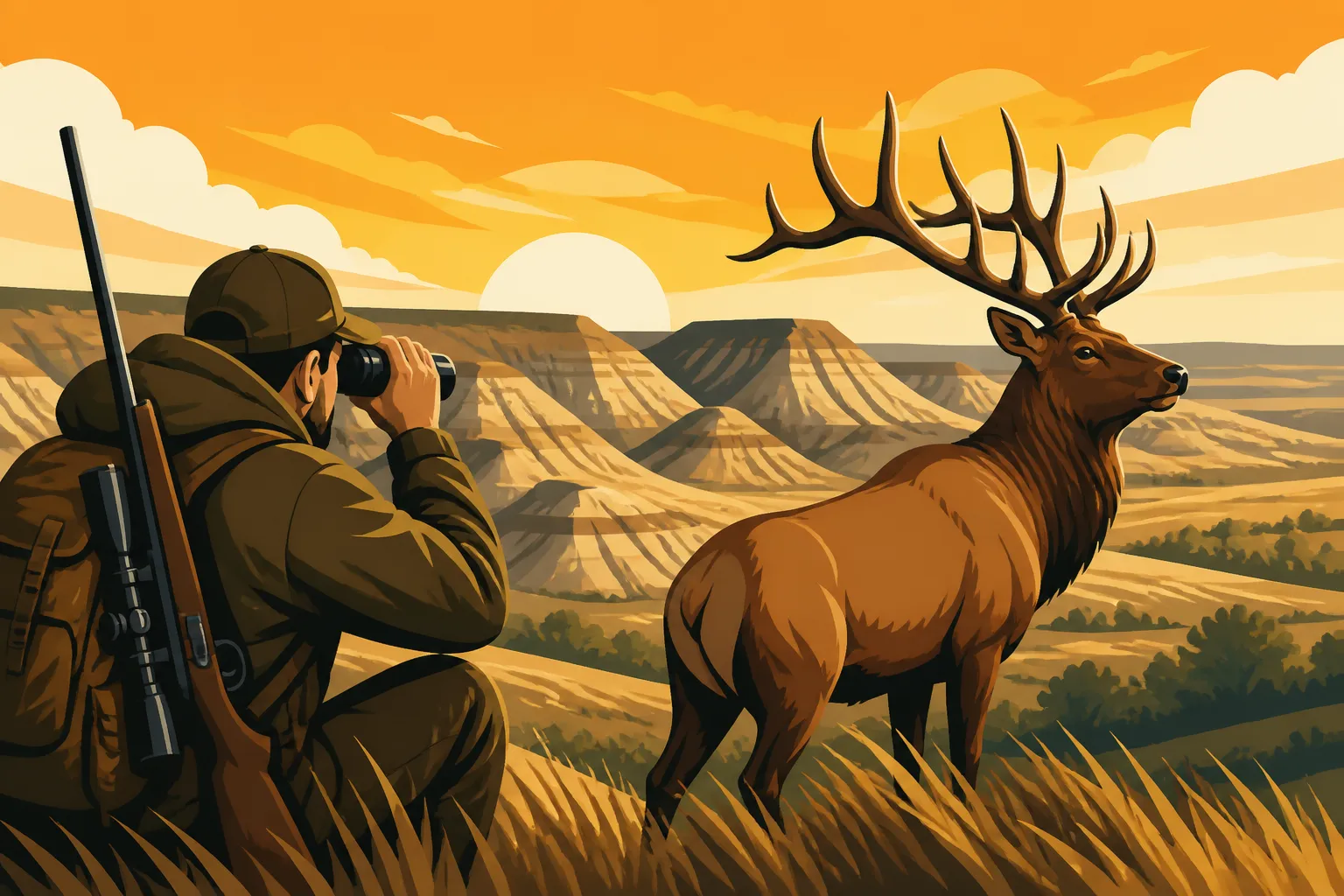
The Red Deer River Badlands present a hunting landscape unlike almost any other in Alberta. Its stark beauty can be deceiving, as the deeply eroded coulees, hoodoos, and winding river bottom create an incredibly challenging yet rewarding environment for hunters. This guide aims to peel back the layers of this unique terrain, offering insights into its game, access, and the strategies you'll need to successfully hunt this iconic Alberta region.
What Makes the Red Deer River Badlands Unique for Hunting?
The Red Deer River Badlands are a geological marvel, but for hunters, they represent a specific set of challenges and opportunities. This isn't your typical bush hunting or open prairie experience; it's a world defined by its contours, its exposed nature, and the surprising pockets of life it supports. Understanding this unique character is the first step to hunting it effectively.
The Geography of the Badlands: Coulees, Hoodoos, and the River
Imagine a landscape sculpted by millennia of water and wind, creating a labyrinth of steep-sided coulees, sharp ridges, and sandstone formations known as hoodoos. This is the heart of the Red Deer River Badlands. The main Red Deer River carves a wide, often tree-lined valley through this broken country, acting as a lifeline for much of the wildlife. Away from the river, the land quickly transforms into a harsh, exposed environment of clay, shale, and sparse vegetation. Traversing this terrain is physically demanding; footing can be loose, climbs are often steep, and distances, while seemingly short on a map, are deceptive due to the constant up and down. This broken ground dictates how game moves, where they bed, and how a hunter must approach them. You're constantly searching for those hidden folds in the landscape, those draws that offer a sliver of cover or a path of least resistance for both you and the animals.
The sheer scale of the badlands can be overwhelming at first glance. From a high vantage point, it looks like an endless maze of cuts and contours. But within this chaos, there's a pattern, an order that animals use to their advantage. They travel the bottoms of the coulees, utilize the benches and terraces for bedding, and cross the exposed ridges quickly. Understanding these natural movement corridors is paramount. The river itself is a crucial feature, providing water and cover that isn't found anywhere else in the immediate vicinity, making its banks and associated riparian zones prime hunting grounds, especially during dry spells.
Wildlife Adaptation to This Harsh Landscape
The animals that call the Red Deer River Badlands home are masters of this challenging environment. They are hardy, accustomed to the extremes of weather, and incredibly adept at using the terrain for survival. Mule deer, for instance, are perfectly designed for this country. Their large ears help them pick up distant sounds in the open, and their bounding gait allows them to navigate steep, broken ground with ease. They'll often bed high on a leeward slope, where they can watch their backtrail and the prevailing wind for any threats, or tuck themselves into a small pocket of shade or cover that seems invisible from above.
Whitetail deer, while often associated with heavier cover, also thrive along the Red Deer River. They prefer the denser brush, the stands of cottonwoods and willows that line the riverbanks and extend up into the wider, more timbered draws. These river bottoms provide food, water, and security from predators and the elements. You'll find their tracks and rubs hidden away in these green strips, often just meters from the exposed badlands above. Even smaller game like Hungarian partridge and sharp-tailed grouse find ways to exist, utilizing the sparse shrubs, grass patches, and pockets of water within the coulees, making them a surprising but rewarding target if you know where to look.
Key Species to Target in the Badlands
While the Red Deer River Badlands might seem barren to the uninitiated, they are home to several exciting game species. Knowing what to look for and where to find them is the key to a successful hunt in this unique habitat. The terrain dictates much of their behaviour, offering different challenges and opportunities depending on your target.
Mule Deer: The Badlands Icon
When most hunters think of the Red Deer River Badlands, they think of mule deer. This is truly their kingdom. These magnificent deer are perfectly adapted to the wide-open, broken country. You'll find them using the coulees for cover, bedding on benches with excellent visibility, and traversing the steep slopes with an agility that will impress any hunter. Spotting a mule deer in this landscape often means glassing huge swaths of country, looking for an ear, a patch of hide, or the tell-tale horizontal line of a deer bedded in sparse cover. They often blend in incredibly well, making keen eyesight and patience your most valuable assets. Glassing an Alberta Coulee for Mule Deer is an art form here, requiring powerful optics and a methodical approach.
Hunting mule deer in the badlands often involves extensive glassing from high vantage points, identifying a buck, and then planning an intricate stalk. The wind is critical in this open country, as thermal currents can shift dramatically in the coulees. You might spot a buck a mile away, but getting within range requires navigating steep terrain, avoiding exposure, and staying downwind. Their keen senses mean that a careless move, a glint of sun off a scope, or a sudden shift in wind can send them bounding away over the next ridge, seemingly disappearing into thin air. Patience and persistence are rewarded handsomely when you finally close the distance on one of these elusive badlands bucks. For more insights, check out Mule Deer Hunting Alberta's Prairie and Badlands.
Whitetail Deer Along the River Bottoms
While mule deer dominate the exposed badlands, whitetail deer are frequently found thriving in the denser cover along the Red Deer River itself and in the larger, more vegetated coulees feeding into it. These areas provide the thickets, tall grasses, and abundant water sources that whitetails prefer. Hunting whitetails here is a different game than hunting mule deer. Instead of wide-open glassing, you'll often be focusing on smaller, more concealed pockets of cover, looking for trails, rubs, and scrapes that indicate their presence. The river bottom acts as a natural corridor, and deer will often travel along its edges, ducking into the safety of the trees. Hunting a River Valley Bottom in Alberta requires a stealthier, more close-quarters approach.
You might find whitetails using the same access points to water as mule deer, but they'll often retreat deeper into the willows and cottonwoods at the slightest sign of disturbance. During the colder months, these riverine habitats offer crucial thermal cover, making them attractive to deer seeking refuge from the biting prairie winds. This proximity of two distinct deer species, each utilizing different aspects of the same larger landscape, adds an exciting layer to hunting the Red Deer River Badlands. It means you need to be prepared for both long-range spotting and close-quarters still-hunting or stand hunting, depending on the specific pocket of habitat you're in.
Predators and Upland Birds
Beyond the deer, the Red Deer River Badlands are also excellent grounds for predator hunting, particularly coyotes. The open terrain makes it ideal for calling, as your calls can carry far, and you often have excellent visibility for incoming predators. Coyotes here are tough and smart, constantly on the move, scavenging and hunting the abundant small game. The broken coulees provide perfect ambush points and travel routes for them, and they are quick to respond to distress calls or howls. Coyote Hunting Alberta Farm Country, while different in terms of specific cover, shares many calling principles that apply here.
For those who enjoy upland bird hunting, don't overlook the badlands. While not as dense as some agricultural areas, you can find Hungarian partridge and sharp-tailed grouse in surprising numbers, especially where there are pockets of native grassland, rose bushes, or thicker cover near water sources within the coulees. Walking the edges of these patches, particularly in the cooler morning or late afternoon, can flush coveys of Huns or single grouse. They offer a fast-paced, exciting hunt and are a fantastic way to fill a small game tag while waiting for a deer opportunity. Remember to always carry non-toxic shot for birds if there's any chance of encountering migratory species. Hunting Hungarian Partridge on Alberta Farms can give you an idea of their behavior, which translates well to the badlands' similar food sources.
| Species | Primary Badlands Habitat | Hunting Strategy | Key Challenge |
|---|---|---|---|
| Mule Deer | Exposed coulees, benches, high ridges, sparse vegetation | Extensive glassing from high points, long-range spotting, methodical stalks | Blending in, keen senses, difficult terrain for stalking |
| Whitetail Deer | River bottoms, thick riparian zones, larger vegetated draws | Still-hunting thickets, tracking, stand/blind hunting pinch points along the river | Dense cover, quick to spook, thermal winds in draws |
| Coyote | Open coulees, ridges, draws, anywhere small game gathers | Calling (distress calls, howls), long-range shooting, patience | Wary animals, good eyesight, wind shifts |
| Hungarian Partridge | Native grassland patches, rose bushes, edges of fields within coulees | Walking up coveys, working edges of cover with a flushing dog, quick shooting | Small target, fast flight, hard to hold points |
Navigating Access and Terrain Challenges
Hunting the Red Deer River Badlands isn't just about finding game; it's equally about mastering the landscape itself. From understanding where you can legally hunt to physically traversing the demanding terrain, preparation is key to a safe and successful trip.
Understanding Land Ownership: Crown vs. Private, and Permissions
One of the biggest hurdles in hunting the Red Deer River Badlands is navigating land ownership. This region is a checkerboard of Crown land, private agricultural land, and leased land. While there are significant tracts of public Crown land, much of the river breaks and surrounding areas are privately owned or managed under grazing leases. It's absolutely critical to know precisely where you are at all times. Trespassing, even accidentally, can ruin a hunt and land you in legal trouble. Tools like onX Hunt are invaluable here, as they overlay property boundaries, public land, and even land ownership details onto satellite imagery. This allows you to verify your location in real-time and plan your routes to stay within legal hunting areas. Using Alberta's Recreational Access Mapping Tool can also provide official information.
Even on Crown land, access can be tricky. Some areas might be landlocked by private property, requiring you to seek permission from landowners just to cross their land to reach public hunting ground. Always carry current maps, and consider scouting during the off-season to identify clear access points. If you plan to hunt private land, always, always obtain permission before you go. Knock on doors, be polite, and offer to share some of your harvest. Many landowners are receptive to respectful hunters, especially those willing to help manage problematic wildlife populations. Knowing Asking an Alberta Landowner for Permission can make all the difference.
Physical Demands of Badlands Hunting
Let's be blunt: hunting the Red Deer River Badlands is physically demanding. This isn't a stroll through flat timber. You'll be climbing steep, often loose, shale and clay slopes, descending into deep coulees, and navigating uneven, broken ground for miles. The constant elevation changes will test your endurance, and the footing can be treacherous, especially when wet or covered in frost. Carrying a pack, rifle, and potentially game meat out of a steep coulee requires significant physical conditioning and mental grit.
It's not uncommon to gain and lose hundreds of feet in elevation multiple times in a single day. Your knees, ankles, and lungs will feel it. Proper footwear is non-negotiable—think sturdy boots with excellent ankle support and aggressive tread. Hydration is also paramount, even in cooler weather, as the physical exertion and dry air can quickly lead to dehydration. Always carry more water than you think you'll need, along with high-energy snacks. Training with weighted hikes before your trip can make a huge difference in your enjoyment and success.
Using Technology for Navigation and Scouting
In a landscape as complex as the Red Deer River Badlands, technology becomes an indispensable hunting partner. GPS devices and smartphone apps are vital for navigation, especially when the terrain itself provides few obvious landmarks. Using an app like onX Hunt or GoHunt allows you to drop pins on potential hunting spots, mark game sightings, identify water sources, and, most importantly, confirm land ownership. These tools often include detailed topographic maps and satellite imagery, letting you visualize the terrain and plan your approach to a coulee or a ridge from the comfort of your home. Scouting With Satellite Imagery in Alberta is particularly effective here, allowing you to identify bedding areas, travel corridors, and potential glassing points before you ever set foot on the ground.
Beyond real-time navigation, these platforms are fantastic for pre-season scouting. You can spend hours studying the contours, identifying pinch points, and marking areas where cover and water intersect. This "e-scouting" is crucial for maximizing your limited time in the field. When you're standing on a ridge looking out over miles of broken country, having a pre-planned route or knowing where the property lines fall can save you immense time and effort. Always carry a physical map and compass as a backup, because batteries die and signals drop, especially in remote areas.
Essential Strategies for Success
Hunting the Red Deer River Badlands is a masterclass in observation, patience, and meticulous planning. It requires a different skillset than hunting dense timber or flat fields, one that emphasizes long-range tactics and careful movement.
The Art of Glassing
In the wide-open expanse of the badlands, your optics are your most important tools. Effective glassing is absolutely essential for locating game. You're not just scanning; you're systematically picking apart the landscape, looking for anything that seems out of place – a horizontal line in a vertical world, a patch of hide that doesn't quite match the dirt, or the flicker of an ear. A good pair of binoculars (10x or 12x magnification) and a spotting scope (20-60x or higher) mounted on a sturdy tripod are indispensable. Find a high vantage point that allows you to see into multiple coulees and across distant ridges. This elevated position is your command center.
Set up your spotting scope and slowly, methodically, grid out the landscape. Start with the areas of highest probability: shaded slopes where deer might bed during the day, pockets of cover near water, or natural travel corridors. Pay close attention to the small details. What looks like a rock at first glance might resolve into a deer’s rump or a set of antlers if you give it enough time and a closer look. Glass for 15-20 minutes, then take a break and let your eyes reset. Sometimes, just changing your angle slightly or waiting for the light to shift can reveal an animal you previously overlooked. Patience is key; often, the deer you're looking for will reveal themselves by moving slightly, stretching, or repositioning. Hunting a Prairie Coulee Bottom or Stalking Mule Deer in Badlands Breaks will often start with this critical first step.
Mastering the Stalk
Once you've spotted your target, the real challenge begins: the stalk. This is where the badlands terrain becomes both your enemy and your friend. The broken country offers an abundance of folds, draws, and ridges that can be used for cover, but it also means you'll be dealing with steep climbs, loose footing, and constant wind shifts. Planning your approach requires careful consideration of the wind direction, the terrain between you and the animal, and potential escape routes for the game. Always use the terrain to your advantage, staying below ridge lines, using the bottom of coulees, and moving slowly and deliberately.
Wind is a critical factor in the badlands. Thermals often drop into the coulees in the morning and rise out of them in the afternoon, creating unpredictable swirling patterns. Always try to approach from downwind, or at least crosswind, to prevent your scent from spooking the animal. Movement must be slow and deliberate, especially when you're nearing your target. Each step should be placed carefully, testing the ground for loose rock or noisy debris. Use natural cover like brush, low rises, or even hoodoo formations to break up your silhouette. The goal is to move like a shadow, taking advantage of every bit of concealment the landscape offers, until you are within ethical shooting range.
Gear Up for the Badlands
Your gear choices can significantly impact your success and safety in the Red Deer River Badlands. Given the demanding nature of the terrain and the potential for long distances, lightweight, durable, and functional equipment is paramount.
- Footwear: This is perhaps your most important piece of gear. Invest in high-quality, ankle-supporting hiking boots with stiff soles and aggressive tread. The loose shale and steep inclines will quickly expose weaknesses in lesser boots. Waterproofing is a bonus, especially if you're crossing creek bottoms or hunting in early spring/late fall.
- Optics: As mentioned, a good pair of binoculars (10x-12x) and a spotting scope on a tripod are essential for glassing. Don't skimp here; quality optics will make a world of difference in locating game.
- Backpack: A comfortable daypack is needed to carry essentials: water, snacks, extra layers, first-aid kit, game bags, and navigation tools. If you plan to pack out meat, consider a pack with a strong external frame or one designed to carry heavy loads.
- Clothing: Layers are key. The badlands can experience significant temperature swings between morning and midday, and winds can be fierce. Breathable base layers, insulating mid-layers, and a windproof/waterproof outer shell will keep you comfortable. Blaze orange is often required during general seasons; ensure your outer layer complies.
- Navigation: GPS device or a smartphone with a reliable hunting app (like onX Hunt or GoHunt) loaded with offline maps. Always carry a physical map (e.g., Reading an Alberta WMU Map Before You Go) and compass as a backup.
- Water: Carry plenty of water. A hydration bladder in your pack is excellent, supplemented with extra bottles. Consider a water filter or purification tablets for emergencies if you're near the river.
- Trekking Poles: These can be a lifesaver on steep ascents and descents, providing stability and reducing strain on your knees and ankles.
- First-Aid Kit: Essential for any backcountry hunting, especially in remote, rugged terrain. Include blister treatment, pain relievers, and supplies for minor cuts and scrapes.
- Game Care: Knife, sharpening stone, game bags, and perhaps even a small tarp for meat processing are crucial, especially if you're hunting in warmer early season conditions. Meat Care in Alberta's Cold and Warm Swings provides good advice.
The Red Deer River Badlands offer a truly unique and deeply satisfying hunting experience for those willing to embrace its challenges. With the right preparation, knowledge, and respect for the land, you can unlock the secrets of this remarkable Alberta hunting ground.
Disclaimer
This article is for general informational purposes only and does not constitute professional advice. Laws, prices and regulations vary by location and change over time. Consult a qualified professional for guidance on your specific situation.