Red Flags in an Outfitter’s Website
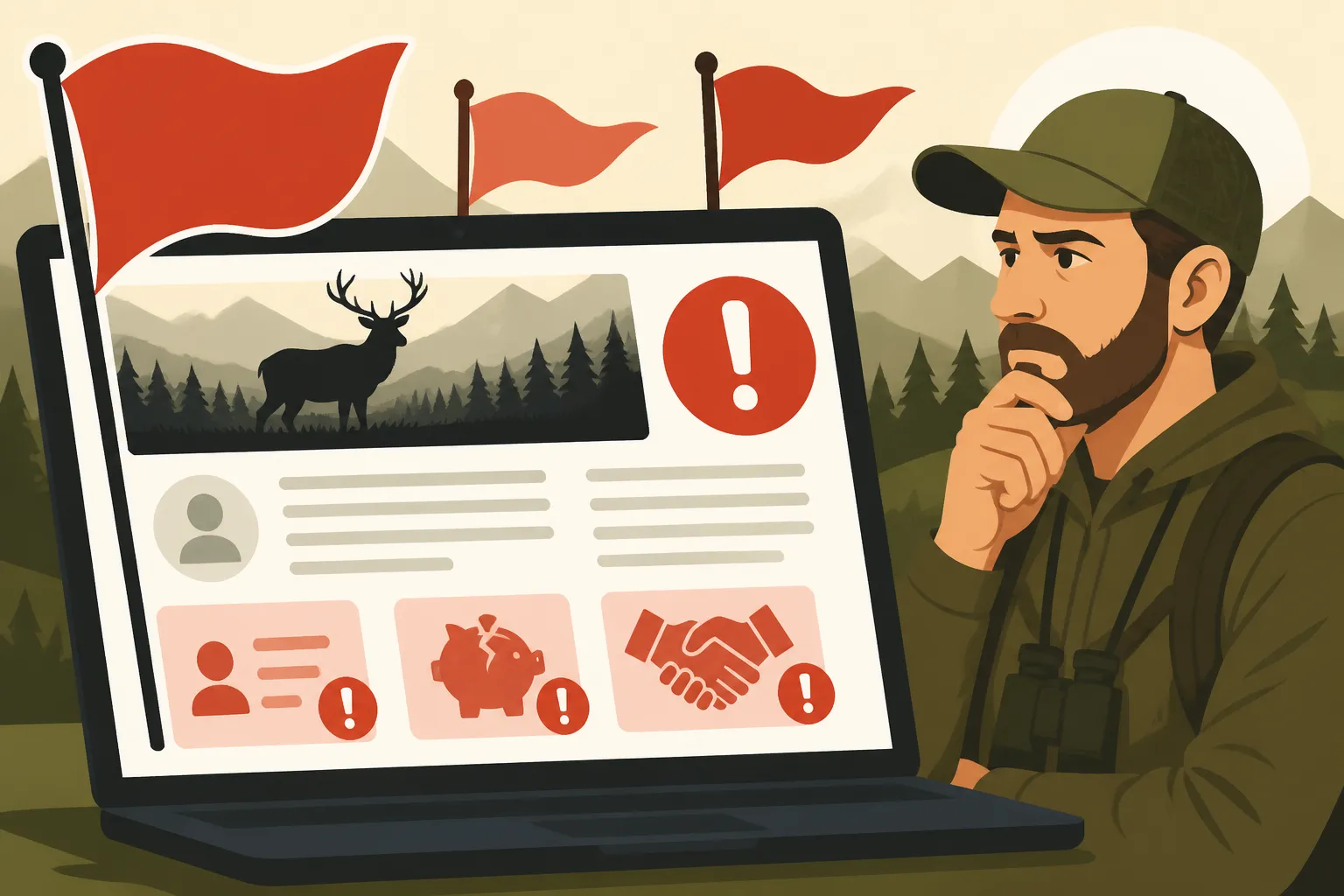
Booking an Alberta hunting adventure is an exciting prospect, full of anticipation for incredible landscapes and world-class game. But let's be honest, the digital age has made finding outfitters easier than ever, and with that convenience comes the challenge of sifting through countless options. It can be incredibly frustrating to spend hours researching, dreaming of that perfect hunt, only to stumble upon a website that feels… off. You know the feeling: that little voice in the back of your head whispering, "Is this legit?" This guide is here to help you recognize those crucial "red flags" on an outfitter's website, so you can book with confidence and avoid potential disappointment.
The Lure of the Perfect Hunt and What Can Go Wrong
When you're looking at outfitter websites, it's easy to get swept away by glossy photos and promises of dream hunts. Every hunter wants a successful trip, but sometimes, those promises can stray into the realm of fantasy. It’s vital to approach these sites with a healthy dose of realism and skepticism, especially when things seem almost too good to be true. A reputable outfitter will always manage your expectations rather than inflate them.
Too Good to Be True Promises
One of the biggest red flags you'll encounter is an outfitter making unrealistic claims. We're talking about guarantees of "100% success on Boone & Crockett animals" or "the biggest deer you've ever seen, no matter what." While Alberta certainly has world-class game, hunting is never a guarantee. There are too many variables: weather, animal movement, hunter skill, and plain old luck. An outfitter who promises guaranteed success on monster trophies is either misleading you or operating unethically, potentially cutting corners to make those promises come true.
Think about it from a practical standpoint: if every client truly bagged a record-book animal every season, those hunts would be booked solid years in advance and command astronomical prices. Reputable outfitters will speak of high success rates, based on genuine past performance and opportunities, but they'll always stress that it's hunting, not shopping. They understand the challenge and the ethics involved. If a price seems exceptionally low for what's being offered, especially for a prime Alberta big game species like elk or moose, that should also raise an eyebrow. Quality hunts, with experienced guides, good equipment, and access to prime land, simply cost what they cost. There are no real shortcuts to a high-quality experience.
Lack of Specificity in Hunt Details
Another major concern is when an outfitter's website is vague about the actual hunt details. You might see beautiful pictures of majestic Alberta landscapes, but then realize there's no mention of specific Wildlife Management Units (WMUs) where the hunting takes place. Are they hunting the foothills, the boreal forest, or the prairie? Are they focused on Whitetail Hunting in Alberta or Mule Deer Hunting Alberta's Prairie and Badlands? This information is crucial for you to understand the type of terrain, the species concentration, and even the general weather you might encounter.
Beyond location, look for specific details about the hunt itself. What methods are used – spot-and-stalk, still-hunting, calling, or stand hunting? What kind of accommodations are included? Is it a lodge hunt, wall tents, or spike camps? What about transportation during the hunt (trucks, quads, horses)? If the website just says "guided hunt in Alberta," without delving into these specifics, it leaves too much to the imagination and too many opportunities for miscommunication once you arrive. A professional outfitter wants you to be well-informed and will lay out the itinerary and logistics clearly. They should be proud to share the details of their operation.
Website Clues and Communication Hiccups
In today's digital world, an outfitter's website is their storefront. It's the first impression, and it should reflect their professionalism and attention to detail. Just like a physical store, if the windows are dirty and the shelves are empty, it's a sign that something might not be quite right. Pay close attention to the overall presentation and, even more critically, how they communicate with you.
Outdated Information and Poor Presentation
A poorly maintained website is a significant red flag. Are the photos ancient, clearly from a decade or more ago? Do you see copyright dates in the footer that are several years old? Are there broken links or pages that lead nowhere? This suggests a lack of attention to their online presence, which could extend to their operation in the field. Up-to-date photos and videos showcasing recent hunts are important. We're not talking about needing a Hollywood production, but current, clear imagery showing real hunters and real animals is essential.
Beyond aesthetics, check for outdated season dates, licence requirements, or regulations. Alberta Big Game Season Dates and Alberta Game Bird Seasons and Limits change from time to time, and an outfitter's site should reflect the current information. If you see references to old permit systems or rules that have clearly changed, it’s a sign that they might not be on top of the latest provincial requirements. Similarly, generic stock photos of animals that don't even look like they came from Alberta are a huge red flag; it suggests they don't have enough genuine content from their own hunts.
Evasive or Slow Communication
Once you reach out to an outfitter, pay very close attention to their communication style and responsiveness. A significant red flag is slow, inconsistent, or outright evasive communication. If it takes days or even weeks to get a reply to a simple email, imagine how challenging it might be to get answers to critical questions about your hunt or to resolve any issues. Even worse is when you ask specific questions, and the answers are vague, don't directly address your concerns, or try to pivot to a different topic.
High-pressure sales tactics are another warning sign. If an outfitter pushes you to book immediately, claiming "only one spot left!" or offering a steep discount only if you commit today, be wary. Reputable outfitters understand that booking a hunt is a significant investment and requires careful consideration. They should be willing to provide all the information you need and give you time to make an informed decision without undue pressure. Platforms like BookYourHunt often provide a structured way to communicate and compare outfitters, which can help in avoiding these kinds of pitfalls.
Unverifiable Claims and Missing Credentials
Any outfitter operating in Alberta is required to be licensed. A huge red flag is a website that makes grand claims about its operation but provides absolutely no verifiable credentials. They should proudly display their provincial outfitter license number or at least state that they are fully licensed and insured. Furthermore, look for affiliations with professional hunting associations. While not mandatory, membership in organizations like the Alberta Professional Outfitters Society (APOS) or the Wild Sheep Foundation shows a commitment to industry standards and ethics.
When an outfitter talks about their experience, they should be able to back it up. If they claim decades of experience, but their photos are all recent, or they don't list specific WMUs where they operate regularly, that raises questions. Reputable outfitters will be transparent about their operation, their guides' experience, and their compliance with all local regulations. You want to know they are operating legally and professionally, especially given Alberta's specific rules for non-residents and the Rules for Non-Residents Hunting Alberta. Tools like GoHunt often feature vetted outfitters, providing an extra layer of confidence.
Contractual Concerns and Financial Red Flags
Money matters are where things can go really sideways if you're not careful. A solid contract and transparent financial dealings are the backbone of any trustworthy business relationship, especially when you're investing a significant sum in a hunting trip. Don't let the excitement of the hunt overshadow your need for clear terms.
Vague or Non-Existent Contracts
A non-existent or vague contract is a colossal red flag. Every reputable outfitter will provide a detailed, written contract outlining every aspect of your hunt. This document should clearly state the dates of the hunt, the species you're pursuing, the specific services included (e.g., meals, lodging, guide service, field transportation, trophy care), and what is not included (e.g., licences, tags, taxidermy, meat processing, gratuities, CWD testing fees). It should also clearly detail the payment schedule, cancellation policy, and refund terms.
Imagine showing up for a Booking an Alberta Mule Deer Hunt or a Booking an Alberta Moose Hunt with just a handshake or a few emails. What happens if there's a disagreement about services, or if you need to cancel due to an emergency? Without a clear contract, you have very little recourse. A detailed contract protects both you and the outfitter by setting clear expectations. If an outfitter tries to brush off the need for a written agreement, or offers a contract that's full of loopholes and ambiguous language, run in the other direction.
Unusual Payment Demands
How an outfitter requests payment can also be a significant red flag. While many outfitters require a deposit to secure your booking, be wary of requests for large upfront sums paid solely in cash, or transfers to a personal bank account rather than a business account. Legitimate businesses use professional payment methods, whether it's credit card processing, certified cheques, or wire transfers to a clearly designated business account. These methods offer a paper trail and often some level of consumer protection.
If an outfitter demands full payment many months in advance without a detailed, clear cancellation policy, or avoids using standard booking platforms that provide secure transactions (like those found on BookYourHunt), proceed with extreme caution. This kind of behavior can indicate an unstable business, or worse, a scam. Always ensure your payments are traceable and that you understand the terms for refunds or rescheduling. Don't be afraid to ask specific questions about payment security and what happens to your deposit if circumstances change.
Hidden Fees and Unexpected Costs
A common frustration for hunters is getting hit with unexpected costs once they arrive at camp. A reputable outfitter will make it very clear what is and isn't included in their package price right on their website or in their initial communication. Red flags appear when a website or initial quote seems attractively priced, but then you dig a little deeper or receive a contract that starts adding on a laundry list of "extras." These might include things like transportation from the nearest airport, trophy fees, field preparation for taxidermy, basic meat care, or even charges for things that most hunters assume are standard, like non-alcoholic beverages or camp snacks.
For instance, the cost of your Alberta Hunting Licences and What They Cost and specific tags like an Alberta Resident Deer Licence Cost or What an Elk Licence Costs are almost universally not included in an outfitter's package price, and this should be clearly stated. Other common exclusions include travel insurance, taxidermy services, or shipping your trophy home. A transparent outfitter will provide a comprehensive list of what's included and a separate list of potential additional costs, allowing you to budget accurately. If you have to pull teeth to get this information, or if they keep "remembering" new fees, that's a problem.
Reputation and Reference Checks
Even with a slick website and professional-looking communication, an outfitter's reputation is everything. In the hunting community, word travels fast, both good and bad. Before you commit your hard-earned money and precious vacation time, you need to do your due diligence and dig into what other hunters have to say. This is where How to Vet an Alberta Outfitter really comes into play.
Lack of Client Testimonials or References
One of the easiest red flags to spot is a complete absence of client testimonials or, if they have them, a lack of contactable references. A successful outfitter will have a roster of happy clients willing to share their experiences. If their website has zero testimonials, or only a couple of very generic ones from "John D." with no location or date, that's a warning sign. It suggests they either don't have many satisfied customers or they're trying to hide something.
Even better than a written testimonial is the offer to connect you directly with past clients. When you ask for references, a good outfitter should provide several names and contact details (with the clients' permission, of course). Being able to speak with someone who has actually hunted with them allows you to ask detailed Questions to Ask Before Booking, discuss their honest experience, and verify the outfitter's claims. If an outfitter hesitates or refuses to provide references, it's a massive red flag.
Generic or Suspicious Reviews
In today's online world, reviews are everywhere, but not all reviews are created equal. Be wary of websites that only have uniformly glowing, perfect five-star reviews, especially if they are all very short, lack specific details about the hunt or guide, and sound almost identical. These can be fabricated. Conversely, a complete lack of any online presence outside their own website – no social media mentions, no forum discussions, no reviews on independent platforms – can also be a red flag. It's hard to be truly invisible in this day and age unless you're very new or actively trying to avoid scrutiny.
Look for reviews on third-party sites like Google, Facebook, hunting forums, or specialized booking platforms. What do they say? Are there consistent themes, good or bad? How does the outfitter respond to negative feedback, if any? A truly transparent outfitter might have a few less-than-perfect reviews, but their responses to criticism and their overall pattern of reviews should still lean positive and show a commitment to customer satisfaction. Remember to read between the lines and consider the source of the review.
Industry Connections and Associations
While not directly on an outfitter's website, their connection to established industry associations is a strong indicator of legitimacy. As mentioned before, if they claim to be licensed or affiliated with organizations like the Alberta Professional Outfitters Society, it's a good idea to cross-reference this information. Most reputable associations have a directory of their members. If an outfitter claims membership but isn't listed, that's a huge red flag.
These associations often have codes of conduct, ethical guidelines, and dispute resolution processes. An outfitter who chooses to be part of such a body is typically committing to a higher standard of professionalism. This isn't just about a logo on their website; it's about accountability. When you are planning something as important as a Bowhunting Alberta's Early Archery Seasons or Rifle Hunting Alberta's General Seasons, knowing your outfitter is held to a professional standard adds invaluable peace of mind.
Here's a quick summary of red flags and what to look for instead:
| Red Flag | What to Look For Instead |
|---|---|
| Unrealistic promises (e.g., 100% success on giant trophies) | Realistic success rates, emphasis on ethical hunting, fair chase |
| Vague hunt details (no WMU, methods, dates) | Specific WMUs, detailed hunt descriptions, clear itinerary |
| Outdated website, generic photos, broken links | Current photos/videos, updated regulations, professional presentation |
| Evasive, slow, or high-pressure communication | Prompt, clear, honest responses, no undue sales pressure |
| No license numbers or verifiable credentials | License numbers displayed, professional association memberships |
| Non-existent or vague contracts | Detailed, written contract covering all terms and conditions |
| Demands for cash, personal transfers, large upfront sums | Professional payment methods, clear payment schedules |
| Hidden fees, unclear inclusions/exclusions | Transparent breakdown of all costs and what's included/excluded |
| No client testimonials or contactable references | Abundant, specific testimonials and readily available references |
| Suspiciously perfect or generic online reviews | Varied, honest reviews on third-party sites, professional responses |
By keeping an eye out for these red flags, you can significantly increase your chances of booking a legitimate and enjoyable Alberta hunting experience. Always trust your gut feeling; if something doesn't feel right, it probably isn't. Take your time, do your research, and don't be afraid to ask tough questions to ensure your hunting adventure is everything you dreamed it would be.
Disclaimer
This article is for general informational purposes only and does not constitute professional advice. Laws, prices and regulations vary by location and change over time. Consult a qualified professional for guidance on your specific situation.