Hunting Alberta’s Three-Point Mule Deer Rules
It can be incredibly frustrating to be out in the field, spot a magnificent mule deer, and then be plagued by uncertainty about whether it’s a legal buck according to Alberta’s antler point rules. Many hunters have felt that pang of doubt, worried about making a mistake that could cost them a fine or, worse, a valuable animal. This guide aims to clear up all the confusion surrounding Alberta's specific three-point mule deer regulations, giving you the knowledge and confidence to make the right call every time you pull up your binoculars.
Understanding Alberta's Mule Deer Regulations
Alberta is a phenomenal place to hunt mule deer, especially in our broken prairie and badlands country, but our regulations are designed to manage the herd for sustainability and quality. One of the most common points of confusion for both seasoned and new hunters revolves around antler point restrictions, particularly for mule deer. These rules aren't just arbitrary lines in the sand; they're vital tools in wildlife management.
The Rationale Behind Point Restrictions
Wildlife managers in Alberta implement antler point restrictions for a few key reasons, primarily centered around herd health and promoting mature buck populations. By requiring hunters to harvest bucks with a minimum number of points, we allow younger, genetically strong bucks to survive an extra year or two. This contributes to a healthier buck-to-doe ratio, allowing more does to be bred by mature bucks, and often results in larger, more impressive antlers in subsequent years. It’s a conservation strategy that asks us to pass on those smaller, younger deer for the benefit of the herd's future. It really helps ensure that when you're Hunting Mule Deer in the Badlands Coulees, you're seeing a healthy population.
Differentiating Antlered and Antlerless Tags
Before diving into the "three-point" rule, it's crucial to understand the basic tag categories for deer in Alberta: "antlered" and "antlerless." An "antlered" deer tag typically allows you to harvest any deer with at least one antler protruding beyond the hairline. This is the most liberal definition. However, many zones and seasons (especially those designated for mule deer) introduce further restrictions, like the three-point rule, on what constitutes a legal antlered animal. An "antlerless" tag, on the other hand, permits the harvest of a doe or a fawn, which are generally abundant and managed to control herd growth. Always double-check your specific tag and the WMU regulations in the yearly Alberta hunting synopsis, as rules can change.
Decoding the "Three-Point" Rule for Mule Deer
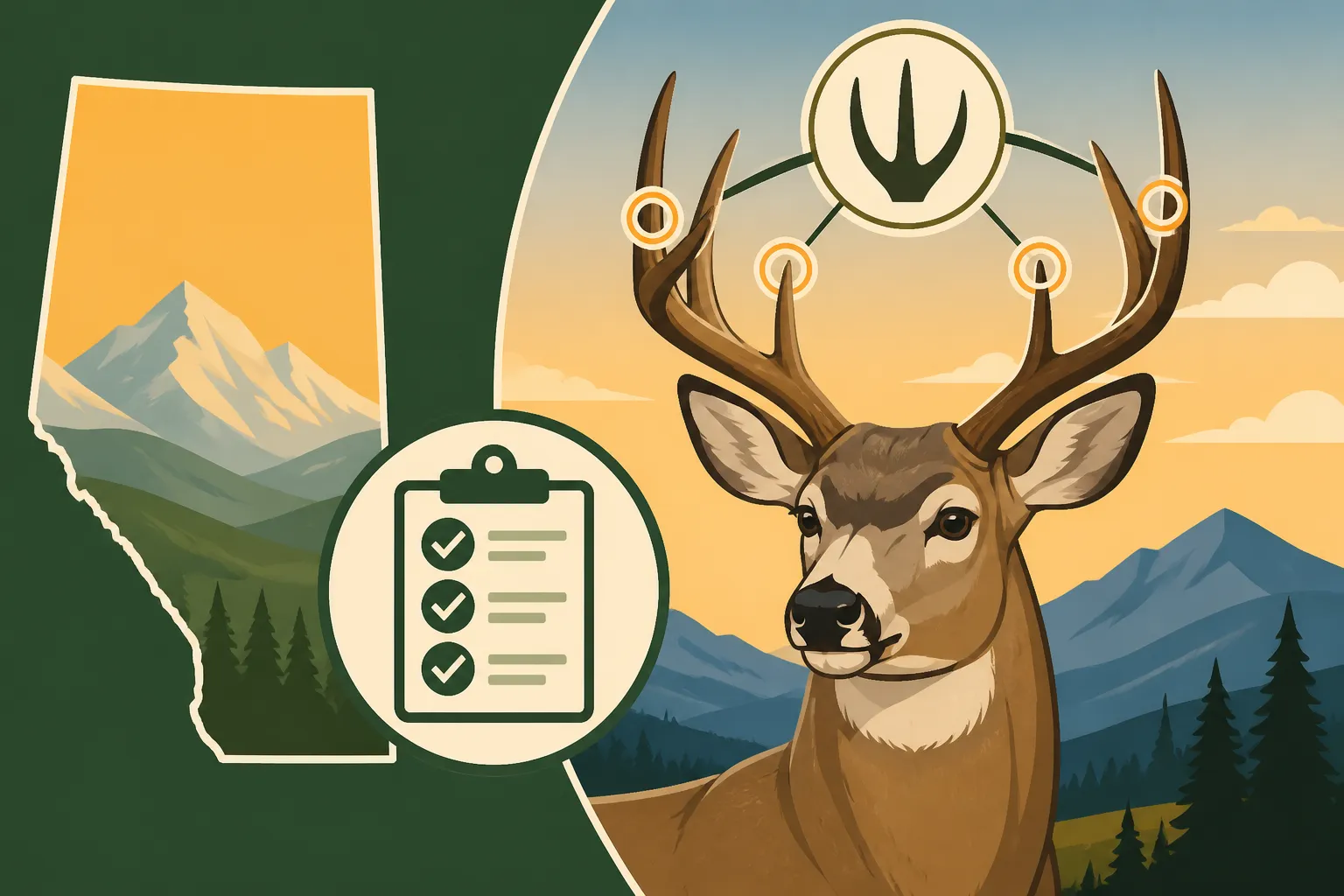
The "three-point or better" rule is a specific antler restriction applied to antlered mule deer in certain WMUs (Wildlife Management Units) across Alberta. It means that to legally harvest an antlered mule deer, it must have at least three points on one antler. But what exactly counts as a point? This is where many hunters get tripped up.
What Constitutes a Legal Point
In Alberta, for mule deer, a "point" is defined as a projection on an antler that is at least one inch (2.54 cm) long, and whose length exceeds the width of its base at any point along its length. This is a critical distinction. It’s not just about length; it's about shape. A blunted or worn-down tip that's wider than it is long at its base would not count, even if it measures over an inch. Eyeguards (brow tines) are typically counted as points if they meet the size requirement.
Here’s a quick breakdown:
- Main Beam: The main beam itself is not a point. Points project off the main beam.
- Tines: Any projection from the main beam or another tine that meets the 1-inch length and length-exceeds-base-width criteria.
- Abnormal Points (Non-typical points): These can also count towards the three-point minimum, provided they meet the definition of a legal point. So, if a buck has a sticker point off its main beam, and that sticker is over an inch long and narrower than its base, it counts.
The key is often that "length exceeds the width of its base." This helps distinguish actual points from small bumps or burrs. When you're trying to Judge a Mule Deer Buck at Distance, this rule can add a layer of complexity.
Common Misinterpretations and How to Avoid Them
One of the most common mistakes is to simply count every visible projection without applying the "length exceeds base width" rule. You might see a buck that looks like it has three points, but upon closer inspection, one or more of those "points" are actually just short, thick bumps that don't meet the legal definition. Another pitfall is forgetting that only one antler needs to have three legal points. A buck with two points on one side and three on the other is a legal "three-point or better" buck. A third common error is neglecting to check the hunting synopsis for specific WMU rules, as the general "antlered" definition might apply in some areas while the "three-point" rule applies to mule deer in others. Always refer to the current year's regulations on the Alberta government website or your physical synopsis.
The "Three-Point or Better" Mandate in Practice
Imagine you're glassing a mule deer buck in a coulee. You're looking for that distinct branching antler structure.
- Identify the main beam.
- Look for tines projecting off the main beam. Are there brow tines? Are there tines coming off the back of the beam?
- Count the tines on one antler. For each tine, quickly assess if it's at least an inch long and narrower than its base. If you can confidently identify three such points on either antler, that buck is legal for a "three-point or better" tag. If one antler has two points and the other has three, it's legal. If both have two points, it's not.
- Confirm the species. This rule specifically applies to mule deer. Whitetail deer have different regulations, which usually focus on the "antlered" definition or specific draw conditions. Always be sure of your target species before making a final decision, especially when Mule Deer in Alberta's Open Country and Whitetails can inhabit similar areas.
Regional Application and Practical Hunting Considerations
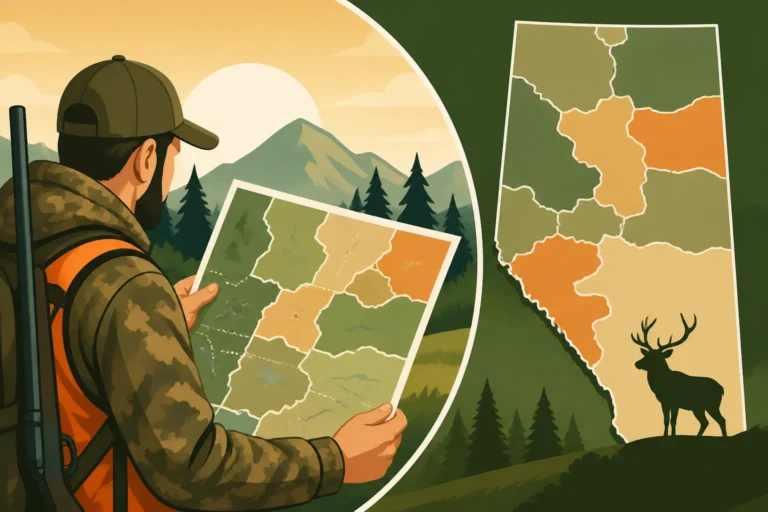
The three-point rule isn't universal across all of Alberta for mule deer. It's a targeted management tool applied to specific WMUs where managers aim to protect younger bucks and encourage antler growth. Knowing where these rules apply is just as important as knowing how to count points.
WMUs Where Three-Point Rules Apply to Mule Deer
Many of Alberta’s prime mule deer hunting zones, especially those encompassing the prairies, badlands, and some parkland areas, fall under the three-point rule for antlered mule deer. These typically include WMUs in the southern and central parts of the province. For instance, many WMUs around the Cypress Hills or along the Red Deer River valley will have this restriction. However, some general WMUs might only have an "antlered" mule deer season, meaning any buck with at least one antler protruding past the hairline is legal.
It is absolutely crucial to consult the annual Alberta Hunting Regulations every season. The exact WMUs and their specific rules can and do change based on wildlife surveys, population trends, and management goals. Using resources like the GoHunt app or the AlbertaRELM website can help you cross-reference your specific WMU with the current year's regulations well before you head out. These digital tools often update rapidly when regulations are released, providing an excellent way to confirm your specific zone's requirements for Alberta Big Game Season Dates.
Here's a simplified example of how mule deer antler regulations might look for different types of WMUs (always consult the current official regulations):
| WMU Type / Region | Mule Deer Antler Restriction (Example) | Common Rationale |
|---|---|---|
| Prairie/Badlands | 3 points or better on one antler | Promote buck maturity, CWD management |
| Parkland Fringe | 3 points or better on one antler | Maintain buck age structure |
| Foothills | Antlered (at least one antler ≥ 1") | Lower mule deer density, emphasis on general harvest |
| Northern Boreal | Antlered (at least one antler ≥ 1") | Lower mule deer density, less pressure |
Field Judging Mule Deer for Point Compliance
This is where the rubber meets the road. In the heat of the moment, with adrenaline pumping, accurately judging antler points can be tough.
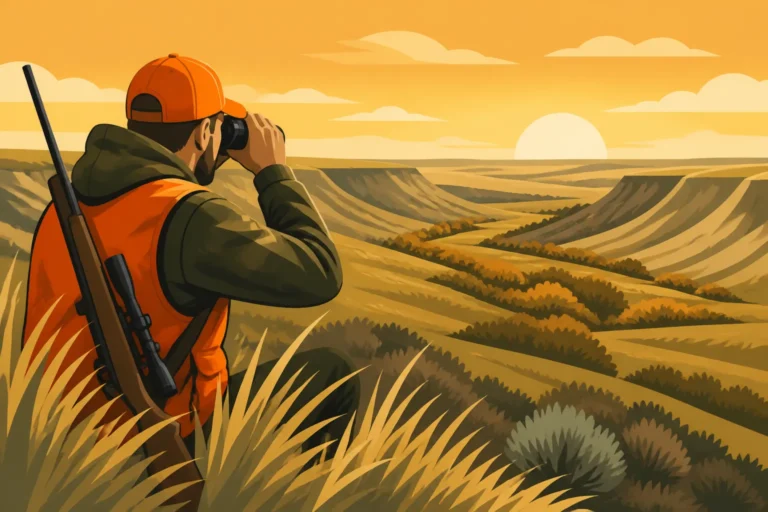
- Use good optics: A quality pair of binoculars (10x is common) or a spotting scope is indispensable. Don't be shy about spending time glassing a buck before deciding to pursue it. For hunters who Glassing an Alberta Coulee for Mule Deer, clear optics are paramount.
- Wait for the right angle: Sometimes a buck's head position, or the angle of light, can obscure points. Be patient. Watch the animal move, or wait for it to turn its head to give you a clear view of both antlers.
- Focus on one side: Pick one antler and count. If it clearly meets the three-point minimum, you're good to go. Don't try to count both simultaneously unless you need to.
- Practice, practice, practice: Before the season, look at photos and videos of mule deer. Practice counting points on bucks with varying antler configurations. This mental rehearsal will pay dividends in the field.
- "When in doubt, don't": This age-old hunting adage is especially true with antler restrictions. If you can't be absolutely certain a buck meets the legal requirement, let it walk. There will always be another legal buck.
Ethical Hunting and "Passing" a Buck
The three-point rule, while a regulatory requirement, also aligns perfectly with ethical hunting practices. It encourages hunters to be selective and to understand the game they pursue on a deeper level. Passing on a young two-point buck, even if it's a tempting target, contributes to the overall health and quality of the mule deer herd in Alberta. It's an investment in future hunting seasons and often leads to more rewarding experiences when you do finally harvest a mature animal. This mindful approach is a cornerstone of responsible Alberta hunting.
Beyond the Three-Point Rule: Other Important Mule Deer Regulations
While understanding antler restrictions is critical, it's just one piece of the puzzle for a successful and legal mule deer hunt in Alberta. Several other regulations must be considered to ensure you're hunting ethically and lawfully.
General Season Mule Deer Opportunities
Even with point restrictions in place in many areas, Alberta still offers fantastic general season mule deer hunting opportunities. These general seasons often mean you don't need to win a draw to get a tag. However, specific WMUs might have the "three-point or better" rule attached to these general tags. Always confirm the specific regulations for your chosen WMU and license type. These general seasons are a fantastic way to pursue Mule Deer Hunting Alberta's Prairie and Badlands.
Mandatory CWD Submission Areas for Mule Deer
Chronic Wasting Disease (CWD) is a serious concern for Alberta's deer populations, and hunters play a crucial role in monitoring its spread. In many WMUs, particularly those in central and southern Alberta, it is mandatory to submit the heads of all harvested deer (including mule deer) for CWD testing. Failure to comply can result in significant penalties. You'll often find freezer locations listed in the annual regulations where you can drop off your deer heads. Stay informed about Alberta's CWD Testing Requirements to do your part.
Using Technology for Pre-Season Scouting
Modern technology has revolutionized how we prepare for hunts. Tools like the GoHunt app or other reputable mapping applications are incredibly valuable for understanding WMU boundaries, identifying Crown land, and, crucially, cross-referencing specific regulations. You can often overlay layers that show different land designations, helping you pinpoint where different mule deer rules apply. Before you even set foot in the field, you can virtually scout terrain, identify potential bedding areas, and understand how the land is used, all while double-checking those three-point rules for your chosen area. This kind of diligent Scouting With Satellite Imagery in Alberta can give you a significant advantage. It's a game-changer for detailed trip planning and ensuring you're fully compliant with all local hunting rules, especially when targeting those specific mule deer with the right antler configuration.
Disclaimer
The information provided in this guide is for general informational purposes only and is not a substitute for the official Alberta hunting regulations. Hunters are responsible for consulting the current year's Alberta Hunting Regulations available through the provincial government website or authorized retailers before participating in any hunting activity. Regulations can change annually and vary by WMU and species.