Hunting a Cutline for Moose at First Light
The pre-dawn chill in Alberta's boreal forest can be bone-numbing, and the dense timber feels impenetrable, making you wonder if a moose will ever step into view. Many hunters struggle with pinpointing precisely when and where to intercept these elusive giants, especially when the forest seems endless. This guide is dedicated to equipping you with the specialized knowledge and tactics to successfully hunt a cutline for moose, focusing specifically on the critical window of first light in Alberta.
Understanding Moose Behavior on Cutlines at First Light
Moose are creatures of habit and opportunity, and cutlines often represent a perfect blend of both, especially as dawn breaks over the vast Alberta landscape. Ignoring these linear features is like walking past a grocery store when you're starving – you're missing a prime opportunity.
Why Cutlines Attract Moose
Cutlines, whether they are old seismic lines, utility corridors, or logging roads that have grown in, act as natural magnets for moose for several compelling reasons. Imagine an animal as large as a moose trying to navigate dense, tangled bush. It's not impossible, but it certainly expends a lot of energy. A cutline offers an unobstructed, relatively easy travel corridor. They serve as nature's highways, allowing moose to move efficiently between bedding areas, feeding grounds, and water sources.
Beyond easy travel, cutlines often provide crucial browse. The disturbed ground and increased sunlight along these corridors encourage the growth of young deciduous trees, shrubs, and forbs – all prime moose forage. Think about how many willow shoots or trembling aspen saplings you see flourishing along an old road allowance. These are gourmet meals for a moose. During a typical fall in northern Alberta, moose will spend significant time browsing these regenerating plants. These areas become particularly attractive after a rain, as the vegetation is more succulent, or in the late season when other food sources become scarce. They also offer linear pockets of cover, especially where the edges have grown up thick with alders or dense spruce, allowing moose to feel secure while still having an easy escape route or travel path. Sometimes, they'll even bed right in the thick growth just off a cutline, using the line itself for quick movement when disturbed or just before settling in. For more on their habitat preferences, check out our insights on Moose Across Alberta's Boreal and Foothills.
The "First Light" Advantage for Moose Hunting
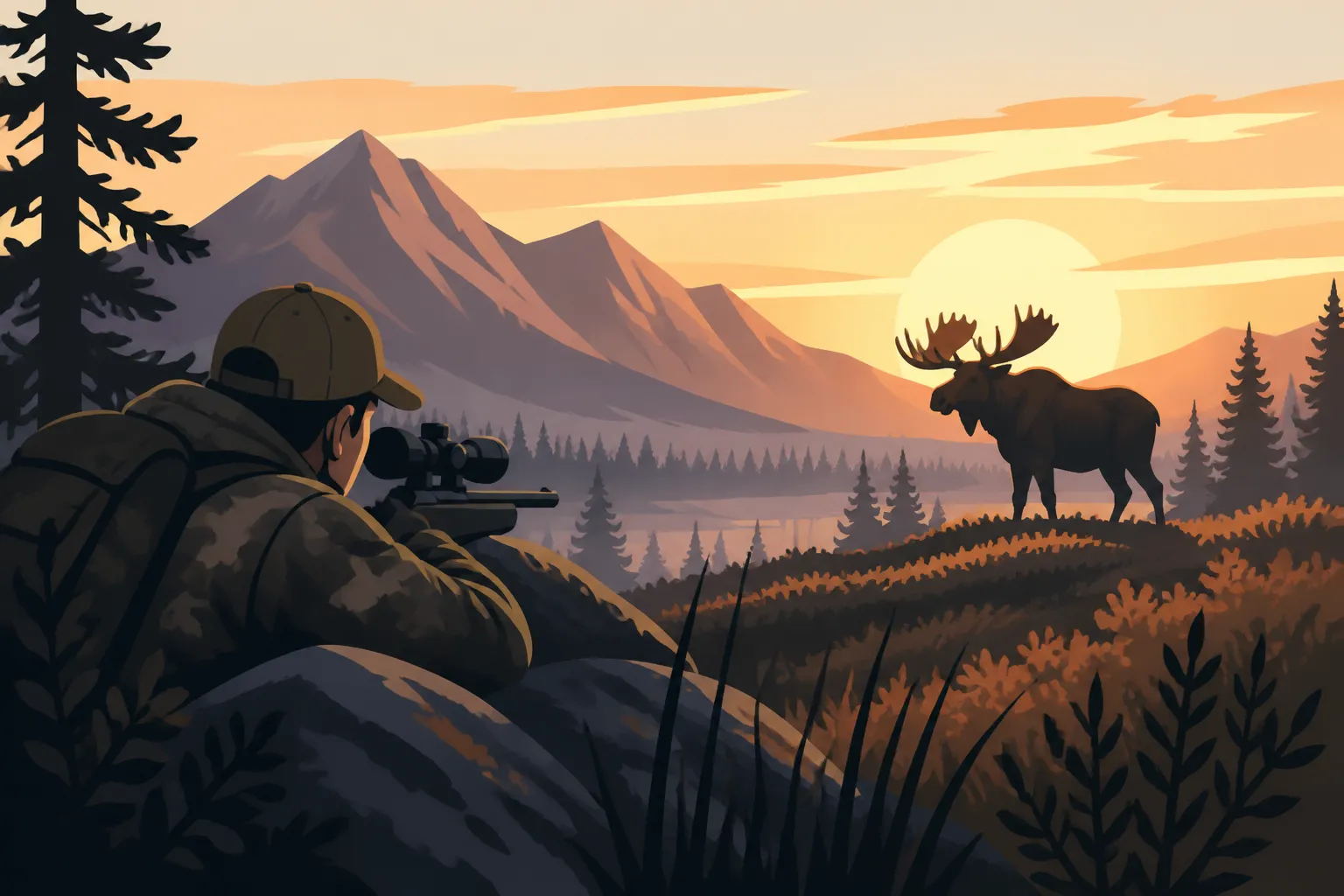
The period just before and after sunrise, often referred to as first light, is arguably the most productive time to hunt moose on a cutline. Moose are crepuscular animals, meaning they are most active during dawn and dusk. As the first hints of light begin to paint the eastern sky, moose are often transitioning from their nocturnal feeding activities to bedding down for the day, or, if they've been bedded nearby, they might be moving out for an early morning browse before the full light of day.
This narrow window of time offers several key advantages. Firstly, there's reduced human activity. Most people aren't up and about in the deep bush before the sun is fully over the horizon, which means less disturbance for the moose. Secondly, the ambient light levels are perfect. It’s often enough to see, but the low-angle sun creates long shadows and soft light, which can help conceal your approach and break up your silhouette. Crucially, moose at first light are often less wary than they might be later in the day when the woods are buzzing with more activity. They are focused on their routine, moving deliberately, and are more likely to be out in the open or along the edges of a cutline, making them visible for a potential shot. If you're targeting areas where moose frequent cutlines, understanding this morning routine is paramount. They often follow similar paths day after day, making their movements predictable during this specific timeframe.
Strategic Approach to Hunting Cutlines in Alberta
Hunting successfully on cutlines at first light isn't just about showing up; it requires thoughtful planning, meticulous scouting, and a disciplined approach to your entry and movement. Alberta's vast hunting grounds, from the Peace Country to the dense Boreal, offer countless miles of these linear features, but knowing which ones to focus on is key.
Scouting and Pre-Season Preparation
Before you ever step foot into the woods with your rifle, serious scouting is non-negotiable. This is where you put in the groundwork that dramatically increases your odds. Start with digital tools. Satellite imagery, which you can often access through apps like GoHunt or other mapping software, is an invaluable resource. Zoom in and identify cutlines that connect different habitat types – for example, a cutline that links a dense bedding block of mature timber with a marshy feeding area or a beaver pond. Look for areas where cutlines intersect, where they cross creeks, or where they parallel water bodies. These are natural funnels and transition zones that moose frequently use. You can get a good feel for these areas when Scouting an Alberta WMU Before Season.
Once you have identified promising locations on a map, it's time for boots-on-the-ground reconnaissance. During the off-season or just before the hunting season, walk these cutlines. Look for fresh moose tracks – their size and depth will tell you if it's a mature bull or cow. Pay close attention to browsed vegetation; moose prefer tender young shoots, so if you find recent browsing on willow, aspen, or dogwood, you know they're using that area. Look for rubs on small trees or saplings, indicating a bull has been working them. Droppings are another tell-tale sign of recent activity. I recall one September hunt near Calling Lake where a distinct series of fresh tracks along an old seismic line, combined with heavily browsed willows, told us exactly where to focus our efforts for a pre-dawn stalk. These signs, especially along a cutline that offers some slight elevation changes or thick pockets of cover, are gold.
Silent and Stealthy Entry
The effectiveness of hunting a cutline at first light hinges entirely on your ability to approach undetected. Moose have excellent hearing and a phenomenal sense of smell. Any mistake in your entry can send them crashing off into the timber before you even see them.
Minimizing Noise: Your gear needs to be quiet. Ensure zippers are muffled, loose items are secured, and your clothing doesn't rustle excessively. Walk slowly, deliberately, and pick up your feet, avoiding snapping twigs or shuffling through leaves. If you're on an ATV or truck, park well away from your intended hunting spot and walk in. Many experienced hunters will park a kilometer or more from their target area, choosing to walk in the dark to ensure a silent approach. The forest floor can be notoriously crunchy in the early morning, especially after a frost, so every step needs to be mindful.
Scent Control: Always hunt with the wind in your favor. Thermals often carry scent downhill at first light, so if you're approaching from higher ground, your scent will drop. Conversely, as the sun rises, thermals will begin to lift. Pay close attention to this dynamic. Use scent-eliminating sprays on your clothing and gear, and store your hunting clothes in airtight bags until you reach your hunting area. Avoid strong-smelling foods, colognes, or even heavily scented bug sprays. Moose don't need to see you to know you're there; their nose will tell them long before. If you're dealing with the bitter cold that often accompanies late-season hunts, managing your scent while staying warm requires careful layering and planning. Read more on Hunting Alberta Winter Weather Safely to prepare for those conditions. Remember, you’re trying to slip into their world unnoticed, not announce your arrival with a parade.
Executing Your Hunt: Tactics and Shot Placement
With scouting done and a stealthy approach made, the true art of hunting a cutline at first light comes down to how you execute your plan, interact with the environment, and, ultimately, make the shot. This is where patience, keen observation, and good judgment truly pay off.
Positioning for Success
As you near your chosen cutline at first light, your positioning is paramount. You want to be close enough to see and hear, but also far enough to not spook anything while allowing for a good shooting rest. Ideally, look for a slight rise, a subtle bend in the cutline, or an area where the timber offers a natural backdrop and some concealment. Elevated positions, even a few feet higher, can significantly improve your visibility down the length of the cutline and into the edges of the timber.
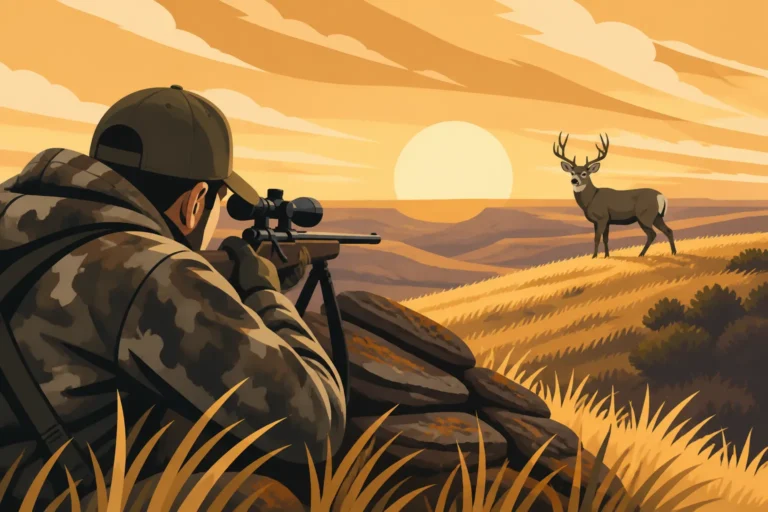
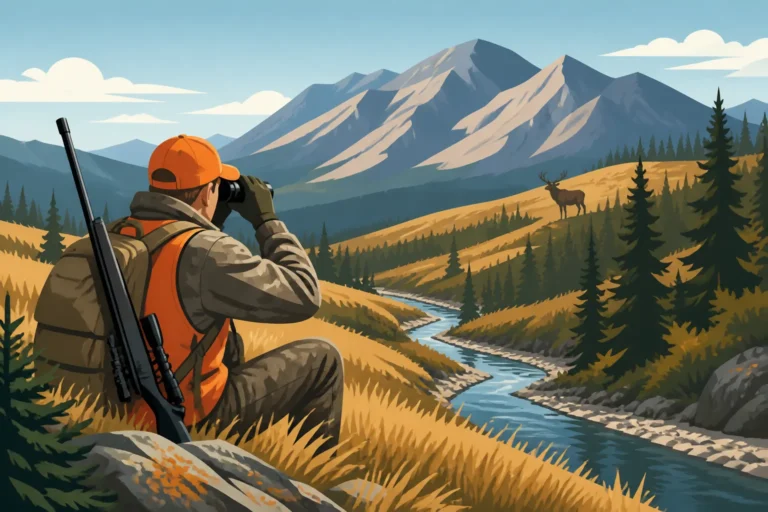
Position yourself where you have a clear view of the cutline, but also where you can quickly raise your rifle for a shot. Clear any brush or fallen branches that might interfere with your shooting lane. Often, moose will materialize silently, so being ready means being set up with your rifle resting, perhaps on shooting sticks or a bipod, ready to be shouldered. I've often found that setting up within 50-75 yards of a likely travel intersection or a well-used browse area yields the best results. Patience is key here. Settle in, let your eyes adjust to the low light, and scan continuously. The soft light of dawn can make it difficult to distinguish an animal from shadows and stumps, so use your binoculars to scrutinize every dark shape and movement. Sometimes, what looks like a distant stump might just be the shoulder of a bull moose patiently waiting for the sun to clear the trees. You might even adapt some tactics from Hunting a Cutline Intersection for Whitetails to apply to moose, focusing on where two travel corridors meet.
Effective Calling and Decoy Strategies
Moose calls can be incredibly effective, especially during the rut, but even outside of it, a well-timed call can pique a moose's curiosity at first light. During the peak of the rut, typically in late September and early October in Alberta, a cow in heat call or a bull grunt can elicit a strong response. Early morning is an excellent time for this, as bulls are often on the move, searching for cows. For more detail on this, check out Calling a Bull Moose in the Rut.
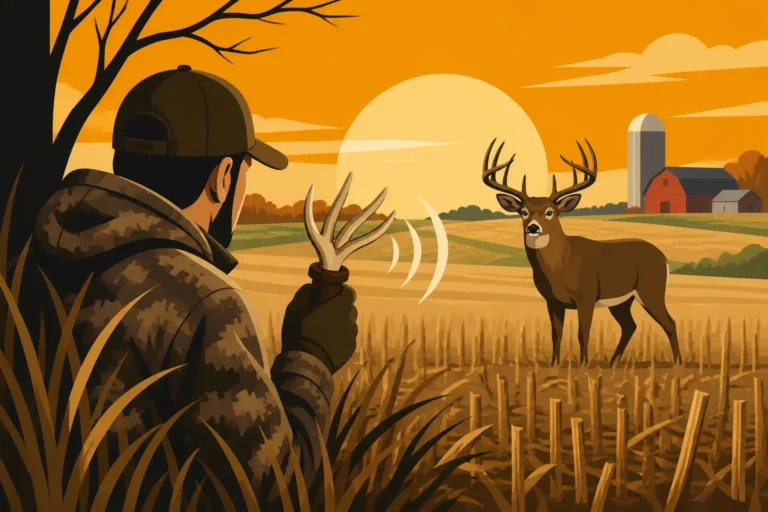
However, even outside the rut, a soft cow call can sometimes draw in a curious moose. You're not trying to aggressively challenge a bull, but rather sound like a potential mate or just another moose in the area. Often, a combination of calling and "raking" — mimicking a bull rubbing his antlers on brush – can be potent. Use a sturdy stick or an antler to rake the ground, break branches, and rub against saplings. This creates the illusion of another moose in the area, a non-threatening presence that might just draw a cautious bull out of the timber and onto the cutline. Always be ready to shoot immediately after calling or raking, as a moose can appear surprisingly quickly and silently. The key is to start with subtle calls and increase intensity only if there's no response or if you need to pinpoint a distant animal. For comprehensive calling advice, refer to Calling Moose in Alberta's Boreal Forest.
Shot Placement and Post-Shot Protocol
When a moose finally presents itself on the cutline, calm and decisive action is critical. Aim for the vital zone – typically the shoulder, slightly behind the front leg, targeting the heart and lungs. This large area offers a good margin for error on an animal the size of a moose. With their thick hide, heavy bone structure, and sheer mass, using an appropriate caliber and bullet construction is crucial to ensure a clean, ethical kill. Modern hunting rifles chambered in calibers like .30-06, .300 Win Mag, or .338 Win Mag with quality bullets are excellent choices.
After the shot, don't rush. Take a moment to compose yourself and watch the animal closely. Moose are incredibly tough, and even a well-placed shot might not drop them instantly. If the animal runs, mark the exact spot where it was standing and where you last saw it. Wait a minimum of 30 minutes, sometimes longer for a gut shot, before beginning your track. This allows the animal to expire or stiffen, preventing a long, difficult tracking job. Look for blood, broken branches, and disturbed earth. If the blood trail is sparse, expand your search pattern in the direction the animal was last seen. Field dressing a moose is a massive undertaking, and being prepared for it, especially if you're alone, is crucial. Our guide on Quartering a Moose Alone in the Bush offers valuable insights for this demanding task. Remember to tag your animal immediately upon recovery, as per Alberta regulations. Then the real work begins – getting that incredible amount of meat out of the bush, perhaps with the help of a quad, as discussed in Getting a Moose Out With a Quad.
Equipment Considerations for Alberta Cutline Moose Hunting
Being prepared for the conditions you'll encounter while hunting cutlines at first light in Alberta means having the right gear. The weather can be fickle, ranging from mild to intensely cold and wet, often all within a single morning.
Essential Gear for Cold, Wet Mornings
Alberta's boreal forest mornings are often damp and cold, even in early fall. Layered clothing is your best friend. Start with a moisture-wicking base layer to draw sweat away from your skin, followed by insulating mid-layers like fleece or wool, and finally, a waterproof and windproof outer shell. Consider brands like Sitka or Kryptek for their performance in varied conditions. A good pair of insulated, waterproof boots is non-negotiable, as you'll likely be walking through dew-laden grass, mud, or even early snow. Having a thermos of hot coffee or tea can be a game-changer, providing warmth and a morale boost during long waits in the cold. A reliable headlamp with a red light option is essential for navigating in the pre-dawn darkness without spooking game. Don't forget a sturdy backpack to carry your layers, food, water, and emergency supplies. For comprehensive preparation against the elements, our article on a Winter Truck Kit for an Alberta Hunt has more ideas on essential items.
Optics are also critical. High-quality binoculars (10×42 or 8×42) will help you pick apart dense cover and identify moose in low light conditions. A rangefinder is also extremely useful for accurately gauging distances, especially when a moose appears at an unexpected range on a long, straight cutline. Even a seemingly clear shot can be complicated by distance, and accurately judging it eliminates guesswork.
Firearms and Ammunition Choices
For moose, you want a rifle that delivers serious knockdown power with accuracy. As mentioned earlier, calibers like .30-06 Springfield, .300 Winchester Magnum, .338 Winchester Magnum, or even the venerable .375 H&H Magnum are excellent choices. The key is bullet construction. Choose heavy, well-constructed bullets designed for large game, such as Nosler AccuBond, Barnes TTSX, Swift A-Frame, or similar bonded or monolithic projectiles. These bullets retain their weight, penetrate deeply, and expand reliably, which is crucial for ethically harvesting an animal as robust as a moose.
Accuracy is paramount. Know your rifle, practice shooting from various positions (standing, kneeling, prone, off a rest) that mimic potential field scenarios. Understand your rifle's point of impact at different ranges. While cutlines often offer long, clear shots, you might find yourself shooting at a moose that is partially obscured or moving. Confidence in your rifle and ammunition is key. Always zero your rifle with the exact ammunition you intend to hunt with, and confirm that zero frequently. Before heading out, double-check that your rifle is clean, lubricated, and functioning perfectly. A misfire or jam at first light could mean the difference between filling your tag and going home empty-handed. Remember that moose are massive animals, with a mature bull often weighing well over a thousand pounds, as detailed in What a Big Bull Moose Weighs, requiring a robust setup.
Table: Pros and Cons of Hunting Cutlines at First Light for Moose
| Aspect | Pros | Cons |
|---|---|---|
| Moose Activity | High activity as moose transition from feeding/bedding. | Moose can be extra wary due to quiet mornings. |
| Visibility | Low light provides natural camouflage; good for stealth. | Difficult to identify animals clearly in deep shadows; limited shooting light. |
| Travel & Access | Easy travel corridors for both hunter and moose. | Can attract other hunters, increasing pressure; predictable routes make moose wary. |
| Scent/Wind | Predictable thermals (downhill at dawn, rising with sun). | Changing thermals can quickly shift scent into game's path. |
| Forage/Cover | Excellent browse opportunities, offering prime feeding. | Moose often bed very close to cutlines, making quiet approach critical. |
| Hunter Presence | Fewer hunters out at this time, less disturbance. | Requires very early start, often in cold/dark; fatigue. |
| Success Potential | One of the most productive times and locations for moose. | Requires extreme patience and meticulous stealth. |
Final Thoughts on Your Alberta Moose Hunt
Hunting cutlines for moose at first light in Alberta is an exhilarating and rewarding experience that offers a genuine connection to the wilderness. From the northern reaches where Hunting Alberta's Northern Boreal Roads provides critical access, to lesser-known seismic lines, every cutline holds potential. It demands a blend of careful planning, keen observation, and disciplined execution. By understanding moose behavior, meticulously scouting, approaching with stealth, and being prepared for the shot, you significantly increase your chances of success. It's a challenging endeavor, but the reward of harvesting one of Alberta's majestic moose from these unique features is a memory that will last a lifetime. Remember, the journey is as important as the destination, and every moment spent in the pre-dawn quiet, watching a cutline, is a privilege.
Disclaimer
Please ensure you are familiar with and adhere to all current Alberta hunting regulations and licensing requirements. Hunting practices and regulations can change, so always consult the latest official Alberta hunting regulations guide before heading afield. Safety should always be your top priority when hunting.