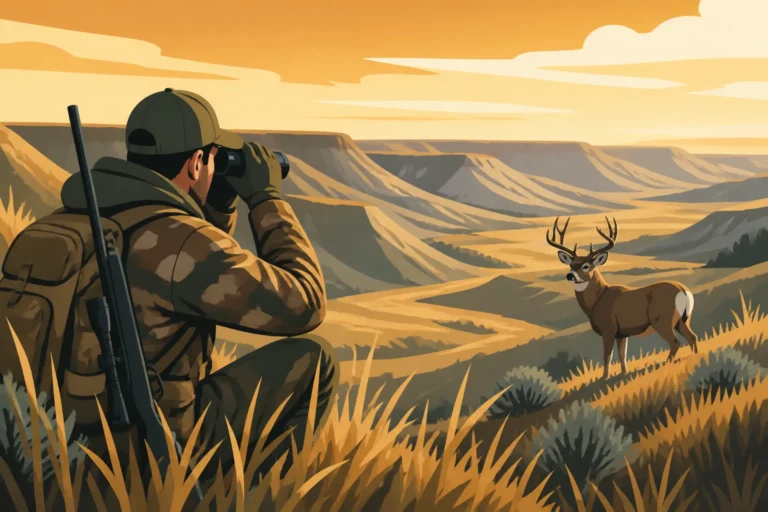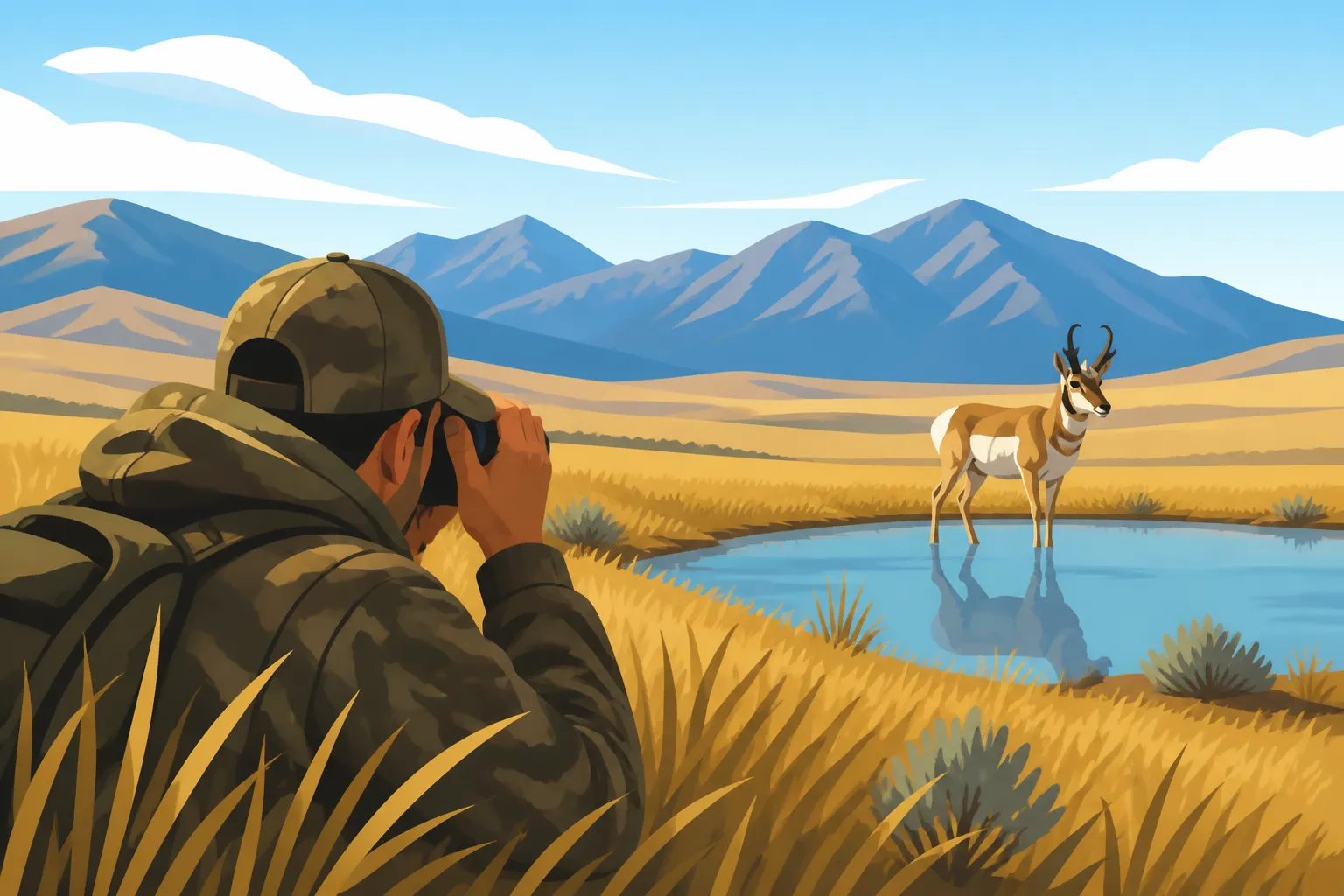
Hunting Pronghorn Near a Water Source
Hunting pronghorn in Alberta's vast, open prairie can feel like chasing ghosts sometimes. Their incredible eyesight, blistering speed, and often unpredictable movements make them one of the most challenging big game animals to pursue. But if you're feeling frustrated by the wide-open spaces, know this: understanding their absolute reliance on water can turn the tide in your favor. This guide will walk you through exactly how to leverage water sources to increase your odds of success when hunting Alberta's swift prairie dwellers.
Why Water Sources Are Pronghorn Magnets
Pronghorn, often mistakenly called antelope, are creatures of the open plains, built for speed and survival in arid environments. But even these tough animals can't escape the fundamental need for water. This isn't just about thirst; it's about their entire physiological makeup and social structure revolving around hydration, especially during the warmer early seasons and dry periods. If you can wrap your head around why they need water so badly, you'll be one step closer to predicting their movements.
Understanding Pronghorn Physiology and Hydration Needs
Unlike deer or elk that can often get enough moisture from lush vegetation, pronghorn on the dry Alberta prairie need to drink water regularly. While they are adapted to conserve water, consuming succulent plants and even dew, direct water sources become absolutely crucial, particularly as summer progresses and vegetation dries out. Imagine being out on the scorching prairie in August or early September; you'd be looking for a drink, right? So are they. Their metabolism and digestive processes require a steady intake of water, and while they can go a day or two without direct water if conditions are right, prolonged periods of drought or intense heat will drive them directly to a reliable source. This makes water holes veritable hubs of activity during certain times of the day.
Moreover, the quality of forage can impact their water needs. If they're feeding on dry, cured grasses, their dependence on free-standing water increases dramatically. This becomes even more pronounced when you consider the energy they expend moving around. A pronghorn on the move across miles of prairie under a hot sun is burning calories and losing moisture, pushing them towards the nearest drink. This instinct is so strong it often overrides their natural skittishness, making them vulnerable.
Social Dynamics and Water Hole Concentration
Water sources aren't just for drinking; they're also social epicenters, especially during the rut. Buck groups, doe groups, and solitary animals will all converge, sometimes in relatively close proximity, to quench their thirst. This congregation offers hunters a unique opportunity. Instead of trying to find one animal in thousands of acres, you’re looking for a group of animals drawn to a known, finite location. These spots can act like natural funnels, bringing animals from various directions into a predictable area.
During the pre-rut and rut phases, a dominant buck might even try to "hold" a water source, attempting to keep does within his territory or intercept them as they come to drink. This adds another layer of predictability and observation opportunity. You might see a lone buck patrolling the perimeter, or groups of does being pushed around. Observing these dynamics can tell you a lot about the local herd structure and where the biggest bucks might be trying to establish dominance. Remember, they aren't just using the immediate shoreline; they're often bedding nearby, waiting for the optimal time to approach.
Identifying Prime Water Sources for Pronghorn in Alberta
Alberta's prairie landscape offers a variety of water sources, but not all are created equal in the eyes of a pronghorn. Knowing what to look for and how to interpret the signs will save you countless hours of fruitless glassing. This means understanding everything from natural potholes to man-made dugouts and how environmental factors influence their use.
Types of Water Sources and Their Appeal
On the Alberta prairie, water sources can range from ephemeral puddles after a rain to permanent sloughs, dugouts, and small reservoirs. Each has its own draw. Natural potholes and sloughs are often abundant in certain regions and provide consistent water, but they can be large and have a lot of cover, making observation tricky. Dugouts, often created by farmers and ranchers for livestock, are typically smaller, more defined, and sometimes have minimal vegetation around them, offering clear sightlines. Smaller, isolated dugouts can be real honey holes, as they may be the only water for miles.
Rivers and creeks also offer water, but pronghorn often prefer more open, shallow access points rather than steep banks or dense riparian vegetation where predators might lurk. The Milk River in southern Alberta, for instance, offers water, but pronghorn might favor a shallow crossing or a sandbar over deep, brushy sections. Areas with natural springs, though rare, are absolute gold mines. Remember to consider the time of year and recent rainfall. A slough that was teeming with life in June might be bone dry by late August, especially in a hot, dry year. Using tools like GoHunt with up-to-date satellite imagery can help you identify these spots and gauge water levels before you even leave home.
Scouting for Pronghorn Sign and Activity at Water
Once you've identified potential water sources, the real work begins: scouting. This isn't just about looking for water; it's about looking for evidence that pronghorn are using it. What does that look like? Think tracks, droppings, and worn trails. Pronghorn tracks are distinctive – small, cloven, and often accompanied by small, pellet-like droppings. Look for trails leading directly to the water's edge, often converging from several directions. The more pronounced the trails, the heavier the usage.
Pay attention to areas where they might bed down nearby. Pronghorn often bed on slight rises or knolls that offer good visibility, allowing them to keep an eye out for danger while resting. Look for flattened grass in these spots. Consider using trail cameras, if allowed, positioned discreetly near water sources or along major trails leading to them. This can provide invaluable data on when and how frequently animals are using the water, and even give you a peek at the quality of bucks in the area. Remember, pronghorn are incredibly alert, so minimize your impact when scouting. Approaching on foot during the middle of the day is often best to avoid spooking animals you might want to hunt later. For further insights on how these animals traverse the landscape, you might want to read our article on Hunting Pronghorn Near a Water Source.
Strategies for Hunting Pronghorn Around Water
Okay, so you’ve found your prime water source, scouted it, and you're confident pronghorn are using it. Now comes the exciting part: putting yourself in a position for a shot. This requires a blend of patience, stealth, and an intimate understanding of wind and terrain. These aren't whitetails in a dense forest; these are prairie speed demons with eyes like a hawk, so your approach needs to be calculated.
Timing Your Approach and Setting Up
Timing is absolutely everything when hunting pronghorn near water. They are most likely to visit water in the early morning, just after sunrise, and in the late afternoon or evening, as the heat of the day subsides. During hot weather, midday visits can also occur, but these are less common as they prefer to avoid the open exposure during the sun's peak. Plan to be set up well before first light or several hours before sunset, allowing the area to settle down after your presence.
Your setup will depend heavily on the surrounding terrain. If there’s natural depression, a cut bank, or even a lone scrub bush, these can offer critical concealment. Sometimes, you might need to build a makeshift blind. This could be as simple as digging a shallow scrape, setting up a camo net, or even just using a natural clump of sagebrush for cover. The key is to break up your outline completely. Remember that pronghorn have an almost 360-degree field of vision and can spot even the slightest movement from an incredible distance. You might have to crawl the last few hundred yards to your setup point, using every ripple in the ground for cover, even if it means getting a little dirty. You can find more detail on their habits in Alberta's Pronghorn Herd and Winter Kill.
The Art of the Spot and Stalk Near Water
Even if you're set up on a water source, the reality of pronghorn hunting is that you might need to transition to a spot and stalk. Maybe a buck you want is just out of range, or he's approaching from an unexpected angle. This is where patience and glassing become paramount. Start by Glassing Alberta Prairie for Pronghorn from a high vantage point, looking for movement towards the water. Once you spot an animal, the stalk begins.
The challenge of Stalking Pronghorn Across Open Ground is immense. Their eyesight can pick you out from a mile away. You'll need to use every contour of the land: draws, coulees, even the slightest dip or rise. Move slowly, deliberately, and always pay attention to the wind. The wind is critical; if they smell you, they're gone. A crosswind is ideal, allowing you to approach without your scent wafting towards them. If you run out of cover, you may need to wait them out, or even crawl the last hundred yards, using a decoy if you have one. This is where a rangefinder is indispensable. Practice estimating distances and making quick, clean shots under pressure. It's not uncommon for a successful pronghorn stalk to take hours, covering just a few hundred yards.
| Water Source Type | Pronghorn Appeal | Hunting Considerations | Best Time to Hunt |
|---|---|---|---|
| Dugouts | High; predictable | Often less cover, good visibility for hunter; can be pressured easily. | Early morning, late evening (especially hot days) |
| Natural Sloughs | High; consistent | Can be large, more natural cover for both hunter and game; harder to pinpoint exact approach. | Same as dugouts, also midday in very remote spots |
| Rivers/Creeks | Moderate; situational | Look for shallow, open banks; less likely to congregate as tightly as dugouts. | Transition times (dawn/dusk) as they move to/from banks |
| Ephemeral Puddles | Low; temporary | Only useful after heavy rain; unpredictable, can dry quickly. | Immediately after rain |
Common Pitfalls and How to Avoid Them
Hunting pronghorn near water sources sounds great in theory, but there are always real-world challenges that can quickly turn a promising hunt into a frustrating lesson. Knowing these common mistakes ahead of time can help you proactively avoid them. Even seasoned hunters get tripped up by these factors, so don't feel bad if you've encountered them!
Managing Pressure and Scent Around Water Holes
One of the biggest mistakes hunters make is over-pressuring a water source. If you hunt the same water hole repeatedly, or approach it carelessly, pronghorn will quickly learn to avoid it during daylight hours, or worse, avoid it altogether. Their survival depends on vigilance, and they are incredibly sensitive to human presence. Think of it like a public park bench; if someone's always sitting there, you'll eventually find another spot.
To mitigate this, try to limit your visits. Scout thoroughly before the season opens, mark down which water holes are active, and then choose one to hunt. If you spook animals, give that area a break for a day or two. When approaching, always consider Wind in Open Prairie Country. A slight breeze can carry your scent for miles across the open plains. Always approach from a direction that keeps your scent blowing away from where you expect animals to be. Use scent control measures – clean clothes, scent sprays, and mindful hygiene – even if you think the wind is perfect. You never know when a swirling eddy might betray you. For tips on long-range scouting, check out Scouting With Satellite Imagery in Alberta.
Dealing with Pronghorn's Legendary Eyesight and Movement
A pronghorn's eyesight is legendary for a reason. They have huge eyes, set on the sides of their heads, giving them an incredibly wide field of vision. This means they can spot movement from incredibly far distances, often well over a mile away. What looks like perfectly good cover to you might be a glaring outline to them. This is where camouflage and stillness are paramount.
Avoid wearing any clothing with shiny surfaces or bright colours, even your binoculars or rifle scope can reflect sunlight and give you away. Move agonizingly slowly, or not at all, when animals are within sight. If you need to shift position, do so when their heads are down, eating, or when their attention is diverted. And remember, pronghorn don't often stand still for long. They'll browse, walk, and occasionally run at breakneck speeds. Be ready for a quick shot, and understand that sometimes, the best strategy is to let them move out of a compromised position into a more favorable one for you. Hunting the wide-open prairie demands a lot from a hunter, often far more patience and calculated moves than in denser cover. Understanding the nuances of a specific area, like those found in Hunting Alberta's Prairie WMUs, can make a real difference.
Maximizing Your Chances on Public and Private Land
Whether you're hunting on public access lands or have secured permission on private property, understanding how to apply these water-source strategies efficiently is key. Alberta offers diverse landscapes, and each requires a slightly different approach.
Utilizing Mapping Tools and Land Access
Before you even step foot in the field, modern mapping tools are your best friend. Services like GoHunt are invaluable for identifying water sources on public and private land. You can layer satellite imagery with land ownership maps, highlighting dugouts, sloughs, and drainage patterns. This pre-scouting allows you to pinpoint potential honey holes and plan your approach routes, considering wind direction and natural cover. You can literally sit at home and identify numerous Hunting a Grazing Lease Water Hole opportunities.
If you're targeting public land, cross-reference these water sources with designated public hunting areas. Some WMUs, particularly in the southern prairie, offer vast tracts of crown land or grazing leases that are accessible to hunters. Knowing where these boundaries are and where the water lies within them is a huge advantage. If you're looking at private land, identifying water sources will give you a compelling reason to approach landowners. You can explain how you've identified a specific area on their property that could hold pronghorn due to its water, demonstrating you've done your homework and respect their land. Understanding Reading an Alberta WMU Map Before You Go can drastically improve your planning.
Respecting Landowners and Minimizing Impact
Gaining access to private land often hinges on your ability to build trust and show respect. When asking for permission to hunt near a water source on private land, be clear about your intentions. Explain that you understand pronghorn utilize water, and you've identified a potential spot. Always ask specific questions about gates, fences, and any areas they prefer you avoid. Leaving gates as you found them, avoiding driving in wet fields, and picking up any litter are small actions that build a positive reputation for hunters.
Even on public land, minimizing your impact is crucial. Avoid leaving trash, driving off-road where prohibited, and disturbing cattle or other livestock. Pronghorn are highly sensitive to disturbance, and if an area sees too much human activity, they will simply move elsewhere. A considerate hunter is an effective hunter, ensuring that both the animals and the access opportunities remain for future seasons. Being familiar with Alberta's specific land access rules will also ensure a smooth hunt.
Disclaimer
Please remember that hunting regulations, seasons, and access rules in Alberta can change. Always consult the most current Alberta Hunting Regulations Guide and relevant land access maps before planning any hunt. Ensure you have all necessary licenses and permits, and adhere to all safety guidelines. This information is for educational purposes and general guidance only.