Scouting Fields for Alberta Waterfowl
The frustration of driving endless miles, seeing ducks and geese in the air, but never quite locating exactly where they're feeding can be soul-crushing. You know the birds are there, but pinpointing their preferred buffet is often the biggest hurdle to a successful waterfowl hunt. This guide will walk you through effective strategies for scouting fields for Alberta waterfowl, saving you precious time and dramatically increasing your chances of success.
Understanding Waterfowl Behavior and Field Selection
Waterfowl, especially geese and many duck species, are creatures of habit driven by a few core needs: food, water, and safety. Understanding what makes a particular field irresistible to them is the first step in successful scouting. It’s not just about seeing birds in the sky; it’s about understanding why they’re in that particular sky and where they intend to land.
The Allure of Grain
Alberta is famous for its vast agricultural landscape, making it a prime destination for migrating waterfowl. These birds are looking for high-energy food sources to fuel their long journeys or to build up fat reserves for the winter. Different species have different preferences, but generally, they are drawn to specific types of grain.
Ducks, particularly dabblers like mallards and pintails, absolutely love peas and barley. They'll also hit wheat and lentils if available, especially fields that have been recently swathed or harvested, leaving spilled grain on the ground. Geese, on the other hand – Canada geese, specklebellies, and snow geese – are less picky. They'll devour everything from peas and barley to wheat, oats, and even canola. Canola fields, especially those that have been swathed and are lying flat, can be huge magnets for thousands of geese. The key isn't just the type of grain, but also its availability. Fields that have been harvested recently often have a significant amount of "waste grain" left behind, which is an easy meal for hungry birds. A swathed field offers exposed grain heads that are easy to access. Birds often prefer fields that are relatively clean, meaning not too much regrowth or weeds to peck through.
Water and Roosting Proximity
While fields provide food, water is equally vital for waterfowl. They need water to drink, to preen, and crucially, for safe roosting overnight. The ideal feeding field is often located within a reasonable flight distance of a major body of water – a large lake, a river, or even a cluster of prairie potholes.
Ducks, for example, will often spend the day loafing and feeding in a field, then fly to a nearby pothole or river for security and rest. Geese might do the same, often roosting on large, open water bodies where they feel safe from predators like coyotes and foxes. Think about it: a goose needs a clear view of its surroundings to detect threats. A vast, open lake offers that. So, when you're scouting, pay close attention to the relationship between the feeding field and any significant water sources. A field that’s a mile or two from a major lake or the Peace River, for instance, is far more likely to hold birds consistently than one deep in dry country. This daily commute between food and water creates predictable flight patterns that can be key to a successful hunt. Remember, you might see birds leaving a field at dusk, but that doesn't necessarily mean they're done feeding for the day – they might just be headed to water.
Pressure and Sanctuary
Waterfowl are intelligent and quickly learn to avoid areas where they've been pressured. An actively hunted field, or one that has seen heavy hunting pressure in the days leading up to your hunt, is likely to be abandoned by birds. They will seek out quieter, safer feeding grounds. This is why scouting isn't a one-and-done activity; it's an ongoing assessment of bird behavior.
Consider fields that are less accessible, perhaps requiring a longer walk or being further from main roads. These often become natural sanctuaries for birds trying to escape hunting pressure. Sometimes, just one side of a large field might be pressured, while the other remains a prime feeding zone because hunters can't easily access it or simply overlook it. Furthermore, some landowners might permit hunting only on specific parts of their property, inadvertently creating safe zones that birds quickly learn to exploit. The best fields for hunting are often those that have not been heavily shot, or those that have been "rested" for a few days after pressure. Observing bird reactions to distant gunshots or other activity can give you a clue as to how pressured an area is. They will shy away from anything that makes them feel unsafe, and finding unpressured birds is often the key to getting them to commit to your spread.
Tools and Techniques for Effective Field Scouting
Gone are the days when effective scouting meant endless miles in a truck, crossing your fingers. While some windshield time is still invaluable, modern tools and techniques can make your efforts far more efficient and strategic.
Glassing from a Distance
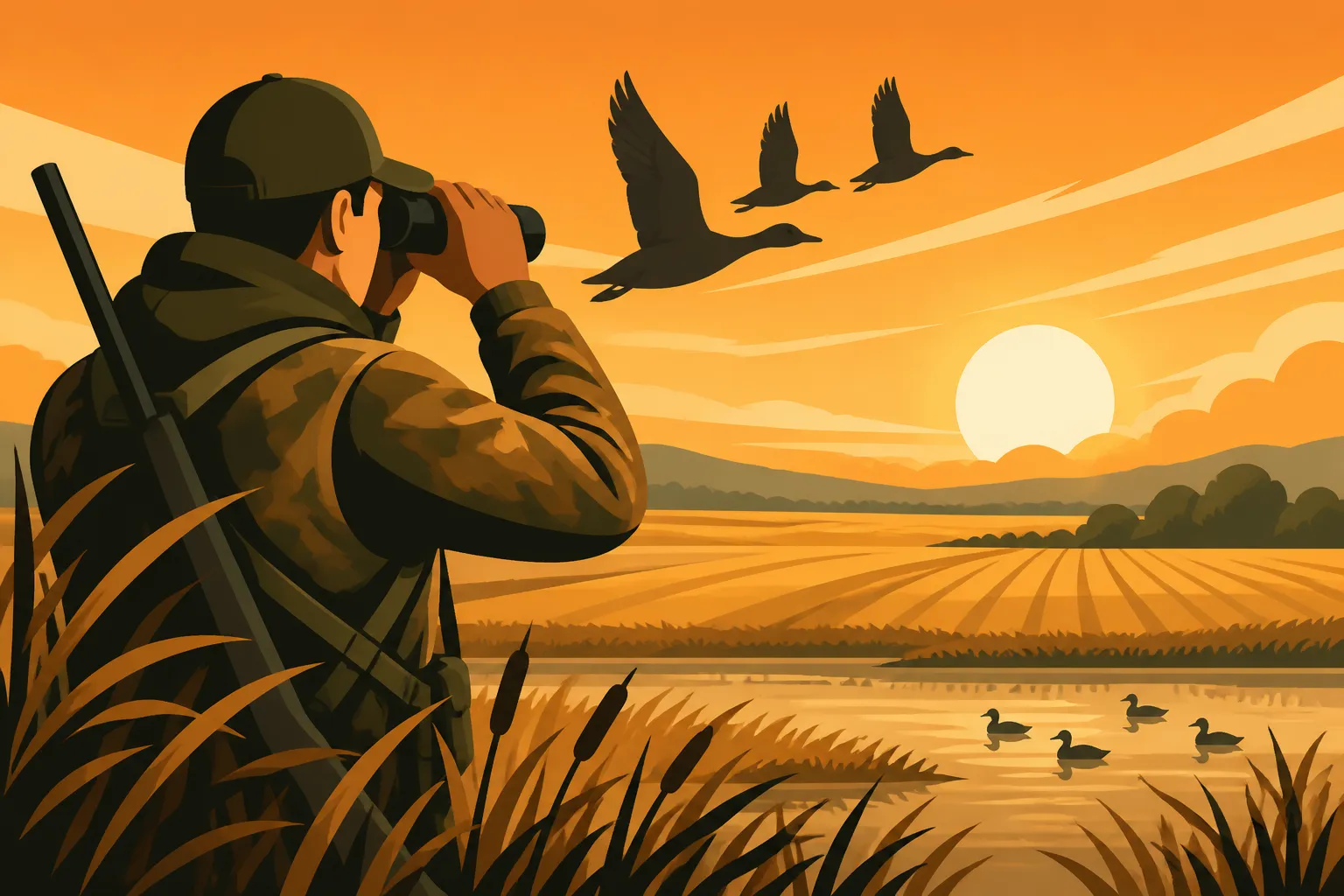
This is arguably the most critical and often overlooked scouting technique. Driving right up to a field where birds are feeding will almost certainly spook them, making them wary of that location for days. The goal is to observe birds naturally, without influencing their behavior. This means finding elevated vantage points, hills, or even wide-open road allowances far from the target fields.
A good pair of binoculars (10×42 or 10×50 are excellent general-purpose options) and a spotting scope (20-60x or 15-45x) are indispensable. Look for areas 1-3 miles away that offer an unobstructed view of potential feeding grounds. You're not just looking for birds, but observing their flight paths, how they enter and leave a field, and precisely where they land. Do they commit quickly, or circle hesitantly? What time of day do they arrive and depart? Which fields are they consistently hitting? A spotting scope allows you to literally count the individual birds, identify species, and even see the subtle movements that indicate active feeding. Remember to use natural cover to conceal yourself – don't stand silhouetted against the sky. Being patient and spending a couple of hours glassing from a discreet distance can tell you more than a whole day of driving around. You'll often notice patterns in how birds use different sections of a large field or how they react to different wind conditions.
Satellite Imagery and Mapping Apps
Before you even leave the house, modern technology allows for incredible pre-scouting. Satellite imagery and mapping applications like GoHunt, onX Hunt, or even Google Maps are game-changers for identifying potential hotspots and planning your approach.
Start by looking for large agricultural fields, especially those near significant water bodies. Identify different crop types if the imagery is recent enough, or at least look for the tell-tale signs of swathed fields or harvested sections. Pay attention to field edges, shelterbelts, and any topographical features that might influence bird movement or offer natural concealment for hunters. With GoHunt, for instance, you can often toggle between satellite views from different times of the year, which can show you what crops were planted previously or how water bodies fluctuate. Use these apps to identify potential access points, note property boundaries (especially crucial if you plan on knocking on doors for permission), and mark likely areas where birds might be feeding or loafing. This digital scouting can save you hours of driving by narrowing down your search to the most promising areas. You can also use them to plan your approach to a field, identifying the best routes to avoid skyline exposure or to take advantage of cover. For an in-depth look, check out our guide on Scouting With Satellite Imagery in Alberta.
Driving Reconnaissance (The Windshield Tour)
Once you've done your initial glassing and digital scouting, a carefully executed windshield tour is the next step. This isn't about driving into fields, but rather driving the roads surrounding your target areas to get a closer look and confirm your observations.
The goal is to drive slowly, keep your eyes open, and maintain a respectful distance. Look for freshly cut fields, swathed canola, or stubble fields that appear to be holding grain. Keep your binoculars handy for quick checks from the road. Pay attention to utility lines, tall trees, or isolated brush piles that birds might use as loafing spots or landmarks. This is also your chance to identify potential blind locations or retrieve points for game. When you spot birds in a field, do not drive directly toward them. Instead, pull over, park discreetly, and observe from afar. Note the exact field, the time, the wind direction, and the species of birds. This information is invaluable for planning your hunt. Remember to be mindful of traffic and never stop on busy highways. This type of scouting is also where you'll start to identify which fields might require you to Get Permission for a Goose Field from a landowner.
Scouting Checklist for Waterfowl Fields
To keep your scouting efforts organized and effective, here's a quick checklist to reference:
| Characteristic | Ducks (Mallards, Pintails) | Geese (Canada, Snow, Specklebelly) | Notes |
|---|---|---|---|
| Preferred Crop Types | Peas, Barley, Wheat, Lentils | Peas, Barley, Wheat, Oats, Canola | Focus on harvested or swathed fields with spilled grain. Canola often overlooked for ducks but is a goose magnet. |
| Harvest Status | Swathed, Freshly Harvested Stubble | Swathed, Freshly Harvested Stubble | The fresher the harvest, the more waste grain available. |
| Proximity to Water | 0.5 – 2 miles from potholes/rivers | 1 – 5 miles from large lakes/rivers | Crucial for roosting and loafing. Observe flight lines between fields and water. Potholes are great for ducks, larger open water for geese. |
| Hunting Pressure | Low to Moderate | Low to Moderate | Birds will abandon pressured fields quickly. Look for less accessible areas or fields that haven't been hunted recently. |
| Wind Direction | Important for landing/takeoff | Important for landing/takeoff | Birds almost always land into the wind. This affects decoy placement. |
| Topography/Cover | Field edges, low spots, natural blinds | Open, clear sightlines for landing | Ducks use cover more readily. Geese prefer open fields where they can see predators from a distance. |
| Bird Numbers Observed | Consistently high numbers | Consistently high numbers | Don't just look for a few birds; look for consistent large numbers indicating a primary feeding zone. |
| Time of Day Observed | Morning, late afternoon | Morning, late afternoon | Birds often have predictable flight times. Knowing these helps plan your hunt. |
| Recent Weather Changes | Post-front, calm days | Post-front, calm days | Weather fronts can push new birds in or change feeding patterns. |
| Landowner Relationship | Get permission before entering | Get permission before entering | Essential for legal and ethical hunting. Always ask. |
Timing Your Scouting Efforts
The "when" of scouting can be just as important as the "how." Waterfowl behavior is dynamic, influenced by migration patterns, weather, and hunting pressure. Effective scouting is often a multi-stage process that begins long before opening day.
Pre-Season Homework
Before the first duck or goose even thinks about migrating through Alberta, you can start your pre-season homework. This involves reviewing regulations, understanding Alberta Game Bird Seasons and Limits, and familiarizing yourself with specific WMUs.
Start by studying maps – topographical maps, satellite imagery, and even old agricultural maps if you can find them. Identify areas with a high concentration of prime waterfowl habitat: large lakes, major river systems like the Athabasca or North Saskatchewan, and vast agricultural zones. Look for patterns of historical waterfowl use. Many seasoned hunters know certain areas consistently hold birds year after year. While things can change, historical data gives you a fantastic starting point. This is also the time to make contact with landowners if you're hoping to hunt private land. Building relationships early can be invaluable. For a general overview of areas, our guide on Alberta's Waterfowl and Migration Routes can be a great resource. You might also want to consult the Federal Migratory Game Bird Permit Cost and ensure all your licenses are in order.
Morning vs. Evening Flights
Waterfowl typically exhibit two primary feeding flights each day: a morning flight and an evening flight. Understanding these patterns is critical for effective scouting.
The morning flight usually occurs shortly after sunrise, when birds leave their roosting areas and head to feed. They might feed for several hours, then loaf on water or in a safe field before returning to feed again in the late afternoon/early evening. The evening flight is often just as intense, as birds top off their energy reserves before heading back to their roost for the night. To scout effectively, you'll want to be out observing during both these periods. This helps you confirm consistent feeding patterns. If a field is hot in the morning, it's often hot in the evening too, but not always. Sometimes, birds will hit one field in the morning and a different one later in the day. Witnessing these flights firsthand gives you the best information on where to set up. Observing when they arrive and depart helps you dial in your setup time for the actual hunt.
Post-Front Scouting
Weather plays an enormous role in waterfowl migration and feeding behavior. Cold fronts, particularly, can dramatically alter patterns and bring in new waves of birds. Scouting immediately after a major cold front has passed can be incredibly productive.
A strong cold front often pushes new birds south, filling fields that were previously empty. It can also make existing birds hungrier and more active, as they need to feed heavily to fuel their journey or build fat for the colder temperatures. Keep a close eye on weather forecasts and be prepared to head out and scout when a front is moving through or has just passed. The combination of new birds and increased activity can turn a quiet area into a hotspot overnight. Pay attention to wind shifts too; birds will always land into the wind, which is crucial for decoy placement and hunter concealment. A strong north wind, for instance, might signal the arrival of fresh birds from further north in the boreal forests. Understanding the nuances of Alberta Hunting Winter Weather Safely can be beneficial, especially later in the season.
Navigating Access and Landowner Relations During Scouting
Finding the perfect field is only half the battle. If that field is on private land, you absolutely need permission. Navigating landowner relations is a skill every responsible waterfowl hunter must cultivate.
Identifying Land Ownership
Before you even think about approaching a landowner, you need to know who owns the land. This is where those mapping apps like GoHunt or onX Hunt come in handy once again. These platforms often display property boundaries and landowner names, making it much easier to identify who to speak with.
If you don't have access to these apps, local municipal or county offices can often provide land ownership information. Sometimes, a quick chat with locals at a gas station or diner can point you in the right direction. It's crucial to confirm land ownership, especially in Alberta where "Crown land" is a possibility, but access rules still apply. Never assume a field is unowned or public; always verify. Knowing exactly whose door to knock on shows respect and preparedness, making a good first impression. Remember, hunting on private land without permission is trespassing and carries significant penalties. Knowing your WMU boundaries and understanding Alberta's 219 Wildlife Management Units can also help you determine if an area is private or public.
Respectful Communication
Once you've identified the landowner, approaching them with respect and a clear purpose is paramount. Most landowners are perfectly happy to grant permission to courteous hunters, especially if they know you'll be responsible.
Approach homes during reasonable hours, avoid meal times, and always be polite. Introduce yourself, explain why you're there (to scout for waterfowl), and clearly state your intentions (e.g., "I saw some geese feeding in your barley field and was hoping to get permission to scout the field and perhaps hunt it later if the birds are still there."). Be prepared to provide your name and contact information. Offer to leave your vehicle in a specific spot, respect their property, and always close gates. Some landowners might decline, and that's perfectly acceptable – thank them for their time and move on gracefully. If they do grant permission, be clear about the terms: where you can hunt, when, and if there are any specific rules (e.g., stay away from certain buildings, don't drive on wet fields). Consider offering to help with a small chore or bringing a small token of appreciation later. Building these relationships can lead to long-term hunting opportunities. Our article on Asking an Alberta Landowner for Permission delves deeper into this vital process.
Scouting Ethics and Safety
Even when scouting, responsible and ethical behavior is essential. This not only keeps you safe but also helps maintain a positive image for hunters in the community.
Never trespass. If you don't have permission to be on private land, don't go on it, even just to scout. When observing from public roads, ensure your vehicle is pulled completely off the road and not impeding traffic. Avoid parking in a way that blocks field entrances or creates a nuisance. Do not leave any trash behind. While scouting, remember that you might encounter wildlife beyond waterfowl. Be aware of your surroundings, especially in areas where you might encounter larger game or predators. If you're carrying optics, make sure they are clearly for observation, not for aiming a firearm. Always be mindful of firearms safety rules, even when not actively hunting. For instance, Rules on Shooting Across a Road are strict and apply even when scouting or retrieving game. A good hunter is always a good steward of the land and a respectful member of the community.
Disclaimer
Please ensure you are familiar with all current Alberta hunting regulations and obtain the necessary licenses and permits before engaging in any hunting activity. Regulations can change, so always consult the latest Alberta Hunting Regulations Guide available from the provincial government. Safety should always be your top priority.