Alberta’s Black Bear Numbers by Region
It can be incredibly frustrating trying to understand the broad strokes of Alberta's vast landscapes, especially when you're looking for something as specific as black bear distribution. You might hear generalities, but getting down to the nitty-gritty of which regions truly hold the highest concentrations of these fascinating animals for hunting or wildlife viewing can feel like searching for a needle in a haystack. This guide is here to cut through that noise, offering a detailed, region-by-region breakdown of Alberta's black bear numbers and what drives them.
Understanding Black Bear Distribution in Alberta
Black bears (Ursus americanus) are incredibly adaptable creatures, but even with their ability to thrive in various environments, their populations aren't evenly spread across Alberta. Instead, they tend to concentrate in areas that offer the best combination of food, cover, and denning sites. Understanding these patterns is key, whether you're a seasoned hunter planning your next trip or simply a nature enthusiast hoping for a glimpse of these iconic animals. It’s not just about knowing that they exist, but where they truly flourish.
Why Regional Numbers Matter
For hunters, knowing where black bear numbers are highest drastically improves your odds of success. You're not just looking for a bear; you're looking for an opportunity, and that comes from understanding the density of the population. A high bear population often translates to better opportunities for locating mature animals, especially when you're considering a focused hunt like during the spring or fall seasons. Beyond hunting, regional numbers are vital for wildlife managers. These statistics inform decisions about tag allocations, season lengths, and conservation efforts, ensuring healthy populations for future generations. If you're using tools like GoHunt, understanding these regional dynamics helps you pinpoint the most productive areas to research for specific game species.
Overall Alberta Black Bear Population Trends
Alberta boasts a robust and healthy black bear population, estimated to be somewhere in the range of 30,000 to 40,000 animals, although precise numbers are always a challenge to pin down for any wide-ranging species. This population has generally remained stable, and in some areas, even seen increases over recent decades. This resilience is a testament to their adaptability and effective wildlife management strategies. However, these provincial averages mask significant regional variations. Factors like habitat availability, food abundance, and even human activity create localized hotspots and sparser zones. Understanding these broader trends is important, but zooming into specific areas gives you the real picture of where these animals make their primary homes.
Factors Influencing Regional Black Bear Populations
Black bears are creatures of habit and opportunity. Their survival and proliferation in any given region are directly tied to a handful of critical environmental factors. It's not just random chance that dictates where they live; it's a complex interplay of what the land can offer and how human activity interfaces with their needs. Knowing these influences helps predict where you'll find them, year after year.
Habitat Availability and Food Sources
The primary driver of black bear numbers in any region is the availability of suitable habitat and an abundance of diverse food sources. Black bears are omnivores, meaning they'll eat just about anything, but their diet varies seasonally. In spring, they emerge from dens hungry, often seeking out green shoots, grasses, and winter-killed carcasses. As the season progresses, they'll feast on berries, nuts, insects, and even small mammals. Regions with rich berry crops (like saskatoons, blueberries, and cranberries), abundant aspen stands for denning, and diverse forest cover to provide security and travel corridors will naturally support higher bear densities. This is why areas of the Boreal Forest and certain Foothills regions are so productive; they offer that perfect smorgasbord and ample sanctuary. Learning about What Bears Eat in Spring can give you a better idea of what to look for when scouting.
Human-Wildlife Coexistence and Conflict
Unfortunately, as human populations expand and development encroaches deeper into bear country, the potential for human-wildlife conflict increases. Regions with higher human density, particularly those bordering prime bear habitat, often see more encounters. This can lead to bears being relocated or, in some unfortunate cases, euthanized, impacting local populations. Conversely, areas with lower human disturbance and vast tracts of contiguous wilderness allow bears to live relatively unmolested, leading to more stable or growing populations. This balance is critical, and understanding how different regions manage this coexistence – from responsible garbage disposal to deterrent strategies – plays a big part in regional bear numbers. This is especially true when considering Baiting Black Bear in Alberta, as bait sites need to be managed carefully to minimize conflicts.
Seasonal Movements and Denning Habits
Black bears are not static residents; they undertake seasonal movements driven by food availability and the urge to find suitable denning sites. In early spring, after When Bears Come Out of the Den, they'll often frequent lower elevations and south-facing slopes where vegetation greens up first. As summer progresses, they may move into higher elevations or deeper bush to capitalize on ripening berry crops. Come fall, the focus shifts to finding calorie-dense foods like acorns and preparing for hibernation. Regions with diverse topography and habitat types that can support these seasonal shifts—offering different food sources at different times of the year, alongside secure denning locations—will typically sustain larger and healthier populations. Think about the sheltered coulees for denning and nearby river bottoms for food; these combinations are gold.
Key Black Bear Regions Across Alberta
Alberta is a vast province, and its diverse landscapes offer different opportunities and challenges for black bears. From the dense northern forests to the rugged western mountains and the more open central parklands, each region presents a unique picture of black bear density and behavior. Pinpointing these geographical differences is crucial for any hunter or wildlife enthusiast.
The Boreal Forest Zone
Without a doubt, the Boreal Forest is the stronghold of Alberta's black bear population. This vast expanse of coniferous and mixedwood forest, stretching across the northern half of the province, offers everything a black bear could ever want: endless cover, a rich variety of seasonal foods, and countless denning opportunities. Areas around Grande Prairie, Whitecourt, Fox Creek, and extending north towards Fort McMurray, are prime examples of regions with consistently high black bear densities. The mosaic of old growth, new growth, natural clearings, and water bodies creates an ideal environment. It's no wonder that many hunters focus on Black Bear Hunting in Alberta in these northern zones. If you're scouting with a tool like GoHunt, you'll see a lot of activity reported from these areas.
Foothills and Mountain Regions
While the Boreal Forest is dense, the Foothills and lower Mountain regions of western Alberta also host significant black bear numbers. Areas west of Calgary, Rocky Mountain House, and Hinton offer excellent habitat, particularly where the foothills transition into the subalpine. Here, bears utilize the rugged topography, dense timber, and a mix of berry-producing shrubs. River valleys and creek bottoms are particularly attractive, providing consistent food sources and travel corridors. While not quite as universally dense as the deep Boreal, these areas can produce exceptionally large bears, thanks to diverse diets and less intense hunting pressure in some of the more remote pockets. Understanding Hunting Alberta's Foothills Country is vital when targeting these areas.
Parkland and Agricultural Fringe Areas
Moving south and east into the Parkland and agricultural fringe areas, black bear numbers generally decrease, but they are still present. These bears are often found in the remaining patches of aspen parkland, river valleys, and shelterbelts that provide cover amidst cultivated fields. Areas like the Beaver Hills, east of Edmonton, or along major river systems such as the North Saskatchewan or Red Deer River, can hold surprising numbers of bears. However, these populations tend to be more fragmented and often lead to increased human-bear interactions due to proximity to farms and communities. Bears in these zones are highly opportunistic, often capitalizing on agricultural crops, fruit trees, and even improperly secured garbage. It's a different kind of hunt here, often requiring more patience and a keen understanding of their movements between cover and food sources.
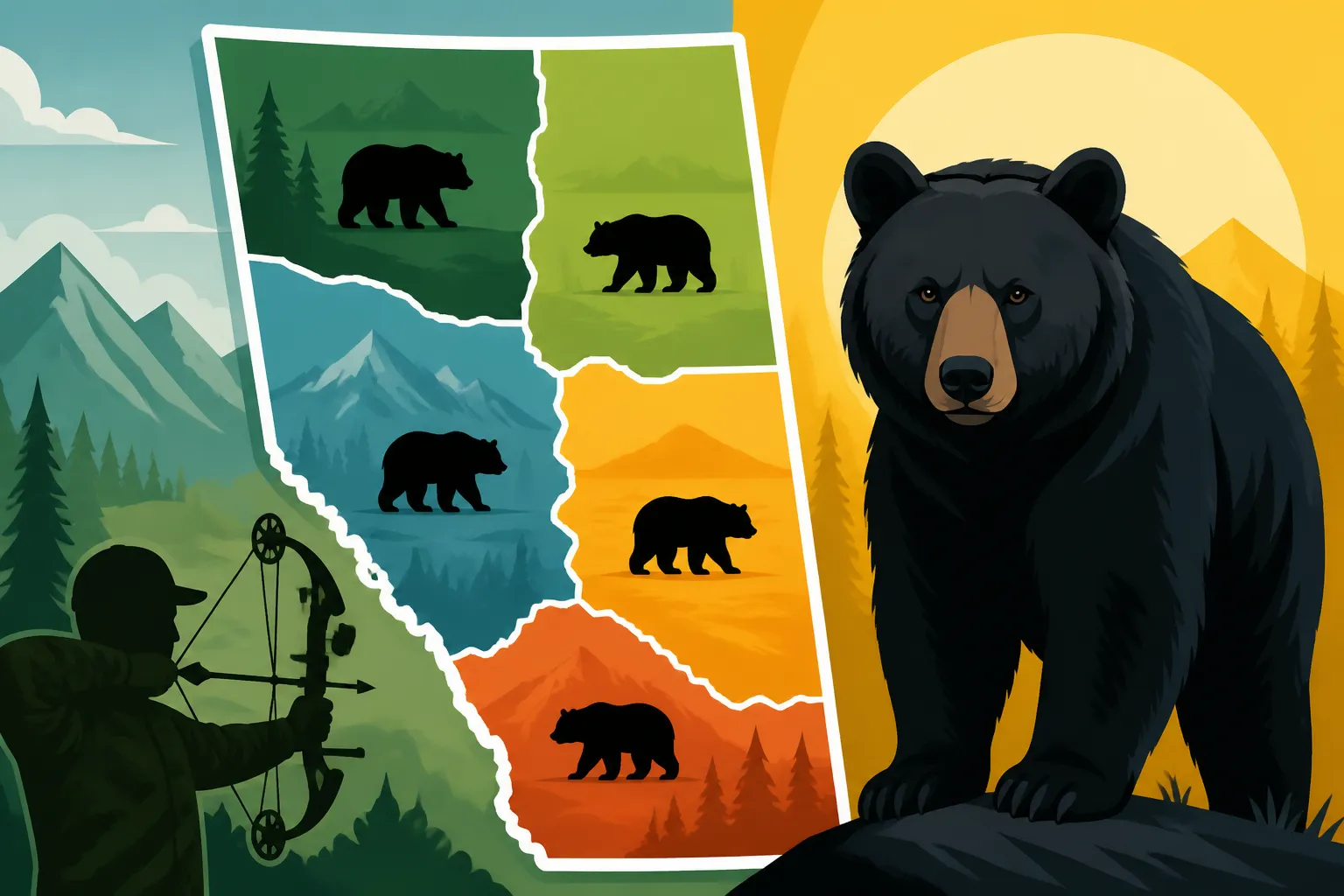
Here's a simplified look at regional black bear densities in Alberta:
| Region | Primary Habitat | Typical Density | Hunting Opportunity | Notes |
|---|---|---|---|---|
| Boreal Forest | Dense coniferous/mixedwood forest | High | Excellent | Alberta's black bear stronghold; vast wilderness. |
| Foothills & Lower Mountains | Rugged terrain, mixed forests, river valleys | Moderate to High | Very Good | Diverse habitat, can produce large bears in remote areas. |
| Parkland & Agricultural Fringe | Aspen bluffs, river valleys, shelterbelts | Low to Moderate | Fair to Good | Fragmented habitat, increased human interaction, opportunistic feeding. |
| Southern Prairie | Open grassland, sparse cover | Very Low / Absent | Very Limited | Not typical black bear habitat. |
| Extreme Alpine (High Mountains) | Above treeline | Very Low / Absent | Very Limited | Habitat typically too harsh, limited food sources. |
Hunting Black Bears in High-Population Areas
Hunting black bears in regions with high populations can be incredibly rewarding, but it also comes with its own set of responsibilities and considerations. Success isn't just about showing up where the bears are; it's about understanding their behavior, respecting their environment, and ensuring a safe and ethical hunt.
Best Practices for Hunting in Dense Bear Country
When you're in an area known for high black bear numbers, like the sprawling Boreal Forest near Slave Lake or the Swan Hills, your hunting strategy needs to be refined. Bears in these dense environments often have established travel patterns, using old logging roads, game trails, or natural funnels through thick timber. Scouting is absolutely paramount. Look for fresh scat, rubbed trees, tracks, and disturbed ground where they've been digging for roots or insects. Consider using scents or calls, especially during the spring when bears are actively seeking mates. Patience is key; bears are notoriously wary, and in dense cover, they can appear and disappear silently. For those doing a Spring Bear Hunting Alberta's Cutblocks, understanding their post-denning habits in these areas is a game-changer. Using a GPS mapping system, like what's often integrated into platforms like GoHunt, is invaluable for navigating these complex landscapes and marking bear sign.
Licensing and Season Dates by Region
While Alberta generally has generous black bear seasons, it's crucial to consult the provincial hunting regulations for specific Wildlife Management Units (WMUs). Season dates can vary slightly by WMU, and understanding these nuances is critical for legal hunting. For instance, the fall bear season might open earlier or close later in some northern WMUs compared to others. You’ll need a valid Alberta Wildlife Identification Number (WIN) card, a Wildlife Certificate, and a Black Bear Licence. Always double-check the regulations for the specific WMU you plan to hunt, especially concerning any changes from year to year. Knowing the Fall Bear Season Dates and WMUs is a non-negotiable part of planning your hunt. Remember, black bears can be harvested in both spring and fall seasons, offering extended opportunities for hunters.
Safety Protocols in Bear Country
Hunting in high-density black bear areas means you're operating in their domain, and safety must always be your top priority. While black bears are generally shy, they can be unpredictable, especially sows with cubs or startled bears. Always carry bear spray and know how to use it. Make noise as you move through thick cover to avoid surprising a bear. When field dressing an animal, be acutely aware of your surroundings and consider having a hunting partner watch your back. Properly store food and dispose of garbage to avoid attracting bears to your camp or vehicle. Furthermore, it's vital to be able to tell the difference between a black bear and a grizzly. While grizzly bears are protected in Alberta and cannot be hunted, it's critical to know Telling a Black Bear From a Grizzly on sight, for both safety and legal compliance.
Conservation and Management of Alberta's Black Bears
Alberta's healthy black bear population is not accidental; it's the result of ongoing conservation efforts and thoughtful management strategies. These efforts ensure that this iconic species continues to thrive across its diverse habitats, balancing ecological needs with human interests, including hunting.
Monitoring Population Health
Wildlife biologists and conservation officers in Alberta continually monitor black bear populations through various methods. This includes analyzing harvest data from hunters, conducting aerial surveys in some areas, and utilizing research studies involving collaring and tracking bears. This data helps assess population trends, health indicators, and reproductive rates. By understanding these metrics, managers can identify areas where populations might be stable, increasing, or potentially facing challenges. This detailed monitoring is crucial for making informed decisions about future management plans and ensuring sustainable populations. A healthy population also means a better chance of encountering What a Big Black Bear Weighs or observing bears in their prime.
Role of Hunting in Management
Regulated hunting plays a significant role in black bear management in Alberta. Far from being a detriment, it's often an effective tool for maintaining healthy populations and minimizing human-bear conflicts. Hunting helps to control numbers in areas where they might otherwise overpopulate their habitat, leading to food scarcity or increased interactions with humans. It also generates revenue through licence sales, which directly funds conservation programs, research, and habitat protection. Ethical hunting, practiced by responsible individuals, is a cornerstone of wildlife management in Alberta, contributing to the long-term viability of the species. Many hunters rely on resources like GoHunt to stay informed about regulations and contribute to data collection.
Protecting Habitat and Corridors
Ultimately, the long-term success of Alberta's black bear population hinges on the protection and intelligent management of their habitat. This includes preserving large tracts of wilderness, managing forestry operations to ensure diverse age classes of timber, and establishing wildlife corridors that allow bears to move safely between different areas. Initiatives aimed at minimizing habitat fragmentation and mitigating the impacts of human development are paramount. When bears have ample space, undisturbed denning sites, and a variety of food sources, their populations thrive naturally. Understanding where these efforts are concentrated, such as in the expansive Hunting Alberta's Boreal Forest Country, helps appreciate the dedication to sustaining these magnificent animals.
Disclaimer
Please remember that hunting regulations, season dates, and specific WMU boundaries can change. Always consult the most current Alberta Hunting Regulations Guide published by the provincial government before planning any hunt. This guide is for informational purposes only and should not be used as a substitute for official regulations.