Hunting a Native Grassland Pasture
Hunting native grassland pastures in Alberta can be one of the most rewarding yet challenging experiences for a hunter. These vast, often unbroken landscapes, while seemingly open, hide game with an incredible knack for disappearing, leaving many hunters frustrated and wondering where all the animals went. This guide is here to unravel the mysteries of these beautiful, yet demanding, hunting grounds, helping you understand the unique characteristics of these areas and the best strategies to find success.
Understanding Native Grassland Pastures in Alberta
Native grassland pastures are a quintessential part of Alberta's landscape, particularly in the southern and eastern regions of the province. Unlike cultivated fields or dense bush, these areas are characterized by diverse grasses, forbs, and shrubs that have evolved over millennia, providing critical habitat for a variety of wildlife. For hunters, they present a unique set of circumstances that require a different approach than hunting timber or agricultural lands.
What Makes These Areas Unique for Hunting?
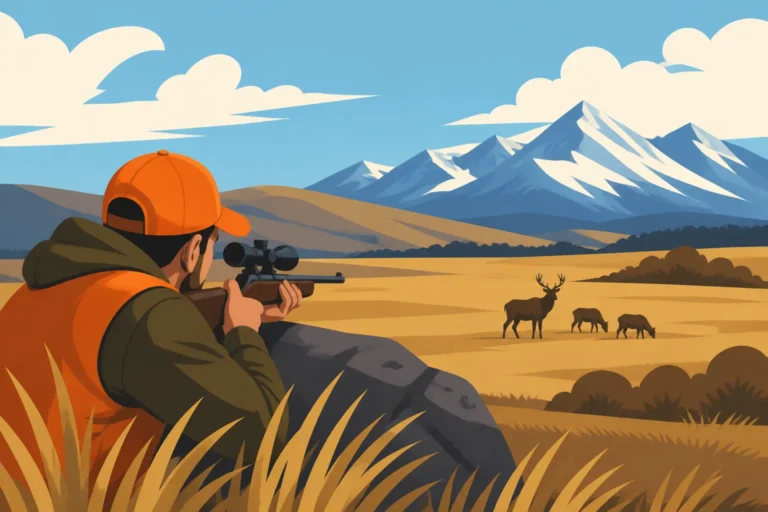
The sheer openness of native grasslands is both their defining feature and their greatest challenge. There's often very little vertical cover, which means animals rely heavily on subtle terrain features like coulees, draws, and even minor undulations for concealment. This also means visibility can be incredible, allowing you to glass vast distances, but it also makes it equally easy for game to spot you long before you ever get within range. The wind, which seems to blow constantly on the prairie, plays an even more critical role here. It can carry your scent for miles, but also allows you to stalk with a distinct advantage if you use it wisely.
These pastures often have a complex mosaic of land ownership and use. Many are privately owned ranchlands, some are provincial grazing leases, and others are Crown land. Understanding these distinctions and securing proper access is paramount. The vegetation itself, while appearing uniform from a distance, holds numerous micro-habitats – taller grasses for bedding, lower areas holding moisture, and the occasional sagebrush or willow clump providing just enough cover. Mastering the ability to "read" this subtle landscape is the key to locating hidden game.
Another aspect that sets these pastures apart is the type of game they attract. While you might associate whitetails with bush and mule deer with badlands, native grasslands are prime territory for certain species. They offer extensive foraging opportunities and open sightlines, which appeal to animals that thrive in such environments. Understanding what species prefer these areas will direct your scouting and hunting efforts more effectively.
Identifying and Accessing Native Grasslands
Identifying native grassland pastures often involves a combination of satellite imagery, topographical maps, and on-the-ground scouting. Look for expanses that aren't marked as cultivated fields, showing a more natural, varied texture from the air. Topographical maps will reveal the subtle draws, coulees, and ridges that act as travel corridors and bedding areas. Tools like onX Hunt are absolutely invaluable here, layering property lines with satellite views and topographical contours, making it easy to distinguish private land from various forms of public access.
Accessing these areas is where many hunters hit a roadblock. A significant portion of Alberta's native grasslands are either privately owned or under grazing lease agreements. For private land, you absolutely must obtain explicit permission from the landowner before stepping foot on their property. This means knocking on doors, making phone calls, and building relationships. Never assume permission. For grazing leases, the situation can be a bit more nuanced. While they are still private tenures, there are specific regulations regarding hunter access. Often, you'll need to contact the leaseholder, and while they cannot technically refuse access to foot traffic for hunting during open seasons, it's always best practice to communicate your intentions and build goodwill. Respecting their operations, their livestock, and their property goes a long way.
Crown land, where available, offers more straightforward access, but even then, understanding Public Land Use Zones (PLUZs) and specific regulations for vehicle use is crucial. Always verify the land status, especially if you're using older maps or relying solely on general knowledge. Misidentifying land or trespassing can lead to serious consequences and damage the reputation of all hunters. Remember to check Alberta's Recreational Access Mapping Tool for up-to-date information on land status.
Game Species You'll Encounter in Native Grasslands
Native grassland pastures are teeming with life, offering diverse hunting opportunities. While big game might be the primary draw for many, these vast landscapes also provide excellent habitat for various bird species, making for truly mixed-bag potential.
Big Game Opportunities
The iconic big game animals of Alberta's grasslands are undoubtedly the mule deer and the pronghorn, but whitetails can also be surprisingly prevalent in certain areas.
-
Mule Deer: These magnificent deer thrive in the broken terrain often associated with native grasslands. They use the coulees, draws, and even slight depressions as bedding areas and travel routes. Their large ears and keen eyesight are perfectly adapted to the open country. Hunting mule deer here often involves extensive glassing, patiently picking apart every fold in the landscape, followed by a strategic stalk. Knowing Mule Deer in Alberta's Open Country is key to understanding their behaviour in these environments. They will often bed on a leeward slope, facing downhill with the wind at their back, allowing them to scent anything approaching from behind while seeing anything coming from below. Their ability to seemingly vanish into sparse cover is legendary, making a successful spot-and-stalk hunt a true test of skill and patience.
-
White-Tailed Deer: While typically associated with thicker cover, whitetails have adapted remarkably well to certain grassland environments, especially where there are shelterbelts, river bottoms, or brushy draws. White-Tailed Deer, Alberta's Most Hunted Big Game often utilize these pockets of cover as sanctuaries, moving out into the open grasslands to feed, particularly at dawn and dusk. Hunting them in these areas often involves focusing on the edges of this limited cover, or identifying their primary travel routes between bedding and feeding areas, which might be subtle trails through the taller grass or along fence lines. Don't underestimate a whitetail's ability to live in what appears to be wide-open country; they are masters of finding and exploiting any available cover.
-
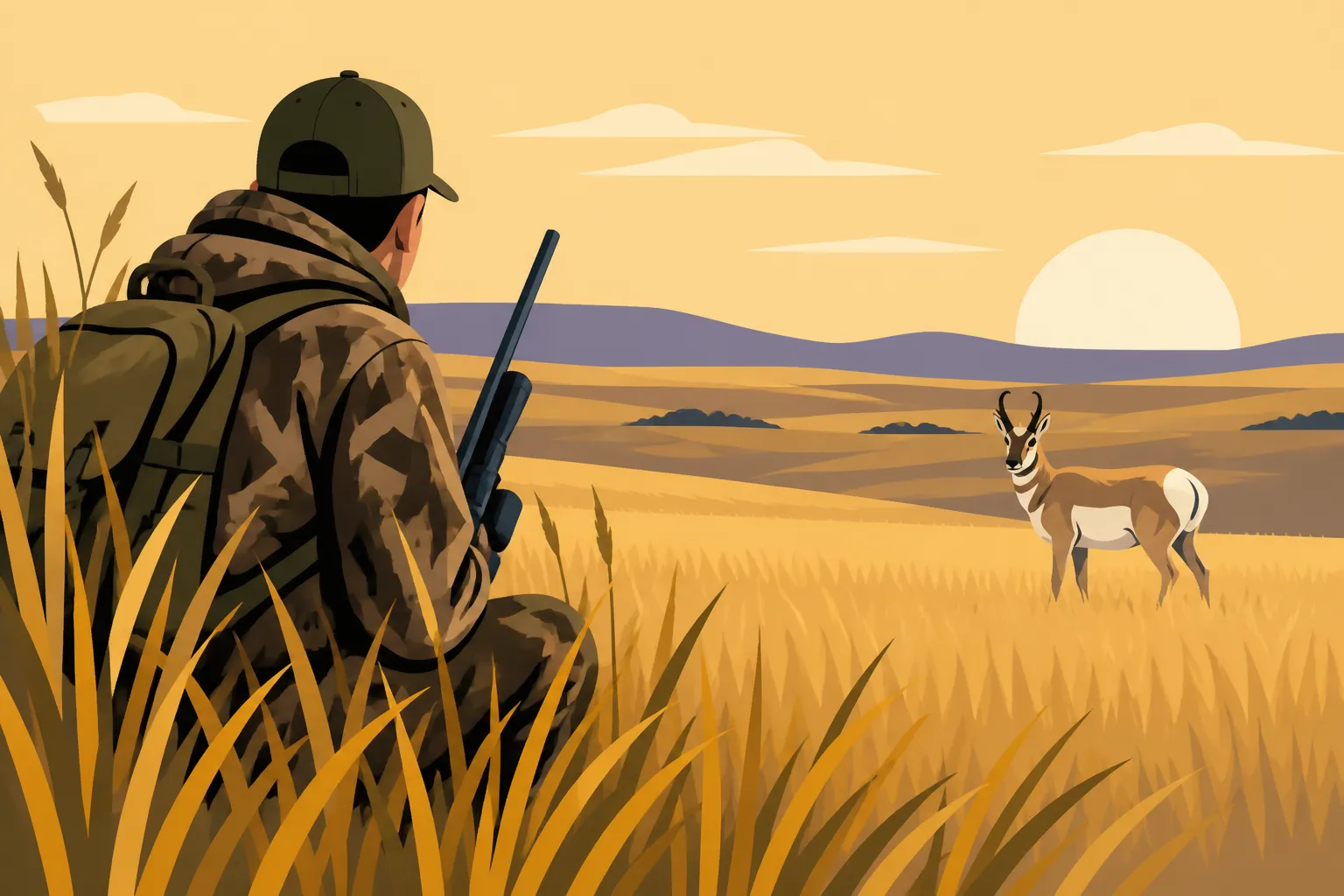
Pronghorn: The fastest land animal in North America, pronghorn are perfectly at home on the open prairie. Pronghorn on Alberta's Southern Prairie are a true grassland specialist, their eyesight legendary, allowing them to spot danger from incredible distances. Hunting pronghorn is almost exclusively a spot-and-stalk affair, requiring immense patience and often long, circuitous stalks to get within range. Their preference for wide-open spaces means cover for the hunter is minimal, making approaches extremely challenging. They typically use very subtle dips and rises in the terrain to feed and bed, always keeping an eye out. Understanding their movement patterns, often related to water sources or specific forage, is critical for success.
Upland Birds and Waterfowl
Beyond big game, native grasslands are a haven for various game birds, offering exciting wingshooting opportunities.
-
Upland Birds: The quintessential grassland upland bird is the sharp-tailed grouse. These birds are found throughout the native prairie and parkland regions, often holding tight in dense grass or brushy coulees. Walking Up Sharp-Tailed Grouse in Alberta requires covering a lot of ground, often with a good pointing dog, as they can flush wildly if approached too closely. Hungarian partridge, or "Huns," are another popular species, frequently found near farmland edges but also in pure native grass. Hunting Hungarian Partridge on Alberta Farms often involves walking shelterbelts or fence lines where they seek refuge. These birds are known for their covey flushes, providing fast-paced action. You might also encounter pheasants in areas adjacent to agricultural lands, especially near dense cover like cattail sloughs or thick brush.
-
Waterfowl: While not strictly a "grassland" species, many native grassland pastures contain potholes, sloughs, and small marshes that attract migratory waterfowl. Ducks and geese will often utilize these water bodies for resting and roosting, flying out to feed in nearby grain fields. This means that combining a big game hunt or an upland bird hunt with a bit of jump-shooting or decoy hunting near a grassland pothole can be incredibly productive. Alberta's Waterfowl and Migration Routes crisscross these regions, making them prime staging areas during migration. Keep an eye out for these opportunities, especially if you're exploring areas with diverse habitat.
Strategies for Hunting Alberta's Native Grasslands
Hunting native grasslands demands a thoughtful and often physically demanding approach. The wide-open nature of these landscapes means you can't rely on dense cover to hide your mistakes; every move must be deliberate and well-planned.
The Art of Spot and Stalk
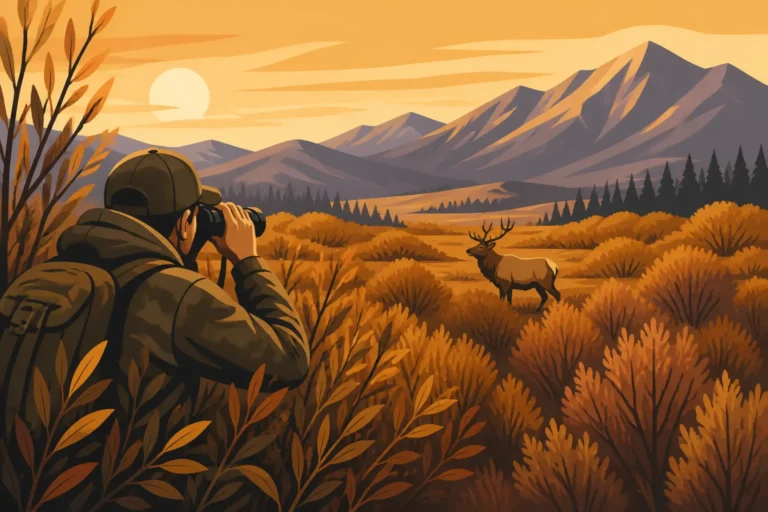
Spot and stalk is the bread and butter of grassland hunting, especially for mule deer and pronghorn. It begins with effective glassing. You need quality optics – good binoculars on a tripod are almost non-negotiable for thoroughly picking apart the distant landscape. Find a high vantage point, settle in, and meticulously scan every draw, coulee, ridge, and shadowed area. Animals blend in incredibly well, so look for abnormal shapes, horizontal lines breaking up vertical grass, or a subtle flick of an ear. Once you spot an animal, the real work begins.
The stalk itself needs careful planning. Before you move, determine the wind direction – it's your most critical ally. Wind in Open Prairie Country is often swirling, so having a good wind checker is essential. Plan your route to stay downwind of the animal, using every piece of available cover: the bottom of a coulee, a fence line, a stand of taller grass, or even a slight rise in the ground. You might have to walk a long, circuitous path to get into position, often covering several kilometres for what seems like a short distance on the map. Patience is paramount; rushing a stalk in open country almost always ends in failure. Stay low, move slowly, and constantly check for the animal's location, especially if it's bedded. The goal is to get within shooting range undetected. For a deeper dive, consider Spot-and-Stalk Mule Deer in Alberta.
Ambush Hunting and Scouting
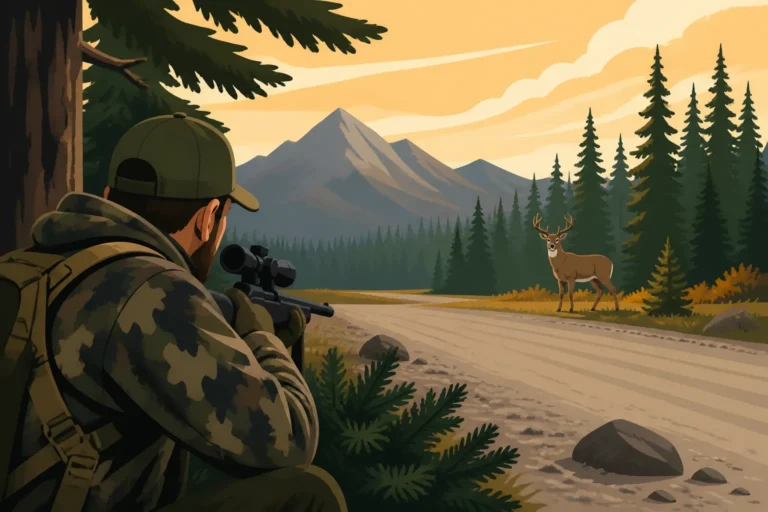
While spot and stalk is dominant, ambush hunting also has its place, particularly for whitetails or in areas with consistent game movement patterns. This strategy hinges on meticulous scouting and understanding animal behaviour. Identify key pinch points, such as where a large coulee narrows, a fence line creates a natural funnel, or a brushy draw provides the only significant cover leading to a feeding area. Water sources, especially in dry prairie environments, are also prime ambush locations. Hunting a Prairie Coulee Bottom can be incredibly effective, especially if it's a known travel corridor.
Setting up an ambush involves getting into position well before daylight or in the late afternoon, minimizing your movement and scent. A portable ground blind can be invaluable for breaking up your silhouette in open country, or you might find natural cover in a clump of sagebrush or the bank of a creek. Pay close attention to historical game sign – tracks, rubs, scrapes, and droppings – to confirm that animals are actively using the area. Trail cameras can also be a game-changer for monitoring activity and confirming travel routes without putting undue pressure on the animals. Remember, the goal is to be invisible and scent-free when the game arrives.
Utilizing Technology for Success
Modern hunting technology has revolutionized how we approach hunting, and native grasslands are no exception. Far from being a crutch, these tools, when used correctly, significantly enhance your ability to scout, navigate, and execute a hunt.
-
Mapping Applications: Applications like onX Hunt are indispensable. They provide detailed satellite imagery, topographical maps, and, crucially, property ownership overlays. This allows you to plan your stalks, identify public land access, locate potential water sources or bedding areas, and understand the lay of the land without having to physically walk every inch. You can mark waypoints for promising sign, plan entry and exit routes, and ensure you're always aware of property boundaries. This is especially vital when Finding Access on Alberta Crown Land or navigating the complex patchwork of private and leased lands. GoHunt is another excellent resource, often providing more in-depth data on specific hunting units, draw odds, and historical harvest data which can help you identify high-potential WMUs.
-
Weather Apps: Given the exposed nature of grasslands, knowing the precise wind direction, speed, and upcoming weather patterns is crucial. Modern weather apps provide hyper-local forecasts, allowing you to plan your stalks for optimal wind conditions and prepare for sudden changes in temperature or precipitation. A rapidly shifting wind can ruin a perfectly planned stalk, so constant monitoring is key.
-
Rangefinders: In open country, judging distance can be incredibly deceptive. A quality rangefinder is an absolute must-have. Whether for archery or rifle hunting, knowing the exact distance to your target, and to various landmarks during a stalk, will significantly improve your accuracy and confidence. Don't rely on estimation; the wide-open prairie has a way of making distances appear much shorter than they truly are.
Essential Gear and Safety Considerations
Hunting native grassland pastures presents specific gear requirements and safety challenges that hunters need to address to ensure a successful and safe outing. The environment can be harsh and unforgiving if you're not properly prepared.
Gear for Open Country
When you're out in the vastness of Alberta's native grasslands, your gear choices can make or break your hunt. The long hours of glassing, the extended stalks, and the unpredictable prairie weather demand specific items.
-
Optics: As mentioned, quality binoculars (10×42 or 12×50) and a spotting scope (15-45x or 20-60x) mounted on a sturdy tripod are essential. You'll spend a significant amount of time behind glass, dissecting every detail of the landscape. Don't skimp here; good optics reduce eye strain and reveal game that cheaper alternatives simply can't. A rangefinder is also non-negotiable for accurate shot placement in open country where distances are deceiving.
-
Clothing: Layers are key. The prairie can experience extreme temperature swings, from frosty mornings to scorching midday heat, and then sudden evening chills. Pack moisture-wicking base layers, insulating mid-layers, and a windproof/waterproof outer shell. Camouflage patterns that blend with sparse grassland vegetation are ideal, but more importantly, choose quiet fabrics that won't rustle during a stalk. Given Alberta's regulations, remember your blaze orange during general seasons.
-
Footwear: You'll be covering a lot of ground, often uneven and possibly rough with badger holes or cattle tracks. Comfortable, supportive, and waterproof hiking boots are critical. Ensure they're well broken-in to prevent blisters on long walks. Consider gaiters if you're walking through tall, dew-laden grass or potential muddy areas.
-
Navigation & Communication: Beyond your mapping app, always carry a physical map and compass as a backup. A reliable GPS device can also be a lifesaver if your phone battery dies or loses signal. In remote areas, a satellite messenger or two-way radio can provide vital communication in emergencies, as cell service is often non-existent.
Staying Safe on the Prairie
Safety in native grasslands goes beyond just firearm handling; it involves being aware of your surroundings, the elements, and respecting the land and its other users.
-
Weather Preparedness: Prairie weather can change rapidly. A sunny, calm morning can turn into a cold, windy rain or even a snow squall in hours. Always carry extra layers, water, and emergency supplies like a fire starter, first-aid kit, and an emergency blanket. Hunting Alberta Winter Weather Safely emphasizes preparation for extreme cold, which can strike in late fall as well. Hypothermia and frostbite are real risks.
-
Livestock: Many native grasslands are working pastures with cattle or horses. Always give livestock a wide berth and avoid disturbing them. Close gates behind you, and if you encounter cattle or horses, move slowly and calmly to avoid startling them. Harassing or injuring livestock is a serious offense. If you encounter a herd with a bull, be extra cautious and give it plenty of space.
-
Landowner Relations: This cannot be stressed enough. Building and maintaining positive relationships with landowners is crucial for continued access. Always ask for permission, follow their specific rules, and leave no trace. If you promise to call them after your hunt, do it. Offer to share meat or help with chores. Good landowner relations benefit all hunters. Asking a Grazing Leaseholder for Access is a foundational skill for hunting these areas. Remember, your actions reflect on the entire hunting community.
-
Wildlife Encounters: While rare, encounters with potentially dangerous wildlife like bears (especially in the foothills fringe of the grasslands) or cougars are possible. Carry bear spray and know how to use it. Be aware of your surroundings, especially in dense brush along creek beds or in areas with known predator activity.
Hunting Alberta's native grassland pastures offers an incredible challenge and the chance to experience a unique part of our hunting heritage. It demands patience, keen observation, and a deep respect for the land and its inhabitants. By understanding the environment, the game, and employing the right strategies and gear, you can unlock the secrets of these vast, beautiful plains and enjoy truly unforgettable hunting adventures.
Disclaimer
This article is for general informational purposes only and does not constitute professional advice. Laws, prices and regulations vary by location and change over time. Consult a qualified professional for guidance on your specific situation.