Hunting an Alberta Winter Range in Late Season
Late season hunting in Alberta's winter ranges can be a truly incredible experience, offering unique opportunities to find big game that has congregated in specific, accessible areas. However, it also presents some of the most brutal conditions a hunter can face: biting winds, deep snow, and temperatures that can plummet well below freezing. This guide will walk you through how to understand these critical wintering areas, adapt your strategies for success in the deep cold, and prepare yourself and your gear for a challenging yet potentially very rewarding hunt.
The Dynamics of Alberta's Winter Ranges and Game Movement
As the season progresses and the snow begins to pile up, big game animals in Alberta—from whitetail and mule deer to elk and moose—don't just wander aimlessly. They actively seek out "winter ranges." These are specific geographical areas that offer critical advantages for survival during the harshest months. Understanding why and where animals congregate in these zones is the first step to late-season success.
Why Animals Seek Winter Ranges
Animals migrate to winter ranges primarily for three reasons: food, cover, and easier movement. Deep snow can make foraging incredibly difficult, burying vital food sources and expending precious energy with every step. Winter ranges typically feature south-facing slopes, which catch more sunlight and melt snow faster, exposing grasses and shrubs. Heavy timber provides crucial thermal cover, breaking the wind and offering shelter from extreme cold. River bottoms, dense aspen bluffs, or pockets of mature spruce can all serve as sanctuaries. Additionally, topography might create areas with less snow accumulation, allowing animals to move with less effort and conserve calories. If you've ever tried to walk through waist-deep snow, you know how exhausting it is; imagine being a deer doing that all day, every day.
Identifying Key Winter Range Characteristics
When you're looking at a map, or even better, using a digital tool like onX Hunt, you'll want to focus on several key characteristics that define good winter range. South-facing slopes are gold, especially if they transition into dense timber or have a good amount of woody browse. River valleys and creek bottoms often provide sheltered corridors that hold less snow and offer access to food and water. Think about how the sun hits the land, where the prevailing winds are blocked, and where the animals can move without expending too much energy.
For whitetail deer, these might be the thickest aspen bluffs bordering agricultural fields, or sheltered river valley bottoms where they can find browse and escape the wind. Mule deer often gravitate towards the sheltered coulees and broken badlands of the prairie, especially those with good stands of brush or timber, often facing south. Where Alberta Whitetails Bed in Deep Snow will give you a better idea of what to look for with deer, and it’s no different for late season. Elk, particularly in the foothills, might descend from higher elevations to more sheltered creek bottoms or areas with exposed forage, often on ranch land where they can find leftover feed or graze. Moose in the boreal forest will still utilize cutlines and seismic lines, but will increasingly depend on dense cover and areas with available willow and aspen browse, particularly near wetlands or sheltered creek systems. How Deep Snow Moves Deer Around explains how changing conditions dictate movement, and in winter, that means moving to the path of least resistance and best food.
Strategic Approaches for Late Season Success
Hunting in the late season demands a shift in strategy. The game is focused on survival, meaning their patterns are often more predictable, but they are also more wary and less active during daylight hours. Your approach needs to be calculated, patient, and prepared for the elements.
Scouting for Winter Concentrations
Effective late-season hunting starts with focused scouting, even if it's primarily done with your eyes on a map from home. Use tools like onX Hunt or even satellite imagery from GoHunt to identify those prime south-facing slopes, dense timber pockets, and river corridors mentioned earlier. Look for areas where fields transition directly into heavy cover, or where a ridge offers both sun exposure and wind breaks. Once you're in the field, this kind of pre-scouting pays off immensely. You won't be wasting precious hunting time wandering aimlessly in brutal cold.
Once you have a few promising spots, head out and look for actual sign. In the snow, tracks are your best friend. Look for heavy trails, beds, and feeding areas. Pay attention to the freshness of the tracks – deep, crisp prints mean recent activity. Animals will often yard up in these winter ranges, so if you find one set of tracks, chances are there are more nearby. Focus on pinch points where terrain funnels animals, or travel corridors between bedding and feeding areas. This time of year, animals are often making shorter, more deliberate movements between these critical resources.
Adapting Your Hunting Tactics
The deep snow and cold weather dictate your hunting tactics. This isn't the time for long, fast pushes.
Still-Hunting and Stalking
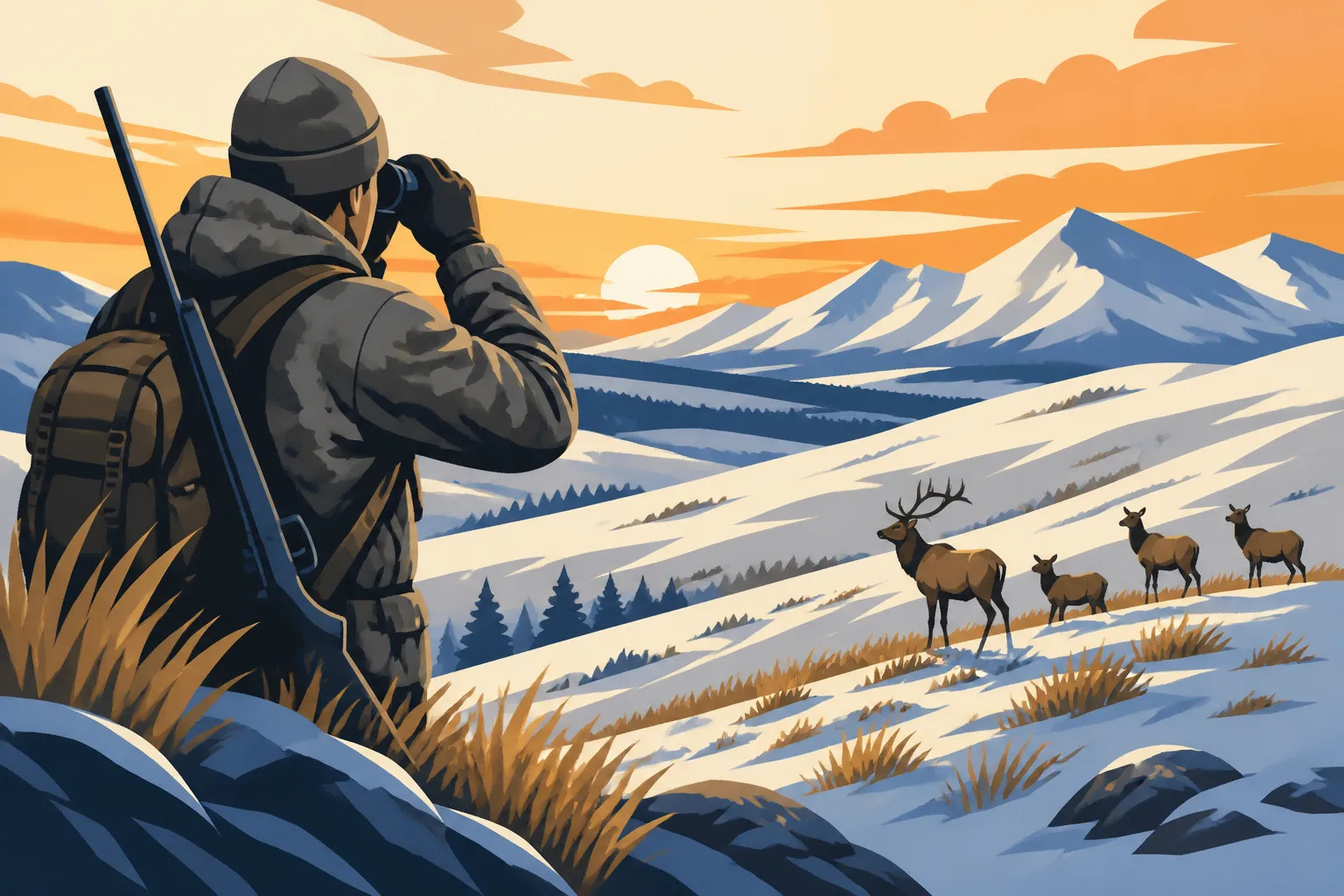
With snow on the ground, still-hunting becomes an incredibly effective, albeit challenging, technique. The snow mutes your footsteps, allowing for quieter movement, but it also means animals can hear you better if you break through a crust. Move slowly, taking one or two steps, then pausing to scan thoroughly. Use binoculars constantly to pick apart dense cover. Focus on moving into the wind or crosswind, especially when working through timber or along a creek bottom. Animals will be bedded down more often, conserving energy, so you need to be observant. Pay close attention to subtle movements, an ear flick, a patch of fur that doesn't quite look right. Stalking Mule Deer in Badlands Breaks offers great advice on slow, deliberate movement that translates well to snow. If you're hunting along a creek or in the foothills, Hunting a Foothills Bench Above a Creek provides insights into navigating broken terrain that often serves as winter range.
Stand Hunting and Ambushing
For extreme cold or when animals are highly predictable, stand hunting from a blind or treestand can be productive, especially if you've patterned game movement to and from a specific food source or bedding area. Think about sheltered spots with good visibility, perhaps an old logging road that animals are using as a travel route, or a field edge bordering a dense bluff. A ground blind can provide critical shelter from the wind, allowing you to stay on stand longer. Make sure your setup is quiet and allows for an unobstructed shot. This is also where understanding animal habits comes in; a well-placed stand near a Hunting a Frozen Slough Crossing could intercept deer moving between cover.
Late Season Gear and Preparation
Late season hunting is as much about mental toughness and physical preparedness as it is about strategy. The cold is a serious threat, and your gear choices can literally be life-saving.
Layering for Extreme Cold
Forget bulky, single-layer warmth. A proper layering system is non-negotiable. Start with a moisture-wicking base layer against your skin to pull sweat away. Next, a mid-layer of fleece or wool provides insulation. Your outer layer should be windproof and water-resistant (or waterproof if snow is falling heavily), allowing you to shed or add layers as your activity level changes. Good quality insulated bibs and a parka are critical. Don't skimp on a warm hat that covers your ears, a neck gaiter or balaclava, and most importantly, your hands and feet. Insulated, waterproof boots are essential, and many hunters use chemical hand and foot warmers to extend their time in the field.
The Cold-Weather Survival Kit
Beyond your hunting gear, carry a robust survival kit. Fire-starting materials, a small emergency shelter (like a Mylar space blanket or bivy sack), a headlamp with extra batteries, a knife, a compass and map, and a reliable communication device are paramount. While cell service is spotty in many areas, a satellite messenger or two-way satellite communication device, like those often discussed in GoHunt forums, can be a lifesaver if you get into trouble. Carry high-energy snacks that won't freeze solid, and an insulated water bottle to prevent your water from turning to ice. A thermos of hot tea or coffee can be a game-changer. For advice on staying safe in the cold, check out Hunting Alberta Winter Weather Safely.
Navigating Access and Regulations for Winter Ranges
Just because it's cold and snowy doesn't mean the rules change. In fact, some access issues can become even more pronounced in late season. Being prepared for this is crucial to a successful and legal hunt.
Understanding Public and Private Land Access
Knowing where you can and cannot hunt is fundamental. While public lands, particularly Crown Land in the Green Area, often offer vast tracts for hunting, access can be tricky in winter due to snow-covered roads or gates. Always verify your location, and this is where an app like onX Hunt shines, showing you exactly where property lines lie, including Crown Land and private parcels. Many winter ranges, especially for whitetails and elk, occur on private agricultural land or grazing leases. You absolutely still need permission to hunt these areas, even if they appear unposted or remote. Asking a Grazing Leaseholder for Access details how to approach this. Never assume access based on an old fence line or faint trail.
Specific Late Season Regulations and Considerations
Always consult the current Alberta Hunting Regulations for specific season dates, which vary by Wildlife Management Unit (WMU) and species. Some WMUs have extended late seasons specifically for antlerless deer, or for general deer in certain areas. For example, Late Season Whitetail Dates by WMU will show you how these dates can differ significantly across the province. Pay close attention to any special draw tags you might hold, as their validity dates are strict.
One critical aspect of late season hunting is the mandatory Chronic Wasting Disease (CWD) submission for certain WMUs. Even if you're out late in the season, if you harvest a deer, moose, or elk in a designated CWD zone, you must submit the head for testing. Which WMUs Require a Deer Head Submission lists the affected areas and where to drop off samples. This is a non-negotiable part of responsible hunting in Alberta.
Vehicle Access and Winter Road Conditions
Many backcountry roads, especially in the Green Area or Provincial Grazing Reserves, are not maintained for winter travel. Snowfall can quickly render trails impassable, and freezing/thawing cycles can create treacherous icy conditions. Always ensure your vehicle is properly equipped for winter driving, including good tires, a shovel, tow straps, and emergency supplies. Consider a Winter Truck Kit for an Alberta Hunt for safety. Quad trails might be open but could also be deep in snow or ice. Be realistic about your vehicle's capabilities and always err on the side of caution. Getting stuck far from help in freezing temperatures is a serious situation, as outlined in What to Do If You Get Stuck in the Bush.
| Aspect | Consideration for Late Season Alberta Hunting | Why It Matters |
|---|---|---|
| Game Movement | Reduced activity, concentrated in winter ranges | Predictable locations, but wary and often nocturnal |
| Forage Availability | Limited, animals seek exposed browse and food sources | Focus scouting on south-facing slopes, agricultural edges |
| Snow Depth & Crust | Deep snow hinders movement; icy crusts are noisy | Aids tracking, but makes silent movement difficult; plan routes |
| Temperature Extremes | Bitter cold, wind chill, rapid temperature drops | Requires robust layering, insulated gear, and hot liquids |
| Daylight Hours | Shorter days mean less active time for game | Focus efforts during prime morning/evening hours |
| Access to Areas | Roads may be unmaintained, impassable, or gated | Verify routes, consider alternative transport (snowshoes) |
| Meat Care | Freezing temperatures aid preservation but make processing tough | Meat Care in Alberta's Cold and Warm Swings is critical; quarter quickly |
| Hunter Pressure | Generally lower than early season, but can be concentrated | More solitude, but popular winter range spots can still draw crowds |
Beyond the Shot: Meat Care and Safety
Once you've successfully harvested an animal in the late season, a new set of challenges and responsibilities emerges. Proper meat care and maintaining safety are paramount, especially when temperatures are well below freezing.
Field Dressing and Meat Care in the Cold
The upside of frigid temperatures is that spoilage isn't typically an immediate concern. However, getting the animal field dressed quickly and efficiently is still important to allow the carcass to cool properly and prevent bacterial growth from internal heat. In extreme cold, meat can freeze solid surprisingly fast, which can make quartering difficult. Have a plan for getting the animal out of the bush. A sled or game cart can be invaluable in snow. For detailed guidance, especially on avoiding frozen meat issues and keeping things clean, consult Meat Care in Alberta's Cold and Warm Swings. Always ensure you tag your animal immediately and properly, adhering to all provincial regulations.
Prioritizing Safety in Harsh Conditions
Your personal safety should be your absolute top priority. Hunting in Alberta's late season wilderness, especially alone, carries inherent risks. Beyond the gear discussed earlier, always inform someone of your hunting plans, including your route, where you'll be, and when you expect to return. Carry a fully charged phone (keep it warm to extend battery life) and a power bank. Be aware of the signs of hypothermia and frostbite, both in yourself and your hunting partners. Stay hydrated, eat regularly, and don't push yourself past your limits. The experience of hunting a late season winter range is unforgettable, but only if you return home safely to tell the tale.
Disclaimer
This article is for general informational purposes only and does not constitute professional advice. Laws, prices and regulations vary by location and change over time. Consult a qualified professional for guidance on your specific situation.