Glassing a Burn for Alberta Moose
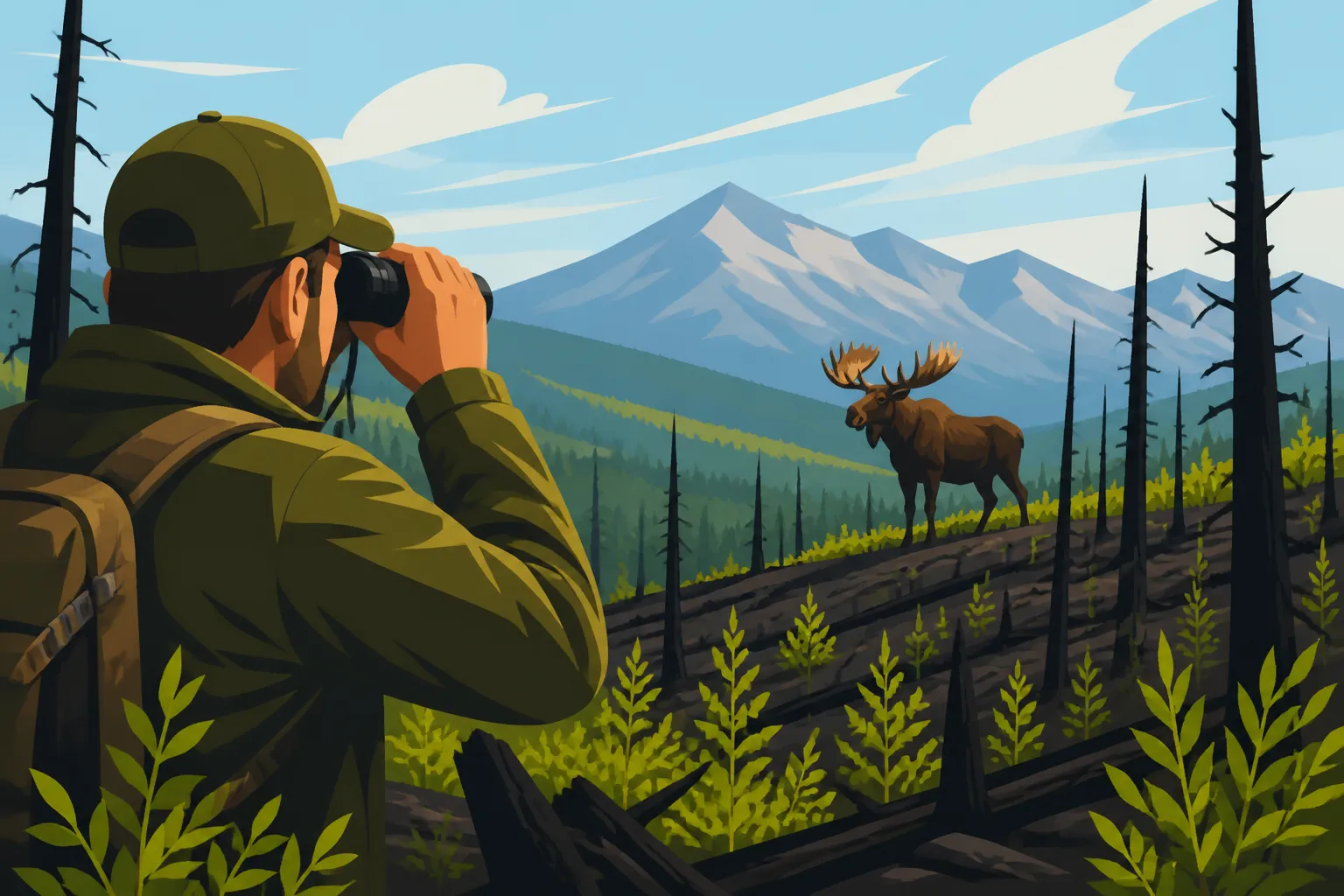
The sheer vastness of Alberta's wilderness can feel overwhelming when you're on the hunt for moose, especially when you're trying to make sense of a burned-over area. It's easy to drive past what looks like a desolate landscape, missing the prime opportunities that fire-scarred timber often presents. This guide will walk you through the nuances of glassing burned areas for moose, helping you understand their behavior in these unique environments and equip you with the strategies to spot that trophy bull amidst the regenerating forest.
Understanding Moose Behavior in Burned Areas
When wildfire tears through a forest, it might look like destruction, but for moose, it's often a catalyst for new life and prime habitat. These areas, especially after a few seasons, become incredibly attractive to them. But it’s not just any burn; the age of the burn and the types of vegetation that return make all the difference.
The Stages of a Burn and Moose Attraction
Moose are creatures of habit, but they're also highly opportunistic, always seeking out the best forage and cover. A burned area offers a dynamic landscape that changes with time, directly influencing how moose use it.
- Year 1-2 Post-Burn: The Initial Regeneration: Immediately after a fire, the ground is often bare and nutrient-rich, exposed to sunlight. You won't find a lot of moose here right away. The initial growth is often grasses and fireweed, which moose will browse lightly, but the lack of substantial cover and their preferred woody browse keeps them from making it a primary residence. You might see them skirting the edges, but they're not typically deep in the core. The frustration here is that many hunters dismiss these areas too soon, thinking they're dead zones, when in reality, they're laying the groundwork for future feeding grounds.
- Year 3-10 Post-Burn: The Browse Explosion: This is often the sweet spot for moose. As the years pass, the forest floor comes alive with a dense flush of willow, aspen, birch, and other deciduous shrubs – all prime moose browse. The sunlight reaching the forest floor supercharges this growth, creating a cafeteria of tender, nutritious shoots. Moose will move into these areas to feed heavily, especially in the early mornings and late evenings. They'll use any surviving islands of timber or unburned pockets for bedding cover during the day. This period can last for many years, depending on moisture and fire intensity. It's during this phase that you're most likely to find them, but the thick new growth can make visual spotting incredibly challenging without proper glassing techniques. You're not just looking for a moose, you're looking for a dark shape against a cluttered, regenerating backdrop.
- Older Burns (10+ Years): Transitioning Habitat: As the new growth matures and begins to canopy over, shading out the understory, the abundance of moose browse can start to diminish. These older burns might still hold moose, especially if they are interspersed with younger growth or near wetlands, but the initial "browse explosion" tapers off. They might transition to using these areas more for travel corridors or secondary feeding, rather than primary feeding and bedding zones. The challenge becomes finding the specific micro-habitats within these older burns that still offer what a moose needs.
Food Sources and Cover in Post-Fire Landscapes
Moose aren't just looking for quantity; quality matters too. The new growth in burned areas is often highly palatable and nutritious.
- Nutrient-Rich Forage: The ash from burnt timber releases essential minerals into the soil, creating a nutrient-dense environment for new plant growth. This can lead to larger, more robust browse, which means better nutrition for moose. They will gravitate towards these areas for species like willow, trembling aspen, balsam poplar, and various woody shrubs. You might find them in areas with regenerating alders, or even pawing at the soil for mineral content. Thinking about What Moose Eat Through the Year can really help you pinpoint the most attractive feed.
- Edge Habitat and Travel Corridors: Burns often create extensive "edge" habitat where new growth meets unburned timber. These edges are natural travel routes and feeding zones for moose. They offer security cover close to abundant food. Look for where a dense pocket of regenerating willow abuts a stand of mature spruce. These transition zones are ideal for intercepting moose moving between bedding and feeding areas. Additionally, burned areas often open up visibility, creating new travel corridors that moose will exploit, such as along ridges or in creek bottoms that were previously too dense to navigate easily. Identifying these corridors is a critical part of Hunting Moose Along Cutlines and Seismic Lines, and the principle applies equally to fire-created paths.
- Thermal Regulation and Security: While burns initially lack dense thermal cover, pockets of surviving timber or thick regenerating areas will be utilized for bedding. Moose need shelter from both sun and wind, especially during harsh Alberta summers or early season cold snaps. In winter, deeper snow in burns can actually offer some insulation, while thickets of dense regenerating spruce can provide vital windbreaks. Keep an eye out for how moose use the remaining structure in the landscape.
Essential Gear for Glassing Burns Effectively
Glassing a burned area for moose is a test of patience, and your gear can make or break the hunt. You're not just scanning; you're dissecting the landscape, piece by piece, looking for anomalies.
Optics: Binoculars, Spotting Scopes, and Tripods
Having the right optics is non-negotiable for effective glassing, especially in the vast and often broken terrain of a burn.
- High-Quality Binoculars (10×42 or 12×50): Your binoculars are your primary scouting tool. They should be clear, bright, and comfortable to hold for extended periods. A 10×42 or 12×50 magnification is often a good balance between field of view and magnification. You’ll be spending a lot of time behind these, scanning systematically. Look for optics with good light transmission, especially for those crucial low-light periods at dawn and dusk. Brands like Vortex, Leupold, and Swarovski are popular choices among serious hunters. Don't cheap out here; blurry optics will lead to eye strain and missed opportunities. Remember, even a slight quiver from handheld binos can mask a moose, which is why a tripod is so important.
- Spotting Scope (60x or 80x): For those truly vast burns, or when you spot something suspicious at extreme range, a spotting scope is invaluable. A 60x or 80x magnification scope will allow you to discern details like antler configuration, body size, and even whether that dark patch is a stump or a moose bedded down. When Judging a Mule Deer Buck at Distance, a spotting scope is crucial, and the same applies to the often more camouflaged moose in regenerating burns. Having an angled eyepiece can also be more comfortable for long glassing sessions, especially when looking uphill or downhill.
- Sturdy Tripod and Adaptor: This is perhaps the most overlooked, yet critical, piece of gear. Handholding binoculars for more than a few minutes is inefficient and tiring. A solid tripod allows you to stabilize your binoculars or spotting scope, eliminating shake and enabling you to pick apart details that you'd otherwise miss. You'll need a bino adaptor to attach your binoculars to the tripod. This stability is what allows you to really see into the shadows and through the clutter. Without a tripod, you're just looking at the burn, not into it. For backcountry hunts, consider lightweight carbon fiber tripods, but ensure they remain stable.
Other Essential Gear for Burned Terrain
Beyond optics, the unique challenges of a burned landscape require specific considerations for your clothing, footwear, and navigation.
- Durable Clothing and Footwear: Burned areas are often littered with sharp, broken timber, ash, and uneven ground. Your clothing needs to be tough and snag-resistant. Think durable ripstop fabrics. More importantly, your footwear needs to be robust, waterproof, and offer excellent ankle support. Hiking through thick, regenerating shrubs and over fallen logs can be a real grind. A good pair of sturdy hunting boots with aggressive tread will prevent slips and protect your feet from jagged debris. Consider gaiters to keep ash, dirt, and sharp sticks out of your boots, especially if you're planning to still-hunt or stalk in the burn.
- Navigation Tools (GPS and Apps): While the burn itself might be easy to spot on a map, navigating within it can be disorienting. What was once a distinct treeline might now be a mix of burnt snags and new growth. A reliable GPS unit or a mapping app like GoHunt on your phone is essential. Use it to mark your glassing locations, potential moose sightings, and your planned approach routes. Satellite imagery through GoHunt can be invaluable for identifying unburned pockets, remaining timber, or natural draws that moose might use within the burn. Knowing Reading an Alberta WMU Map Before You Go is a great start, but in a burn, real-time navigation is key. Download offline maps because cell service is often non-existent in remote burn areas.
- Bear Spray and First Aid: Anytime you're in Alberta's wilderness, especially in areas with good moose populations, you're in bear country. Burned areas can attract bears due to new berry growth and easier travel. Always carry bear spray and know how to use it. A comprehensive first-aid kit is also a must. Cuts and scrapes from sharp debris are common, and a rolled ankle on uneven ground is a real possibility. Be prepared for emergencies, as help can be a long way off.
Strategies for Successful Glassing
Glassing a burn isn't just about sitting down and looking around. It's a deliberate, systematic process that requires patience and a keen eye for detail.
Choosing Your Glassing Location
The spot you choose to glass from is just as important as the optics you bring. You need to maximize your field of view while remaining undetected.
- Elevation is Key: Always try to gain elevation. Ridge lines, hillsides, or even tall surviving snags (if safe to climb) offer commanding views over vast stretches of burned timber. The higher you are, the more ground you can cover, and the better angle you have to look into shaded areas or thick pockets of new growth. Think about a vantage point that allows you to see down into draws, across slopes, and into the edges of the burn where it meets unburned forest. This is similar to Glassing an Alberta Coulee for Mule Deer where elevation gives you the advantage.
- Consider Wind and Sun: Position yourself so the wind is in your face or quartering into it, carrying your scent away from where you expect moose to be. Additionally, try to avoid having the sun directly in your eyes, as it creates glare and makes it incredibly difficult to see. Early morning glassing often means looking east, so consider a west-facing slope for your setup. In the evening, reverse that. Sunlight can also highlight the subtle differences between a moose and a stump if you have it at the right angle.
- Concealment and Comfort: While you need a good view, don't sacrifice concealment. Use natural cover like rocks, downed timber, or existing shrubs to break up your silhouette. Wear camouflage that blends with the burnt, grey, and brown tones of the landscape, not just green forest camo. And seriously, bring a comfortable sitting pad. You'll be spending hours in this spot, and discomfort leads to impatience and mistakes.
Systematic Scanning Techniques
Effective glassing is methodical, not random. You're searching for specific shapes, colors, and movements.
- The Grid Pattern: Don't just swing your binos wildly. Pick a section of the burn and work it systematically, moving your optics in small, overlapping horizontal or vertical strips, like reading a page. Slowly scan from left to right, then drop down slightly and scan from right to left, and so on. This ensures you cover every inch of terrain. Repeat this process for the entire area you're trying to cover. Patience is your biggest weapon here; don't rush. You're looking for an ear flick, a dark patch, the sheen of an antler, or a patch of hair that just doesn't quite fit the surrounding environment.
- Focus on Edges and Contrasts: Pay extra attention to the edges of the burn, where it transitions into green timber. Also, focus on areas of contrast: where thick regenerating growth meets sparser areas, or where shade meets sunlight. Moose often bed in the shade during the day and move into sunlit feeding areas in the mornings and evenings. Look for subtle differences in color, texture, or shape. A moose's dark hide can stand out against the grey-brown of burnt snags or the lighter green of new growth.
- The "Moose Test": When you spot something that might be a moose, don't immediately dismiss it as a stump or a shadow. Zoom in with your spotting scope if possible. Look for specific moose characteristics: a long, rectangular body, a dewlap, the characteristic hump on their shoulders, or the distinct shape of an antler. If you can't tell, keep watching it for several minutes. A stump doesn't move, but a moose will eventually twitch an ear, shift its weight, or lift its head. This mental discipline can mean the difference between seeing an animal and passing it by.
Reading the Landscape for Moose Sign
Glassing isn't just about seeing the animal; it's about seeing the evidence of the animal and interpreting it.
- Browse and Trails: Even from a distance, with powerful optics, you can often identify areas of heavy browse. Look for patches of regenerating willows or aspens that appear "trimmed" or heavily browsed. Moose are creatures of habit and will repeatedly visit productive feeding areas. Once you identify these, zoom in and scrutinize the surrounding area for an actual animal. You might also spot subtle game trails winding through the new growth, leading to these browse spots or between cover and water. Identifying these corridors from afar can help you plan your stalk, as detailed in Hunting a Cutline Intersection for Whitetails – the principles are similar for moose.
- Water Sources: Moose need water daily. In a burn, water sources like small ponds, sloughs, or creek bottoms often have lush vegetation around them that attracts moose. From your glassing vantage point, scan these areas intently, especially during dry spells. Look for pockets of green, even if small, within the drier burn. These will be magnets. Knowing Hunting Moose Around Alberta Beaver Ponds is also crucial, as beavers often thrive in the aftermath of a fire, creating new ponds and associated riparian vegetation.
- Bedding Areas: Moose often bed in thick cover, but in burns, this cover might be islands of unburned timber, dense pockets of regenerating shrubs, or even just a shaded spot under a cluster of burnt snags. Look for areas that offer both concealment and a good vantage point for the moose itself. Sometimes, you'll spot a moose bedded down, and that's where your spotting scope comes in handy to confirm what you're seeing before you plan your approach.
| Optic Type | Magnification Range | Best Use | Tripod Recommended? | Key Considerations |
|---|---|---|---|---|
| Binoculars | 8x-12x | Wide-area scanning, locating general activity, quick checks | Highly recommended | Field of view, low-light performance, comfort |
| Spotting Scope | 20x-80x | Long-range identification, assessing antlers, confirming distant shapes | Absolutely essential | Clarity at high magnification, eye relief, weight |
| Rangefinder | N/A | Measuring distance to target/landmarks, planning stalks | No | Accuracy, ease of use, angle compensation |
Navigating and Approaching Moose in Burned Terrain
Spotting a moose is only half the battle. The unique landscape of a burn presents both challenges and opportunities for a successful stalk.
Planning Your Stalk
Once you’ve spotted a moose, the real work begins. Moving in for a shot requires careful planning, considering the terrain, wind, and the animal's behavior.
- Use the Terrain to Your Advantage: Burned areas often have a mix of fallen timber, regenerating shrubs, and uneven ground. Use these features to mask your approach. Ridge lines, deep draws, or even large piles of burnt logs can offer excellent cover for movement. Avoid open, exposed areas, especially if the moose is in a visible location. Sometimes, a long, circuitous route that keeps you out of sight is better than a direct, risky approach. Remember, a burn can feel like an obstacle course, and navigating silently is a skill developed over time.
- Mind the Wind Constantly: The wind can swirl unpredictably in broken terrain, especially in burns where the canopy is gone. A slight shift can carry your scent directly to the moose. Use a wind checker (talcum powder, milkweed seeds) regularly. If the wind isn't cooperating, wait it out or change your approach. Getting busted by a bad wind is one of the most common reasons a stalk fails. Moose have an incredible sense of smell, and in open or semi-open burns, your scent can travel far.
- Observe Moose Behavior: Before you commit to a stalk, spend time observing the moose. Is it feeding actively, moving slowly, or bedded down? Is it alone or part of a small group? If it's feeding, note its direction of travel. This allows you to predict its movements and intercept it, rather than just chasing it. If it’s bedded, identify nearby escape routes or patches of cover it might use if spooked. This crucial observation period is often what separates a successful stalk from a blown opportunity.
Challenges of Stalking in Burns
Stalking in a burned area comes with its own set of unique difficulties that you need to be prepared for.
- Noise and Visibility: The ground in burns can be crunchy with burnt timber, broken branches, and dry ash, making quiet movement incredibly difficult. Every step can sound like a drum solo. Take your time, walk slowly, and lift your feet high to avoid scraping debris. At the same time, the reduced canopy in many burns means increased visibility, making it harder to stay concealed. You might need to crawl or move at a snail's pace through regenerating thickets. This is where the durable clothing and gaiters really pay off, protecting you from scrapes and snags.
- Broken and Unstable Ground: Navigating over and around fallen trees, unstable slopes, and hidden holes can be physically demanding and dangerous. Twisted ankles are a real risk. Always watch your footing. If you're going to commit to a stalk, make sure you're physically up to the task. Burned areas are not places to rush through.
- Getting a Moose Out: Successfully harvesting a moose in a remote burn is fantastic, but then comes the colossal task of getting it out. Burned areas often lack established trails, and the ground can be soft and challenging for ATVs. Plan your extraction strategy before you even start your hunt. Consider the nearest access points, whether you'll need a game cart, pack frame, or even a horse. If you’re lucky enough to harvest a big bull, remembering Quartering a Moose Alone in the Bush will be essential, as it's often the most practical way to handle such a large animal in challenging terrain. And always have a plan for Getting a Moose Out With a Quad if that's an option.
Post-Shot Procedures in a Burn
The moment after the shot is critical, especially in a landscape that might look uniform but hides many obstacles.
- Mark Your Location and the Shot Site: Immediately after the shot, mark your exact location and the spot where the moose was standing when you shot. Use a GPS, flagging tape, or distinct landmarks. Burns can be disorienting, and it's easy to lose track of exact spots once you start moving.
- Tracking in Ash and Debris: While tracking in ash can sometimes show a clear print, it can also quickly become obscured. Look for blood on burnt logs, on the undersides of regenerating leaves, or even specks on ash. Take your time, look for disturbed ground, and use your optics to scan ahead. A brightly colored cap or jacket, left at the last blood sign, can help you keep your bearings while tracking. Don't rush into the burn after the shot; give the animal time, and approach with caution and respect.
- Meat Care and Storage: The open nature of burns can expose harvested meat to the elements quickly. Have a plan for quick field dressing and cooling. If temperatures are warm, you'll need to work fast. Hang quarters if possible, and protect them from flies and scavengers. Think about Meat Care in Alberta's Cold and Warm Swings because even in burns, Alberta weather can be unpredictable. Proper ventilation is key to cooling the meat quickly and preventing spoilage.
Disclaimer
Hunting is an activity with inherent risks. This guide provides general information and recommendations. Always consult the official Alberta hunting regulations for the most current laws and safety guidelines. Your safety is paramount, and responsible hunting practices are essential.