Tracking a Cougar in Fresh Snow
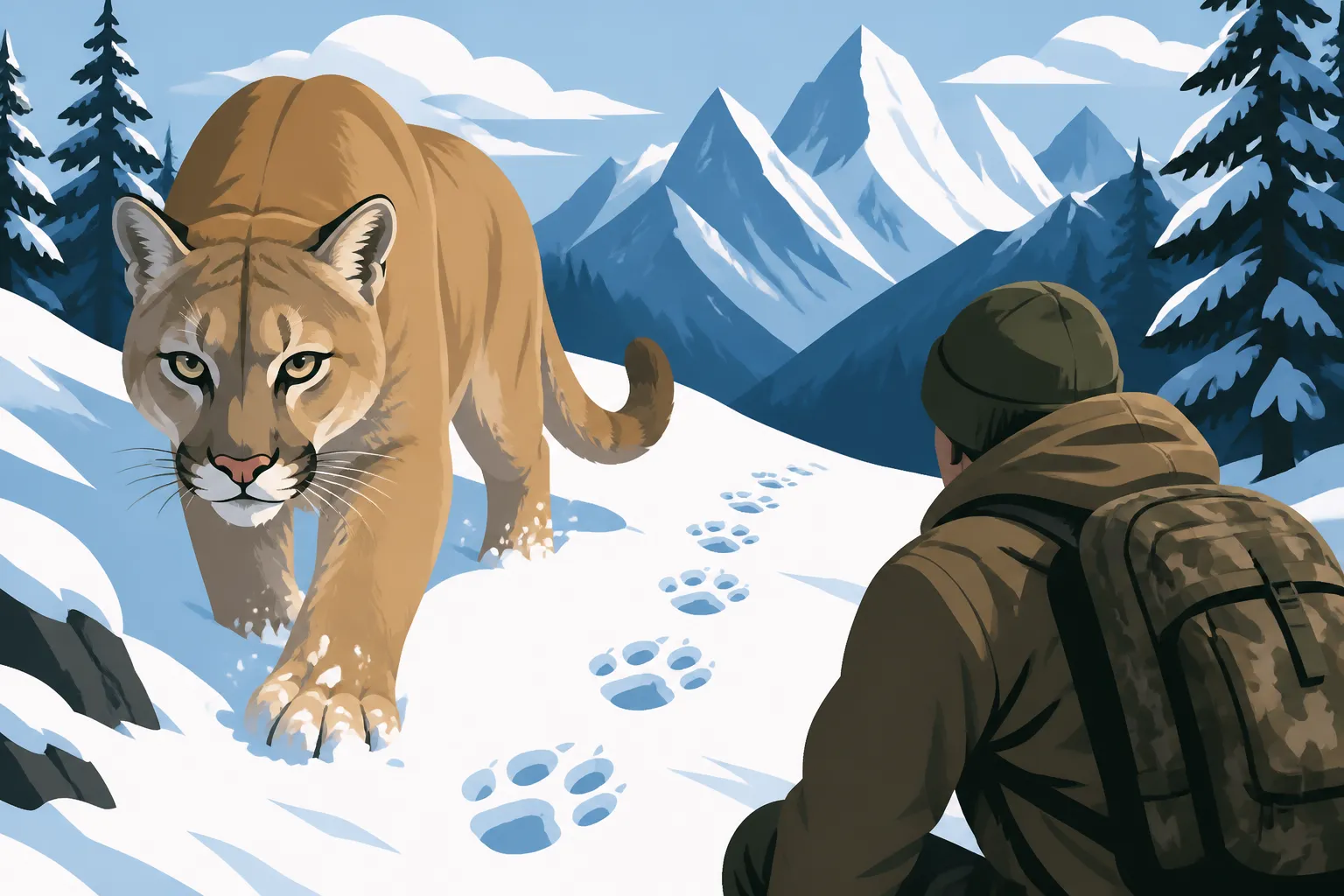
There's nothing quite like that feeling of excitement mixed with pure bewilderment when you're out in the Alberta winter, stumbling across a set of tracks that just might be a cougar. It’s a moment that can make your heart pound, knowing you might be on the trail of one of North America's most elusive predators. But quickly, that excitement can turn to frustration: how fresh are they? Is it even a cougar? This guide is here to walk you through the intricate, challenging, but ultimately rewarding process of tracking a cougar in fresh snow, giving you the tools and knowledge to turn those fleeting tracks into a successful hunt.
Understanding Cougar Behavior in Winter
Cougars are incredibly adaptable animals, but fresh snow changes their world, and yours, dramatically. To successfully track one, you first need to think like one, understanding how these magnificent cats navigate the cold, white landscape of Alberta.
Cougar Movement Patterns in Snow
When the snow flies, cougars don't just disappear; they adapt their movements to conserve energy and efficiently hunt their prey. Deep, fresh snow can slow them down significantly, which means they often prefer to travel along paths of least resistance. This might include wind-blown ridges where snow is shallower, game trails already packed by deer or elk, or even human-made features like old logging roads and seismic lines. They’re masters of ambush, so their movements are typically not random; they're calculated.
During winter, cougars will often follow prey animals to their wintering grounds. In the foothills and mountains, this means they'll likely be found where deer, especially mule deer, and elk concentrate. You might find them paralleling a creek bottom, working their way through dense timber pockets, or using the cover of a thick spruce bluff as they stalk unsuspecting game. Their primary focus is always food and conserving energy, so a cougar's tracks will often tell a story of strategic travel between feeding and bedding areas. Knowing What Cougars Eat in the Foothills can give you crucial clues about where to start looking.
Identifying Cougar Tracks vs. Other Predators
This is where the rubber meets the road, or more accurately, the paw print meets the snow. The biggest challenge for many hunters is distinguishing a cougar track from a large coyote or, more commonly, a wolf. We've all been there, squinting at a print, trying to convince ourselves it's a cat when our gut says otherwise. But there are key differences that, once you learn them, become invaluable.
Cougar tracks are typically more rounded than canine tracks. A key feature is the absence of claw marks in most circumstances, as cougars retract their claws when walking, much like a domestic cat. Canine tracks (wolf, coyote) will almost always show clear claw marks ahead of the toe pads. Cougar pads are often noticeably larger in relation to the overall track size compared to a dog. They also tend to have a distinct leading toe—one toe that projects slightly further forward than the others, creating an asymmetrical appearance. When comparing, wolf tracks are generally more oval, and lynx tracks are often very large and rounded, but sometimes appear blurry due to the fur on their paws, making claw marks difficult to see even if they were present. The stride length can also be a clue; cougars often have a longer, more purposeful stride, especially when they're simply traveling versus actively hunting.
Here's a quick comparison to help you tell them apart:
| Feature | Cougar Track | Wolf Track | Coyote Track |
|---|---|---|---|
| Shape | More rounded | More oval/elongated | More oval, smaller than wolf |
| Claw Marks | Usually absent (retracted) | Always visible | Always visible |
| Toe Symmetry | Asymmetrical (leading toe prominent) | More symmetrical | More symmetrical |
| Pad Size | Large, distinct pads | Smaller relative to overall track | Small relative to overall track |
| Overall Size | Often 3.5 – 5 inches (width/length) | Often 4 – 5.5 inches (width/length) | Often 2 – 3.5 inches (width/length) |
| Furry Paws | No | No | No |
When you find a track, take your time. Look at multiple prints. Does the overall pattern of travel suggest a deliberate, solitary hunter, or a smaller, more meandering canine?
Essential Gear and Preparation for Snow Tracking
Tracking a cougar in fresh snow in Alberta isn't a casual stroll. It requires specific gear and careful preparation to ensure your safety and maximize your chances of success. Winter conditions can turn quickly, and being ill-prepared is not just uncomfortable; it's dangerous.
Clothing and Footwear for Winter Tracking
The name of the game is warmth, layers, and silence. You'll be moving slowly, often stopping, and then moving again. This fluctuating activity level means you need versatile clothing. Start with a good moisture-wicking base layer (merino wool or synthetic, never cotton). Over that, an insulating mid-layer like fleece or a puffy jacket is crucial. Your outer shell should be windproof, waterproof, and breathable. Quiet fabrics are paramount; avoid anything that rustles loudly, as a cougar's hearing is exceptionally keen.
For footwear, you need insulated, waterproof boots with good traction. Look for boots designed for deep snow, with removable liners if possible, which helps with drying them out overnight. You'll be doing a lot of walking, potentially miles, so comfort is also key. Gaiters are a non-negotiable item to keep snow out of your boots, preventing wet feet and potential frostbite. Don't forget insulated gloves or mitts, and a warm toque or balaclava to protect your head and face. Think about how you’ll manage your layers as your body temperature fluctuates, storing outer shells or extra insulation in your pack when you're moving hard, and adding them back on quickly when you stop to glass or analyze tracks. For more general advice on staying safe in the cold, consider reading Hunting Alberta Winter Weather Safely.
Navigation and Communication Tools
In the vast, often remote areas where you'll be tracking cougars, reliable navigation and communication are non-negotiable. A GPS unit or a smartphone with a robust mapping app like GoHunt is essential. Download offline maps of your hunting area before you lose cell service (which you almost certainly will). Familiarize yourself with how to mark waypoints, track your route, and navigate back to your vehicle. A physical map and compass, and knowing how to use them, should always be a backup.
Beyond navigation, consider how you'll communicate in an emergency. Cell service is spotty at best in many cougar habitats. A satellite messenger, such as a Garmin inReach or Zoleo, is a smart investment. These devices allow you to send and receive text messages, share your location, and most importantly, trigger an SOS in a life-threatening situation. Always let someone know your hunting plan, including your intended route, expected return time, and who to call if you don't check in.
Optics and Other Tracking Aids
While you'll be focused on the ground, good optics are still vital. Binoculars (10×42 are a good all-around choice) will help you scan ahead, spot tracks from a distance, or even pick out the cougar itself if it's bedded down or on the move far from your position. A rangefinder is also useful for confirming distances before a shot, especially if you're in broken terrain.
A small tracking kit can also be surprisingly helpful. This might include a flexible measuring tape to accurately size tracks, a small notepad and pencil to sketch track details or make notes, and even a compact camera to photograph tracks for later analysis or sharing with more experienced trackers. A bright headlamp with extra batteries is crucial, as winter days are short, and you don't want to be caught in the dark without light, especially if you're packing out an animal or still on the trail.
The Art of Tracking in Fresh Snow
Once you're properly equipped and mentally prepared, the real work begins: following those elusive tracks through the winter wilderness. This is where patience, observation, and an understanding of cougar psychology truly come into play.
Finding the Right Tracks and Confirming Species
The first step is always finding fresh tracks. Start your search in areas where cougars are known to travel or where their prey concentrates. This often means driving or hiking logging roads, checking out game trails, or traversing cutlines and seismic lines in the early morning after a fresh snowfall. Pay close attention to areas where prey animals are abundant, such as deer wintering areas or elk migration routes, especially in regions like Hunting Cougar in Alberta's Foothills.
Once you find a track, the critical step is to confirm it's actually a cougar. As discussed, look for the rounded shape, the absence of claw marks, and the distinct leading toe. Don't just look at one print; follow the trail for 10-20 yards if possible, observing the stride, the gate (how the animal walks), and the consistency of the prints. Freshness is another key indicator. Look for crisp edges in the snow, minimal snow crystals blown into the print by wind, and perhaps even slight melting around the edges if the sun has hit it. If you're seeing signs like fresh scat or urine alongside the tracks, that's an excellent confirmation of recent activity. A track that looks too big for a coyote but still shows claws is almost certainly a wolf, and you might consider a different pursuit, perhaps Calling Wolves Along a Frozen Cutline.
Following the Trail: Pacing and Strategy
This is not a race. You need to embrace a slow, deliberate pace. The "cat walk" method, where you pick up your foot slowly and place it down gently to avoid noise, is ideal. Always assume the cougar is just ahead, bedded down, and listening. Look ahead 50-100 yards, scanning the terrain for the animal itself, not just the next track. Cougars are masters of camouflage, and you'll often see them before you realize it.
Cougars will frequently use terrain features to their advantage. They might walk ridgelines for a better vantage point, or drop into coulees and thickets for cover. When the tracks enter dense timber or thick brush, circle wide on the downwind side, looking for where they emerge, rather than plunging straight in and spooking the animal. This is often called "cross-tracking" or "swinging," allowing you to cover ground more efficiently and quietly. If you lose the tracks, don't panic. Go back to the last clear print, then systematically search in concentric circles or arcs, always assuming the cat is looking for a way to evade you. Look for subtle signs: a displaced twig, a rubbed branch, a slight depression where it went over a log. Remember, cougars can cover ground quickly when they choose, and they often backtrack or make large loops to throw off pursuers.
The Approach and Shot Opportunity
As you get closer, the signs will often become fresher and more frequent: scat, urine, maybe even a disturbed bedding area. This is when every step truly counts. The cougar will likely be aware of you long before you see it. Reduce noise to an absolute minimum. Check the wind constantly; you must stay downwind.
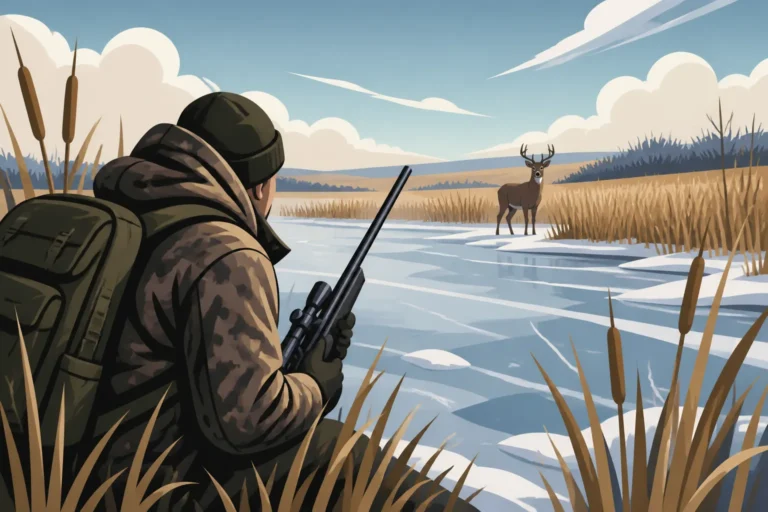
Cougars often bed in dense cover on a vantage point, allowing them to see what's below them. If the tracks lead into such an area, approach slowly, using all available cover. Look for an ear, a tail twitch, an outline. When you do spot the cougar, it might be facing away, or it might be staring right at you. Your window of opportunity might be fleeting. Take a deep breath, verify your target, and make a clean, ethical shot. The goal is a quick, humane harvest. Shot placement for cougars is crucial – typically aiming for the shoulder or just behind it to ensure a vitals hit. They are incredibly tough animals, and you want to anchor them quickly.
Safety and Ethical Considerations
Pursuing a cougar in winter conditions is a challenging endeavor that requires not only hunting skill but also a strong commitment to safety and ethical practices.
Backcountry Safety in Winter Conditions
Alberta winters are no joke, and when you're deep in the backcountry, the stakes are high. Hypothermia and frostbite are real dangers. Always carry enough layers, high-energy snacks, and water (ensure it doesn't freeze). A thermos of hot tea or soup can be a morale booster and a lifesaver. Ensure your Winter Truck Kit for an Alberta Hunt is fully stocked with recovery gear, extra fuel, and emergency supplies.
Be aware of avalanche conditions, especially if you're tracking in mountainous or hilly terrain, like parts of the Crowsnest Pass. Always check local avalanche forecasts and carry appropriate safety gear (beacon, shovel, probe) if venturing into avalanche-prone areas. While grizzly bears are typically denned for the winter, wolves and other predators are active. Be aware of your surroundings and carry bear spray as a last resort, even in winter. Satellite Messengers in the Backcountry are essential for calling for help if an emergency arises, allowing you to focus on the hunt without being overly worried about being stranded. And always, always tell someone exactly where you're going and when you expect to return.
Ethical Tracking and Pursuit
Ethical hunting practices are paramount when pursuing any animal, and cougars are no exception. One of the most important aspects is knowing when to back off. If tracks are old, faded, or consistently lead through impossibly dense terrain where a clean shot is unlikely, it’s often best to call it a day and try again. Pushing an animal relentlessly can lead to unnecessary stress for the cougar and a low-percentage shot for you. Respect the animal by only taking high-probability, ethical shots. If you wound a cougar, the absolute ethical imperative is to do everything in your power to recover it. This may mean staying on the trail long after dark, calling in help, or returning at first light.
Also, remember that cougar hunting in Alberta operates under a quota system in many Wildlife Management Units (WMUs). This means that only a certain number of cats can be harvested in a specific area each season. It is your responsibility to check The Cougar Quota Phone Line Explained daily to ensure the season is still open in your WMU before heading out. Over-harvesting or taking an animal when the season is closed is not only illegal but deeply unethical and harmful to conservation efforts. Always familiarize yourself with Cougar Season Dates and Quota well in advance. Responsible hunting means understanding and respecting the rules and the animal you pursue.
Disclaimer
Please ensure you are fully aware of and comply with all current Alberta hunting regulations and licensing requirements before engaging in any hunting activities. This guide is for informational purposes only and does not supersede official government regulations. Safety in the field is your responsibility.