Field Dressing in Alberta’s Deep Cold
There’s nothing quite like the rush of a successful hunt in Alberta, especially when the landscape is blanketed in snow and the air bites with a real chill. But once that animal is down, the clock starts ticking in a whole new way when you’re dealing with sub-zero temperatures. Field dressing in Alberta’s deep cold brings its own set of unique challenges, from frozen fingers to rapidly congealing blood, making a normally straightforward task incredibly difficult. This guide is here to walk you through how to properly and safely field dress your game when the mercury plummets, ensuring your hard-earned meat is cared for ethically and effectively, even in the harshest conditions.
Understanding the Unique Challenges of Deep Cold Field Dressing
Hunting in Alberta during the late fall and winter months often means contending with truly frigid temperatures. What might be a relatively quick and clean process in warmer weather becomes an entirely different beast when it's well below freezing. The cold doesn't just make you uncomfortable; it actively complicates every step of field dressing.
The Immediate Impact of Freezing Temperatures on Carcasses
When an animal is down in deep cold, the body heat dissipates quickly, and the external tissues begin to freeze surprisingly fast, particularly in smaller animals or exposed areas. This rapid cooling can be a double-edged sword. On one hand, it helps prevent bacterial growth, which is a huge advantage for meat preservation. On the other hand, internal organs can congeal, making them difficult to remove cleanly. Blood rapidly thickens and can even start to freeze, clinging to internal cavities and making the cleaning process much messier and more challenging. Imagine trying to scrape frozen jelly from the inside of a ribcage with numb fingers – that’s often the reality. For those new to Hunting Alberta Winter Weather Safely, understanding this rapid transformation is crucial. Furthermore, exposed meat, if not protected, can quickly "crust over" with freezer burn, impacting its quality long before it reaches the freezer. This is a critical factor to consider for Meat Care in Alberta's Cold and Warm Swings.
Personal Safety Risks for the Hunter
Beyond the practical difficulties, deep cold introduces significant personal safety risks. Frostbite is a serious concern, especially for your hands and feet, which are often exposed or working in direct contact with the cold carcass and snow. Working with sharp knives when your hands are numb or your gloves are cumbersome significantly increases the risk of cuts and injuries. A deep cut in sub-zero weather isn't just painful; it can lead to rapid blood loss and hypothermia, escalating a minor incident into a life-threatening emergency. Furthermore, if you're working alone and far from your vehicle or camp, any injury that impairs your mobility could leave you stranded. This is why a well-stocked Winter Truck Kit for an Alberta Hunt is non-negotiable. Staying hydrated and fueled is also often overlooked in the cold, but critical for maintaining core body temperature and mental acuity during a task that demands focus.
Ethical Considerations for Rapid Processing
Ethical hunting extends far beyond the shot; it encompasses how we treat the animal post-harvest. In deep cold, this means acting swiftly and efficiently to ensure the meat is handled respectfully and preserved to the highest quality. Leaving a carcass unattended for too long, even in freezing temperatures, can lead to scavenging by predators like coyotes or wolves, or damage from birds of prey. The goal is to get the animal field dressed, cooled, and transported as quickly as possible, minimizing waste and maximizing the quality of the meat for your table. Delaying the process not only risks the meat but also reflects poorly on the hunter's commitment to ethical practices. We owe it to the animal to ensure its sacrifice is not in vain, and that means processing it without unnecessary delay, even when every fiber of your being is screaming for warmth.
Essential Gear for Cold Weather Field Dressing
When the temperatures drop to those bone-chilling Alberta lows, your standard field dressing kit might not cut it. Adapting your gear and preparation for the cold isn't just about comfort; it's about efficiency, safety, and ultimately, the quality of your meat.
Specialized Tools for Frozen Conditions
In deep cold, regular knives can feel like ice cubes in your hand, and their blades can become brittle, especially cheaper steel. Investing in high-quality knives with handles designed for cold-weather grip (think textured, non-slip materials) is paramount. A good boning knife, a sturdy skinning knife, and a small, sharp gut hook can make all the difference. Consider knives with a wider blade profile for better leverage against tough, cold hides and congealed tissues. A small folding saw or a compact bone saw is also incredibly useful, especially if you plan to quarter the animal in the field. Trying to break through a frozen pelvis with a knife is a quick way to dull your blade and frustrate yourself. Keep your tools sharp – a small, easy-to-use sharpener or spare blades for a replaceable-blade knife are vital, as dull knives are dangerous knives, especially with numb hands. For those really serious about efficiency, some hunters even carry a small, portable torch or heat pack to briefly warm knife blades, making initial cuts into frozen hide much easier.
Staying Warm and Agile: Layering and Hand Protection
Perhaps the most critical aspect of cold weather field dressing is maintaining your body temperature, particularly in your extremities. Layers are your best friend. Start with a moisture-wicking base layer, add insulating mid-layers, and top it off with a waterproof and windproof outer shell. But the real game-changer is hand protection. You’ll need a system: a thin pair of surgical or nitrile gloves worn directly on your hands for hygiene and dexterity, a thin insulating glove over that, and then a heavy, waterproof work glove or mitten that can be easily pulled on and off. When you need fine motor skills for delicate cuts, you can slip off the outer glove, work for a few minutes, and then quickly warm your hands again. Having multiple pairs of each is wise, as they inevitably get wet or bloody. Think about what you'd wear if you were Hunting Whitetails at Thirty Below – your field dressing attire shouldn't be any less protective. A pair of knee-high waterproof boots is also essential, especially if you're kneeling in snow or mud. Hand warmers tucked into your gloves or pockets can provide a vital burst of warmth when you feel your fingers going numb.
Lighting and Emergency Supplies
Even the best-laid plans can go awry, and often, the work of field dressing extends into twilight or full darkness. A reliable headlamp with extra batteries is non-negotiable. Choose one with multiple brightness settings and a red light option to preserve night vision. Beyond lighting, a small emergency kit should always be within reach. This includes a basic first-aid kit with extra bandages, antiseptic wipes, and pain relievers. A fire starter, like a lighter or waterproof matches, can be a lifesaver if you need to build an emergency fire for warmth or signaling. A fully charged communication device (satellite messenger, two-way radio, or cell phone if you have service) is also crucial. Before you even head out, review your route and potential obstacles using a reliable mapping app. A platform like GoHunt, with its detailed mapping capabilities and public land overlays, can be invaluable for pinpointing your exact location and planning the most efficient extraction path, especially in remote areas where an unexpected injury could be critical. You don't want to be caught unprepared when you're far from help.
Step-by-Step Field Dressing in Sub-Zero Conditions
Field dressing in the deep cold demands a more deliberate, methodical approach than you might take in milder weather. Every step needs to be performed with an awareness of the freezing conditions, prioritizing efficiency and meat quality.
Preparing the Work Area and the Animal
First things first, get the animal into a position that makes the job easiest. Ideally, lay it on its back, propping it up if necessary with logs or snow to prevent it from rolling. This keeps the belly exposed and helps prevent snow or debris from getting into the body cavity. If the ground is frozen solid, you might need to stomp down a patch of snow to create a relatively clean working surface. Before you make any cuts, take a moment to clear the immediate area around the animal. Scoop away loose snow, twigs, and leaves that could contaminate the meat. This might seem like a small detail, but trying to pick frozen bits of debris out of a gut pile is no fun.
Once the area is prepped, address the animal itself. If you're planning on a shoulder mount, be extremely careful with your initial cuts, especially around the neck and brisket, as freezing tissues can make clean lines difficult. Many hunters will make relief cuts around the legs and genitals first, allowing for more slack. Now, this is where your hand protection system becomes key. Don those nitrile gloves, then the thin insulating layer, and finally, your heavy work gloves. When you need to make precise cuts, you can quickly remove the outer heavy glove, do your work, and then put it back on to warm up. Don't be afraid to take short breaks to rewarm your hands; it's safer and will result in cleaner work. This careful preparation prevents unnecessary contamination and sets you up for success, whether you're processing a whitetail you shot while Hunting a Standing Canola Field Edge or a moose deep in the bush.
The Evisceration Process: Adapting for Cold
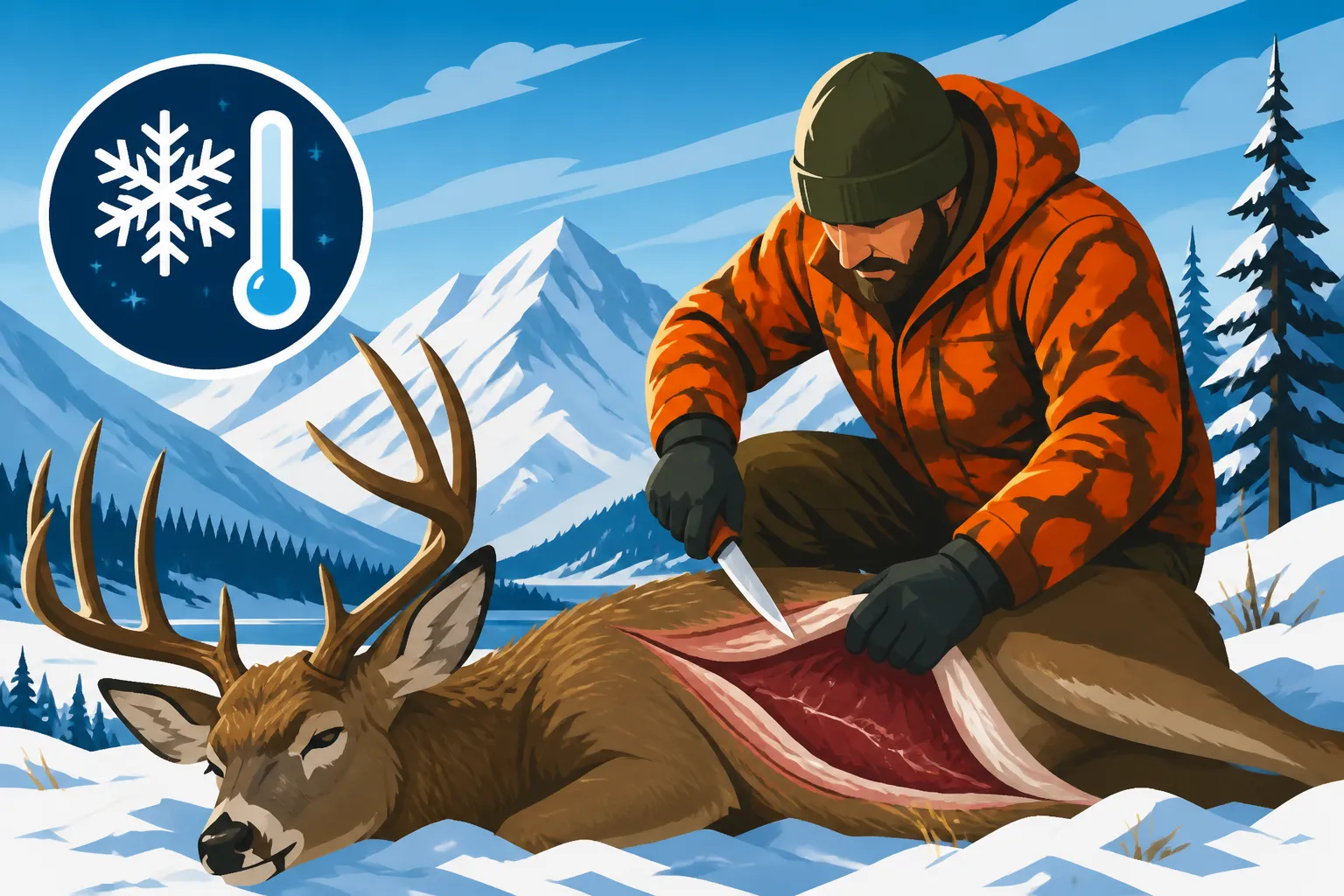
The actual evisceration needs to be swift and clean. Start by making your initial incision from the sternum down to the pelvis. Be shallow at first, just cutting through the hide, then deepen it carefully to avoid puncturing the intestines. Using a gut hook for this long cut can be a game-changer, as it lifts the hide and prevents accidental punctures. Once the cavity is open, you’ll immediately notice how different things are in the cold. Blood will be thick and congealed, and internal organs might be stiff. Work methodically to free the organs, cutting around the anus and rectum first, being careful to tie it off to prevent contamination. Then, reach deep into the cavity to sever the esophagus and windpipe as high as possible.
As you remove the organs, be prepared for them to be partially frozen or sticky. Don't force anything; use your knife with controlled movements. If you're quartering the animal in the field, this is when that small bone saw comes in handy for splitting the pelvis or sternum if needed. Once the entrails are out, inspect the cavity. Scrape away any blood clots or debris. While it's tempting to rinse with snow, resist the urge if you can; water or melted snow can actually accelerate freezing on the meat surface and potentially introduce more contamination. Instead, wipe the cavity clean with dry cloth or paper towels you brought along. The cold air itself will help dry and cool the cavity rapidly, preparing it for transport. Remember, every movement should be calculated to protect the meat from freezing too quickly in a compromised state or from picking up unwanted foreign matter.
Skinning and Quartering Challenges
Skinning in deep cold can be both easier and harder. The hide might pull away cleaner initially because the fat is firmer, but exposed muscle tissue will start to freeze rapidly. If you plan to skin completely in the field, work quickly. Use long, sweeping cuts, pulling the hide taut as you go. Be mindful of hair sticking to the meat as it freezes. Many hunters opt to simply open the cavity, remove the entrails, and then transport the animal whole or quartered with the hide on to a warmer location for full skinning. This protects the meat from external freezing and contamination during transport.
If you are quartering, a sturdy meat saw is essential. Frozen bones are incredibly difficult to cut through with a knife. Breaking down a large animal like a moose or elk into quarters in the field, particularly when it's Quartering a Moose Alone in the Bush, can be a monumental task. You’ll want a clean tarp or game bags spread out on the snow to place the quarters on immediately, preventing contact with the ground and keeping them as clean as possible. Once the quarters are separated, ensure they are thoroughly cleaned of any blood or debris before bagging them. Remember that exposed meat will quickly crust over with ice, so getting it into game bags is critical for protection.
Meat Care and Transport After Field Dressing
The moments immediately following field dressing in deep cold are critical for ensuring the quality of your meat. Proper care and efficient transport are paramount to prevent spoilage, contamination, and freezer burn.
Protecting the Meat from Super-Freezing and Contamination
Once your game is field dressed, the race isn't over. While the cold is your friend in preventing bacterial growth, you don't want the meat to freeze solid too quickly, especially if you plan to hang and age it. Rapid freezing can cause cellular damage, leading to "mushy" meat when thawed. The ideal scenario is a slow, even cool-down. Game bags are absolutely essential here. They protect the meat from dirt, insects (even in winter, some persistent ones can be around!), and curious scavengers, while still allowing air circulation for cooling. Don't use plastic tarps or bags directly against the meat if you can help it; they trap heat initially and then can cause condensation, leading to moisture and potential bacterial issues.
When placing meat into game bags, ensure they are breathable. If you've quartered the animal, try to keep the pieces separated in the bags to allow for better airflow. If you’re not taking the hide, hang the quarters from a tree branch if possible, off the snow, to facilitate cooling on all sides. For smaller game like deer, you might be able to hang the whole carcass. Be aware of the ambient temperature; if it's exceptionally cold (e.g., -20°C or colder), the meat might freeze too hard to be easily cut by a butcher later. In such cases, if you have a way to get it into a slightly warmer environment (like an unheated garage or insulated trailer) for a few hours before fully freezing, that can be beneficial. And don't forget your responsibilities for Alberta's CWD Testing Requirements if you harvested in a designated zone; this often involves careful handling of the head.
Strategies for Efficient Extraction and Storage
Getting your field-dressed game out of the bush and to your vehicle or camp requires a clear plan, especially in winter. If you're fortunate enough to have quad access, using an ATV or side-by-side to retrieve your animal can save immense effort, but always be mindful of Quad and Side-by-Side Rules on Crown Land. Secure the carcass or quarters properly to prevent them from bouncing around and getting damaged. If you're pulling a deer out on a sled, ensure it’s well-tied down to prevent it from flipping. For larger animals or remote locations, this is where a team effort truly shines. Sharing the load of quarters amongst hunting partners not only makes the task easier but also faster.
Once at camp or your vehicle, consider how you’ll transport the meat home. In Alberta's deep cold, meat can remain safely refrigerated in the back of a truck or trailer for extended periods, but again, protect it from direct exposure to the elements to prevent freezer burn or further contamination. A cooler with the lid slightly ajar can provide some protection while still allowing the meat to breathe and continue cooling. Before you hit the road, ensure you have all the necessary documentation for Transporting Game Meat and Proof of Sex. This includes your tags properly attached and proof of sex with the carcass or quarters, as required by Alberta regulations. Proper planning for extraction, which might involve scouting your egress routes with a tool like GoHunt before you even hunt, is just as important as the hunt itself.
Understanding Long-Term Meat Preservation in the Cold
For many hunters, getting the meat off the animal is just the beginning. The natural cold of an Alberta winter provides an excellent environment for short-term preservation, but long-term storage requires specific steps. If you're not taking your meat directly to a butcher, you might consider aging it. In temperatures consistently between 0°C and 4°C (32°F-39°F), deer meat can be hung for several days, or even up to a week or more for larger animals like elk or moose, to tenderize and develop flavor. However, if the temperatures consistently drop below freezing, aging stops. You essentially have frozen meat, and any tenderizing will happen after it thaws.
Once you’re ready for processing, ensure your butcher is aware of whether the meat has been deeply frozen in the field. This can affect how they handle it, as partially frozen meat requires different cutting techniques. If you're doing your own butchering, allow the meat to thaw sufficiently to work with it safely and efficiently. Remember, good meat care in the field, even in the most challenging cold, translates directly to better quality meals on your table. It's a testament to your respect for the animal and the privilege of the hunt.
Disclaimer
Please note that hunting regulations, seasons, and access rules in Alberta can change. Always consult the most current Alberta Hunting Regulations Guide published by the provincial government, and verify any land access requirements before heading out. Safety should always be your top priority in the field.