Mule Deer in Alberta’s Open Country
Hunting mule deer in Alberta's sprawling open country presents a unique challenge, often leaving hunters feeling overwhelmed by the sheer vastness and the elusive nature of these incredible animals. Unlike the dense bush hunts many of us are accustomed to, pursuing mule deer on the prairies, badlands, and parklands demands a completely different skillset and mindset. This guide aims to demystify the process, offering a comprehensive look at understanding, finding, and ethically harvesting mule deer in Alberta's iconic landscapes.
Understanding Alberta's Mule Deer Habitat
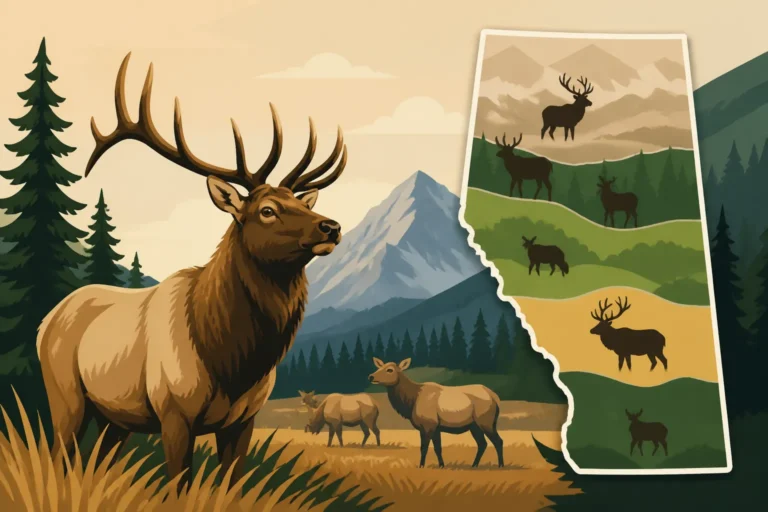
Alberta's mule deer are creatures of diverse, often challenging landscapes, thriving where terrain offers both cover and abundant forage. They aren't just found in one type of environment; rather, their distribution spans from the broken badlands to the rolling foothills, each offering distinct hunting opportunities and challenges. To truly understand mule deer, you first have to understand the ground they call home.
Prairie, Parkland, and Badlands Basins
When you picture mule deer in Alberta, often the first image that comes to mind is the rugged, undulating terrain of the prairies and badlands. This is prime mule deer country. Think of the Red Deer River Badlands, the Milk River Ridge, or the extensive coulee systems that dissect the southern prairies. These areas are characterized by deep, winding coulees, steep banks, and scattered pockets of scrub brush and poplar bluffs. Mule deer utilize these features for everything: bedding, escaping predators, and finding shelter from the harsh prairie winds. In these wide-open spaces, a mule deer can seem to vanish into thin air, only to reappear a mile away, having used every fold in the landscape to their advantage. It's a land of big skies and even bigger vistas, where distances can be deceiving and the wind is a constant companion. Successfully hunting here often means dedicating long hours to glassing, patiently dissecting the landscape, and understanding how these deer interact with the subtle nuances of their environment. They aren't just in the coulees; they often feed out on the benches above or the flat crop fields at the edge, especially during the low light hours of dawn and dusk.
Foothills and Mountain Fringe
Moving west, Alberta's mule deer population extends into the foothills and the fringe of the Rocky Mountains. Here, the landscape transitions from rolling prairie to more heavily treed hills, interspersed with open meadows, clearcuts, and river valleys. While perhaps not the stereotypical "open country" in the same way the prairies are, these areas still offer significant open tracts, especially on south-facing slopes, burn areas, and logging cutblocks. In this environment, mule deer face different pressures and utilize the terrain differently than their prairie cousins. They often seek refuge in the dense timber during the day, emerging to feed in the more open areas. The elevation changes make for challenging hiking, but also offer incredible vantage points for glassing. Understanding how game animals navigate these diverse zones is key to success. Hunters often find themselves working through a mix of thick spruce and pine, only to emerge onto a vast, open slope where a keen eye and steady hand are paramount. The mule deer here can be incredibly athletic, traversing steep inclines with ease, making their pursuit a true test of endurance and resolve.
Agricultural Interfaces and Winter Ranges
Many mule deer in Alberta, especially those in the Parkland country and even some prairie regions, spend significant time living near agricultural lands. This often creates unique challenges for both landowners and hunters. These deer are drawn to the nutrient-rich crops like canola, peas, and winter wheat, which provide an abundant food source, particularly as seasons change. The edges of fields, shelterbelts, and small bluffs of aspen or willow become critical cover for them. As winter approaches, mule deer often consolidate into specific winter ranges, which can be areas with south-facing slopes, river valleys, or even tracts of unharvested crops that offer both food and thermal cover. These areas are crucial for their survival during the harsh Alberta winters. Hunting these interfaces requires a deep respect for private land and a commitment to obtaining proper permission. It also means understanding that deer using these areas can be highly nocturnal and pressured, making daylight sightings a real trophy in themselves. It’s not uncommon to find significant numbers of deer concentrated in these areas, particularly when the snow piles up and forces them into more accessible food sources. Knowing How Mule Deer Use Coulees in Winter is especially valuable here, as these features often offer crucial shelter and access to browse when other areas are locked in snow.
Mule Deer Biology and Behavior in Alberta
Mule deer are remarkable animals, perfectly adapted to the varied and often harsh environments of Alberta. Understanding their natural rhythms, from their seasonal migrations to their feeding habits, is fundamental to becoming a successful and ethical hunter. Their behavior is largely dictated by survival—finding food, avoiding predators, and successfully reproducing.
Seasonal Movements and Rutting Dynamics
Mule deer in Alberta are quite migratory, though the extent of their movements can vary greatly depending on the region and available resources. In mountainous or deep snow country, they often have distinct summer and winter ranges, moving to lower elevations or south-facing slopes as the snow accumulates. On the prairies, their movements might be less pronounced in terms of elevation but are still driven by food availability and security cover. They might shift from summer pastures to agricultural fields as crops mature. The rut, or breeding season, is arguably the most anticipated time for mule deer hunters. In Alberta, the peak of the mule deer rut typically occurs from mid-November to early December, though pre-rut activity can begin weeks earlier. During this period, mature bucks become significantly more active and less cautious, focusing almost entirely on finding does. They will cover vast amounts of ground, often venturing into areas they wouldn't normally frequent during daylight hours. This increased movement makes them more visible but also means they can be incredibly unpredictable. Hunters often plan their trips to coincide with this window, knowing that the chance of encountering a trophy buck is at its highest. It's a truly exciting time to be out in the field, as the landscape comes alive with the pursuit of the does.
Diet, Foraging, and Water Sources
Mule deer are browsers, meaning their diet primarily consists of shrubs, forbs, and woody vegetation, though they will readily graze on grasses and agricultural crops when available. Their specific diet varies significantly with the season and the habitat. In the spring and summer, they feast on lush green growth, forbs, and the tender shoots of shrubs. As fall progresses, they shift to more nutrient-dense foods like alfalfa, corn, and other cereal grains found in agricultural zones. During winter, their diet becomes much more restricted, relying heavily on woody browse from willows, saskatoons, and other resilient shrubs. Access to water is also a critical factor influencing mule deer distribution. While they can obtain a significant amount of moisture from their diet, they still need reliable water sources, especially during hot, dry periods. This could be anything from a prairie pothole, a flowing creek in a coulee bottom, or even dew-laden vegetation. Understanding these dietary preferences and water requirements can help hunters pinpoint areas where deer are likely to congregate. For example, during a dry spell, focusing on areas near the few remaining water sources can be incredibly productive. This type of research and scouting is where tools like GoHunt can be invaluable, helping hunters identify key habitat features and potential water sources within a specific WMU.
How Mule Deer Use Coulees in Winter
Coulees are ecological lifelines for mule deer, particularly when winter's grip tightens on the Alberta landscape. These deep, winding topographical features offer invaluable shelter from biting winds and accumulating snow, creating microclimates that are significantly milder than the exposed prairie above. Inside a coulee, mule deer find thermal cover among the dense stands of willow, aspen, and sometimes even spruce, which also provide critical browse. The slopes themselves often shed snow more quickly, exposing vegetation, and the steep sides can offer escape routes from predators like coyotes and wolves. Deer often bed on the sheltered lee side of a coulee slope, soaking up any available sunlight. During prolonged periods of deep snow, these coulees act as vital corridors, allowing deer to move with less energy expenditure compared to slogging through drifts on open fields. This makes How Mule Deer Use Coulees in Winter a critical piece of knowledge for late-season hunters. Understanding their travel patterns and bedding preferences within these coulee systems is key; they often stick to the bottoms for travel, then ascend benches or sheltered slopes to bed, always with an eye on escape routes.
Hunting Mule Deer: Strategies for Open Country Success
Hunting mule deer in Alberta's open country is a game of patience, stealth, and keen observation. It's less about crashing through the bush and more about using your eyes, understanding the terrain, and executing a precise stalk. The vastness can be intimidating, but it also offers incredible opportunities for those willing to put in the work.
Spot-and-Stalk Mule Deer in Alberta
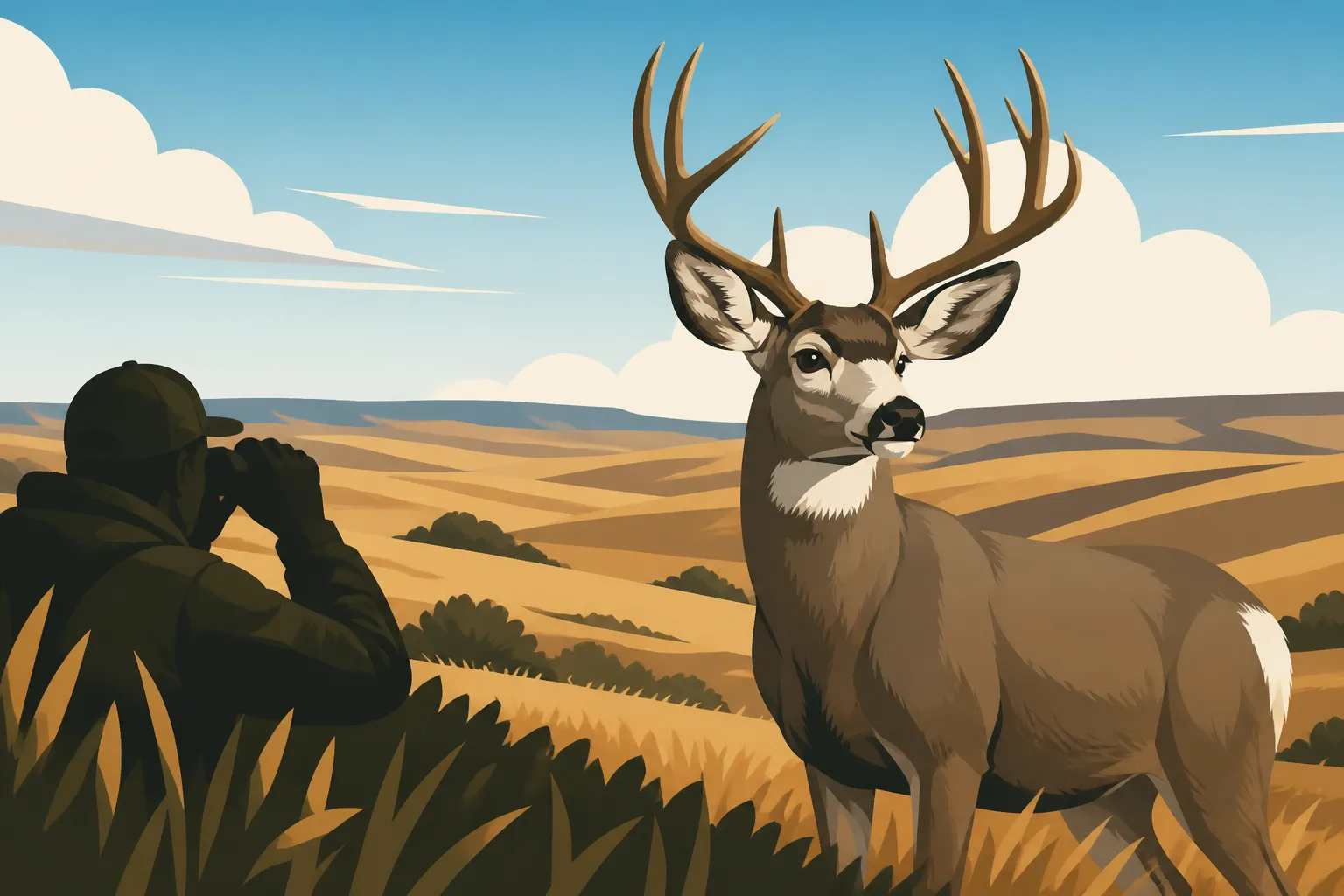
The spot-and-stalk method is king when it comes to hunting mule deer in Alberta's open country. It’s a highly visual approach that demands good optics, a solid understanding of wind, and an even stronger sense of patience. The process begins with finding a high vantage point – a ridge, a hilltop, or even the top of a deep coulee system. From here, you systematically glass the landscape, looking for any sign of deer. This isn't a quick scan; it's a slow, deliberate grid search, often requiring hours of effort. You're not just looking for a whole deer, but parts of a deer – an antler tip, the horizontal line of a back, an ear flicking in the sun. Once a buck is spotted, the real work begins. The stalk itself requires meticulous planning to stay out of sight, keep the wind in your favor, and anticipate the deer's movements. You'll use every ditch, rise, and patch of cover to close the distance. This is where physical fitness and mental fortitude truly come into play. Many stalks end without a shot, which is just part of the game. But when everything aligns, and you're able to get within shooting range of a majestic buck, the reward is immense. Mastering Spot-and-Stalk Mule Deer in Alberta is a lifetime pursuit, but each successful stalk teaches invaluable lessons.
Glassing Techniques for Distant Bucks
Effective glassing is perhaps the single most important skill for a successful open-country mule deer hunter. It's not just about having good binoculars or a spotting scope; it's about knowing how to use them. Start with a systematic grid pattern, moving your optics slowly across the landscape, pausing frequently to let your eyes adjust and pick up on subtle details. Don't just look for a whole deer; look for variations in color, unusual shapes, or movement. Pay close attention to shaded areas, the edges of coulees, and thick patches of brush where deer might be bedded. Use a quality tripod for your spotting scope to ensure stability and reduce eye fatigue, especially when Glassing an Alberta Coulee for Mule Deer for extended periods. As a rule of thumb, when you think you've glassed an area thoroughly, do it again. Deer can blend into their surroundings with uncanny ability. Many hunters, myself included, have looked over the same ridge multiple times before a subtle movement or a shift in light finally reveals an animal. Investing in high-quality optics, like those from prominent brands often reviewed by publications like GoHunt, can dramatically increase your success rate by allowing you to resolve details at extreme distances, differentiating a branch from an antler tine.
Hunting Mule Deer in the Badlands Coulees
The badlands of Alberta offer some of the most dramatic and challenging mule deer hunting. The landscape here is a maze of deeply eroded coulees, hoodoos, and steep-sided draws. Deer use these features for cover and travel, often disappearing into the depths of a coulee system with surprising speed. Hunting Mule Deer in the Badlands Coulees requires a combination of strategic glassing from high points and aggressive, yet cautious, still-hunting through the coulee bottoms and sides. Be prepared for steep climbs and descents, and be mindful of loose rock and unstable ground. The wind can swirl unpredictably in these deep cuts, so constant vigilance of its direction is critical. It's often effective to work with a partner, with one person glassing from a high point, guiding the other who is still-hunting through the coulee. This allows for constant observation and helps to prevent deer from slipping away unseen. Always be aware of your backdrop when preparing for a shot, as the broken terrain can create unexpected angles and obscure vision.
Using Topography to Your Advantage
In open country, topography is your best friend. Every rise, dip, coulee, and ridge offers an opportunity to conceal your approach, break up your silhouette, or funnel deer movement. Before initiating a stalk, take a moment to study the terrain using binoculars or a mapping app. Identify natural breaks in the land that can serve as cover. This could be the bottom of a dry creek bed, the back side of a ridge, or a depression in an otherwise flat field. Always try to approach from downwind or crosswind, using the terrain to shield you from the deer's sightlines. When working ridges, stay just below the crest to avoid silhouetting yourself. When Hunting Mule Deer on a Prairie Ridge, approaching from the backside and slowly peeking over can often give you the advantage. Remember that mule deer also use topography to their advantage, often bedding in spots that offer excellent visibility while keeping them hidden. Learning to think like a mule deer, anticipating where they might travel or bed based on the contours of the land, will dramatically improve your chances of success.
Key Gear for Alberta Mule Deer Hunting
Success in Alberta's open country mule deer hunting isn't just about skill; it's also about having the right tools for the job. The vast, often exposed landscapes demand specialized gear that can withstand the elements and help you effectively locate and harvest deer. From precision optics to reliable firearms and comfortable clothing, every piece of equipment plays a crucial role.
Optics: The Foundation of Open Country Hunting
Without excellent optics, hunting mule deer in Alberta's open country is like trying to find a needle in a haystack blindfolded. Your binoculars and spotting scope are arguably the most important tools in your kit. Invest in the best quality you can afford. For binoculars, 10×42 or 12×50 power is a great all-around choice, offering a wide field of view and sufficient magnification to pick apart distant hillsides. A good quality spotting scope, typically 15-45x or 20-60x, is essential for truly evaluating bucks at long range, especially when you're trying to differentiate a legal buck based on Alberta's specific antler point rules. A sturdy tripod for both your binoculars and spotting scope is non-negotiable for stable viewing, reducing eye strain during long hours of glassing. Laser rangefinders are also a critical piece of the optical puzzle, providing instant and accurate distance measurements, which is invaluable for ethical shot placement in wide-open environments where judging distance by eye can be incredibly deceptive. Many hunters also benefit from using a quality shooting rest that can attach to their tripod, allowing for quick, stable shots after a long stalk.
Rifles and Ammunition for Long-Range Shots
Hunting mule deer in Alberta's open country often means the possibility of longer shots. Therefore, a flat-shooting, accurate rifle chambered in a cartridge suitable for mule deer is paramount. Popular choices include cartridges like the .270 Win, .30-06, 7mm Rem Mag, .300 Win Mag, or 6.5 PRC. The key is to be proficient with your chosen rifle and ammunition at various distances. Practice shooting from field positions, including prone with a bipod, as this is often the most stable position available in open terrain. Quality ammunition with good ballistic coefficients is also important for maintaining accuracy at extended ranges and ensuring clean, ethical kills. Bullet construction that provides good expansion and weight retention is crucial for mule deer, which are robust animals. Always zero your rifle precisely and confirm your drops at different distances, as an error of even a few inches can mean a missed shot or, worse, a wounded animal. Remember, while the ability to take a long shot is valuable, the discipline to know your limits and only take ethical shots is more important.
Clothing and Footwear for Varied Terrain
Alberta's open country can be unforgiving, with temperatures swinging wildly and conditions changing rapidly. Your clothing system needs to be versatile, allowing for layering to adapt to cold mornings, warm afternoons, and biting winds. Think technical fabrics that wick moisture, insulate when wet, and provide wind and water resistance. A good base layer, insulating mid-layers (like fleece or puffy jackets), and a durable, windproof/waterproof outer shell are essential. Blaze orange requirements in Alberta mean you'll need to incorporate this into your outer layer for safety, especially during general seasons. For footwear, durable, comfortable, and waterproof hiking boots with good ankle support are crucial. You'll be covering many miles, often over uneven terrain, through coulees, and potentially through snow or mud. Break in your boots well before your hunt to avoid blisters. Gaiters can be a game-changer for keeping snow, dirt, and burrs out of your boots, especially when traversing through tall grass or deep snow in coulee bottoms. Don't forget quality wool socks, a warm hat, and gloves or mittens – hands and feet are often the first to get cold in exposed conditions.
Alberta's Mule Deer Regulations and Management
Navigating the regulations for mule deer in Alberta can sometimes feel like a puzzle, but understanding them is crucial for a legal and ethical hunt. Alberta Fish and Wildlife works tirelessly to manage game populations sustainably, and hunters play a vital role in adhering to these guidelines.
Special Licence Draws and General Seasons
Mule deer hunting in Alberta typically involves a combination of general seasons and special license draws, depending on the Wildlife Management Unit (WMU) and the antler class you're pursuing. Many WMUs have general seasons for antlered mule deer, meaning you can purchase a license over the counter. However, for specific areas, or for antlerless mule deer, a draw system is often in place. This is where your priority points come into play. Special licenses are allocated through a draw, and the odds of drawing depend on the number of applicants and your accumulated priority points. It's essential to consult the current Alberta Hunting Regulations for specific dates, WMUs, and antler restrictions, as these can change annually. The draw system often applies to prime areas or for managing specific population segments. For example, some WMUs might have a general season for antlered mule deer but require a special draw for antlerless, or even a specific draw for any antlered mule deer to control pressure. Understanding Alberta's Special Licence Draws is critical for planning your hunting season and managing your priority points effectively.
Understanding Alberta's Three-Point Mule Deer Rules
One of the most important regulations for mule deer hunters in Alberta, particularly in many general season WMUs, is the "three-point rule." This regulation states that an antlered mule deer must have at least three points (tines) on one side, not including the brow tine, to be a legal animal. This rule is designed to protect younger bucks, allowing them to mature and contribute to the breeding population before being harvested. This requires hunters to be proficient at Judging a Mule Deer Buck at Distance, often under challenging conditions. It’s not always easy to count points at a distance, especially if the buck is moving, in heavy cover, or in low light. This is where high-quality optics and patience are invaluable. Always take your time to positively identify a legal buck before taking a shot. If you have any doubt, it’s always best to pass. Misidentifying a buck can lead to serious penalties, so familiarizing yourself with antler characteristics and practicing judging at varying distances is a key responsibility for any hunter. The three-point rule encourages hunters to truly evaluate the animal, which is a great practice for ethical hunting anyway.
CWD Testing and Carcass Transport
Chronic Wasting Disease (CWD) is a serious concern for Alberta's cervid populations, including mule deer. As a hunter, you have a critical role to play in monitoring and managing the spread of this disease. In many WMUs, particularly in the southeastern parts of the province, mandatory CWD testing of harvested deer is required. Even in areas where it's not mandatory, voluntary submission of samples is highly encouraged. Hunters are typically required to submit the head of their harvested deer to a designated CWD freezer location within a specified timeframe. It's absolutely crucial to understand the Alberta's CWD Testing Requirements for the WMU you are hunting in. Furthermore, there are strict rules regarding the transport of deer carcasses, especially out of CWD-positive zones. Generally, only deboned meat, skull plates (antlers), and cleaned hides can be transported out of these zones to prevent the spread of the disease. This means field dressing and quartering your animal properly are more important than ever. Familiarize yourself with these regulations before you head into the field, as non-compliance can result in penalties and compromises the collective effort to manage CWD.
Conservation and the Future of Alberta's Mule Deer
The health of Alberta's mule deer population is a reflection of the landscapes they inhabit and the collective efforts of wildlife managers, landowners, and hunters. Conservation isn't just about protecting animals; it's about preserving the ecosystems that sustain them and ensuring sustainable hunting opportunities for future generations.
Population Trends and Environmental Factors
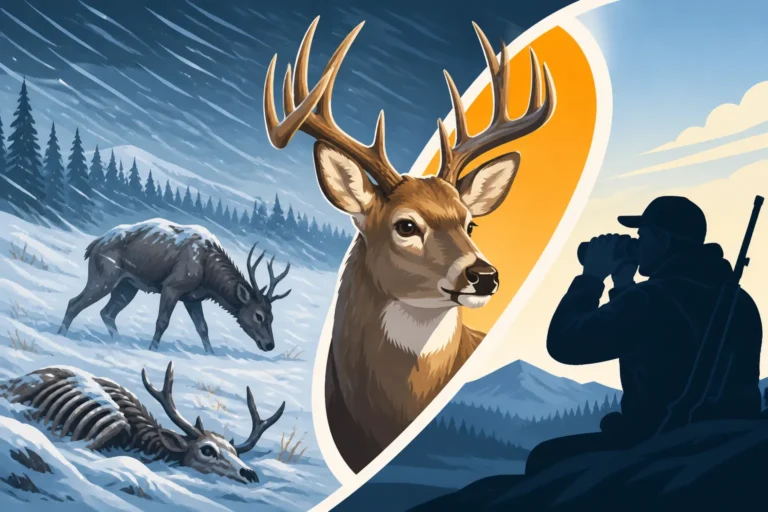
Alberta's mule deer populations are dynamic, influenced by a complex interplay of environmental factors, habitat changes, and disease. Fluctuations in numbers are normal and can be attributed to several factors. Harsh winters, especially those with deep snow and prolonged cold, can lead to significant winter kill, impacting fawn survival and adult condition. Drought conditions can affect forage quality and water availability, stressing deer populations. Habitat fragmentation due to agricultural expansion, industrial development, and urban sprawl also plays a role, reducing contiguous ranges and increasing deer-human conflict. On the flip side, good precipitation years and responsible land management can lead to robust population growth. Disease, particularly CWD, is an ongoing concern that wildlife managers are actively monitoring and researching. Understanding these trends often requires long-term data collection and careful analysis, which is why hunter harvest data and CWD submissions are so important. Websites and platforms like GoHunt often compile and analyze publicly available data on population trends, helping hunters make informed decisions about where and when to hunt.
Habitat Preservation and Restoration Efforts
Protecting and restoring critical mule deer habitat is paramount for the long-term health of the species. This includes conserving natural prairie grasslands, managing forests sustainably, and preserving riparian zones within coulees and river valleys. Organizations like the Alberta Conservation Association (ACA) and various land trusts work with landowners and government agencies to secure and enhance habitat through easements, restoration projects, and responsible land management practices. These efforts often focus on improving forage quality, increasing thermal and security cover, and ensuring connectivity between different habitat patches. For hunters, supporting these organizations through license fees and direct donations is a tangible way to contribute to habitat preservation. Even smaller actions, like being mindful of your impact when accessing Crown land and respecting private property, play a part in minimizing disturbance and allowing deer to thrive. The health of the habitat directly correlates to the health and numbers of the deer herd.
Hunter's Role in Sustainable Management
Hunters are often referred to as the original conservationists, and for good reason. Our license fees directly fund wildlife management, research, and enforcement efforts in Alberta. Beyond financial contributions, ethical hunting practices are fundamental to sustainable management. This includes adhering to all regulations, accurately reporting harvests, and providing CWD samples when required. By selectively harvesting animals according to regulations (like the three-point rule), we help manage population structure and prevent overharvesting of younger animals. Hunters also act as invaluable eyes and ears on the ground, providing crucial anecdotal data to wildlife managers about deer sightings, habitat conditions, and observed disease symptoms. Educating ourselves and others about mule deer biology, habitat, and conservation challenges ensures that our passion for hunting contributes positively to the species' future. Being responsible stewards of the land and its wildlife means ensuring that Alberta's mule deer continue to thrive for generations to come.
Beyond the Hunt: Processing and Trophy Care
The hunt doesn't end when the shot is fired. Ethical hunters are committed to quickly and efficiently processing their animal, ensuring the meat is cared for properly and any trophy elements are preserved. This final stage is just as important as the hunt itself, honoring the animal and making the most of the harvest.
Field Dressing and Meat Care in the Field
Once your mule deer is down, prompt and thorough field dressing is essential to ensure the quality of the meat, especially in warmer temperatures. The goal is to remove the internal organs as quickly as possible to allow the carcass to cool down. Lay the deer on a slope if possible, to help with drainage. Make a shallow incision from the breastbone to the pelvis, carefully cutting around the anus. Roll the deer onto its side to help gravity assist in removing the viscera. Wear gloves for hygiene and to protect yourself from any potential pathogens. After the organs are removed, wipe out the cavity with clean cloths or paper towels; avoid using water directly in the cavity unless absolutely necessary, as it can promote bacterial growth. If you have a long pack out, quartering the animal in the field immediately after field dressing can make transport significantly easier. Take the time to separate the major muscle groups, keeping them clean. Always remember the rules for Meat Care in Alberta's Cold and Warm Swings, as fluctuating temperatures demand adaptability in your approach to preserve your harvest.
Quartering and Transporting Your Mule Deer
For mule deer hunted in Alberta's vast open country, especially in areas far from vehicle access, quartering the animal in the field is often the most practical and efficient way to transport your harvest. After field dressing, you can remove the four quarters (front and hind legs), the backstraps, tenderloins, and neck meat. This significantly reduces the weight and bulk, making it easier to carry on your back in game bags. High-quality, breathable game bags are crucial for protecting the meat from dirt, insects, and drying out, while still allowing it to cool. Pack the meat strategically in a comfortable hunting backpack, distributing the weight evenly. If you've been successful on a hunt and need to get the animal out of a remote coulee system or off a prairie ridge, having the right gear like a sturdy frame pack and good game bags makes all the difference. Always ensure you have sufficient proof of sex attached to the carcass, as required by Alberta regulations, until the meat is processed and stored.
Trophy Care for Antlers and Capes
If you've harvested a buck worthy of the wall, proper trophy care begins immediately in the field. For a shoulder mount, the cape needs to be skinned correctly with sufficient length to allow the taxidermist flexibility. This typically involves a cut around the circumference behind the shoulders, and then careful skinning up the neck to the head. Take extra care around the ears, eyes, and mouth. Keep the cape clean and cool, especially if temperatures are warm. For antler preservation, the skull cap can be separated with the antlers attached. Remove all brain matter and flesh, then salt the cape thoroughly to draw out moisture. Air circulation is key. If you're not planning a full shoulder mount, a skull cap with antlers or a European mount requires less intensive field preparation but still benefits from cleaning and cooling. Always respect the animal and treat its remains with dignity. Knowing What Counts for an Alberta Trophy Record can also help guide your decisions in the field regarding trophy care. For non-residents, understanding the regulations for Taking Meat and Antlers Home Across the Border is crucial to avoid any issues during your return journey.
Disclaimer
Please remember that hunting regulations in Alberta can change. This guide is intended for informational purposes only and does not supersede official government regulations. Always consult the current Alberta Hunting Regulations, available through Alberta Environment and Protected Areas, before planning or engaging in any hunting activities. It is your responsibility as a hunter to know and adhere to all applicable laws and regulations.