Where Alberta’s Woodland Caribou Stand Today
It's a tough truth that some of Alberta's most iconic wildlife are facing significant uphill battles. For those of us who cherish the vast, wild spaces of this province, the status of woodland caribou often weighs heavy on our minds. This guide will delve into the current situation of Alberta's woodland caribou herds, exploring the challenges they face, the conservation efforts underway, and what their future might look like in a rapidly changing landscape.
Understanding Woodland Caribou in Alberta: A Delicate Balance
Woodland caribou aren't just any deer species; they're a unique, ecologically sensitive creature that symbolizes the health of our boreal and mountain ecosystems. Unlike their barren-ground cousins, Alberta's woodland caribou are adapted to deep snow and old-growth forests, where they can evade predators and find their primary food source: lichen. Their very existence is intertwined with undisturbed wilderness, making them particularly vulnerable to human activity.
What Makes Woodland Caribou Unique?
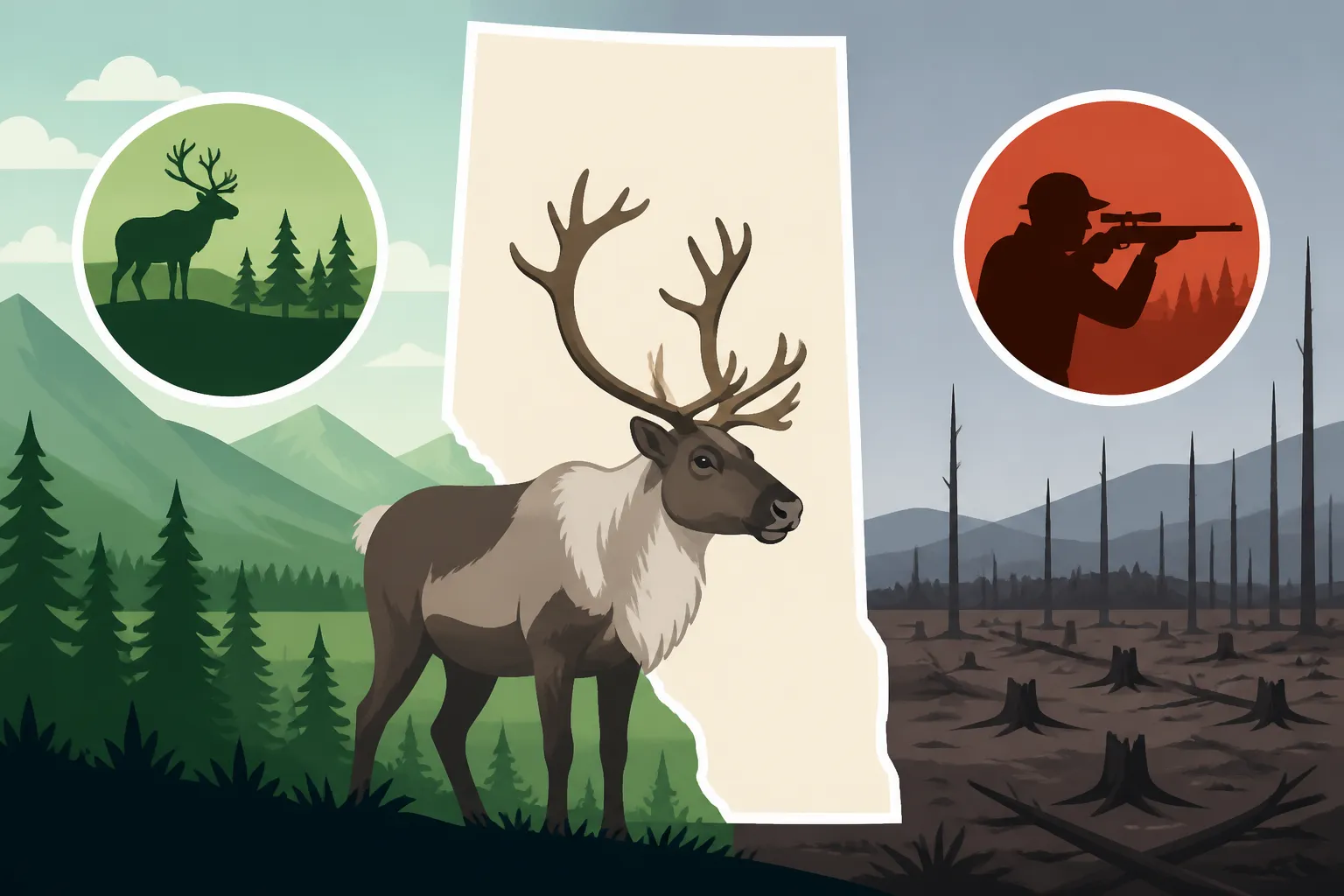
These aren't the large, bustling herds you might see on nature documentaries. Alberta's woodland caribou typically live in smaller, more dispersed groups, a strategy they've evolved to avoid predators like wolves. They rely on vast, contiguous tracts of mature forest, often in areas with muskegs or higher elevations, to give them space and complex terrain to escape. This reliance on specific, undisturbed habitat means that even seemingly small disruptions can have a disproportionately large impact on their survival. When their deep-snow refuges or lichen-rich forests are fragmented, they become easier prey, and their already slow reproductive rates can't keep up.
Their diet, consisting largely of arboreal lichens that grow on older trees, means they need forests that have been left largely untouched for decades, sometimes centuries. This isn't just about a food source; it's about a specific ecosystem that supports their entire life cycle. When you hear about Moose Across Alberta's Boreal and Foothills, you're talking about an animal that thrives on disturbance and younger growth, which can put them in direct competition or overlap with different habitat needs than caribou.
The Critical Role of Alberta's Boreal Forests
Alberta's vast boreal forest is the primary home for most of the province's woodland caribou herds. These northern landscapes, characterized by endless stands of spruce, pine, and aspen, interspersed with wetlands and muskeg, provide the isolation and specialized habitat caribou need. The foothills and mountain regions also host significant herds, but it's the sheer scale and relative remoteness of the boreal that traditionally offered sanctuary.
However, "remoteness" is a quickly fading concept in modern Alberta. The boreal forest is also rich in natural resources, leading to extensive industrial development. Think about areas like the Chinchaga country or the northern reaches around Grande Prairie and Fort McMurray—these are vital caribou ranges, but they're also active zones for forestry, oil and gas exploration, and infrastructure development. Understanding these areas, especially if you're exploring Hunting Alberta's Boreal Forest Country for other species, often means recognizing the signs of habitat fragmentation that impact caribou. You can often see the patchwork of cutlines and roads, even when using mapping tools like GoHunt to scope out potential hunting zones.
The Pressures Facing Alberta's Caribou Herds
The struggles of Alberta's woodland caribou are not simple. They are a complex web of environmental changes and human-induced pressures that have pushed many herds to the brink. It's a sobering reality for anyone who values our provincial wildlife.
Habitat Loss and Fragmentation
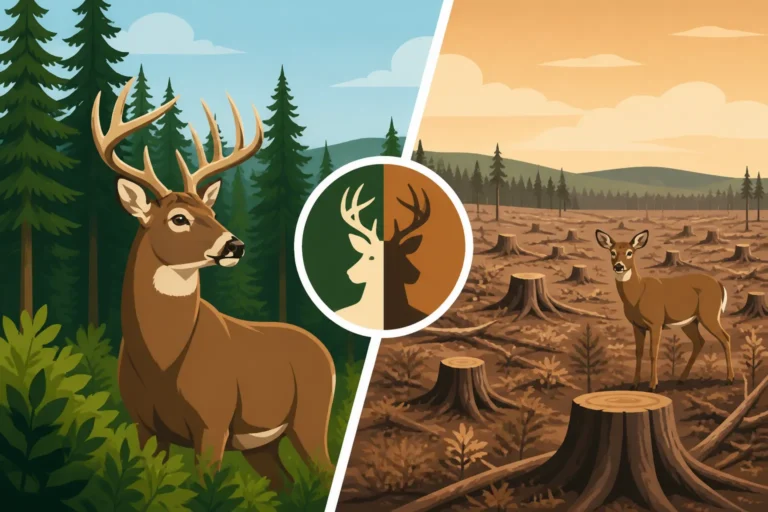
This is arguably the single biggest threat. The mature, undisturbed forests that caribou depend on are constantly being chipped away by human activity. Extensive logging for timber, the construction of seismic lines and pipelines for the oil and gas industry, and the creation of new roads for access all contribute to this fragmentation. When these linear disturbances cut through the forest, they do more than just remove trees; they create easy travel corridors for predators. What Oil and Gas Cutlines Do to Game is a perfect example of how human infrastructure can drastically alter wildlife dynamics.
Imagine a vast, unbroken forest where caribou can roam widely to avoid wolves. Now, picture that forest crisscrossed with straight lines, cleared for seismic testing or pipelines. These clearings act like highways for wolves and other predators, allowing them to move quickly and efficiently into caribou territory that was once a natural refuge. This increased predator access, coupled with habitat loss, means caribou have fewer places to hide and are more frequently encountered by their natural enemies. Even if a specific area is designated Crown Land, like when you're Hunting Alberta's Crown Land, these impacts can be province-wide.
Predation Dynamics and Human Influence
While wolves are a natural predator of caribou, the issue isn't simply the presence of wolves. It's how human activities have changed the dynamics of predation. By altering the landscape, we've inadvertently made it easier for wolves to hunt caribou, and simultaneously created more food sources (like moose and deer) that support higher wolf populations in these same caribou ranges. For example, logging creates young browse that attracts moose and deer, which in turn draws wolves. These wolves then stick around, exerting more pressure on the vulnerable caribou.
The problem is exacerbated because caribou, unlike deer, are not adapted to rapidly increasing predator pressure. Their anti-predator strategy is to simply avoid predators by living in sparsely vegetated, deep-snow areas where other prey animals (and thus predators) are less common. When these areas are compromised by fragmentation, their survival strategy falls apart. Discussions around Wolves Across the Boreal Forest often highlight this delicate balance and the complexities of managing predator populations when their prey bases are shifting due to human impact.
Climate Change and Disease
Beyond habitat and predation, broader environmental shifts are also playing a role. Climate change brings unpredictable weather patterns, including changes in snow depth and duration, which can impact caribou's ability to travel and access food. Warmer winters might reduce the deep snow cover that offers caribou a refuge from predators, or lead to ice crusts on the snow that make foraging for lichen incredibly difficult.
While specific caribou diseases aren't as widely discussed as CWD in deer, general ecosystem health is crucial. Diseases that affect other ungulates could potentially spill over, or changes in vector populations (like ticks) could present new threats. Understanding general trends in Diseases Alberta Game Managers Watch provides a broader context for the health of all wildlife, including caribou.
Conservation Efforts and Management Strategies
The good news is that Alberta isn't sitting idly by. There are significant efforts underway, driven by both provincial agencies and conservation groups, to try and reverse the decline of woodland caribou. However, these efforts are often complex, expensive, and require difficult trade-offs.
Alberta's Caribou Recovery Plans
The provincial government, guided by federal recovery strategies, has developed specific plans for each caribou herd in Alberta. These plans are designed to address the unique challenges faced by different herds, whether they're in the deep boreal forest or the mountain foothills. The overarching goal is often to stabilize and eventually grow caribou populations by tackling habitat loss and managing predation. This often involves detailed land-use planning and regulations specific to Alberta's Wildlife Management Units where caribou are found, acknowledging that a one-size-fits-all approach simply doesn't work for such a sensitive species.
These plans often involve a multi-pronged approach that includes habitat protection, restoration, and active management of predator populations. It’s a huge undertaking, requiring extensive research and collaboration between various stakeholders, including Indigenous communities, industry, and environmental groups.
Habitat Restoration and Protection
One of the most crucial aspects of caribou recovery is addressing habitat directly. This means not just stopping further damage, but actively healing the landscape. Projects are underway to reclaim seismic lines and old logging roads, often by planting trees and re-establishing natural vegetation. This "decommissioning" of linear features aims to make it harder for predators to access caribou habitat and encourages caribou to use these areas again.
Furthermore, there are discussions and efforts to designate protected areas or implement stricter land-use planning in critical caribou ranges. This could mean adjusting forestry practices, limiting new industrial development in certain zones, or even creating protected corridors. These discussions are often challenging, as they balance economic interests with ecological imperatives. For those using mapping resources like GoHunt, you might even see some of these protected areas or limited access zones marked on your maps, providing a clearer picture of where caribou conservation is active. Exploring areas like Hunting a Burned-Over Boreal Block or Hunting an Old Logging Road in the Foothills can give you a firsthand look at how habitat changes impact different species, including caribou.
Predator Management and Herd Augmentation
In some critical areas, direct predator management is a controversial but sometimes necessary component of caribou recovery. This typically involves reducing wolf populations in areas where caribou herds are facing immediate and severe threats. The goal is not eradication, but rather to temporarily reduce predator pressure to give caribou herds a chance to rebound, especially while habitat restoration efforts are still in their early stages.
Another strategy, though less common due to its complexity and cost, is herd augmentation. This involves moving caribou from healthier populations to supplement struggling herds, or captive breeding programs. These are last-resort measures, undertaken when a herd is truly on the brink and needs immediate intervention to prevent local extinction. It underscores just how precarious the situation for some of these herds has become.
The Future Outlook for Alberta's Woodland Caribou
The path forward for Alberta's woodland caribou is anything but certain. It involves a delicate balance of economic realities, environmental stewardship, and a deep understanding of complex ecological systems.
Challenges and Opportunities for Recovery
The sheer scale of the challenge is immense. Reclaiming vast areas of fragmented habitat takes decades, and the pressures from industrial development aren't disappearing overnight. Balancing the need for resource extraction with caribou conservation is a constant negotiation. We face the dilemma of maintaining jobs and economic activity while protecting a species that requires extensive, undisturbed wildland. Even natural events like How Wildfire Changes Game Range can have profound and sometimes contradictory impacts on caribou habitat, forcing constant re-evaluation of strategies.
However, there are opportunities for success. Increased public awareness, technological advancements in habitat mapping (tools like GoHunt are invaluable for understanding land use), and a growing commitment from industry to more sustainable practices offer glimmers of hope. Collaborative efforts, particularly with Indigenous communities who have a deep traditional knowledge of these lands and species, are absolutely essential for long-term success.
How Hunters Can Contribute to Conservation
While caribou hunting is not permitted in Alberta due to their endangered status—and it's vital that hunters respect these protections—our community still has a crucial role to play in their conservation. Hunters are often some of the most ardent conservationists, deeply invested in healthy ecosystems.
Here's how we can contribute:
- Awareness and Education: Understand the issues facing caribou and share that knowledge responsibly. Knowing the difference between Telling a Whitetail From a Mule Deer is one thing, but knowing the struggles of caribou takes that understanding to another level.
- Support Conservation Initiatives: Many conservation groups are actively involved in caribou recovery. Supporting them, whether through donations or volunteering, makes a tangible difference.
- Ethical Land Use: When you're out scouting or hunting other species, practice low-impact land use. Stick to designated trails, minimize your footprint, and be respectful of all wildlife. If you're using a mapping tool like GoHunt, pay attention to any notations about sensitive areas or caribou ranges, even if you're not hunting caribou.
- Advocacy: Encourage sustainable land management practices and voice your support for caribou recovery efforts to local and provincial leaders. Hunters have a powerful voice when it comes to wildlife management.
- Report Observations: While it's rare to see caribou, if you do, report your observations to wildlife authorities. Your data points can contribute to ongoing research and monitoring efforts. Understanding where these animals stand today, and what they need to thrive, benefits all species that call Alberta home.
It’s clear that the future of Alberta's woodland caribou depends on a collective effort. It’s a testament to the challenges of modern conservation, but also a call to action for all of us who care about the wild heart of this province.
Disclaimer
This article is for general informational purposes only and does not constitute professional advice. Laws, prices and regulations vary by location and change over time. Consult a qualified professional for guidance on your specific situation.