Best Alberta Public Ground for Mule Deer
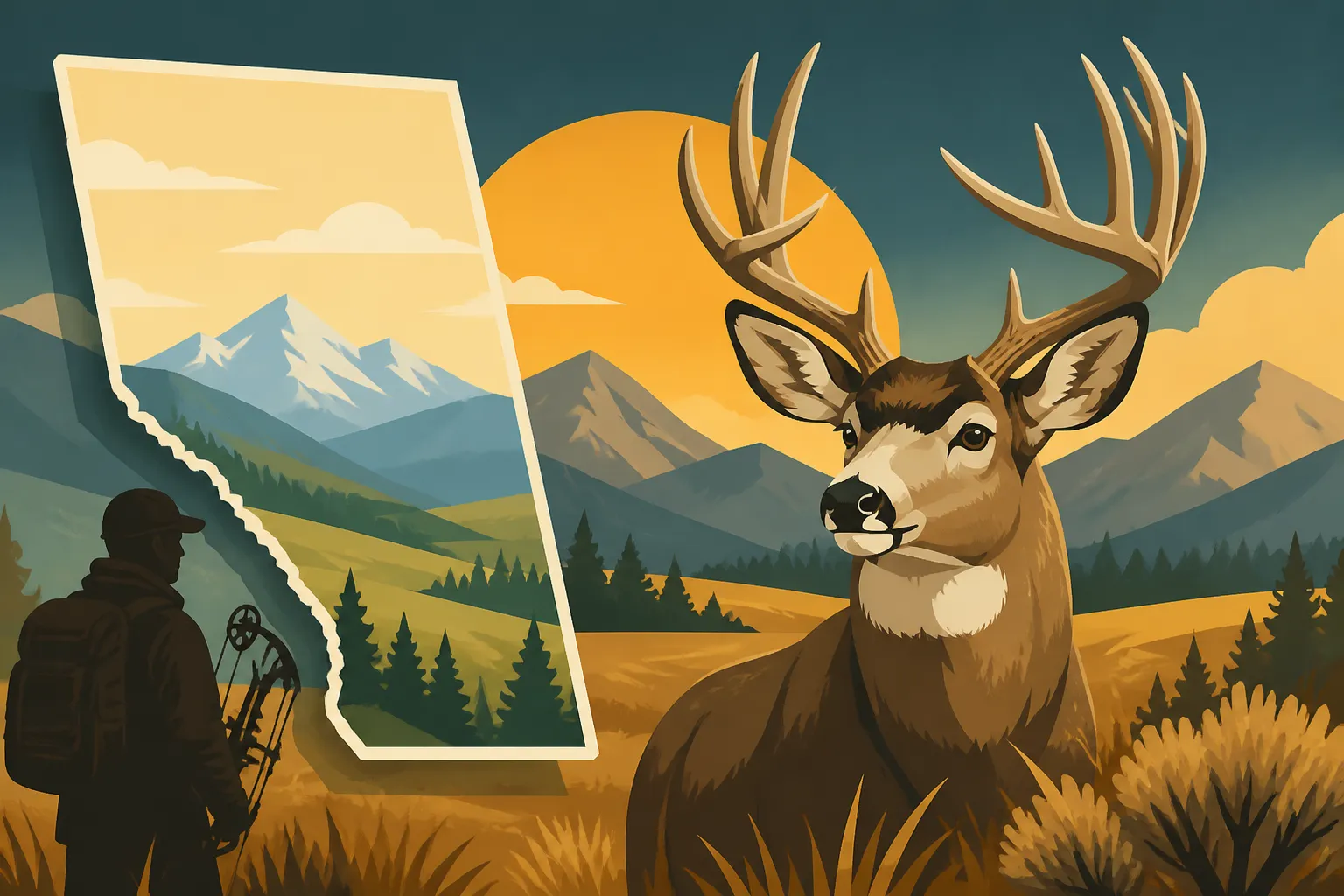
Finding good public hunting ground for mule deer in Alberta can feel like trying to find a needle in a haystack, especially when so much prime muley country is private or heavily pressured. It’s a common frustration for many hunters who want to chase those big-bodied, big-eared deer without paying for access. This guide is here to cut through the noise and help you uncover some of Alberta's best public land opportunities for mule deer, focusing on where to look and how to hunt them effectively when the crowds are thick.
The Unique Challenge of Public Land Mule Deer Hunting in Alberta
Hunting mule deer on public land in Alberta is a distinct beast compared to chasing whitetails or even mule deer on sprawling private ranches. These deer are savvy, and the landscape they prefer often brings its own set of challenges, especially when you're trying to avoid other hunters.
Why Mule Deer are Different on Public Land
Mule deer, unlike their whitetail cousins, often prefer more open, broken country—think coulees, rolling prairie, badlands, and the fringes of the foothills. This kind of terrain offers them great visibility and escape routes, but it also means they're often more visible to us as hunters, which can lead to higher pressure in easily accessible areas. They aren't as prone to "hiding" in thick cover all day like a whitetail might, but rather use the contours of the land, sparse brush, and distance to their advantage. When you add hunting pressure into the mix on public ground, mule deer can become incredibly wary, often moving to the deepest, most inaccessible pockets, or simply becoming nocturnal. You'll find that the big, mature bucks aren't going to hang out in the first coulee off the road, or the easiest ridge to walk. They’ve learned the drill.
The challenge is compounded by their inherent preference for these wide-open spaces that are often prime agricultural land, meaning much of what would be considered "ideal" mule deer habitat is actually private property. This forces public land hunters to really dig deep, literally and figuratively, to find those overlooked gems or be willing to work harder to access them. They might be in a smaller, isolated pocket of Crown land, or deep within a Public Land Use Zone (PLUZ) far from any vehicle access.
Understanding Access and Pressure on Crown Land
Alberta boasts a significant amount of Crown land, particularly in the Green Area (forested zones) and scattered throughout the White Area (agricultural and settled zones). However, "public" doesn't always translate to "easy access" or "unhunted." Much of the best mule deer habitat on public land, especially in the White Area, can be difficult to access due to surrounding private property or may be under grazing leases. While hunters have the right to access Crown land that is subject to a grazing lease, understanding the specific rules and respecting the leaseholder is paramount. Asking a Grazing Leaseholder for Access is often a good idea, even if not legally required for Crown land.
Furthermore, readily accessible public land, particularly anything with a well-maintained road or ATV trail, will see heavy hunter traffic, especially on opening weekend and during the rut. This pressure quickly pushes mule deer into thicker cover, deeper into coulees, or onto neighbouring private land where they feel safer. The key, then, is not just finding public land, but finding unpressured public land. This often means embracing a walk-in approach, scouting extensively, and being willing to go where others aren't. It requires a bit more effort than simply pulling off the highway and walking into the nearest timber.
Identifying Prime Public Ground Mule Deer Habitat Zones in Alberta
When you're looking for public land mule deer, you really need to understand the kind of terrain they gravitate towards. Alberta has some fantastic options, but they all require a specific approach.
The Southern Prairie Coulees and Badlands
Alberta's southern prairie and badlands regions are iconic mule deer country, and for good reason. Think of the vast, rolling grasslands, punctuated by deep, winding coulees, and the dramatic, eroded landscapes of the badlands. Areas like the Milk River Ridge, the Milk River breaks themselves, and the sprawling coulee systems that feed into rivers like the Red Deer or the Oldman, hold incredible potential. Here, mule deer thrive on the mix of sparse timber (often aspen or willow in the coulee bottoms), buckbrush, silver sage, and native grasses that provide both food and cover. These deep, intricate systems offer shelter from the elements, hiding spots, and travel corridors.
Hunting these areas often involves extensive glassing from high points, patiently scanning the coulee slopes, creek bottoms, and distant ridges. The sheer scale of the landscape can be intimidating, but it's also what allows those big bucks to disappear. I’ve spent countless hours with my binos glued to my face, picking apart distant shadows, trying to distinguish a grey rock from a grey mule deer buck bedded tight against a bank. Public land in these regions might include specific parcels of Crown land, Provincial Grazing Reserves, or areas managed by the Alberta Conservation Association (ACA). You'll want to dive into your mapping app, like onX Hunt, to identify these specific parcels and their boundaries. For a deeper dive into these specific areas, you might find insight in Hunting a Milk River Ridge Coulee.
Foothills and Parkland Transitional Zones
Moving north and west from the open prairie, you encounter Alberta's foothills and the parkland transitional zones. These areas present a different, often more timbered, landscape but can still hold excellent public land mule deer opportunities. Here, the rolling hills are often covered in aspen bluffs, interspersed with patches of evergreen, and cut by numerous creeks and river valleys. Mule deer in these regions will often utilize these bush pockets and draws in much the same way whitetails do, but they still prefer the more open edges and higher ground for bedding and feeding. You're looking for that sweet spot where heavy cover meets more open country – areas where they can feel secure but still access abundant forage.
Public land in the foothills often falls within Public Land Use Zones (PLUZs) or large blocks of forested Crown land accessible via forestry roads, though access might be seasonal or limited. The challenge here is less about finding the deer in vast open spaces, and more about navigating denser cover while still having enough visibility to spot those distinctive big ears. River valley bottoms and the benches above them can be especially productive, offering a rich mix of forage and escape cover. Remember to study the contours carefully, as a hidden bench or a brushy finger of timber can hold a good buck all season long. Check out Hunting a Foothills Bench Above a Creek for more detailed tactics in this kind of terrain.
Overlooked Pockets in the White Area
This is where the real "sleeper" spots for public land mule deer can be found – the small, often irregular, parcels of Crown land nestled within Alberta's agricultural White Area. These are not the vast expanses of the prairie or the mountains, but rather isolated quarter-sections, small river breaks, or brushy draws that have somehow remained public amidst private farms and ranches. These spots are easily overlooked by hunters who focus on larger, more contiguous blocks of Crown land. Because they're smaller, they might not hold a large population of mule deer year-round, but they can be critical travel corridors, feeding areas, or temporary sanctuaries, especially during the rut or when pressure pushes deer off adjacent private land.
Finding these spots requires meticulous e-scouting with tools like onX Hunt or GoHunt, zooming in on every piece of green or yellow on the map to identify tiny islands of public access. Once identified, a boots-on-the-ground recon is essential to verify access, assess sign, and confirm if there's enough suitable habitat to hold deer. These areas often get less pressure precisely because they require more work to find and often involve more delicate access negotiations with neighbouring landowners if you need to cross private to reach them. Don't discount a small, brushy coulee on a public quarter-section that's surrounded by alfalfa fields; that could be a magnet for a big buck looking for love or a quiet place to escape the crowds.
Strategic Approaches for Hunting Public Land Mule Deer
Success on Alberta's public ground for mule deer isn't just about showing up; it's about a well-thought-out strategy, both before and during your hunt. The pressure on public land means you need to be smarter and often work harder than the deer (and other hunters!).
Extensive E-Scouting and Boots-on-the-Ground Reconnaissance
This is the cornerstone of successful public land mule deer hunting. Before you ever set foot in the field, you should be spending hours poring over maps and satellite imagery. Tools like onX Hunt or GoHunt are invaluable for this. You want to identify not just the public land boundaries, but also the specific terrain features that mule deer love: deep coulees, north-facing slopes with residual snow, isolated timber pockets, high ridges, and benches. Look for areas with a mix of cover and open feeding grounds. Pay close attention to pinch points, potential travel corridors between cover and food, and any water sources. Scouting With Satellite Imagery in Alberta can reveal incredible detail, showing you trails, game crossings, and bedding areas before you even pack your boots.
Once you’ve identified promising areas on your maps, the next critical step is getting boots on the ground. A pre-season scout allows you to confirm access points, identify fresh sign (tracks, rubs, scrapes, droppings), and get a feel for the terrain that satellite imagery can’t fully convey. It lets you eliminate areas that look good on a map but are actually too swampy, too thick, or too overgrown to be productive. Moreover, it helps you understand how other hunters are accessing and using the area, allowing you to plan routes that avoid them and find those overlooked spots. Remember, mule deer are masters of using the smallest folds in the land for cover.
Utilizing Remote Access and Walk-In Areas
The biggest differentiator on public land is often how far you’re willing to walk. Most hunters are drawn to the easiest access points – roads, trails, and designated parking areas. This means that if you’re willing to hike past the first ridge, cross a creek, or push a few extra kilometres into a PLUZ, you’ll significantly reduce the competition and increase your chances of finding unpressured deer. Look for areas where vehicle access is restricted, or where the terrain makes it difficult for ATVs. Often, a good mule deer buck will simply move a mile or two deeper into the bush or coulee system once the season opens, knowing that most hunters won't follow.
This strategy requires a commitment to physical fitness and proper gear. You'll need sturdy hiking boots, a comfortable pack, and the mental fortitude to push through. Consider a spike camp if allowed, allowing you to stay deeper in the backcountry for several days, giving you more time during prime hunting hours. The further you get from the truck, the less pressure the deer will have seen, and the more likely you are to encounter a mature buck that hasn't been educated by human activity. How Far to Walk From an Alberta Forestry Road is a great resource for understanding this concept in the foothills and boreal fringe.
Mastering Spot-and-Stalk in Open Country
Mule deer hunting, especially in the more open prairie and badlands, is synonymous with spot-and-stalk. This technique is incredibly effective on public land because it allows you to cover vast amounts of territory with your eyes, locate deer from a distance, and then plan a precise, wind-conscious approach. It's an art form that requires patience, keen observation, and an intimate understanding of terrain and wind direction. Start by finding a high vantage point – a ridge, a hill, or even the top of a large coulee. Use high-quality binoculars and a spotting scope to methodically glass every inch of the landscape. Pay attention to shaded areas, brush lines, and the subtle contours of the land where a deer might be bedded.
Once you've spotted a deer, the real work begins. Before you even move, formulate a detailed stalk plan. Identify your route, noting every piece of cover you can use (coulee bottoms, brush, small rises). Always prioritize the wind, ensuring it's in your favour throughout the entire stalk. Mule deer have incredible noses, and a swirling wind will bust you every time. Move slowly, deliberately, and be prepared to take an hour or more to cover a few hundred yards if necessary. Patience is your greatest ally. For more specific advice, Spot-and-Stalk Mule Deer in Alberta and Glassing an Alberta Coulee for Mule Deer are excellent reads to hone these crucial skills.
Tools, Mindset, and Rules for Public Land Success
To truly excel at hunting public land mule deer, it’s not just about knowing where to go, but how to equip yourself, carry yourself, and understand the rules of the game.
Essential Gear and Mapping Tools
Having the right gear is non-negotiable for public land mule deer hunting. Top of the list are quality optics – a good pair of 10x binoculars are a minimum, but a spotting scope (20-60x or 15-45x) is practically essential for picking apart distant hillsides and judging bucks in open country. A comfortable, well-fitting backpack is crucial, especially if you plan on packing out a mule deer after a long hike. Don't skimp on sturdy, broken-in hiking boots that provide good ankle support for navigating uneven terrain. A reliable rangefinder is also a must for accurate shot placement in varying topography.
Beyond physical gear, digital mapping tools are arguably your most important asset. As mentioned, onX Hunt and GoHunt are fantastic for Alberta. They provide invaluable features like satellite imagery, detailed topographic maps, public and private land boundaries, and the ability to mark waypoints for potential deer sightings, access points, and even water sources. These apps can literally be the difference between getting lost on a grazing lease and confidently navigating Crown land. Knowing your exact location relative to boundaries and identifying potential escape routes or ambush points for deer will significantly increase your success rate.
Respecting the Land and Other Users
Hunting on public land is a privilege, and it comes with a responsibility to be a good steward of the land and a respectful ambassador for hunters. Always practice Leave No Trace principles: pack out everything you pack in, and perhaps even a bit more. Respect private property boundaries at all times, even if that means making a longer detour. Ignorance of boundaries is no excuse, and a single act of trespass can damage hunter-landowner relations for years to come. Utilize resources like Using Alberta's Recreational Access Mapping Tool to understand legal access.
Furthermore, you will encounter other recreational users – hikers, birdwatchers, ATV riders, and other hunters. A friendly, courteous attitude goes a long way. Share the resource responsibly. If you see another hunter already working an area, consider moving to another spot to avoid interfering with their hunt. Public lands are for everyone, and fostering a positive image of hunters helps preserve our access for the future. Understanding and adhering to Alberta Trespass Act and Hunting is not just about legality, but about ethical conduct.
Understanding Mule Deer Habits and Local WMU Rules
Successful mule deer hunting hinges on understanding their habits. They are creatures of routine, but those routines can shift dramatically with hunting pressure, weather, and the rut. Pay attention to how they use topography for bedding, what their preferred food sources are in different seasons, and how they react to wind and temperature. Knowing when the rut is peaking in your chosen Wildlife Management Unit (WMU) can also dictate your strategy, as bucks will be more active and less cautious in search of does.
Equally important, and I cannot stress this enough, is a thorough understanding of the Alberta hunting regulations booklet. Each WMU has specific rules regarding season dates, bag limits, and often antler point restrictions (APRs). Alberta has unique regulations, such as the Hunting Alberta's Three-Point Mule Deer Rules in many WMUs, which means only bucks with at least three points on one antler (excluding the brow tine) are legal to harvest. Misinterpreting these rules can lead to serious consequences. Always check the current regulations before you head out, and even carry a copy with you. The regulations are the hunter's bible, and adhering to them ensures a legal and ethical hunt.
Alberta Public Land Mule Deer Zones and General Characteristics
To give you a clearer picture, here's a general overview of public land characteristics in common mule deer areas.
| Region Type | Typical Terrain | Access Challenges | Mule Deer Habits & Density | Key WMU Examples (Check current regs) |
|---|---|---|---|---|
| Southern Prairie | Deep coulees, badlands, rolling grasslands, river breaks | Scattered Crown land, often surrounded by private, grazing leases. Remote access usually requires significant hiking. | High density in prime habitat, can be wary, use terrain for cover. Strong spot-and-stalk hunting. | WMUs in the 100-series like 102, 104, 106, 108 |
| Foothills/Parkland Fringe | Rolling hills, aspen bluffs, mixed forests, river valleys, clearcuts | PLUZs, forestry roads (some gated), scattered Crown land, some walk-in only. Can be steep and rugged. | Good density, utilize bush for security, often found on edges, benches. Blend of spot-and-stalk and still-hunting. | WMUs in the 200/300-series like 212, 216, 218, 304, 306 |
| White Area Pockets | Small parcels of Crown land, brushy draws, river corridors, isolated timber blocks | Often surrounded by private land, requiring careful access planning. May be small, overlooked. | Lower density but can hold large, transient bucks. High pressure can push deer into these "sanctuaries." | Varies widely, requires detailed map scouting in any 000-series WMU with mixed land use. |
| Cypress Hills | Coniferous and deciduous forests, open grasslands, deep ravines | Provincial Park land (hunting restricted), but significant surrounding public & lease land. | Good density, utilize timber and ravines. Mix of timber and open country hunting. | WMUs around the 100-series like 116, 118 (check specific designations). See Hunting a Cypress Hills Timber Pocket |
This table provides a snapshot, but remember that conditions and deer behaviour can change rapidly. Always cross-reference with the most current Alberta hunting regulations and use detailed mapping tools to confirm land ownership and access. You can find more general information about these kinds of areas in Mule Deer in Alberta's Open Country or Hunting Alberta's Prairie WMUs.
Disclaimer
This article is for general informational purposes only and does not constitute professional advice. Laws, prices and regulations vary by location and change over time. Consult a qualified professional for guidance on your specific situation.