What the Prairie Series WMUs Cover
If you've ever looked at an Alberta hunting regulations map, you've probably noticed the vastness of our province and the many different Wildlife Management Units, or WMUs. Among these, the "Prairie Series" WMUs can seem a bit enigmatic, especially if you're used to hunting the bush or the mountains. This guide is here to demystify what these particular WMUs cover, what makes them unique, and what you can expect as a hunter in these often overlooked, but incredibly productive, landscapes.
What Exactly Are the Prairie Series WMUs?
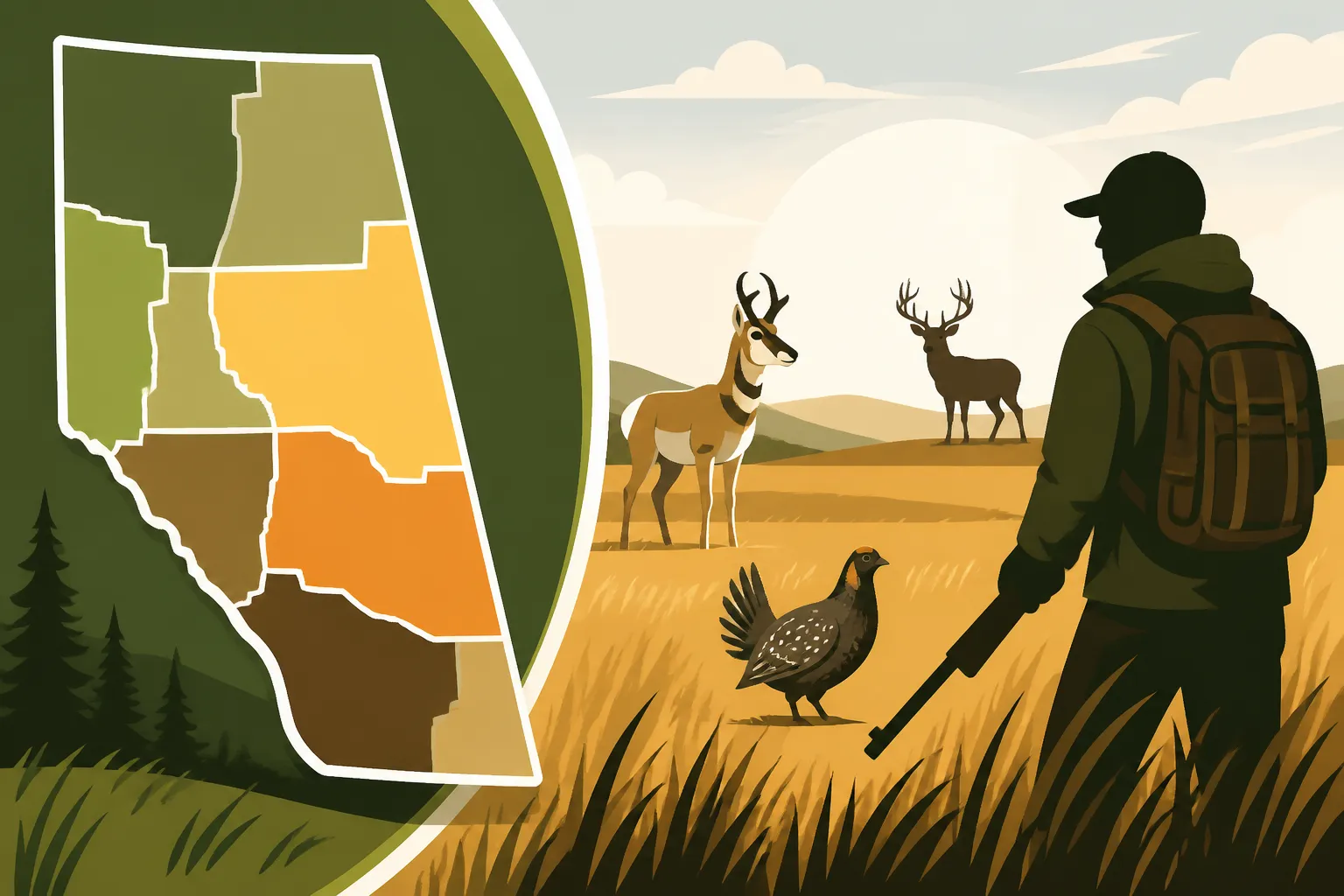
The Prairie Series WMUs are, as their name suggests, the hunting areas that encompass Alberta's true prairie and mixed grassland ecosystems. They represent a significant portion of the province's southern and eastern hunting grounds, stretching from the Montana border northwards, and east towards Saskatchewan. These aren't the dense forests of the Boreal or the rugged peaks of the Rockies, but rather a landscape characterized by its openness, big skies, and unique blend of agriculture and native grasslands. Understanding this distinction is key to successful hunting here.
Defining the Prairie Landscape in Alberta
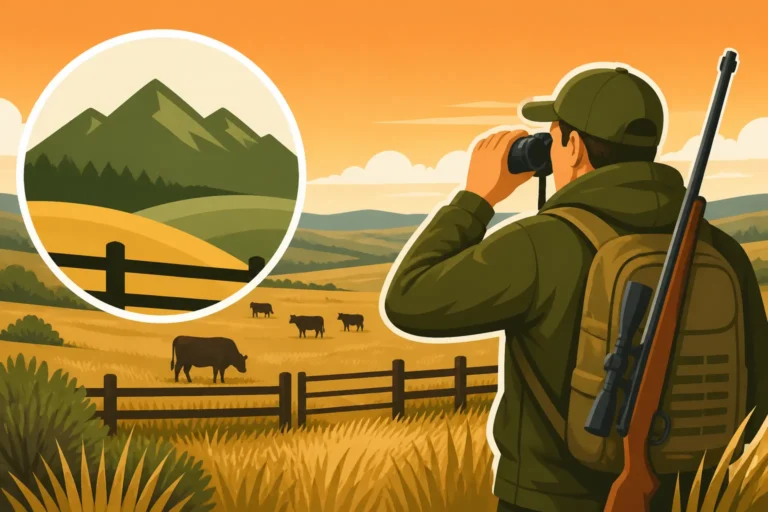
Alberta's prairie landscape is a diverse mosaic, far from a monotonous flat expanse. It’s defined by expansive agricultural fields—think golden wheat, barley, canola, and pea fields stretching to the horizon—interspersed with native grasslands, river valleys, coulees, and the occasional aspen bluff or shelterbelt. Topographically, it ranges from genuinely flat to gently rolling, with significant breaks like the Red Deer River Badlands or the Milk River Ridge offering dramatic elevation changes and crucial cover.
Unlike the thick boreal forest where sightlines are measured in yards, on the prairie, you're often looking at miles. This fundamentally changes how you hunt. The cover is sparse, primarily found in draws, along riparian zones of rivers and creeks, in small bluffs, or within the standing crops themselves. The weather here is also famously extreme, swinging from scorching summer heat to bitter winter cold, often accompanied by relentless wind that can make a calm day a rarity.
Geographical Extent of the Prairie Series
Generally speaking, the Prairie Series WMUs are typically found within the 100 and sometimes the lower 200 series of Wildlife Management Units. These units stretch across a broad arc of southeastern and central Alberta. Picture a line roughly from the Crowsnest Pass area, moving east through the Lethbridge and Medicine Hat regions, up through Brooks, Hanna, and Castor, and then somewhat west into the Dry Hills and sometimes touching the edge of the aspen parkland belt before it transitions north.
This vast area includes some of Alberta's most iconic agricultural land, but also incredibly wild and remote pockets of native prairie and badlands. You'll find WMUs specifically designated as "Prairie" that are characterized by large tracts of cultivated land, but also those that incorporate significant river breaks, such as along the South Saskatchewan or Red Deer Rivers, which offer completely different terrain and hunting dynamics.
Unique Hunting Opportunities and Challenges
The Prairie Series WMUs offer a unique set of hunting opportunities, primarily for white-tailed deer, mule deer, and pronghorn. For waterfowl hunters, these units are world-class, sitting right in the middle of major migration flyways. Upland bird hunters also find success with Hungarian partridge and sharp-tailed grouse.
However, hunting the prairie also presents its own set of challenges. Firstly, the sheer openness means game animals can spot you from a long distance. This often necessitates long-range shooting skills and a mastery of spot-and-stalk tactics. Secondly, private land ownership is predominant here. Gaining access to quality hunting ground often relies on knocking on doors and securing permission from landowners, which can be a significant hurdle for new hunters or those unfamiliar with the area. Lastly, the weather can be a formidable adversary; open fields offer little shelter from wind, rain, or snow, demanding durable gear and mental toughness.
Understanding the Specific WMU Designations and Their Boundaries
Navigating Alberta's WMUs can feel like trying to solve a puzzle, especially when it comes to understanding how the numbering system reflects different ecological zones. The Prairie Series WMUs are distinct, and knowing their characteristics is essential for planning a successful hunt.
How WMU Numbers Are Structured in the Prairie Series
Alberta's WMUs are divided into numerical series, broadly corresponding to geographical regions and ecological zones. The Prairie Series largely falls within the 100-series WMUs, like 102, 116, 128, etc. These numbers typically designate areas that are predominantly prairie, mixed grassland, and extensive agricultural lands. As you move into the lower 200-series (e.g., 200-204), you might start to see a transition zone, often referred to as "Parkland," where aspen bluffs become more common, gradually giving way to the more wooded Foothills or Boreal zones further north and west.
The WMU system is designed to manage game populations effectively by segmenting the province. Each WMU will have specific regulations regarding season dates, species allowed, and tag requirements. What you can hunt, and when, often changes dramatically from one WMU to an adjacent one, even if they appear similar on a general map. It's not uncommon for a deer tag to be valid in one prairie WMU, but not the one right next door, highlighting the importance of precise boundary awareness.
Using Mapping Tools for Prairie WMUs
In this vast, often featureless landscape, relying solely on paper maps can be incredibly challenging. This is where modern mapping applications become an absolute game-changer. Tools like onX Hunt or GoHunt are invaluable for understanding the Prairie Series WMUs. They allow you to overlay WMU boundaries onto satellite imagery, showing you exactly where you are in relation to these lines. Imagine standing at the edge of a vast stubble field, trying to figure out if that far coulee is in WMU 106 or 108; these apps remove all doubt.
Beyond just WMU lines, these platforms provide crucial information like land ownership. In a private-land-dominated region like the prairie, knowing who owns which quarter section is paramount for seeking permission. You can identify Crown land parcels, grazing leases, and private holdings, helping you plan your approach and identify potential access points. Many hunters find that subscribing to one of these apps pays for itself many times over, not just in avoiding trespass, but in helping them strategically locate huntable ground and identify natural funnels and cover in an otherwise open environment. When you're trying to figure out Reading Alberta's Crown Land Layers on onX, these tools are your best friend.
Key Characteristics of Prairie WMUs
Hunting in the Prairie Series WMUs means you'll encounter distinct geographical features that dictate game movement and hunting tactics.
- Vast Agricultural Fields: These are dominant. Whitetails and mule deer often feed in these fields, especially in the early morning and late evening. The edges of standing crops can provide excellent cover for an ambush or a stalk.
- Coulees and River Breaks: These are the lifeblood of prairie big game. Deep, winding coulees, often with some brush or sparse timber, offer vital shelter from wind and predators, and act as travel corridors. River breaks, like those along the Red Deer, Milk, or South Saskatchewan rivers, create significant elevation changes, providing pockets of thick cover and diverse vegetation. This is where you'll find the highest concentrations of deer, often bedding down. Hunting a Prairie Coulee Bottom is a classic prairie strategy.
- Shelterbelts and Aspen Bluffs: While not as prevalent as in the parkland, these scattered tree lines, often planted around farmyards or along property lines, offer crucial thermal and visual cover for deer. Small aspen bluffs, sometimes called "islands" of timber, can hold surprising numbers of deer, especially whitetails. Hunting a Shelterbelt Between Two Fields can be incredibly productive.
- Minimal Natural Cover: The challenge of the prairie is the lack of continuous heavy cover. This means hunters must become masters of using subtle terrain features, fence lines, and even the natural rise and fall of the land to remain undetected. Your ability to glass vast areas and then plan a careful stalk is paramount.
- Water Sources: Dugouts, potholes, irrigation canals, and creeks are critical. Game animals will gravitate towards these for hydration, especially during warmer periods.
Game Species and Hunting Strategies Unique to the Prairie Series
The Prairie Series WMUs, with their wide-open spaces and distinct topography, host a vibrant array of game, each requiring specialized approaches. It’s a completely different game than chasing elk in the foothills or moose in the boreal.
Common Big Game in Prairie WMUs
The prairie is perhaps most famous for its deer hunting, but it's also the exclusive domain of another unique big game animal.
- White-tailed Deer: While often associated with the bush, whitetails thrive in the prairie environment, especially along river bottoms, in large coulees, and within the shelter of aspen bluffs. They use the agricultural fields for feeding and often bed down in dense cover nearby. Hunting the rut in early November can be explosive, as bucks become far more visible. During the early archery seasons, they're often still in predictable patterns between bedding and feeding. You'll find good whitetail populations in many 100-series WMUs, particularly where there's a good mix of fields and riparian cover.
- Mule Deer: The true kings of the prairie coulees, mule deer are perfectly adapted to this open country. They rely heavily on the broken terrain of river breaks, badlands, and deep coulees for cover and escape. Spot-and-stalk hunting is the quintessential mule deer strategy here. You'll spend hours glassing vast areas from high points, looking for bedded bucks, before planning an intricate approach using every ripple in the landscape. Their large ears and keen eyesight make them incredibly challenging to approach. Spot-and-Stalk Mule Deer in Alberta is the name of the game.
- Pronghorn: Alberta's fastest land mammal, pronghorn are unique to the prairie. They inhabit the most open, expansive grasslands and cultivated fields. Hunting pronghorn is almost entirely a spot-and-stalk affair, often requiring incredibly long stalks across featureless terrain. The challenge is their phenomenal eyesight and tendency to graze in open areas, making close approaches difficult. Most pronghorn hunting in Alberta is done via draw-only special licenses, so knowing the Alberta Pronghorn Draw Odds by WMU is crucial.
Waterfowl and Upland Bird Opportunities
Beyond big game, the Prairie Series WMUs are a waterfowl hunter's paradise and offer excellent upland bird hunting.
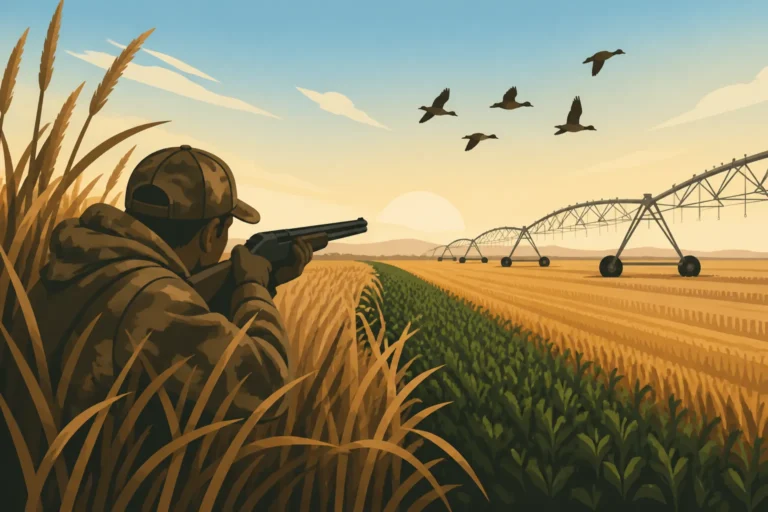
- Waterfowl: Alberta sits squarely in the Central Flyway, and the prairie WMUs are major staging areas for millions of ducks and geese. Vast grain fields attract huge flocks of Canada geese, snow geese, and specklebelly geese, while countless potholes and sloughs dot the landscape, holding mallards, pintails, and various other duck species. Field Hunting Geese in Alberta Stubble is a popular and often highly successful pursuit. Securing permission to hunt these fields is often straightforward, especially if you approach landowners respectfully. Pothole Hunting Ducks on Small Water is also a classic method, where hunters "jump shoot" small bodies of water, or set up small spreads on larger ones.
- Upland Birds: Sharp-tailed grouse and Hungarian partridge are the stars of the prairie upland scene. Sharptails prefer native grasslands, sagebrush, and light brushy cover, often found in coulees or along prairie edges. Walking Up Sharp-Tailed Grouse in Alberta with a good flushing dog can be incredibly rewarding. Hungarian partridge, often called "Huns," are typically found in agricultural fields, fence lines, and shelterbelts. They're quick, flush in coveys, and offer fast-paced wing shooting. Finding them requires covering ground, often walking along field edges or shelterbelts.
Effective Hunting Strategies for Open Prairie
Hunting the Prairie Series requires a specific toolkit of tactics, vastly different from hunting in dense timber.
- Spot and Stalk: This is the dominant strategy for big game. You'll need quality optics—binoculars and a spotting scope—to systematically scan vast areas. Spend more time looking and less time walking. Once game is spotted, a careful, often circuitous stalk utilizing every piece of available cover is necessary. This requires patience, good wind awareness, and sometimes crawling for hundreds of yards.
- Long-Range Shooting: Given the openness, shots can often be at longer distances than in forested areas. Practicing ethical long-range shooting is crucial. Knowing your rifle and ammunition's capabilities, along with understanding wind drift, is paramount. The Wind in Open Prairie Country is a constant factor that can dramatically affect bullet trajectory.
- Using Natural Funnels and Cover: Even in open country, deer will use the path of least resistance or the best available cover. This means focusing your efforts on coulees, river breaks, and the edges of standing crops. These features act as natural funnels for game movement.
- Access and Patience: Getting access to good private land is key. This means being prepared to spend time knocking on doors and building relationships. For public land, often found along major rivers or in certain grazing reserve areas, you might need to walk further to get away from road hunters. The prairie rewards persistence.
Access and Regulations Specific to Prairie WMUs
One of the biggest hurdles and most important considerations for hunting in Alberta's Prairie Series WMUs is understanding and navigating access and localized regulations. It's not just about finding game; it's about being legal and respectful.
Navigating Private Land and Public Access
The vast majority of the land within the Prairie Series WMUs is privately owned, primarily by farmers and ranchers. This means that simply showing up and hunting is almost guaranteed to lead to a trespass violation. Alberta has strict Alberta Trespass Act and Hunting laws, and landowners have the right to refuse access. Therefore, obtaining explicit permission from the landowner before you step foot on their property is not just good etiquette, it's a legal requirement.
This is where planning and good communication skills come into play. Many hunters build relationships with landowners over years, offering a helping hand or sharing some game meat in exchange for hunting access. Don't expect to show up opening morning and get permission on the spot. Reach out well in advance, be polite, clearly state your intentions, and always respect their decisions and property. For specific activities like Getting Permission for a Goose Field, knowing local etiquette and timing your request is important.
While less common, there are pockets of Crown land, often along river systems, in certain provincial grazing reserves, or as small, isolated quarter sections. Identifying these parcels on your mapping apps (like onX Hunt) is crucial. Even on Crown land, access might be limited by surrounding private land, requiring you to find legal entry points.
Recreational Access and Grazing Leases
Alberta's public land system also includes Provincial Grazing Reserves, which are public lands managed for livestock grazing, but often open to hunters with specific rules. Some are more accessible than others, and all require respectful coexistence with cattle. Public Land Use Zones (PLUZs) are more common in the foothills and mountains but do exist in some transitional zones, offering defined recreational access rules.
One unique aspect of Alberta is the concept of grazing leases. These are Crown lands leased to private individuals for grazing cattle, but they remain public land. However, the leaseholder has certain rights and responsibilities, and it's generally considered good practice—and sometimes required by specific WMU rules—to contact the leaseholder before hunting. Knowing Asking a Grazing Leaseholder for Access can prevent misunderstandings and ensure you're hunting legally and respectfully. Always check the current regulations for specific rules on individual grazing leases or reserves.
Unique Regulations and Considerations
Beyond general hunting regulations, the Prairie Series WMUs often have their own specific quirks.
- Special Licence Draws: Iconic prairie species like pronghorn are almost exclusively hunted via special licence draws. Other popular species like mule deer often have specific antlered or antlerless draws in certain WMUs. Understanding Alberta's Special Licence Draws and the Alberta Pronghorn Draw Odds by WMU is essential if these species are on your target list.
- CWD Zones: Chronic Wasting Disease (CWD) is a significant concern in many of Alberta's prairie WMUs, particularly in the southeast. Hunters in certain WMUs are often required to submit the heads of harvested deer for CWD testing. This is critical for disease management and hunter responsibility. Make sure you know if your chosen WMU falls under Alberta's Mandatory CWD Submission WMUs.
- Blaze Orange Requirements: Given the open nature of the prairie and the potential for multiple hunting parties, strict adherence to blaze orange requirements is vital for safety. Always wear the required amount of blaze orange, especially during rifle seasons.
- Shooting Hours: Be keenly aware of legal shooting hours, which typically extend from one-half hour before sunrise to one-half hour after sunset for big game. On the open prairie, it's easy to misjudge light conditions.
- Vehicle Use: Rules regarding off-road vehicle use vary, so always check if you plan to use a quad or side-by-side to access remote areas on Crown land or with landowner permission. Many areas restrict vehicle use to established trails or roads.
Alberta's Prairie Series WMUs offer incredible hunting opportunities for those willing to learn their nuances. It's a landscape of wide-open spaces, challenging stalks, and abundant game, but success hinges on preparation, respect for landowners, and a deep understanding of its unique characteristics and regulations.
Comparative Overview of Prairie Hunting Features
To help summarize some of the distinct characteristics and challenges, here's a quick look at common features you might encounter when venturing into Alberta's Prairie Series WMUs.
| Feature Type | Characteristic in Prairie WMUs | Hunting Implication |
|---|---|---|
| Landscape | Expansive, open, agricultural fields, native grasslands, deep coulees, river breaks | Spot-and-stalk tactics, long-range optics, utilizing subtle terrain for cover |
| Primary Big Game | White-tailed deer, Mule deer, Pronghorn | Focus on cover (coulees, river bottoms), draw-only for pronghorn |
| Upland Birds | Sharp-tailed grouse, Hungarian partridge | Walking field edges, shelterbelts, native grasslands; flushing dogs helpful |
| Waterfowl | Ducks (mallards, pintails), Geese (Canada, Snow, Specklebelly) | Field hunting, pothole jumping; permission critical for fields |
| Access | Predominantly private land; requires landowner permission | Building relationships, using mapping apps, understanding grazing leases |
| Hunting Pressure | Can be high near towns or easily accessible public land | Seek out less accessible areas, hunt during weekdays |
| Weather | Extreme temperature swings, persistent wind, sudden storms | Dressing in layers, wind-resistant gear, robust shelter from elements |
| Regulations | CWD submission zones, special draws, specific boundary rules | Always check current regulations for your specific WMU and target species |
| Required Gear | High-quality binoculars/spotting scope, rangefinder, wind-checker, mapping app, appropriate blaze orange | Investment in optics is paramount; navigation tools are essential |
Disclaimer
This article is for general informational purposes only and does not constitute professional advice. Laws, prices and regulations vary by location and change over time. Consult a qualified professional for guidance on your specific situation.