Alberta’s 219 Wildlife Management Units
Navigating Alberta's hunting landscape can feel like trying to solve a complex puzzle, especially when you first encounter the sheer number of Wildlife Management Units, or WMUs. Many hunters, both new and seasoned, find themselves scratching their heads trying to understand what each of the 219 units means for their hunting plans. This comprehensive guide is here to demystify Alberta's WMU system, explaining its purpose, structure, and how you can use this knowledge to unlock better hunting opportunities and plan your adventures more effectively.
Understanding the Foundation of Alberta's WMU System
When you're planning a hunt in Alberta, the term "Wildlife Management Unit" will be one of the most frequently encountered, and often, most confusing concepts. It's the bedrock upon which all hunting regulations and strategies are built.
What Exactly is a Wildlife Management Unit?
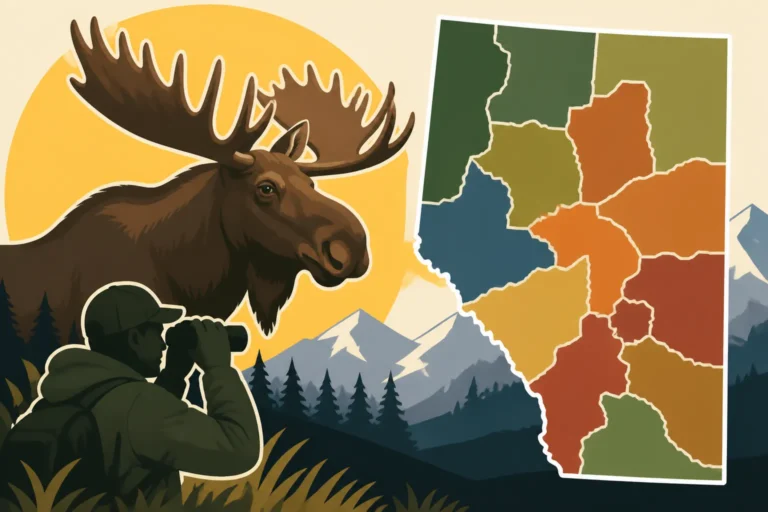
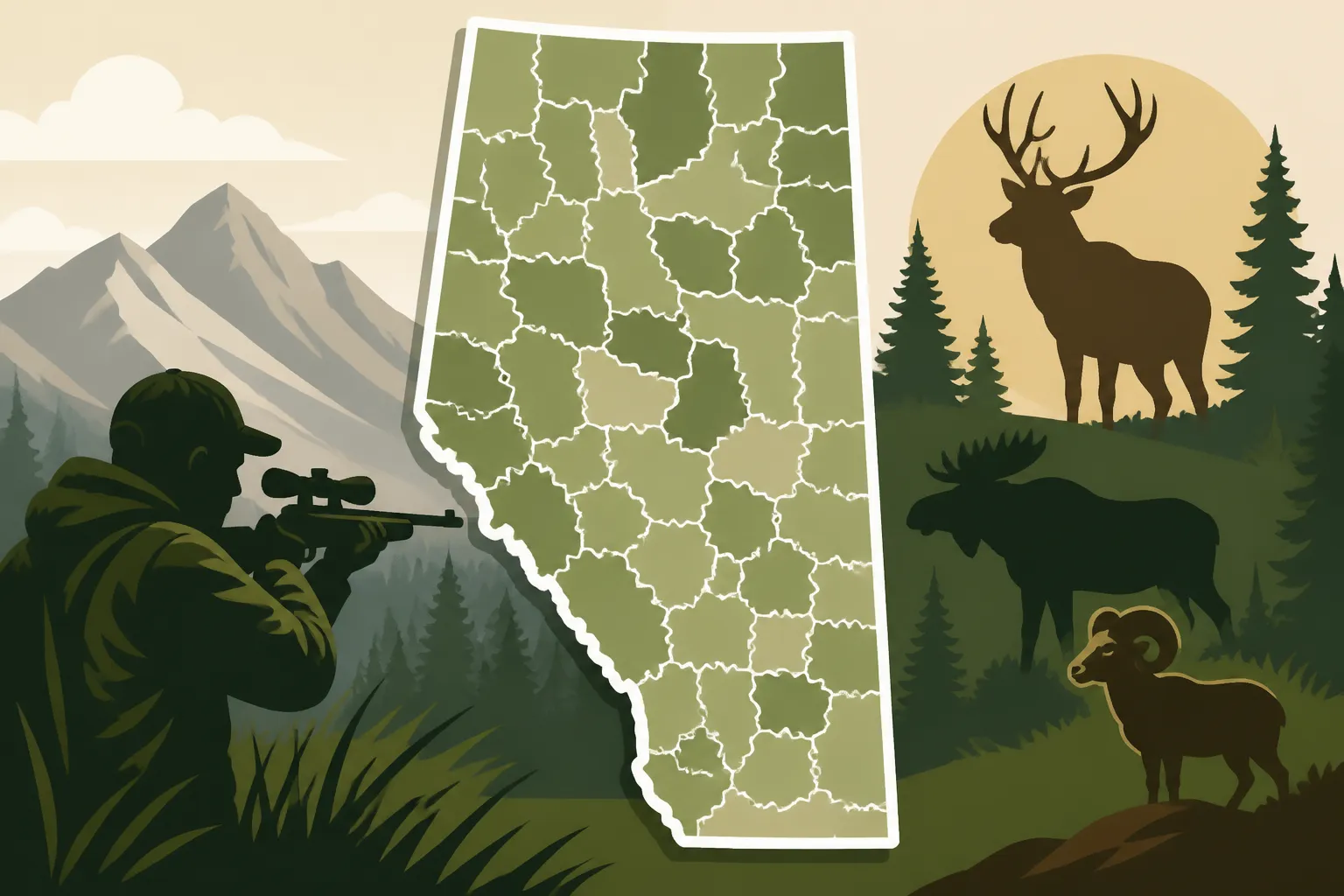
At its core, a Wildlife Management Unit (WMU) is a distinct geographical area defined by Alberta Fish and Wildlife for the purpose of managing wildlife populations and regulating hunting activities. Think of it as a specific hunting district, each with its own set of rules, seasons, and species allocations. Unlike simply having broad zones, Alberta has opted for 219 highly localized units, ranging from the vast expanses of the Boreal Forest to the rolling agricultural lands of the White Area. This granular approach allows wildlife managers to apply very specific management strategies, addressing the unique ecological conditions and wildlife challenges of each area. It's a system designed for precision, aiming to balance hunter opportunity with sustainable wildlife populations. For a new hunter, the sheer number can seem overwhelming, like trying to learn the names of 219 new towns all at once, but each WMU serves a crucial function in the overall health and management of Alberta's diverse game species.
The primary reasons behind establishing such a detailed WMU system are multi-faceted. Firstly, it facilitates robust data collection. Every time a hunter reports a harvest, that data is tied back to a specific WMU, allowing biologists to monitor population trends, success rates, and overall health of game animals within that particular region. This information is invaluable for making informed decisions about future hunting seasons and draw quotas. Secondly, WMUs enable localized management. A deer herd on the open prairie faces different challenges and has different population dynamics than a herd in the dense foothills. The WMU system allows for regulations to be tailored to these specific conditions, preventing overharvest in one area while potentially increasing opportunities in another where populations can sustain it. Lastly, it helps distribute hunting pressure. By having specific seasons and regulations tied to individual WMUs, it can prevent a mass influx of hunters into one prime area, spreading the pressure more evenly across the landscape.
The Importance of WMUs for Hunters
For you, the hunter, understanding WMUs isn't just an academic exercise; it's absolutely critical to your success and compliance. Every single hunting decision, from purchasing a licence to planning your daily hunt, will be directly influenced by the WMU you choose to hunt in. This system dictates precisely what species you can hunt, when you can hunt them, and even what type of weapon you can use. For instance, an archery season might be open in WMU 200, while the rifle season is strictly closed until later, or a particular WMU might have a special draw for antlerless deer that isn't available anywhere else. It’s a make-or-break aspect of hunting in Alberta.
WMUs are the key to unlocking specific hunting opportunities that are otherwise hidden within the broad provincial regulations. Without knowing which WMU you're targeting, you can't accurately check the season dates, the draw odds, or even the type of licence you'll need. This is especially true when it comes to coveted species or those managed through draws. If you're hoping for a moose tag, you'll need to research Alberta Moose Draw Odds by WMU to identify which WMUs offer the best chance of success. Similarly, understanding Alberta Whitetail General Season Dates becomes precise only when you look at them on a WMU-by-WMU basis. Many of Alberta’s most sought-after tags, particularly for elk, moose, and sheep, are allocated through Alberta's Special Licence Draws, and these are entirely WMU-specific. Your eligibility for a general licence can also be tied to whether you were successful in a draw in a particular WMU, underscoring just how central these units are to the entire hunting framework.
How Alberta's WMUs Are Structured Geographically
While there are 219 individual WMUs, they aren't just a random patchwork. Alberta's landscape is incredibly diverse, and the WMU system reflects this by grouping units into larger ecological regions, each with its own distinct characteristics and hunting challenges.
Grouping WMUs by Ecological Regions
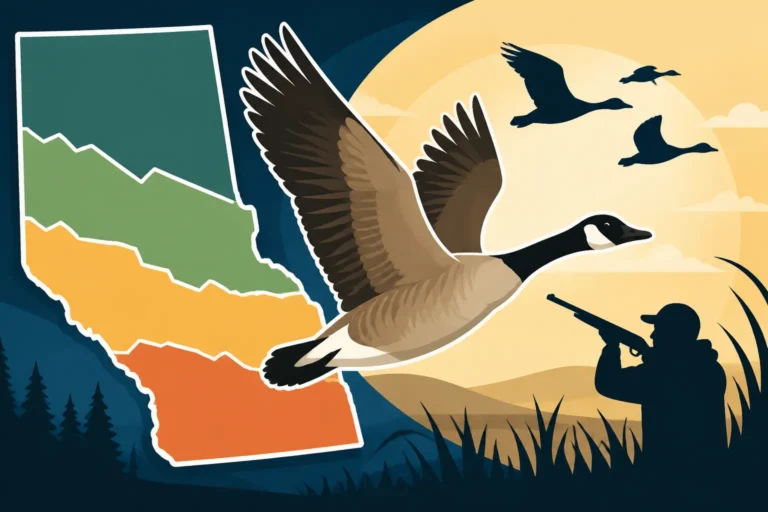
Alberta can be broadly divided into several distinct ecological regions: the Prairies in the south, the Parkland transition zone, the Foothills leading up to the Mountains in the west, and the vast Boreal Forest covering much of the central and northern parts of the province. WMUs are grouped in a way that aligns with these natural boundaries. For example, WMUs in the 100 series (like WMU 102, 110, etc.) are typically found in the southern prairie landscape, known for supporting species like Pronghorn on Alberta's Southern Prairie and Mule Deer in Alberta's Open Country. As you move north and west, you'll encounter WMUs in the 200, 300, and 400 series, which progressively cover the Parkland, Foothills, and Mountain regions, respectively. The 500 series WMUs primarily encompass the immense Boreal Forest, home to species like Moose Across Alberta's Boreal and Foothills and Black Bears in Alberta's Forests and Foothills.
Understanding these regional groupings is immensely helpful because it gives you a quick mental map of what to expect in terms of habitat, terrain, and common game species. WMUs in the mountains (e.g., 400 series) will naturally present different hunting challenges and opportunities, requiring specialized gear and tactics for species like Bighorn Sheep in Alberta's Mountains, compared to the relatively flatter, more open terrain of the prairie WMUs. The species distribution directly influences where certain WMUs are placed and how their seasons are set. For example, WMUs characterized by extensive timber and wetlands are more likely to offer quality moose hunting, while those with mixed agricultural and aspen bluffs will be prime for whitetails. Even within these broad regions, the micro-habitats of a specific WMU can be quite unique, further emphasizing the importance of detailed research when planning your hunt.
The White Area vs. Green Area Distinction
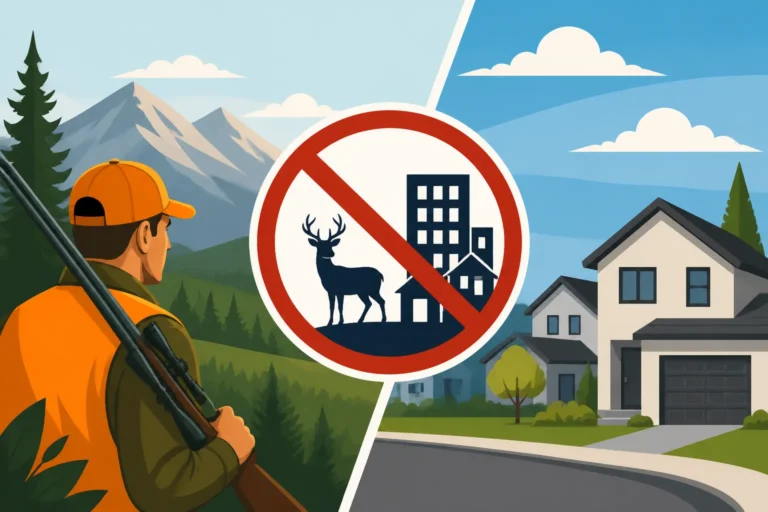
Another fundamental geographical distinction that deeply impacts hunting in Alberta, and consequently the WMU system, is the division between the "White Area" and the "Green Area." This isn't just about the colour on a map; it's a critical legal and practical difference that dictates land ownership, access, and often, the style of hunting you'll encounter.
The White Area generally refers to the settled, agricultural regions of Alberta. This is where most of the province's population resides, and the land is predominantly privately owned. WMUs in the White Area, especially those in the southern and central parts of the province (like many in the 100, 200, and sometimes 300 series), often consist of a mosaic of cultivated fields, pastures, and small parcels of bush. Hunting in these WMUs almost invariably requires seeking Getting Private Land Permission in Alberta from landowners. Without explicit permission, you risk trespassing, which is strictly enforced in Alberta. The hunting opportunities here can be exceptional, particularly for species like whitetail deer and upland birds, but gaining access is the primary hurdle.
Conversely, the Green Area comprises the vast, predominantly publicly-owned, forested and mountainous regions of Alberta. These WMUs are typically found in the western foothills, the mountains, and the expansive northern boreal forest (e.g., 300, 400, and 500 series WMUs). Here, a significant portion of the land is Crown Land, meaning it's publicly accessible for recreational activities, including hunting. While access to Hunting Alberta's Crown Land might be physically challenging due to remote locations or rugged terrain, the legal right to access is generally assured, provided you adhere to specific rules like those found in Alberta's Public Land Use Zones. The Green Area offers different hunting experiences, often requiring more remote camping, backpacking, or off-highway vehicle use to reach prime areas. Many WMUs will contain a mix of both White and Green Areas, further complicating access and requiring hunters to be diligent in identifying property boundaries.
Navigating WMU Specifics: Seasons, Species, and Access
Once you understand the overarching structure of WMUs, the next step is diving into the specific details that will shape your hunting season: when and where you can hunt, and what game you can pursue.
Decoding WMU-Specific Season Dates and Regulations
This is where the rubber meets the road. While Alberta has provincial hunting regulations, the vast majority of specific season dates, bag limits, and even legal methods are highly localized to individual WMUs. You might find that the archery season for white-tailed deer opens on September 1st in WMU 210, but not until September 15th in WMU 212. Ignoring these WMU-specific details can quickly lead to a violation, which no one wants. This hyper-local approach means that meticulous research of the annual Alberta Hunting Regulations, available both online and in print, is not just recommended, but absolutely mandatory.
For many big game species, there are general seasons that apply across broader WMU groupings, but even these often have nuances. For example, Archery Season Dates by WMU Group will provide a general opening, but the length or specific regulations might still vary subtly from one WMU to another within that group. Then there are the draw seasons, which are entirely WMU-specific and often target antlerless animals or specific management goals. An example of this is understanding the nuances of Late Season Whitetail Dates by WMU, where specific WMUs might remain open for general antlerless hunting much later into the winter, often to help manage agricultural damage or control local populations. Always double-check the current year's regulations for your chosen WMU, as dates and rules can and do change based on population surveys, winter severity, and management priorities.
Matching Species to WMU Potential
Every WMU has its own unique combination of habitat, forage, and cover, which directly influences the game species that thrive there. Successful hunting often hinges on selecting a WMU that aligns with the species you want to pursue and the type of hunting experience you're seeking. This requires more than just looking at a map; it involves understanding the ecology of the animals and their preferred environments.
For instance, if your goal is to hunt White-Tailed Deer, Alberta's Most Hunted Big Game, you'll likely focus on WMUs in the Parkland or White Area that offer a mix of agricultural fields, aspen bluffs, and river bottom thickets. These areas provide abundant food sources and cover, leading to healthy deer populations. In contrast, if you're set on a challenging Elk in Alberta's Mountains and Farmland hunt, your research will lead you to WMUs in the Foothills and Mountain regions, or certain parkland WMUs known for elk populations that frequent grain fields. Resources like the GoHunt platform can be incredibly useful here, as they often provide data and heatmaps indicating species concentrations and historical harvest success within specific WMUs, helping you narrow down your choices considerably. This kind of detailed insight can save you countless hours of scouting in areas with low potential.
Practical Strategies for Utilizing WMUs
Simply knowing what WMUs are isn't enough; you need practical strategies to leverage this knowledge for successful hunts. This involves combining mapping tools with real-world scouting and understanding hunter dynamics.
Using Mapping Tools and Scouting Techniques
In today's hunting world, digital mapping tools are indispensable for any serious hunter, especially when trying to decipher WMU boundaries. Platforms like onX Hunt or GoHunt allow you to overlay WMU boundaries onto satellite imagery and topographic maps, giving you a crystal-clear understanding of where you can and cannot hunt. This is crucial for planning your approach, identifying potential access points, and avoiding accidental trespass. You can pinpoint specific features like drainages, timber pockets, or field edges within your chosen WMU, which are all key elements when you're trying to figure out where deer might be bedding or feeding.
Combine these digital tools with boots-on-the-ground scouting to truly understand a WMU's potential. Before the season opens, spend time driving or hiking through your target WMU. Look for physical indicators of game presence – rubs, scrapes, tracks, and droppings. Use your mapping app to identify transition areas, such as Hunting a Cutline Intersection for Whitetails in forested WMUs, or Hunting a Prairie Coulee Bottom in the more open regions, as these are often high-traffic corridors for game. Even if you're not seeing fresh sign, understanding the terrain, the density of cover, and potential water sources within the WMU will give you a significant advantage once hunting season arrives. This preparatory work, guided by accurate WMU boundaries, forms the backbone of a well-executed hunt.
Understanding Access and Hunter Pressure within WMUs
One of the biggest variables between different WMUs, and a major factor in hunting success and enjoyment, is the amount of public access available and the corresponding hunter pressure. Not all WMUs are created equal in this regard. Some WMUs, particularly those in the White Area, might be 90% private land. In these cases, your entire hunting plan revolves around Knocking on Doors in Alberta Farm Country to secure permission from landowners. Without it, you're effectively shut out.
On the other hand, many Green Area WMUs are predominantly public land, offering extensive opportunities for Hunting Alberta's Crown Land. However, even within Crown Land, access can vary drastically. Some WMUs have well-maintained forestry roads, while others might be only accessible by foot, horseback, or off-highway vehicle (OHV). Understanding Alberta's Public Land Use Zones is essential here, as they often dictate where and how you can use vehicles. Proximity to major urban centres also plays a huge role; WMUs close to cities like Calgary or Edmonton often experience significantly higher Opening Weekend Crowds on Alberta Public Land compared to more remote units. Tools like GoHunt can provide insights into historical hunter densities or road networks, helping you choose a WMU that aligns with your preference for solitude or competition.
Advanced WMU Strategies for Success
Moving beyond the basics, there are advanced strategies that can help you maximize your success when navigating Alberta's WMU system, particularly for drawing coveted tags and staying ahead of regulatory changes.
Leveraging Priority Points and Draw Odds
For many of Alberta's most sought-after big game species, such as moose and elk, a general licence isn't an option. Instead, hunters must apply for special licences through an annual draw system, and these draws are always specific to individual WMUs. Bighorn sheep work differently: residents buy class 1 (trophy) sheep licences without a draw, while draws exist for resident class 2 sheep (draw 29), a handful of WMU-special class 1 draws, and non-resident Canadians (draw 31). This is where Alberta's Draw Priority Point System comes into play. Every year you apply for a special licence draw and are unsuccessful, you accumulate a "priority point" for that specific species. The more priority points you have, the better your odds of being drawn in subsequent years.
Understanding the historical draw odds and the number of priority points required for popular WMUs is paramount. If you have 5 priority points for an elk draw, applying for a WMU that historically requires 10+ points might be a wasted application, whereas another WMU might be a realistic target. Platforms like GoHunt consolidate vast amounts of draw data, showing you the minimum points required in previous years for specific WMUs, the number of tags allocated, and the general success rates. This information is invaluable for strategically building priority points and choosing WMUs where your current point level gives you a legitimate chance. It’s a long game for many species, and smart WMU selection is a cornerstone of that strategy.
Adapting to Changes in WMU Regulations and Boundaries
While the 219 WMUs provide a stable framework, it’s crucial to understand that the regulations, and occasionally even the boundaries or numbering, are not set in stone. Wildlife management is a dynamic process, and Alberta Fish and Wildlife continuously monitors populations, habitat conditions, and hunter impacts. This means that the season dates, bag limits, and even the type of licence required for a particular WMU can change from one year to the next. What was open last year might be closed this year, or a general season might become a draw-only opportunity, or vice versa.
The onus is entirely on the hunter to stay informed and check the most current Alberta Hunting Regulations every single year, without fail. These changes are typically announced well in advance of the hunting season, but if you rely on outdated information, you could find yourself in a bind. Population shifts, such as a severe winter resulting in high winter kill, or new scientific data, can lead to adjustments in management goals for specific WMUs. Additionally, changes in land use, urban expansion, or new conservation initiatives can sometimes lead to minor adjustments in WMU boundaries or access rules. Engaging with local hunting communities, signing up for government notifications, and diligently reviewing the annual regulations are your best defenses against being caught off guard and ensuring you’re always hunting legally and ethically within your chosen WMU.
WMU Characteristics by Ecological Region
To give you a better grasp of how WMUs differ across Alberta's diverse landscape, here's a comparative overview of some key characteristics based on their predominant ecological region.
| Ecological Region | Typical WMU Series | Predominant Landscape | Key Big Game Species | Primary Access Type | Common Hunting Style |
|---|---|---|---|---|---|
| Prairie | 100s, parts of 200s | Open grasslands, coulees, some agriculture | Mule Deer, Whitetail, Pronghorn | Mostly Private Land, some Crown | Spot-and-stalk, still hunting, calling |
| Parkland | 200s, parts of 300s | Aspen bluffs, mixed agriculture, wetlands | Whitetail, Moose, Elk (local) | Mixed Private/Crown | Stand hunting, still hunting, driving bush |
| Foothills | 300s, parts of 400s | Rolling hills, coniferous forests, clearcuts | Elk, Moose, Whitetail, Black Bear | Primarily Crown Land (PLUZ) | Backcountry, hiking, calling, quad access |
| Mountains | 400s (e.g., 400-404) | Rugged peaks, alpine, dense timber | Bighorn Sheep, Mountain Goat, Elk, Moose | Crown Land, foot/horse access | Backpack hunting, high-country glassing |
| Boreal Forest | 500s | Dense timber, muskeg, lakes, rivers | Moose, Black Bear, Whitetail | Mostly Crown Land, industrial roads | Bush crawling, still hunting, calling moose |
Disclaimer
The information provided in this guide is for general informational purposes only and is not a substitute for the official Alberta hunting regulations. Hunters are responsible for consulting the most current Alberta Hunting Regulations available from Alberta Environment and Parks before participating in any hunting activities. Regulations, seasons, and WMU boundaries can change annually. Always verify information directly with official sources.