Whitetail Range Expansion in the North
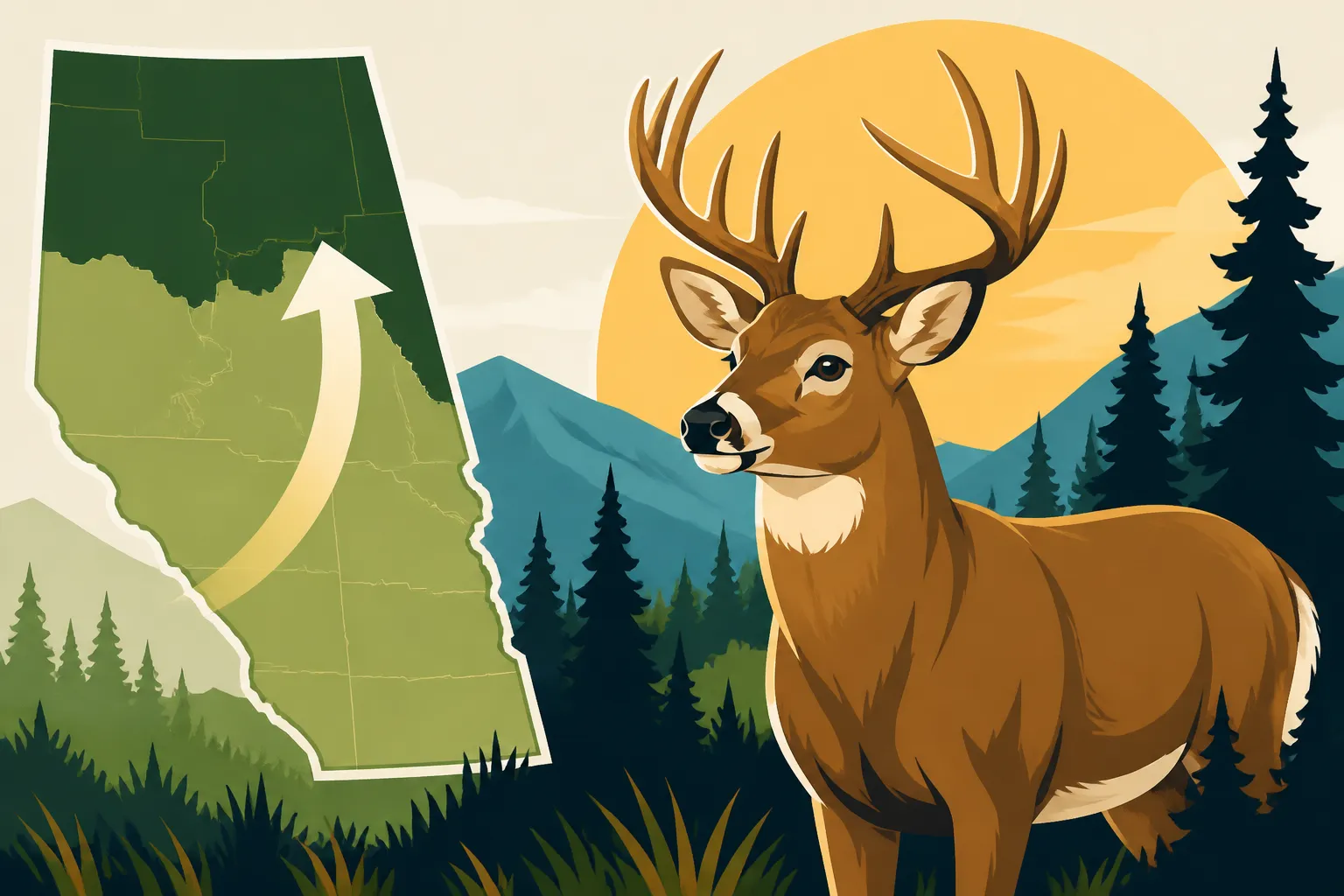
For years, many of us hunters in Alberta considered whitetails primarily a game of the parkland and prairie fringe. We knew them from the agricultural fields and aspen bluffs that defined much of our traditional hunting experience. But if you’ve been paying attention, you've undoubtedly noticed a significant shift: whitetails are pushing further north, colonizing areas once considered moose and black bear exclusive territory. This guide will delve into the fascinating phenomenon of whitetail range expansion in Alberta’s northern regions, exploring what's driving this movement and how hunters can adapt their strategies to find success in these new frontiers.
The Shifting Landscape: What's Driving the Northern Expansion?
The expansion of white-tailed deer into Alberta's more northerly reaches isn't a random occurrence; it's a complex ecological dance influenced by several key factors. Understanding these drivers is crucial for predicting where whitetails will appear next and how best to pursue them in these evolving landscapes. It's not just about a few adventurous deer wandering off; it’s a systemic change impacting entire ecosystems.
Habitat Alteration: Logging, Agriculture, and Energy Development
One of the most significant factors fueling the whitetail's northern march is the continuous alteration of Alberta's landscape. Human activities like logging, agricultural expansion, and oil and gas development, while often seen as disruptive, inadvertently create ideal conditions for whitetails. When mature, dense boreal forest is clearcut, it opens up the canopy, allowing sunlight to reach the forest floor. This stimulates the growth of new, young vegetation – a smorgasbord of tender shoots, forbs, and saplings that whitetails absolutely adore.
These clearcuts, especially in their early to mid-successional stages, provide an abundance of high-quality browse, far more than what a mature forest offers. Furthermore, the logging slash left behind creates dense cover where deer can hide and escape predators. Similarly, seismic lines, cutlines, and pipeline corridors, often created for energy exploration and infrastructure, act as superhighways for deer movement and new growth areas. You can often find them feeding or traveling along these linear features, especially at dawn and dusk. For more insights on these key travel routes, check out our guide on Hunting a Pipeline Right-of-Way
Agriculture is also slowly but surely creeping north, particularly in the Peace Country. As more land is cleared for crops like canola, barley, and peas, whitetails gain access to incredibly rich food sources that help them pack on fat for the winter and support robust antler growth. These agricultural pockets create valuable food plots right on the edge of the deeper bush, drawing deer out from the thicker cover. The edges of these fields become prime hunting locations, often connecting directly to the new successional growth created by forestry. Mastering the art of Hunting a Cutline Intersection for Whitetails can be particularly effective in these transition zones.
Climate Change and Milder Winters
While often debated, the trend towards milder, shorter winters in many parts of Alberta is undoubtedly playing a role in the whitetail's successful push northward. Historically, deep, prolonged snow cover and extreme cold were major limiting factors for whitetail survival in the boreal forest. Their smaller body size and shorter legs compared to moose make it harder for them to navigate deep snow, increasing energy expenditure and making them more vulnerable to predation.
However, with less snow accumulation and warmer average temperatures, whitetails can conserve energy, access browse more easily, and extend their foraging time. This improved winter survival directly translates to higher fawn recruitment and overall population growth, allowing more deer to establish themselves in areas where they previously couldn't thrive. The dynamics of how deep snow impacts deer movement are fascinating and critical for winter hunting, as explored in How Deep Snow Moves Deer Around.
Milder conditions also mean a longer growing season, resulting in more available forage for deer throughout the year. Healthier deer going into winter are more likely to survive, and does are more likely to successfully raise fawns. This positive feedback loop strengthens the expanding populations, cementing their presence in these new territories. Understanding What Whitetails Eat Through Winter gives a clearer picture of their survival needs.
Lower Predator Pressure in New Areas
While the boreal forest is home to apex predators like wolves, coyotes, and black bears, the initial stages of whitetail colonization in truly virgin territory might offer a temporary advantage in terms of predator pressure. In areas where whitetails are newly establishing themselves, the local predator populations might not yet be fully "tuned in" to deer as a primary food source. Their hunting patterns and territories are often more geared towards traditional prey like moose or caribou, or smaller game.
This isn't to say there are no predators, but rather that the predator-prey dynamics are still shifting. As whitetail numbers grow, predators will eventually adapt, but there can be a lag phase where deer can reproduce and expand relatively unchecked. This allows for rapid population growth and the establishment of robust herds in these new northern enclaves. Hunters, however, must always remember they are still in prime predator country, especially for bears. If you find yourself in a situation with a grizzly, understanding What Happens If You See a Grizzly is crucial for safety.
Understanding the New Whitetail Frontiers in Alberta's Boreal Forest
As whitetails move beyond their traditional strongholds, hunters need to adapt their understanding of what constitutes "whitetail country." The tactics that worked so well in the aspen parkland might not be as effective in the vast, dense boreal forest. It requires a shift in perspective and a willingness to learn new approaches.
Identifying Key Areas and WMU Trends
For hunters eager to explore these new frontiers, the first step is identifying where these expansions are most pronounced. Wildlife Management Units (WMUs) in central and northern Alberta, particularly those that blend boreal forest with some degree of industrial activity (like forestry cutblocks or resource exploration), are often the leading edge of this expansion. These aren't necessarily the traditional agricultural WMUs, but rather those with a patchwork of coniferous and deciduous forest, muskeg, and new growth.
Harvest data and observation reports from local wildlife biologists can provide invaluable clues. Websites and mapping tools, like those provided by GoHunt, often allow users to delve into WMU-specific harvest statistics and success rates, which can highlight areas where whitetail numbers are on the rise. Keeping an eye on these trends is like having a crystal ball for future hunting opportunities. It’s also important to consult the Alberta Hunting Regulations annually for updates on season dates and any specific WMU considerations, as these can change to reflect population shifts. Our comprehensive guide to Alberta's 219 Wildlife Management Units offers a great overview of these critical hunting zones.
Beyond official data, local chatter and reports from trappers, forestry workers, and oilfield personnel can be surprisingly accurate indicators of increasing whitetail presence. These individuals spend significant time in the remote bush and are often the first to notice changes in wildlife patterns. This ground-level intelligence, combined with statistical data, paints the most complete picture of where the whitetails are making their new homes.
Adapting Scouting and Hunting Strategies
Hunting whitetails in the boreal forest is a different ballgame than hunting them in open prairie or parkland. Visibility is often severely limited by dense timber, thick undergrowth, and vast tracts of muskeg. This means long-range glassing strategies that work so well for Spot-and-Stalk Mule Deer in Alberta are largely ineffective. Instead, you'll need to focus on identifying travel corridors, pinch points, and feeding areas within the dense cover.
Satellite imagery, available through platforms like GoHunt's mapping tools, becomes an indispensable scouting tool. Look for clearcuts, burned-over areas that are starting to regenerate, old logging roads, and seismic lines. These features create edges and pockets of new growth that attract deer. Understanding Scouting With Satellite Imagery in Alberta can give you a real advantage. The deer will use these features to move between feeding and bedding areas, often sticking to the thickest cover along the edges. After a few years, a Hunting a Burned Block Three Years On can be incredibly productive, as new vegetation provides excellent browse.
Still-hunting and tracking become primary tactics. Moving slowly and deliberately through the bush, pausing frequently to observe and listen, is far more productive than attempting long walks. Pay close attention to subtle deer sign: tracks, rubs, scrapes, and fresh droppings. In these environments, you'll often encounter deer at much closer ranges, demanding quick, decisive action. Setting up tree stands or ground blinds along active trails, especially those connecting different habitat types, can also be effective.
Navigating Access in the Boreal
Access in Alberta's northern boreal regions is primarily dominated by Crown Land, which offers extensive hunting opportunities. However, navigating this vast wilderness comes with its own set of challenges. While there are often numerous forestry roads, seismic lines, and cutlines, many of these can be rough, unmaintained, or even impassable depending on weather conditions. This is where ATVs, UTVs, or even good old-fashioned foot power become essential. Remember to always abide by Quad and Side-by-Side Rules on Crown Land to ensure responsible use of these vehicles.
Understanding Public Land Use Zones (PLUZs) is also critical, as these areas often have specific rules regarding vehicle use, camping, and other activities. Utilizing tools like Reading Alberta's Crown Land Layers on onX or similar mapping applications can help you identify legal access points, property boundaries, and potential travel corridors. These digital maps are constantly being updated and are a game-changer for Hunting Whitetails on Alberta Crown Land successfully.
Always be prepared for remote conditions. Cell service is often non-existent, so bringing a satellite communication device is highly recommended. Carry extra fuel, a winch, and recovery gear if you plan to venture deep into the backcountry with a vehicle. Obtaining permission for oil and gas company roads or active logging roads may sometimes be required, so always check with the specific companies or local forestry offices beforehand. For a broader view of this challenging environment, consult our guide to Alberta's Boreal Forest Country.
Challenges and Opportunities for Hunters in Expanded Whitetail Zones
The expansion of whitetails into northern Alberta presents a mixed bag for hunters: novel challenges that demand adaptability, but also exciting new opportunities that could redefine the provincial hunting experience.
Learning New Terrain and Whitetail Behaviour
The biggest hurdle for many hunters accustomed to the parkland is the sheer density and character of the boreal forest. It’s a completely different environment, dominated by spruce, pine, and poplar, often interspersed with bogs and muskeg. Whitetails here might behave differently, exhibiting heightened wariness due to the thicker cover, making them harder to spot and approach. Their travel patterns may be less predictable than those in agricultural areas, relying more on subtle changes in terrain, wind direction, and cover density.
Hunters will need to hone their woodsman skills, focusing on tracking, reading subtle signs, and understanding how deer use the dense timber. Learning to decipher fresh rubs and scrapes, even if they look different than those in aspen bluffs, is crucial. If you're used to seeing deer move across open fields, be prepared for fleeting glimpses and close encounters. The ability to identify deer by their tracks and general appearance is vital, especially when you might only get a quick look at a deer in thick cover. Understanding Telling a Whitetail From a Mule Deer becomes even more important when species identification needs to be quick and accurate. Learning how to identify and interpret these critical indicators, much like in Reading Whitetail Sign in Alberta Aspen Bluffs, will be key.
Potential for New Trophy Opportunities
One of the most exciting aspects of whitetail range expansion is the potential for discovering unpressured, mature bucks. In newly colonized areas, deer may face less hunting pressure and have access to abundant, high-quality forage. This combination can lead to larger body sizes and impressive antler growth, creating opportunities for hunters to pursue truly exceptional animals. The frontier nature of these hunts means that every new area explored could potentially hold a surprise, a buck that hasn't seen human pressure before.
Deer in these expanding zones are essentially living a relatively stress-free life compared to their cousins in heavily hunted traditional areas. Less competition for food and less disturbance means they can reach their full genetic potential. This aligns with the principle behind Why This Country Grows Heavy Antlers – good nutrition and low stress are key. While specific locations are always fluid, the general trend suggests that hunters willing to put in the work to explore these new territories might be rewarded with a buck that truly fits the description of What a Big Alberta Whitetail Weighs.
It's a chance to experience "new" hunting grounds within Alberta, reminiscent of what hunters might have encountered decades ago in now-famous areas. The thrill of exploring uncharted territory and the possibility of encountering a truly undisturbed trophy buck adds a unique dimension to the whitetail hunting experience in the province.
Conservation Considerations and Future Outlook
As whitetails continue to expand their range, it brings new conservation considerations to the forefront. Wildlife managers are closely monitoring these population shifts to understand their impact on both the whitetail herds themselves and on other native species, particularly those adapted to the boreal environment like moose and woodland caribou. Whitetails can introduce diseases (such as CWD, which is a major concern – though not necessarily more prevalent in the boreal yet) and potentially compete for resources with existing ungulate populations.
Accurate harvest reporting by hunters becomes even more critical in these expanding zones. Every piece of data helps biologists track population growth, distribution, and overall herd health. This information is vital for setting appropriate harvest quotas and managing these dynamic populations effectively. The overall trend for Alberta's Deer Herd Trend Over Ten Years suggests continued growth and adaptation, underscoring the importance of responsible hunter participation.
Ultimately, the whitetail expansion into northern Alberta is a dynamic, ongoing process. It’s a testament to the adaptability of these incredible animals and a call for hunters to be equally adaptable. Embracing the challenge of learning new terrains and strategies, while remaining committed to ethical hunting and conservation principles, will ensure that this evolving whitetail frontier remains a sustainable and rewarding pursuit for generations to come.
Disclaimer
This article is for general informational purposes only and does not constitute professional advice. Laws, prices and regulations vary by location and change over time. Consult a qualified professional for guidance on your specific situation.