Rifle Hunting Alberta’s General Seasons
For many of us who cherish the tradition of hunting in Alberta, the general rifle seasons are where the rubber truly meets the road. It's an exciting time, but also one that can feel incredibly daunting with ever-changing regulations, dense public land maps, and the sheer effort required to find game. This comprehensive guide is designed to cut through the confusion, offering practical advice and seasoned insights to help you navigate Alberta's general rifle seasons successfully and responsibly.
Understanding Alberta's General Rifle Seasons
When we talk about "general rifle seasons" in Alberta, it's easy for newer hunters, or even those coming from other jurisdictions, to get a little lost in the terminology. This isn't just a free-for-all; it's a carefully managed period where specific big game animals can be hunted with a rifle, usually without the need for a special draw, provided you have the correct general license. It's different from the Alberta's Special Licence Draws that are needed for species like moose in many zones or most elk, and it stands apart from the early archery seasons where only bows are permitted. The general season means that if you've purchased your tag, you're good to go within the specified dates and Wildlife Management Units (WMUs). This simplicity, however, doesn't mean it's easy. It means you have access, but success still hinges on your knowledge, preparation, and boots-on-the-ground effort. It's about taking advantage of the wider windows and opportunities that these seasons present across vast swaths of the province.
What 'General Season' Means for Rifle Hunters
Essentially, the general rifle season is your open invitation to hunt certain species in certain areas once you've purchased the necessary general tag. For many hunters, this means pursuing whitetail and mule deer, which often have generous general seasons across much of the province. Unlike draw-only species where success depends on winning a lottery for a limited number of tags, general tags are available to any resident with a valid WIN Card and Wildlife Certificate. This accessibility is what makes these seasons so popular, bringing a significant number of hunters into the field.
The trade-off, of course, is that general seasons often coincide with higher hunter pressure, especially on easily accessible public lands. This means understanding game behaviour under pressure, knowing how to get away from the crowds, and being flexible with your hunting plans become paramount. It's not just about knowing when you can hunt, but how and where to maximize your chances when others are also out there.
Key Species Available and Their Seasons
Alberta's general rifle seasons are most celebrated for deer hunting. White-Tailed Deer, Alberta's Most Hunted Big Game are abundant, particularly in the agricultural and parkland areas, and their general seasons are typically quite long, often extending into late November or early December, catching the peak of the rut. Mule Deer in Alberta's Open Country also have strong general seasons, though often with antler point restrictions (e.g., "3 point or better") in many WMUs, meaning you need to be able to accurately judge a buck before you shoot. These seasons can vary widely across the province, so checking the specific WMU you plan to hunt is always the first step.
Beyond deer, general rifle seasons also offer opportunities for other species. Fall black bear seasons are often general, allowing rifle hunters to pursue bears in many forested WMUs. Wolves and coyotes also have year-round or very long general seasons in many areas, providing additional opportunities, especially when deer seasons are closed. It’s important to remember that general seasons for some species like elk or moose are far less common, typically restricted to specific WMUs or antlerless opportunities, with most antlered tags being part of the draw system.
Navigating WMU Regulations and Dates
This is where many hunters hit a roadblock, and I get it – the Alberta hunting regulations can feel like a labyrinth. Every single Wildlife Management Unit (WMU) in Alberta has its own set of rules, and these can change annually. What's legal for a whitetail buck in WMU 200 might be illegal for a mule deer in WMU 400. This is why having a current copy of the Alberta hunting regulations is non-negotiable. Don't rely on last year's memory or what a buddy told you. You can often find detailed maps and specific regulations on sites like GoHunt, which aggregates this information, making it easier to visualize season dates overlaid on WMU boundaries.
When you're planning your hunt, the very first thing to do is identify the WMU you intend to hunt, then meticulously review the season dates and specific restrictions for your target species in that WMU. Pay close attention to legal game definitions (e.g., antlered vs. antlerless, 3-point rules for mule deer). Missing a small detail here could lead to a serious violation, and nobody wants that. It's a bit of homework, but it's foundational for a legal and ethical hunt.
Essential Gear for Alberta Rifle Hunting
Heading out into the Alberta landscape during general rifle seasons means preparing for anything. Our weather can be notoriously fickle, game can be elusive, and the terrain ranges from wide-open prairies to dense boreal forest. Having the right gear isn't just about comfort; it's about safety, efficiency, and ultimately, success. Trying to skimp on critical items will almost always come back to bite you, leaving you cold, wet, lost, or simply unprepared when an opportunity arises. Investing in reliable, high-quality gear suitable for the conditions you anticipate will make your hunt far more enjoyable and productive.
Choosing the Right Rifle and Caliber
Selecting your rifle and caliber is a deeply personal choice, but in Alberta, there are some practical considerations. For big game like deer, moose, or elk, the law requires a centerfire rifle with a minimum muzzle energy of 1695 joules (1250 ft-lbs) and a bullet expansion of at least 7mm (.276 inches). This generally means anything from a .243 Winchester upwards is legal, but for effectiveness and ethical harvesting, most experienced hunters opt for something more robust. Calibers like the .270 Winchester, .30-06 Springfield, .308 Winchester, and 7mm Remington Magnum are incredibly popular here for their versatility on everything from whitetail to elk. For Moose Across Alberta's Boreal and Foothills or bigger elk, some hunters prefer larger calibers like .300 Winchester Magnum or .338 Winchester Magnum, which offer more knockdown power at longer ranges.
Regardless of caliber, accuracy is king. A rifle that shoots consistently sub-MOA (minute of angle) with your chosen hunting ammunition is far more valuable than a powerful rifle you can't shoot well. Practice regularly, know your rifle's capabilities, and understand your personal limitations regarding distance. Modern rifles from manufacturers like Savage, Tikka, Browning, and Winchester offer excellent accuracy and reliability without breaking the bank.
Optics: Scopes, Binoculars, and Spotting Scopes
Good glass is arguably as important as your rifle itself, especially when hunting Alberta's varied terrain where spotting game at a distance is often the first step. For your rifle, a quality scope with clear glass, good light-gathering capabilities, and reliable turrets is essential. Magnification typically ranges from 3-9x for bush hunting to 4-16x or even higher for open country. Brands like Leupold, Vortex, Nikon, and Zeiss offer excellent options at various price points. Your scope needs to be robust enough to handle recoil and the inevitable bumps and scrapes of a backcountry hunt.
Beyond the rifle scope, a pair of high-quality binoculars (8x or 10x magnification) are your most valuable scouting tool. You'll spend far more time looking through your binos than your rifle scope. For hunting open country like the prairies or badlands where Spot-and-Stalk Mule Deer in Alberta is a common strategy, a spotting scope (15-45x or 20-60x) becomes almost indispensable for evaluating animals at extreme distances without disturbing them. Coupled with a sturdy tripod, a spotting scope allows you to pick apart distant hillsides and coulees for the tell-tale signs of game.
Clothing and Layering for Varied Weather
Alberta weather in the fall and early winter is notoriously unpredictable. You can start a day in crisp, cool sunshine and end it battling a blizzard or a freezing rain shower. Proper layering is the key to staying comfortable and safe. Begin with a moisture-wicking base layer (merino wool or synthetic) to pull sweat away from your body. Add an insulating mid-layer (fleece or down) for warmth. Finally, a waterproof and windproof outer shell is critical for protection against the elements. I can't stress this enough: bring extra layers, even if you think you won't need them. It's better to shed layers than to be caught shivering miles from your truck.
Don't forget accessories: a warm hat, gloves or mittens, and good quality waterproof boots suitable for walking long distances in rough terrain are absolute must-haves. Look for brands like Sitka, Kuiu, First Lite, or good old Cabelas brand gear, which are designed for hunting in varied conditions. Remember the blaze orange requirements too; make sure your outer layer meets the visible surface area requirements for safety.
Navigation and Communication Tools
Getting lost in Alberta's vast wilderness isn't just an inconvenience; it can be life-threatening, especially in cold weather. A reliable GPS unit (Garmin inReach or similar) or a smartphone with a robust hunting app (like GoHunt or OnX Hunt) loaded with offline maps is essential. These tools allow you to pinpoint your location, track your movements, and navigate back to your vehicle or camp. Many apps can also show land ownership, which is critical for staying legal on Finding Access on Alberta Crown Land or distinguishing private property.
Beyond navigation, communication is crucial. Cell service is unreliable or nonexistent in many hunting areas. A satellite messenger or satellite phone provides a lifeline for emergencies. Devices like the Garmin inReach allow you to send and receive texts, track your location, and trigger an SOS in an emergency, giving you and your loved ones peace of mind. Always let someone know your hunting plan, including where you'll be and when you expect to return. A whistle for signaling, a headlamp with spare batteries, and a small first-aid kit should also be standard in your pack.
Scouting and Locating Game for Rifle Hunting
Finding game in Alberta's general rifle seasons is rarely a matter of stumbling upon it. It demands deliberate effort, intelligent planning, and a deep understanding of animal behaviour and habitat. Without effective scouting, you're essentially just wandering around, hoping for luck. While luck certainly plays a role in hunting, consistent success comes from putting in the work before the season even opens and continuing that effort throughout your hunt. Knowing where to focus your attention, what signs to look for, and how game movements are influenced by various factors can drastically improve your odds.
Pre-Season Scouting Strategies
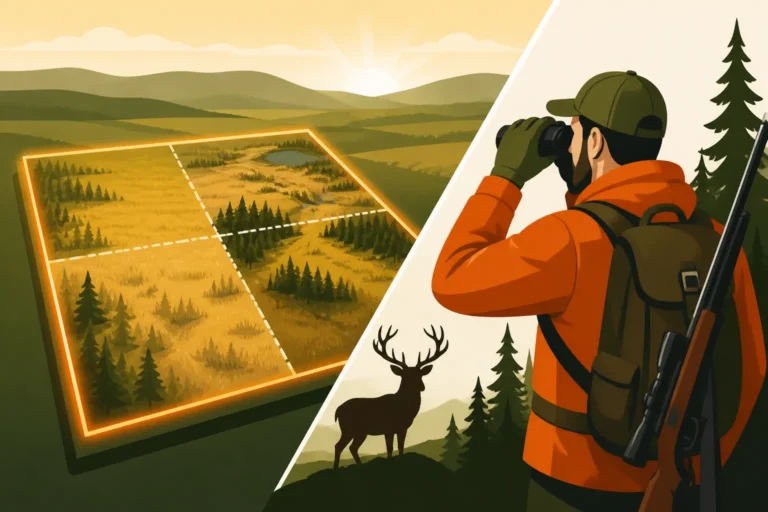
Pre-season scouting is your secret weapon. Long before opening day, you should be researching WMUs, studying maps, and ideally, putting boots on the ground. Start with online resources: the Alberta government's WMU maps, satellite imagery on Google Earth or specialized hunting apps like GoHunt. These tools allow you to identify potential bedding areas, feeding zones, water sources, and travel corridors from the comfort of your home. Look for topographical features like coulees, ridges, bluffs, and dense timber that offer cover and thermal protection for animals. Pay attention to areas where Hunting a Cutline Intersection for Whitetails might be productive, or where a deep coulee provides cover for Hunting Mule Deer in the Badlands Coulees.
Once you have some promising areas identified, it's time for physical scouting. In spring and summer, look for shed antlers, rub lines, and old scrapes that indicate historical use. Set up trail cameras in key areas to monitor game movement patterns and identify specific animals. Even just driving and glassing areas from a distance can provide valuable intel without disturbing game. Remember, game animals often use the same areas year after year, so understanding these historical patterns can give you a significant advantage.
Reading the Landscape
Each species of big game in Alberta has its preferred habitat, and understanding this is key to locating them. White-Tailed Deer, Alberta's Most Hunted Big Game often favour the edges of agricultural fields, aspen parkland bluffs, and river bottom thickets. Look for signs in and around these areas, such as tracks in muddy creek crossings, droppings, and fresh rubs on small trees. They often use dense cover during the day and move out to feed at dawn and dusk. Mule Deer in Alberta's Open Country are more creatures of the broken, open landscape – the coulees and badlands of southern Alberta, or the rugged foothills. Glassing from high points into these intricate landscapes is often the most effective way to find them.
For Moose Across Alberta's Boreal and Foothills, focus on the more northern, wetter areas, near beaver ponds, muskeg edges, and recent logging cutblocks. They are browsers, so look for areas with abundant willow and aspen regeneration. Elk in Alberta's Mountains and Farmland can be found in mountain valleys, foothills clearcuts, and increasingly, on agricultural lands where they feed on crops. Learning to distinguish the preferred habitat and signs of each species will help you narrow down your search and focus your efforts on the most promising areas.
Understanding Game Movement Patterns
Game animals are creatures of habit, but their patterns can shift based on pressure, weather, and food availability. During the general rifle season, especially with increased hunter presence, animals often become more nocturnal or move into thicker cover. Knowing this, you might need to adjust your strategy to hunt bedding areas more aggressively, or focus on transition times like first light and last light when they're most likely to be moving. For example, Hunting the Rut in Early November for whitetails means understanding that bucks will be actively cruising for does, making them more visible even during daylight hours.
Weather plays a huge role. A fresh snowfall can often push deer into specific winter ranges or make their tracks incredibly easy to follow. Cold snaps can increase feeding activity, while high winds might send animals into sheltered valleys or dense timber. Understanding these influences, and observing them firsthand through scouting, will allow you to predict where game might be and adapt your hunting strategy accordingly. Don't be afraid to change your plans if the conditions or game sign dictate it.
Hunting Strategies for Alberta's Diverse Terrain
Alberta is a land of incredible topographical diversity, offering everything from the vast, open plains of the south to the dense boreal forests of the north and the rugged peaks of the Rockies. Each landscape demands a different approach when rifle hunting during general seasons. What works for Spot-and-Stalk Mule Deer in Alberta across an open coulee won't necessarily be effective when Hunting a Cutline Intersection for Whitetails in thick bush. Adapting your strategy to the specific terrain and species you're pursuing is fundamental for success. It's about having a versatile toolkit of tactics and knowing when to deploy each one.
Still-Hunting and Stalking in the Bush
For many hunters pursuing whitetails or even some moose and bear in the forested regions of Alberta, still-hunting is an incredibly effective tactic. This involves moving slowly, taking a few steps, then pausing for several minutes to scan for movement, listen for sounds, and pick apart the cover. The goal is to move as quietly as possible, blending into the environment, and letting your eyes do most of the work. You're not trying to cover ground quickly; you're looking for an animal before it sees you. This strategy works well in areas like the aspen parkland bluffs or the boreal forest where visibility is limited and animals might be bedded tight.
When still-hunting, always hunt into the wind to prevent your scent from spooking game. Pay attention to every snap of a twig, every flick of an ear. Use natural cover to break up your silhouette. If you spot an animal, the "stalk" begins. This requires even slower, more deliberate movement, using every fold in the terrain or piece of brush to stay hidden. It's painstaking, often frustrating work, but incredibly rewarding when you finally get into position for a shot.
Spot-and-Stalk in Open Country
In the expansive landscapes of Alberta's prairies, badlands, and foothills, the spot-and-stalk method is king. This strategy relies heavily on good optics and patience. Find a high vantage point, settle in, and meticulously glass every inch of the landscape with binoculars and a spotting scope. Look for any anomaly – a horizontal line in vertical brush, a flicker of movement, or a patch of color that doesn't quite belong. This is particularly effective for Hunting Mule Deer on a Prairie Ridge or Hunting Alberta's Pronghorn Draw where game often stands out against the open backdrop.
Once you spot an animal you want to pursue, the real work begins. Plan your stalk carefully, paying close attention to the wind, available cover, and the animal's direction of travel. Use coulees, ridges, and even sparse sagebrush for concealment. Move slowly and deliberately, constantly reassessing your approach. This type of hunting can be physically demanding, requiring long walks, low crawls, and precise execution, but it's incredibly exciting and provides some of the most memorable hunting experiences.
Hunting Travel Corridors and Funnels
Animals, just like people, tend to take the path of least resistance or the most secure route between bedding and feeding areas. These natural "funnels" or "travel corridors" are prime spots for rifle hunters. In farm country, this might be a brushy shelterbelt between two fields, a narrow finger of timber connecting larger blocks of bush, or a willow run along a creek bed. In the bush, it could be an old logging road, a pipeline right-of-way, or a well-used game trail leading through a dense area. Reading Whitetail Sign in Alberta Aspen Bluffs can help identify these trails.
Understanding how to identify these natural choke points on a map (perhaps using your GoHunt app again!) and then confirming them with scouting on the ground is key. These are ideal locations for setting up an ambush, either by still-hunting slowly along them or by finding a discreet position overlooking them. The timing of your hunt in these areas is crucial; focus on dawn and dusk when animals are most likely to be moving.
The Art of Stand Hunting
While spot-and-stalk dominates open country, and still-hunting is effective in thicker cover, stand hunting remains a highly productive strategy, particularly for whitetails in the parkland and agricultural zones. This involves positioning yourself in an elevated treestand or ground blind in a high-traffic area, waiting for game to come to you. The advantage is that you minimize your scent, movement, and noise, allowing you to observe animals without disturbing them. Hanging a Stand on an Alberta Bush Edge overlooking a field, or near a well-used trail, can be incredibly effective.
Choosing the right location for your stand is paramount. Look for areas with fresh sign – active scrapes, rub lines, heavily used trails, or natural funnels leading to food sources. Consider prevailing winds and sun direction to ensure you have good visibility and your scent isn't blowing towards the animal's likely approach. Patience is the ultimate virtue in stand hunting. Be prepared for long sits, and dress appropriately for the cold, especially when Hunting Deep Cold Late in the Season. The payoff, when a mature buck finally steps out into your shooting lane, makes all those hours worthwhile.
Accessing Hunting Land in Alberta
One of the biggest headaches for any hunter in Alberta, especially those new to the province or coming from outside, is figuring out where you can actually hunt. The patchwork of public and private lands, lease agreements, and specific regulations regarding access can be incredibly confusing. It's easy to get frustrated trying to unravel it all, but understanding these nuances is absolutely critical for a legal and ethical hunt. Trespassing, even accidentally, can lead to fines, loss of hunting privileges, and gives all hunters a bad name.
Navigating Crown Land and Public Access
Alberta boasts a significant amount of Crown land, or public land, which is generally open for hunting by residents. This includes vast tracts of the "Green Area" (forested regions) and various "Public Land Use Zones" (PLUZs) in the foothills and mountains. However, access isn't always straightforward. Some Crown lands may have restrictions on vehicle use, requiring foot or horseback access. It's crucial to understand Alberta's Public Land Use Zones Explained before you head out, as different zones have different rules. For instance, some PLUZs might restrict ATV use or camping, or require specific permits.
Beyond the Green Area, there are also parcels of Crown land, including Provincial Grazing Reserves, located within the "White Area" (agricultural zones). While these are public, they often have cattle on them and require specific access protocols, sometimes needing permission from the grazing leaseholder. Using mapping tools like those offered by GoHunt or the provincial government's Recreational Access Map is invaluable for identifying Crown land boundaries and understanding access rules. Always verify current regulations, as rules can change, and wildfires or other events can lead to temporary closures.
Gaining Private Land Permission
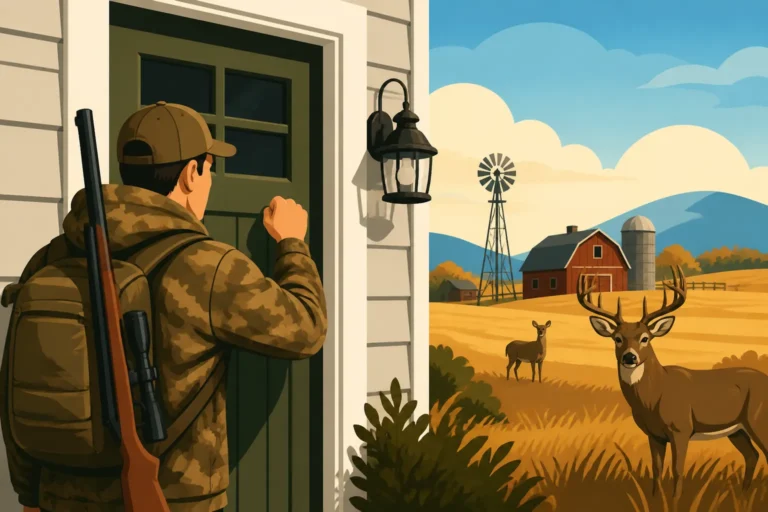
Much of Alberta's best big game hunting, particularly for whitetail and mule deer, takes place on private land in the "White Area." Gaining permission to hunt these lands is often the biggest hurdle for hunters. This requires a personal approach, respect, and good communication. My best advice is always to ask in person. Knock on doors well in advance of the season, not just the day before. Be polite, well-dressed, and respectful of the landowner's time and property. Introduce yourself, explain what you're looking to hunt, and offer to share some of the meat.
It's a numbers game: you might get ten "no's" before you get a "yes." Don't take rejection personally; landowners have many reasons for refusing, from existing arrangements to concerns about liability or past negative experiences with other hunters. If you do get permission, always leave the property better than you found it, close all gates, and respect any specific requests the landowner has. Maintaining a good relationship can lead to hunting opportunities for years to come. Remember the Alberta Trespass Act and Hunting requirements; verbal permission is usually sufficient, but having it in writing or via text can offer extra peace of mind for both parties.
Understanding Recreational Access Regulations
Alberta has specific regulations governing recreational access, which directly impact hunters. The Recreational Access Regulation (RAR) defines public access rights on certain types of Crown land, but it also clarifies the rights of private landowners. Knowing these rules helps you avoid misunderstandings and ensures you hunt legally. For example, some grazing leases have specified access points and rules, which you need to respect. It's not enough just to know it's Crown land; you need to know how to legally access it.
Furthermore, always be aware of rules regarding proximity to dwellings, occupied buildings, and livestock. It is illegal to discharge a firearm within 183 meters (200 yards) of an occupied building without the owner's permission, and caution should always be exercised around livestock. When Hunting Alberta Ground With Cattle On It, extra vigilance is required to ensure safety and avoid disturbing the animals. Being a responsible hunter means not just following the letter of the law but also acting as a good steward of the land and respecting everyone who uses it, whether they hunt or not.
Game Care and Post-Harvest Procedures
Congratulations, you've harvested an animal during Alberta's general rifle season! This is a moment of pride, but it's also where the real work of responsible hunting truly begins. How you handle your game immediately after the shot can significantly impact meat quality and ensure you're in compliance with all regulations. From rapid field dressing to proper cooling and understanding CWD testing requirements, these steps are just as vital as the hunt itself. Skimping on game care can lead to spoiled meat, a lost trophy, or even legal trouble.
Field Dressing and Quartering in the Field
The absolute priority after harvesting an animal is to get it field dressed as quickly and cleanly as possible. This involves removing the internal organs to allow the carcass to begin cooling down. In Alberta's often unpredictable fall weather, temperatures can swing wildly. Warm weather means you need to work even faster to prevent bacterial growth. Make sure you have a sharp knife, game bags, and gloves. For larger animals like moose or elk, or if you're hunting in remote areas, quartering the animal in the field can be the most practical way to get the meat out. This involves breaking the animal down into manageable pieces, which significantly reduces the weight you need to pack out.
Proper field dressing and quartering requires practice and knowing the anatomy of the animal. Always ensure you have a clean workspace, and try to keep dirt, hair, and debris away from the meat. If you're new to this, watch some instructional videos or, better yet, go with an experienced hunter who can walk you through the process. Your goal is to get the animal cooling down and protected from contaminants as quickly as possible.
Meat Care in Alberta's Cold and Warm Swings
Once field dressed, the meat needs to be cooled rapidly and kept clean. In Alberta's colder late-season hunts, hanging the carcass in a shady spot or an unheated garage might be enough, assuming temperatures stay consistently cool (ideally between 0-4°C or 32-40°F). However, if temperatures are warmer, or fluctuate, you'll need to be more proactive. Transporting the carcass on a quad or in the back of a truck, even for a short distance, can heat it up. Consider bringing coolers with ice, especially for cut-up meat or if you're hunting in early fall.
Using breathable game bags is essential to protect the meat from flies, dirt, and debris while still allowing air circulation for cooling. Avoid plastic tarps or bags directly on the meat, as these will trap heat and moisture, promoting spoilage. When Meat Care in Alberta's Cold and Warm Swings is critical, having a plan for immediate cooling and transport back to a processing facility or your home cooler is paramount. Don't let all your hard work go to waste by neglecting this crucial step.
Mandatory CWD Testing and Carcass Transport
Chronic Wasting Disease (CWD) is a serious concern for Alberta's deer and elk populations, and hunters play a vital role in monitoring and managing its spread. In many WMUs, particularly in central and eastern Alberta, mandatory CWD testing of deer heads is required. It's your responsibility to know if the WMU you're hunting in is one of these designated zones. If so, you must submit the head of your harvested deer (whitetail or mule deer) to a designated drop-off freezer. The Alberta government provides maps of these locations and instructions for submission.
Furthermore, there are strict rules regarding Moving a Carcass Out of a CWD Zone. You cannot transport a whole carcass or certain parts (like brain or spinal cord) out of a CWD-positive or CWD-surveillance WMU unless it's been processed to specific standards. Generally, this means only deboned meat, clean skull plates, antlers, and hides are allowed to cross WMU boundaries from these areas. Familiarize yourself with these regulations before you hunt to avoid potential legal issues and to do your part in minimizing the spread of CWD.
Safety and Ethical Considerations
Hunting in Alberta's general rifle seasons is an incredible privilege, but it comes with a profound responsibility – to yourself, to other hunters and outdoor users, to the wildlife, and to the land. Safety is paramount, and ethical conduct underpins the entire experience. Ignoring either of these aspects not only endangers lives but also undermines the public perception of hunting. A safe and ethical hunter is a good ambassador for the sport, ensuring its future for generations to come.
Blaze Orange Requirements and Visibility
Safety should always be your top priority, especially when rifle hunting during general seasons when many other hunters might be in the field. Alberta regulations mandate that all big game hunters (excluding migratory bird and bear hunters) wear blaze orange or "hunter orange." This includes a minimum of 400 square inches (2580 square cm) of solid blaze orange material visible from the front, back, and sides, and a blaze orange head covering. This is not just a suggestion; it's a legal requirement designed to make you highly visible to other hunters and significantly reduce the risk of accidental shootings.
Even if not legally required in a specific scenario (like hunting bear), wearing blaze orange is a smart practice. Don't just meet the minimum; wear as much as you comfortably can. Think about the conditions you'll be hunting in – dense brush versus open fields – and choose your gear to maximize your visibility. When Hunting Alberta Winter Weather Safely, for instance, ensure your orange stands out against snow. Remember, you can never be "too visible" to other hunters.
Firearm Safety and Transport Rules
As a rifle hunter, you are responsible for knowing and strictly adhering to all firearm safety rules. This includes treating every firearm as if it's loaded, always pointing the muzzle in a safe direction, keeping your finger off the trigger until ready to shoot, and being absolutely sure of your target and what is beyond it. These fundamental rules are non-negotiable. Beyond the basic tenets of firearm safety, Alberta also has specific rules regarding the transport of firearms. When in a vehicle, rifles must be unloaded and either cased or stored in a way that is not readily accessible to the driver or passengers.
When walking, carrying your rifle safely is equally important. Use a sling to keep it secure, and ensure the safety is always on until you are ready to take a shot. Be extra cautious when crossing fences, climbing into tree stands, or navigating difficult terrain. Always unload your firearm before crossing an obstacle or when you're done hunting for the day and heading back to camp or your vehicle. Understanding Transporting Firearms Into Alberta also requires awareness of federal rules if you're coming from out of province.
Respect for Wildlife, Land, and Other Users
Ethical hunting goes beyond simply following the law; it encompasses a deeper respect for the animals you pursue, the land you hunt on, and the people you share the outdoors with. This means striving for a clean, humane kill every time. Practice your shooting to ensure proficiency, know your effective range, and pass on shots that aren't clean and ethical. It also means properly Field Dressing in Alberta's Deep Cold and caring for the meat, ensuring no part of the animal is wasted.
Respect for the land means leaving no trace, packing out everything you pack in, and being mindful of your impact. Avoid damaging private property, closing gates, and respecting agricultural operations. Respect for other users involves being courteous to hikers, birdwatchers, and other hunters. Give others space, avoid overcrowding hunting areas, and be mindful of noise. A friendly wave or a polite conversation goes a long way in fostering good relationships. By embodying these principles, you contribute positively to the image of hunting and help ensure the sustained support for our cherished traditions.
Disclaimer
The information provided in this guide is for general informational purposes only and does not constitute legal advice. Hunting regulations in Alberta are complex and subject to change. It is the responsibility of every hunter to consult the most current Alberta Hunting Regulations (available from Alberta Environment and Protected Areas) and all applicable federal laws before hunting. Ignorance of the law is not a defense.