Alberta WMUs You Can Hunt From a Truck
It's a common thought for many hunters, especially as we get a little older or when dealing with less-than-ideal weather conditions, to wish for hunting opportunities that don't require miles of bushwhacking or scaling mountains. The reality of hunting in Alberta often involves rough terrain, but there are indeed Wildlife Management Units (WMUs) where strategic use of your truck can significantly enhance your access and overall hunting experience. This guide is all about helping you identify and successfully navigate those WMUs where your vehicle can be a true asset for getting into the game.
Understanding "Truck Hunting" in Alberta
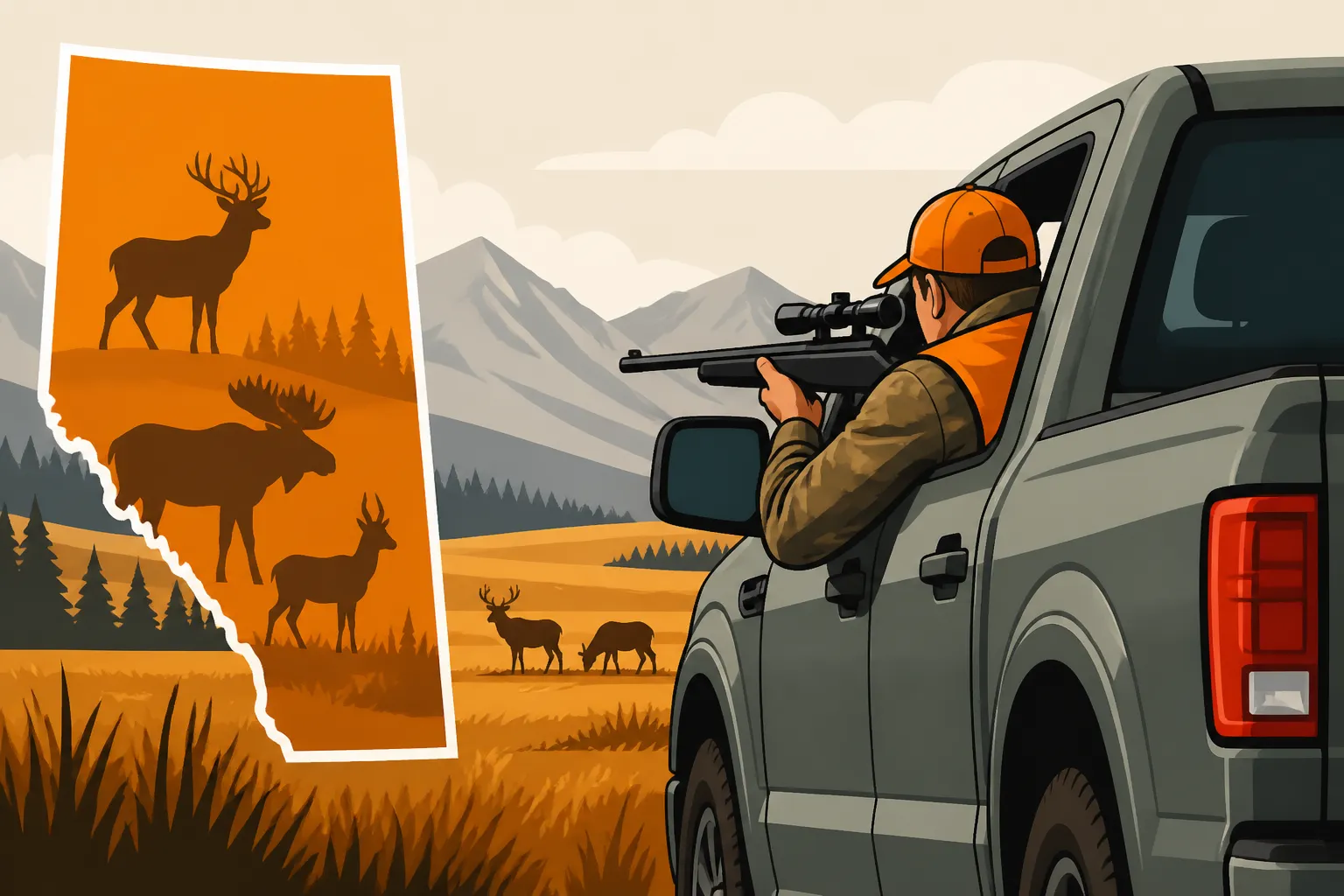
Let's be clear from the start: "truck hunting" doesn't mean driving around and shooting animals from your window. That's illegal, highly unethical, and dangerous. What we're talking about here is leveraging the extensive network of roads, cutlines, and trails found in many Alberta WMUs to access good hunting ground, allowing you to cover more territory, bring more gear, and minimize physical exertion getting to and from prime areas. It's about smart logistics, not lazy hunting.
What We Mean by "Truck Hunting"
When I talk about "truck hunting," I'm referring to a strategy where your vehicle serves as a primary mode of transport to reach hunting locations that are otherwise difficult or time-consuming to access on foot. Think of it as your mobile base camp or your quick-entry ticket to specific zones. This could involve driving forestry roads deep into the bush, navigating grid roads through vast stretches of farmland, or even using older, less-maintained cutlines that might only be passable by a high-clearance 4×4. The goal is to park, exit the vehicle, and then hunt on foot, using the truck to optimize your reach.
This approach is particularly valuable when you're exploring new areas or when time is limited. Instead of spending hours hiking just to get to a starting point, your truck can put you there in minutes. It's also fantastic for retrieving game, especially larger animals like moose or elk, from areas that would be a nightmare to pack out from otherwise. Imagine having to haul a quartered moose for a mile through muskeg versus being able to drive right up to a cutline nearby. It changes the entire game.
Why Truck Access Matters
The benefits of utilizing truck access are numerous, and they address many common frustrations hunters face. First, there's mobility and efficiency. Alberta is a huge province, and game populations can be spread out. Being able to drive between different sections of a WMU, or even between different WMUs, allows you to scout and hunt a much larger area in a shorter amount of time. If one spot isn't producing, you can quickly move to another.
Second, it significantly reduces physical exertion. Not everyone can, or wants to, hike ten miles into the backcountry. Truck hunting opens up opportunities for hunters with physical limitations, or simply those who prefer to conserve their energy for the actual stalking and retrieving. This means more time actively hunting and less time simply moving through unproductive areas.
Third, consider gear transport. Your truck acts as an excellent storage locker. You can carry more survival gear, more comfort items (like a good Thermos of coffee or a change of dry clothes), more specialized hunting equipment (tree stands, rattling antlers, extra decoys), and certainly more game recovery tools like a hoist or extra coolers. This flexibility can be a real game-changer, especially during inclement weather or if you're planning a multi-day hunt from a roadside camp.
Finally, for those who brave the colder parts of the season, Hunting Alberta Winter Weather Safely is much more manageable when you can get back to a warm truck quickly. It provides a sanctuary from the elements, allowing you to warm up, regroup, and then head back out refreshed.
Legalities and Ethics of Vehicle Use
While using your truck for access is a smart strategy, it's absolutely critical to understand and adhere to Alberta's hunting regulations regarding vehicles. Under no circumstances is it legal to shoot from or across a public road, or from a vehicle. Your firearm must be unloaded and encased (or otherwise safely stored, depending on the regulations for your specific firearm type) while in a vehicle. When you're actively hunting, you must be off the road, and your vehicle should be parked safely and legally.
Another key aspect is land access. Just because there's a road doesn't mean it's open to public use, or that the land beside it is. You still need to distinguish between Crown land, private land, and lease land. Alberta Landowner Permission Law is very clear: you need permission to hunt on private land. Many roads, especially in agricultural areas, may traverse private property, and driving on them without permission is trespassing.
In designated Public Land Use Zones (PLUZs), there are often specific rules regarding vehicle access on trails, cutlines, and seismic lines. Some are open to OHVs (Off-Highway Vehicles) and trucks, while others may be restricted or seasonally closed to prevent habitat damage. Always consult the specific WMU regulations and PLUZ maps for the area you intend to hunt. Respecting these rules is not just about avoiding fines; it's about being an ethical hunter and maintaining good relationships with landowners and fellow outdoors enthusiasts. This ensures these access opportunities remain available for everyone.
Types of WMUs Amenable to Truck Hunting
Alberta offers a diverse range of landscapes, and with that comes varying levels of vehicle access. Certain WMUs, by their very nature and infrastructure, are much better suited for hunters who want to leverage their truck for getting around.
Prairie and Parkland WMUs
These WMUs, generally found in the southern and central parts of the province, are often characterized by extensive grid road systems, gravel county roads, and numerous private farm access roads. Think of areas like the "Prairie Series" WMUs or those in the "Parkland Country." While a significant portion of this land is private, these areas offer excellent opportunities for "truck hunting" due to the sheer density of roads.
You'll often find mule deer and whitetails in the coulees, river breaks, and shelterbelts that crisscross this landscape. Being able to drive the grid roads allows you to systematically scout these natural travel corridors and bedding areas. You can park at a strategic location, glass a distant coulee, or walk a Hunting a Shelterbelt Between Two Fields for pheasants or Hungarian partridge. The challenge here is less about getting your truck into the remote bush, and more about navigating private land boundaries and securing permission. Many hunters successfully employ a strategy of driving and spotting, then approaching landowners for permission to access a specific field or pasture where they've seen game.
For example, WMUs in the 100 and 200 series (like 102, 116, 204, 212) often have a good mix of roads and habitat, where deer will frequent crop fields and then retreat to river bottoms or brushy draws. Being able to drive the perimeter roads of a Hunting a Standing Canola Field Edge at dawn or dusk can quickly reveal if deer are using it, allowing you to then focus your efforts on a strategic stalk on foot.
Foothills and Boreal Fringe WMUs with Good Road Networks
As you move west into the Foothills or north into the Boreal fringe, the terrain changes, but accessible WMUs still exist. Here, the "roads" might look different – more gravel, less maintained, and often forestry roads, oil and gas lease roads, or old logging tracks. WMUs like those in the 300 series (e.g., 304, 310, 318) or lower 500 series (e.g., 507, 510) can offer extensive networks of these industrial access routes.
These roads allow you to penetrate deep into what might otherwise be dense bush, providing access points to areas where moose, elk, and black bears frequent. You might drive for miles on a main forestry trunk road, then turn off onto an old, overgrown logging spur or a seismic line that cuts through the timber. These can be prime spots for Hunting a Cutline for Moose at First Light or Hunting Bear on a Green Cutline in June. The key here is that the truck gets you deep, but the real hunting still happens when you step out of the vehicle and start walking, whether it's still-hunting along the edge of a cutblock or calling into thick timber.
Always be mindful that these roads can quickly deteriorate, especially in wet conditions. A 4×4 with good ground clearance is often a necessity, and a winch wouldn't hurt. But the payoff is access to vast tracts of Crown land that might otherwise be unreachable for day hunts.
Areas with Agricultural Overlap
Many WMUs, particularly those bordering established agricultural zones, benefit from a unique blend of habitat and infrastructure. These WMUs are where the cultivated fields meet the untamed bush or broken prairie. Examples can be found in the transition zones between parkland and boreal forest, or prairie and foothills.
These WMUs typically have better-maintained road systems due to farming operations, combined with pockets of bush or coulees that hold game. Deer, elk, and even moose will often move between agricultural fields for feeding and the adjacent wilder areas for cover. This creates a fantastic opportunity for truck-based scouting. You can drive the roads, glassing field edges, forest fringes, and creek bottoms for signs of movement or recent activity.
A good example might be some of the WMUs in the 200 series that butt up against the forest fringe. You can drive the periphery of farm fields, then quickly move into publicly accessible timber or river valleys. These areas often see heavier deer pressure because of the food sources. Being able to quickly move between vantage points along these agricultural edges is a significant advantage. It allows you to maximize your time actually hunting prime spots, rather than hiking through less productive areas.
| WMU Type | Typical Game Species | Road Characteristics | Access Considerations | Key Strategy |
|---|---|---|---|---|
| Prairie | Mule Deer, Whitetail, Birds | Grid roads, gravel roads, private farm access | Mostly private, extensive road network, permission critical | Spot and stalk from roadsides, secure landowner permission |
| Parkland | Whitetail, Mule Deer, Elk | Paved & gravel grid roads, some forestry access | Mix of private & Crown, moderate roads | Scout fringes, focus on transition zones, knock on doors |
| Foothills | Elk, Moose, Deer, Bear | Forestry Trunk Road, logging roads, seismic lines | Primarily Crown, often rougher roads, OHV trails | Drive deep, then hike into cutblocks or valleys |
| Boreal Fringe | Moose, Bear, Whitetail | Logging roads, oilfield roads, cutlines, some gravel | Mostly Crown, can be very remote, seasonal closures | Utilize main access routes, explore side lines, be prepared |
Key Considerations for Successful Truck-Accessible Hunting
Even with great road access, successful truck hunting still requires skill, preparation, and smart tactics. It's not just about opening your truck door; it's about what you do once you're out of it, and how you choose where to park.
Scouting and Mapping Tools
This is where modern technology truly shines for the truck hunter. In the past, you'd spend countless hours with paper maps, marking potential roads and public land boundaries. Today, digital mapping applications like onX Hunt and GoHunt are invaluable. These tools allow you to:
- Identify Public vs. Private Land: This is perhaps the most critical feature. You can instantly see land ownership boundaries, helping you ensure you're hunting legally on Crown land or know exactly whose door to knock on for private access. This prevents accidental trespassing, which is a major concern when hunting WMUs with mixed land ownership.
- Locate Road Networks and Trails: These apps display detailed road and trail layers, including older seismic lines and forestry roads that might not appear on standard road maps. You can plan your driving routes, identify potential pull-offs, and gauge the density of accessible areas. With onX Hunt, for instance, you can often see historical aerial imagery which reveals old logging cuts or brush piles that might not be visible on current satellite views but still hold game.
- Mark Waypoints and Points of Interest: As you drive, you can drop pins for areas where you see fresh sign, potential bedding areas, or good vantage points. This helps you build a mental and digital map of productive areas over time. You can also mark parking spots and plan your walking routes from there.
- Understand Topography: Contour lines and 3D terrain views help you visualize the landscape from a distance, even before you set foot on the ground. This is especially useful in coulee country, where a ridge might hide a deep draw that's perfect for deer.
Before you even leave home, spend time poring over these maps. Look for areas where Crown land butts up against agricultural fields, or where a network of logging roads seems to lead to remote clearings. These are often prime candidates for truck-accessible hunting. Scouting With Satellite Imagery in Alberta becomes an active part of your pre-hunt strategy, letting you virtually drive the roads and identify key features.
Vehicle Preparedness and Safety
Your truck is your lifeline when you're using it for access, so proper preparation is non-negotiable, especially when venturing off main highways onto less-maintained roads. Even in areas considered "truck-accessible," conditions can rapidly deteriorate.
- Proper Tires: All-terrain or mud-terrain tires are highly recommended, especially if you plan to hit any gravel, dirt, or muddy tracks. Getting a flat tire miles from pavement is a serious problem.
- Recovery Gear: Even the most capable 4×4 can get stuck. A basic recovery kit should include a shovel, a tow strap, traction boards, and ideally, a winch. Don't forget a set of jumper cables and a tire repair kit. Many of the old Hunting an Old Logging Road in the Foothills can be deceptively soft after a rain.
- Navigation and Communication: While mapping apps are great, always have a backup. A physical map and compass are essential, especially in areas with no cell service. A satellite messenger or satellite phone is a wise investment for emergency communication if you're truly heading into remote country, even if only a few miles off the main road.
- Emergency Supplies: Pack extra food, water, warm clothing, a first-aid kit, and a full tank of gas (or even extra fuel). A well-stocked Winter Truck Kit for an Alberta Hunt is crucial if you're hunting in colder months. Things can go sideways quickly, and being prepared can turn a major headache into a minor inconvenience.
- Maintenance: Ensure your vehicle is in good working order before heading out. Check fluids, tire pressure, and lights. A breakdown will ruin your hunt and potentially put you in a dangerous situation.
Reading the Landscape from the Road
This is where the "art" of truck hunting comes in. It's not about just driving aimlessly; it's about actively scouting and interpreting the environment from your vehicle.
- Slow and Observant Driving: Drive slowly and scan the edges of fields, cutlines, and timber patches. Look for fresh tracks crossing the road, rub lines on saplings, or fresh droppings. These are clear indicators that game is using the area.
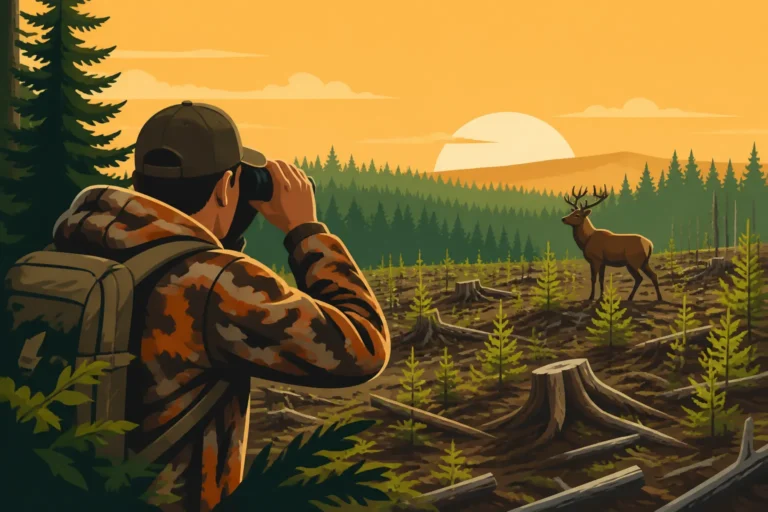
- Glassing: Use binoculars or a spotting scope to scan distant hillsides, coulees, and clearcuts from elevated vantage points along the road. This is particularly effective for spotting mule deer on prairie ridges or elk in clearcuts. You can cover vast amounts of territory visually before deciding where to park and walk. Glassing an Alberta Coulee for Mule Deer can save you miles of walking.
- Understanding Habitat Preferences: Know what different species prefer. Whitetails often stick to dense cover near food sources, so look for thickets along field edges or aspen bluffs. Mule deer prefer more open, broken country. Moose will be in swampy areas or fresh burns and cutlines. Tailor your scanning to the species you're pursuing.
- Time of Day: Early morning and late evening are prime times for seeing game moving or feeding near roadsides. During midday, animals will often be bedded down in thicker cover, requiring you to get out and still-hunt those areas. The vehicle is a tool to get you to these spots, not a substitute for understanding game behavior.
Common Mistakes and How to Avoid Them
Even with the best intentions, it's easy to fall into common traps when relying on your truck for hunting access. Being aware of these pitfalls can save you time, frustration, and potential legal issues.
Over-reliance on the Vehicle
The biggest mistake a "truck hunter" can make is to become too dependent on their vehicle. Remember, the truck is a tool for access, not a hunting blind. You still need to put in the legwork. Many hunters get discouraged if they don't see game right from the road, not realizing that deer and other big game animals will often move deeper into cover as soon as they hear a vehicle or sense human presence.
How to avoid it: Think of your truck as the means to get to your starting point. Park your vehicle, get out, and walk at least a few hundred yards (or a few kilometers, depending on the terrain and your target species) into the bush or along a coulee before you expect to see anything. Use your vehicle to cut down travel time to prime areas, but then engage in traditional still-hunting, stalking, or stand hunting strategies. For instance, if you're Hunting a Cutline Intersection for Whitetails, park well downwind and approach on foot.
Ignoring Land Access Rules
Alberta has a mix of Crown land (public land), private land, and various lease lands (such as grazing leases) with differing access rules. It's a complex patchwork, and a common mistake is assuming that if a road is there, you can hunt the adjacent land. This is simply not true.
How to avoid it: Always verify land ownership. This is where mapping tools like onX Hunt are indispensable, as they display land ownership boundaries right on your phone or GPS. For private land, Asking an Alberta Landowner for Permission is not just polite; it's a legal requirement. Even on some Crown lands, there might be specific restrictions, such as in Provincial Parks (where hunting is generally prohibited) or certain Public Land Use Zones with specific motorized access rules. Always check the Alberta hunting regulations for your specific WMU and any local bylaws. Ignoring these rules can lead to fines, loss of hunting privileges, and, worse, give all hunters a bad name.
Neglecting Off-Road Conditions
While we're talking about "truck-accessible" WMUs, this doesn't mean every road will be a paved highway. Alberta's backroads, forestry trails, and seismic lines can quickly turn treacherous, especially with adverse weather conditions like heavy rain or snow. A road that looks perfectly passable one day could become a muddy quagmire or a snowed-in trap the next.
How to avoid it: Always be prepared for the worst. As mentioned under vehicle preparedness, having a capable 4×4, good tires, and recovery gear is paramount. Check weather forecasts religiously before heading out, and pay attention to recent precipitation. If in doubt, err on the side of caution. Sometimes, even if the truck could make it, the risk of getting stuck or damaging your vehicle might outweigh the potential benefit of accessing that extra mile of road. Be realistic about your vehicle's capabilities and your own recovery skills. It's better to park a bit further away and walk the last stretch than to be stranded in the middle of nowhere.
Disclaimer
This article is for general informational purposes only and does not constitute professional advice. Laws, prices and regulations vary by location and change over time. Consult a qualified professional for guidance on your specific situation.